
Encore un excellent podcast de Charles Beauchesne. On s’entend tous pour dire que l’histoire du Canada n’est pas ce qu’il y a de plus excitant, mais là, ça vaut le coup 😉
Amis français, ça peut être très intéressant à écouter pour vous aussi.
https://open.spotify.com/episode/4tSBA3FduFv6y4hdPocrkm?si=J43nb-XoRh6JritglPzl6g
Amphora attributed to the painter Timiades and the Tyrrhenian Group, is a pottery piece from Attica dating around 570-550 BCE. It showcases painted and incised techniques, depicting mythological figures, dances, and birds, reflecting the Attic period and culture.
It illustrates the sacrifice of Polyxena, daughter of Agamemnon, who willingly sacrificed herself to secure the Greek victory at Troy. Refusing to live without her brother, she accepted being killed by her father. Her poignant sacrifice embodies an act of loyalty and tragic devotion in Greek mythology.
#history #mythology #greekmythology 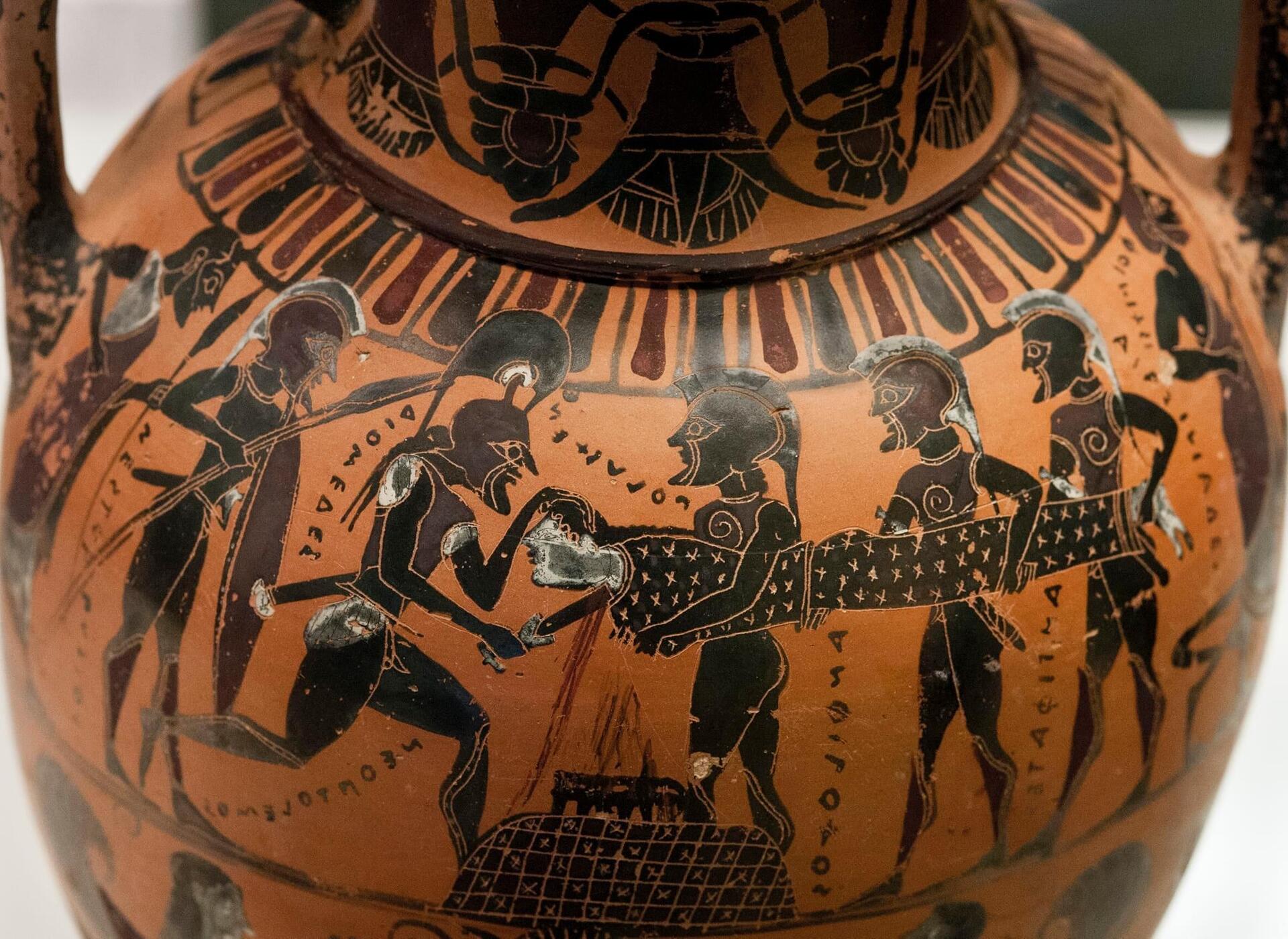
Joyeux Noël / Merry Christmas / Joyeuses Saturnales🎄 😉
#MerryChrismas #JoyeuxNoel #SantaClausIsComingToTown #luciuscorneliussulla #sulla #romanhistory #romanrepublic 
Si vous ne connaissez pas encore le podcast Passion Médiévistes, vous passez à côté de quelque chose. Particulièrement les épisodes de Super Joute Royale… vraiment, j’adore 😂
#moyenage #middleages
https://open.spotify.com/episode/52BVtuHen3Jnw4yAUrPhmE?si=kUY1eLQGTJmeLh3waS5jkQ
It becomes awkward to be pro-crypto when you see the crypto community rejoicing over the election of this crazy fool. Anti-abortion, climate skeptic, sexist, racist, neo-fascist. 
Dionysos contre les Indiens, mosaïque du IIIe siècle provenant de Tusculum, Musée national romain, Rome (exposition Alexandre le Grand et l’Orient au MAN de Naples).
https://x.com/dimitritilloi/status/1714619643808092604?s=46&t=n1Azz6tsbB5OUie6BEKH9Q
The Temple of Hephaestus or Hephaisteion (also "Hephesteum" or "Hephaesteum", and formerly called in error the Theseion or "Theseum"; is a well-preserved Greek temple dedicated to Hephaestus; it remains standing largely intact today. It is a Doric peripteral temple, and is located at the north-west side of the Agora of Athens, on top of the Agoraios Kolonos hill. From the 7th century until 1834, it served as the Greek Orthodox church of Saint George Akamates. The building's condition has been maintained due to its history of varied use.
Via Archeology Aesthetic (FB) 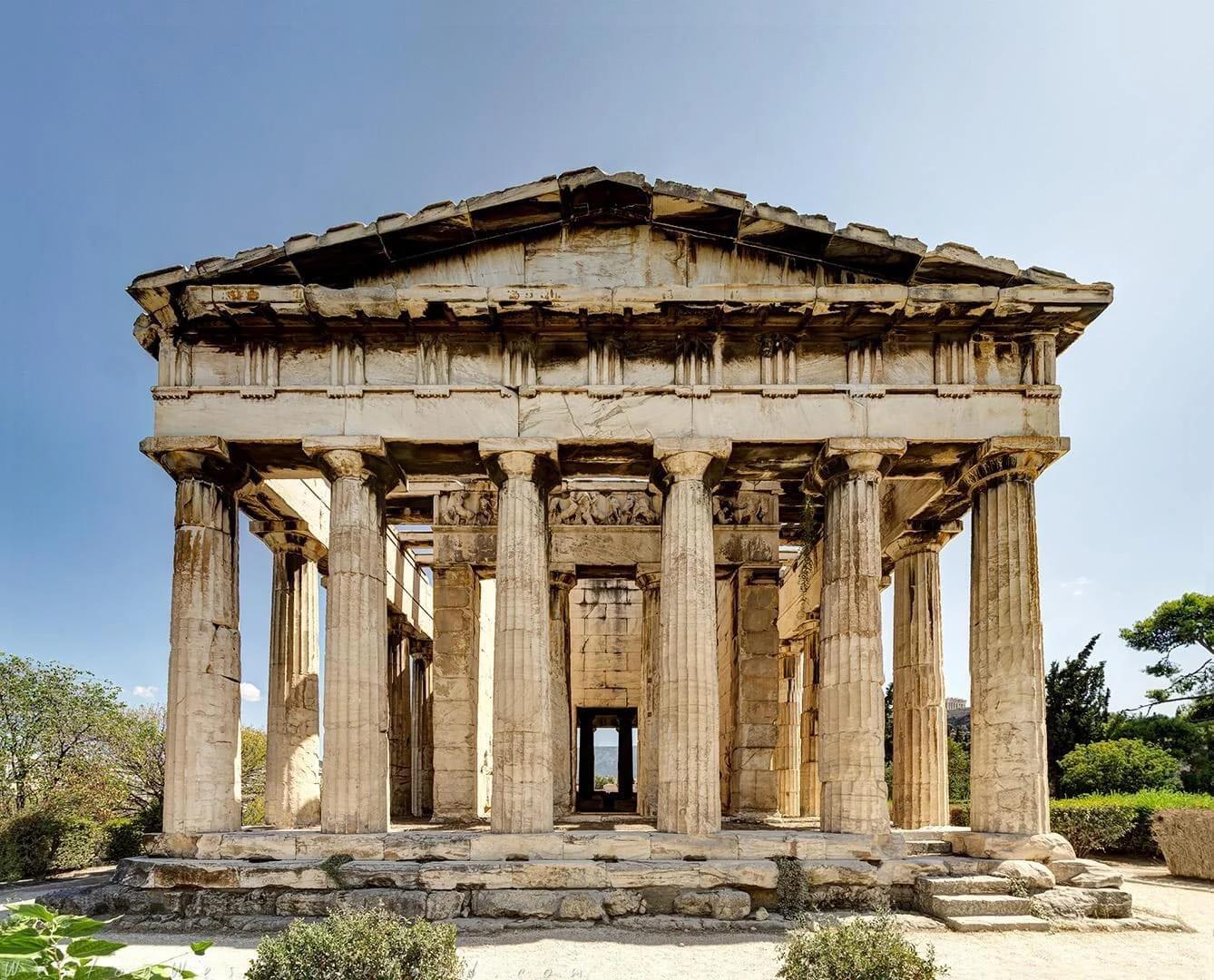
Fragment de la frise de la Gigantomachie du Grand Autel de Pergame, créée au IIe siècle av. J.-C. et exposée au musée de Pergame à Berlin. On y voit les Moires tuant les Géants Agrios et Thoas.
La frise est une œuvre sculpturale monumentale qui illustre la célèbre bataille mythologique entre les dieux de l'Olympe et les Géants. Cette frise en haut-relief présente une scène épique avec des divinités grecques combattant les Géants, créatures mythiques représentées comme des monstres. Les détails des combats, l'anatomie des personnages et l'expression dramatique des visages sont impressionnants. C'est un chef-d'œuvre de l'art hellénistique qui témoigne du talent artistique de l'époque et de l'importance des récits mythologiques dans la culture grecque.
Quant à Agrios et Thoas, ils étaient deux géants de la mythologie grecque. Agrios était connu pour sa sauvagerie et sa force brute, tandis que Thoas était réputé pour son intelligence et son habileté au combat. Ils étaient souvent décrits comme des fils de la Terre (Gaïa) et faisaient partie de la génération des géants qui combattit les dieux olympiens dans la Gigantomachie, une bataille mythique. Leur destin tragique les conduisit à être vaincus par les dieux, notamment par Héraclès.
#history #arthistory #mythology 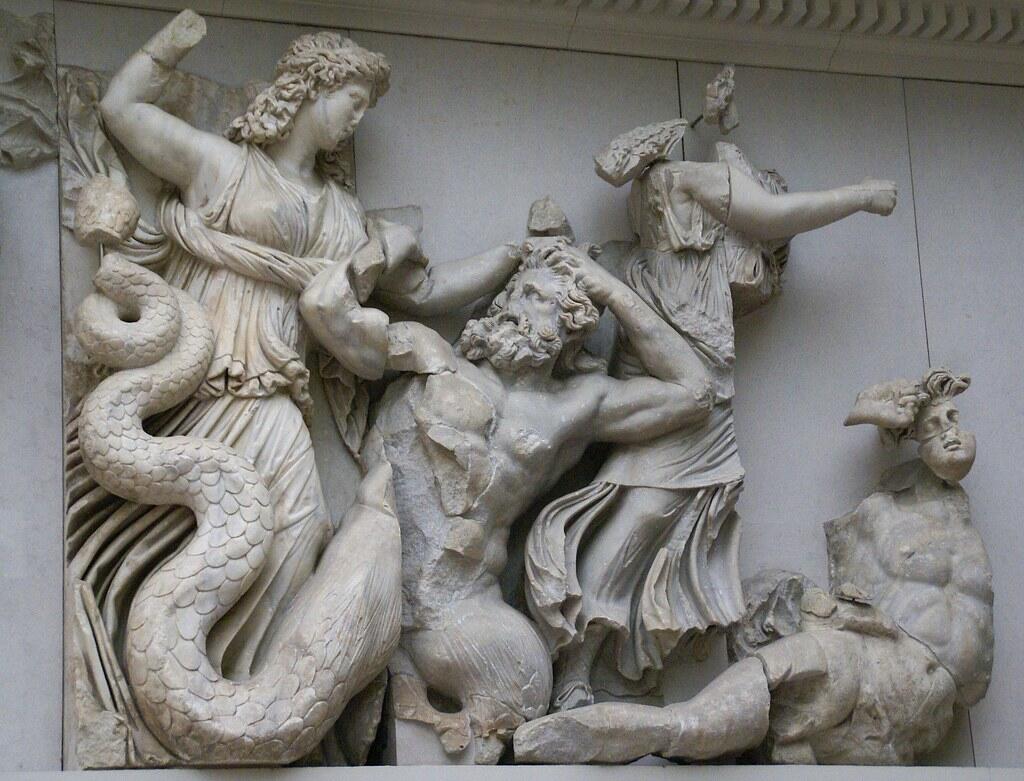
GM!
La minute d’histoire et de mythologie vient de publier une nouvelle vidéo à propos d'Élisabeth Báthory, la Comtesse Sanglante!
Bonne écoute
Let's continue our exploration of Greek mythology's deities and heroes with the lesser-known Hecatoncheires.
The Hecatoncheires were primordial deities in Greek mythology, consisting of three: Cottus, Gyges, and Briareos. Their name means "the Hundred-Handed" as they had 50 heads and 100 arms each. Their mother, Gaia, bore them to combat the Titans. Zeus released them from their prison, Tartarus, to aid in the Titanomachy. Their power was formidable, and their involvement contributed to the victory of the Olympian gods over the Titans. After the war, they were confined deep in Tartarus under the guard of Campe.
#mythology 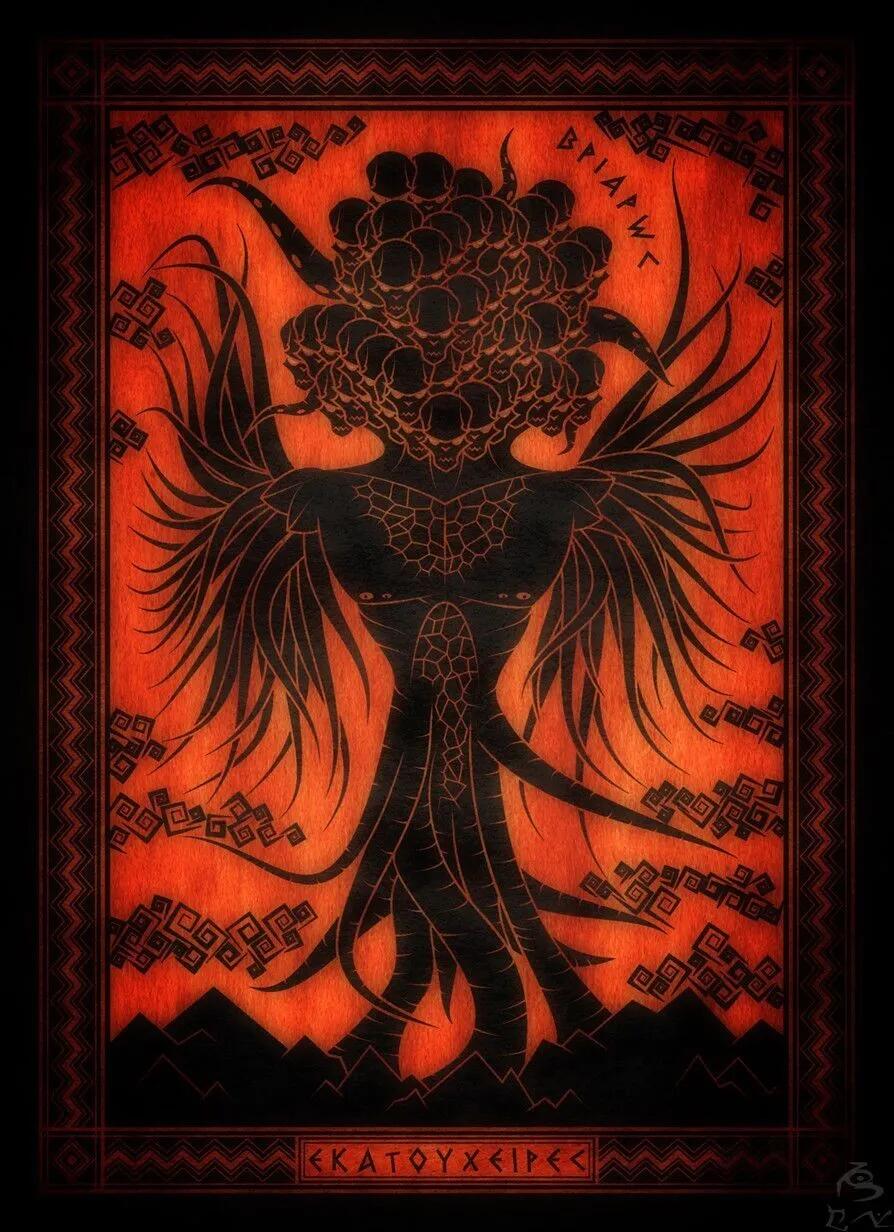
Excellent texte. Le professeur John Maxwell O'Brien suggère qu'Alexandre le Grand avait recours à l'alcool pour gérer son anxiété. Un point de vue unique parmi les historiens, alors que la plupart défendent l’absence de preuves d'alcoolisme.
#histoire
https://letempsdunebiere.ca/alexandre-le-grand-et-la-pire-beuverie-de-lhistoire/
Fragment of a Roman Mosaic depicting Mithras
1st century AD.
Mithra is said to have been born in a cave on December 25. The myth of his birth is also associated with a certain rebirth and the celebration of light... a story quite well known due to its remake.
Beyond that, Mithras, the Persian god of creation and light, inspired the mystery religion of Mithraism that spread across the Roman Empire. This cult, limited to men, was popular among Roman soldiers in the 2nd and 3rd centuries AD. In Persian mythology, Mithras sacrificed a white bull sent by the sun god. The bull's death transformed it into the moon, and Mithras's cloak became the sky, stars, and planets. This sacrificial scene, known as Tauroctony, took place in a cave, observed by Luna and Sol, the moon and sun gods, respectively. Mithras is often depicted with his attendants, Cautes and Cautopates, and animals like a dog, raven, snake, and scorpion.
The central medallion in a mosaic shows the birth of Mithras emerging from a cave, flanked by his attendants, and with the raven flying above, symbolizing the creation myth and an initial stage of initiation into the cult. 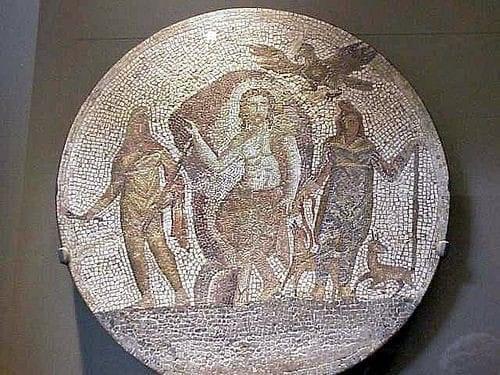
Painted slab, called "Black Rider" or "Lucanian Cavalier", from Paestum, Andriuolo, Tomb 58.
The "Lucanian Cavalier" is a famous fresco from a tomb in Paestum, an ancient Greek city in Italy. The fresco depicts a knight in armor, mounted on a horse, wielding a lance. He wears a helmet and a tunic. This wall painting, dating back to the 5th century BC, is a remarkable example of funerary art from the time and reflects Greek influence on the culture of Southern Italy during that period. It is precious for understanding the history and aesthetics of the region in the classical age.
The Lucanians were an ancient Italic people who inhabited the region of Lucania in Southern Italy. They played a significant role in the pre-Roman and Roman periods. Known for their warrior culture, they engaged in conflicts and alliances with Greek colonies and Romans. Their legacy includes archaeological sites and artifacts reflecting their distinctive culture and history.
#history 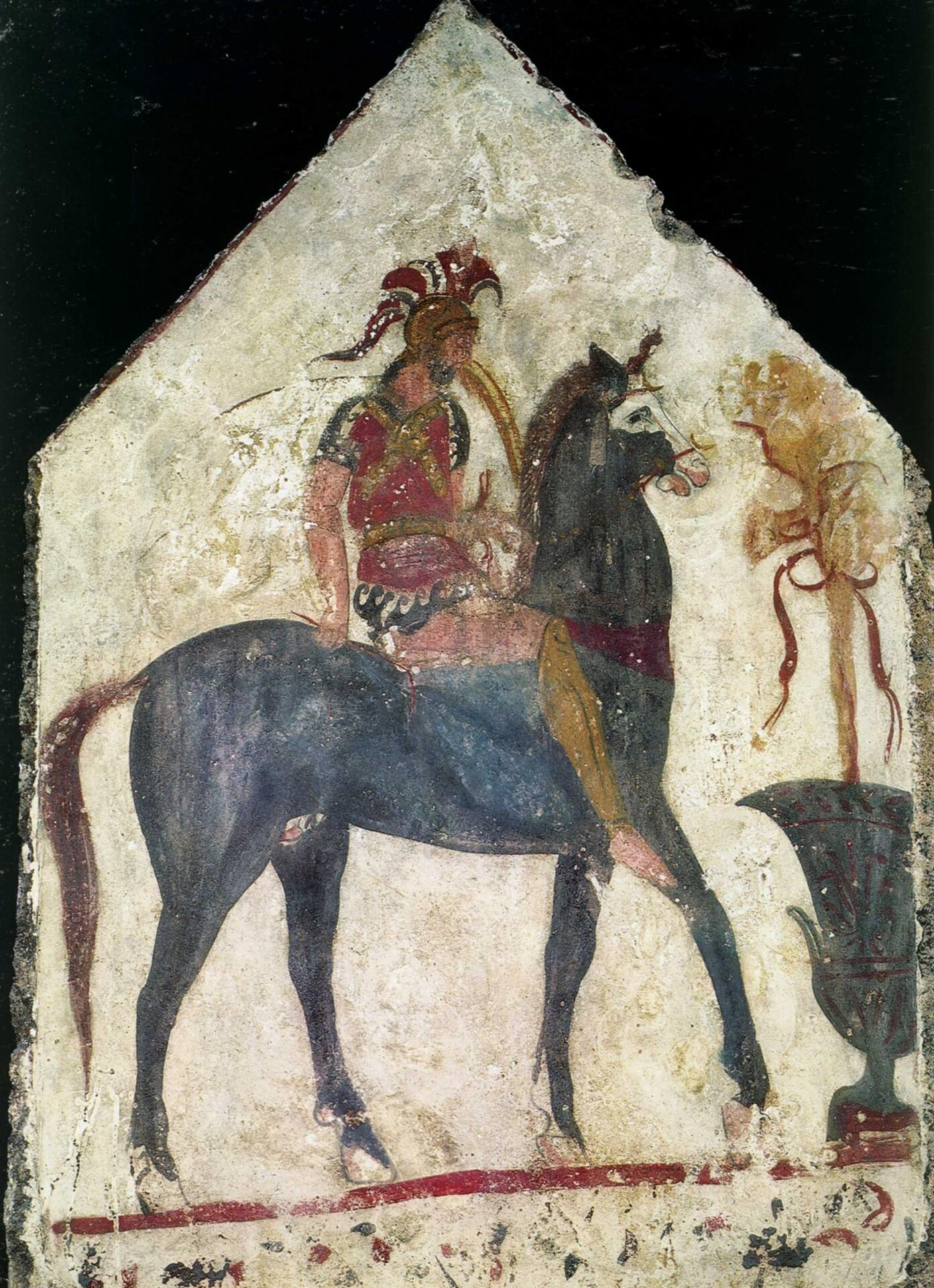
Ancient Greek music 🎶
I don’t know if it 100% historically plausible, but it’s really it's really nice to listen.
The Medieval Sect That Inspired the Video Game ‘Assassin’s Creed’
L'Atlas Farnèse est une sculpture antique romaine représentant le titan Atlas portant le ciel. Réalisé au IIe siècle après J-C, il s’agit d’une copie de la version grecque. Il est conservé au Musée archéologique national de Naples. Cette statue en marbre illustre la puissance artistique et mythologique de l'époque gréco-romaine.
Atlas est un titan de la mythologie grecque, fils d'Iapétos et Clymène. Il est souvent représenté portant la voûte céleste sur ses épaules, punition infligée par Zeus pour sa participation à la Titanomachie. Atlas était également associé aux piliers qui soutiennent la Terre, d'où le terme "Atlas" pour désigner des cartes géographiques. Selon la légende, il résidait dans les montagnes de l'Atlas au Maghreb, donnant son nom à cette chaîne. Sa figure incarne la force, la résilience et la punition divine dans la mythologie grecque.
#mythology #arthistory 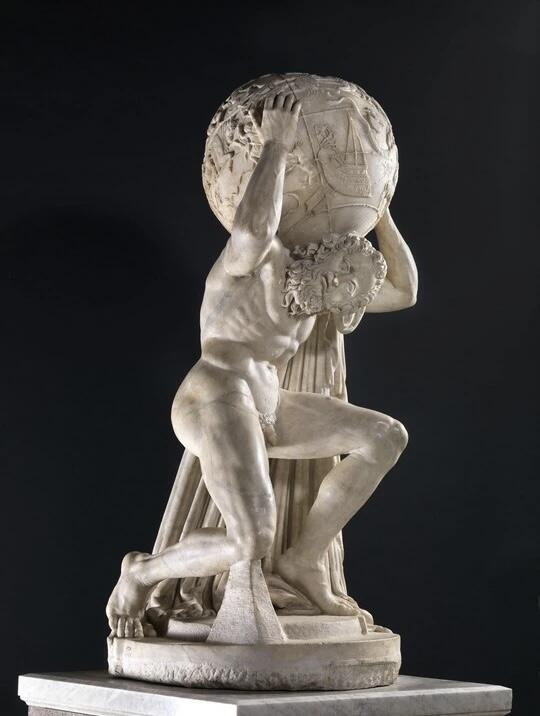
L’Éphèbe d'Agde est une statue en bronze datée du IIᵉ ou Iᵉr siècle av. J.-C.. (période hellénistique) et attribuée à l'école de Lysippe.
Elle fut découverte dans la rivière Hérault près d'Agde, France. De près de 31 pouces de haut, probablement d'un jeune prince, l'adolescent est représenté de manière noble, l'œil fixé sur un objectif lointain. La statue est notable pour son œuvre réaliste et détaillée, capturant la taille et le tonus musculaire, ainsi que les boucles fines des cheveux et les caractéristiques symétriques du visage. Sa présence naissante de puissance et d'élégance fait de lui un parfait exemple de l'art hellénistique.
#history #arthistory 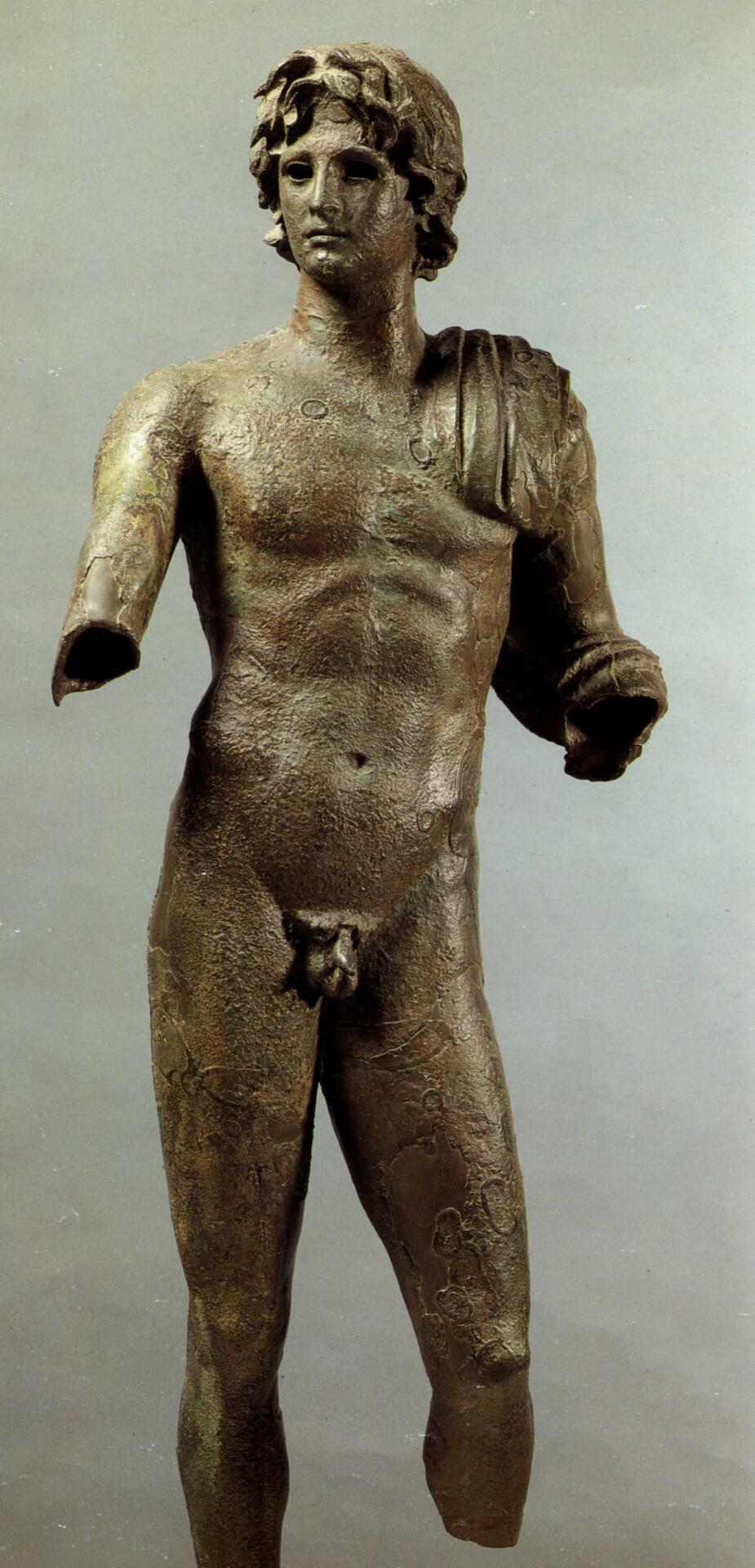
23 septembre 63 av. J.-C. : naissance de Caius Octavius, futur empereur Auguste. Bon anniversaire ! Photo de l’Auguste Prima Porta prise aux musées du Vatican.
#history 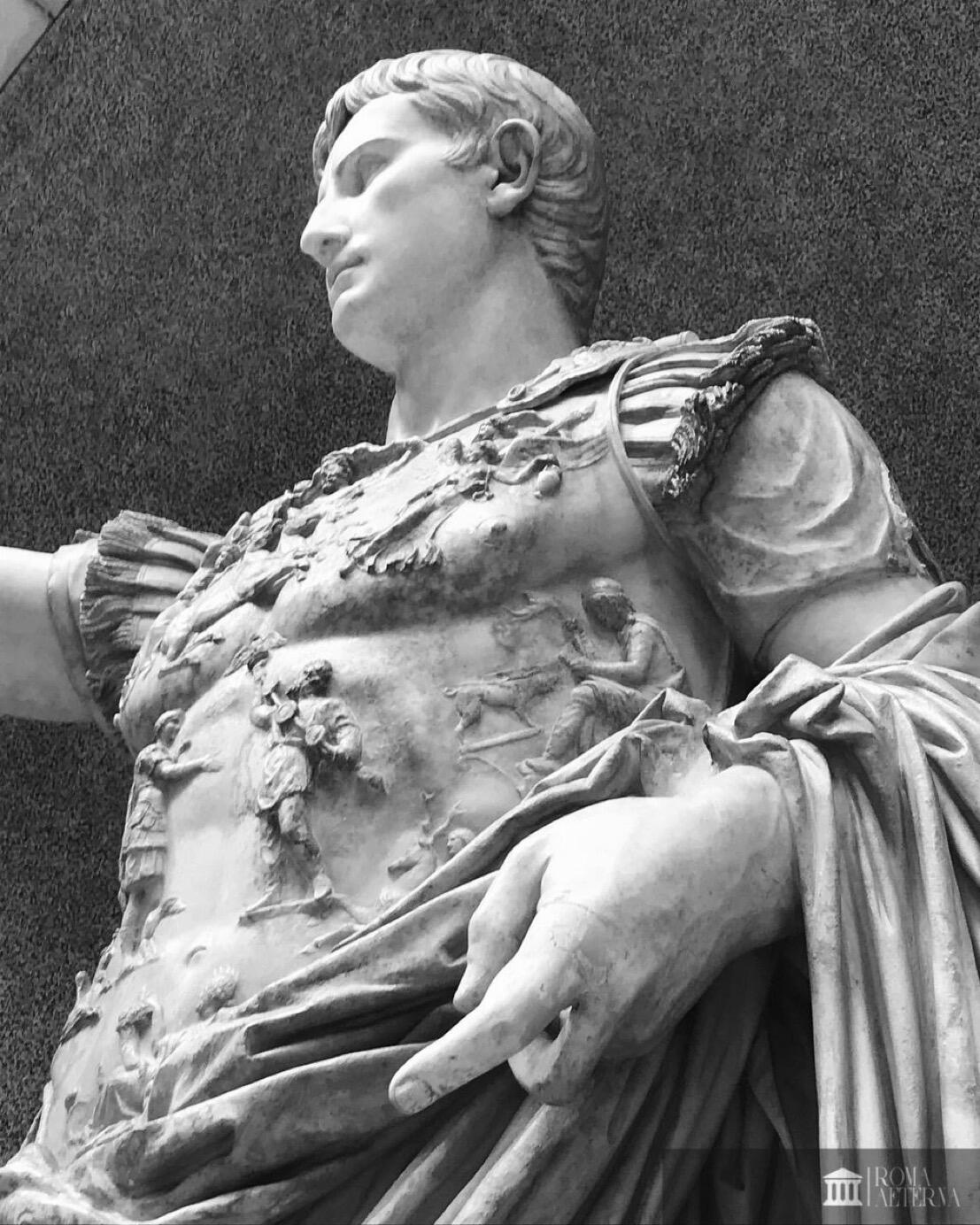
Appian Way (312 BC), considered one of most strategically important roads of ancient Rome, which connected Rome to Brindisi, in southern Italy.
Rightly called "Queen of the Roads", road was first built for military purposes during Samnite Wars. One of oldest roads in the world.
Appian Way is still preserved in stellar condition and now, you too can walk same path as Julius Caesar. Best place to see Appian Way is at Appia Antica Regional Park, through which it runs. 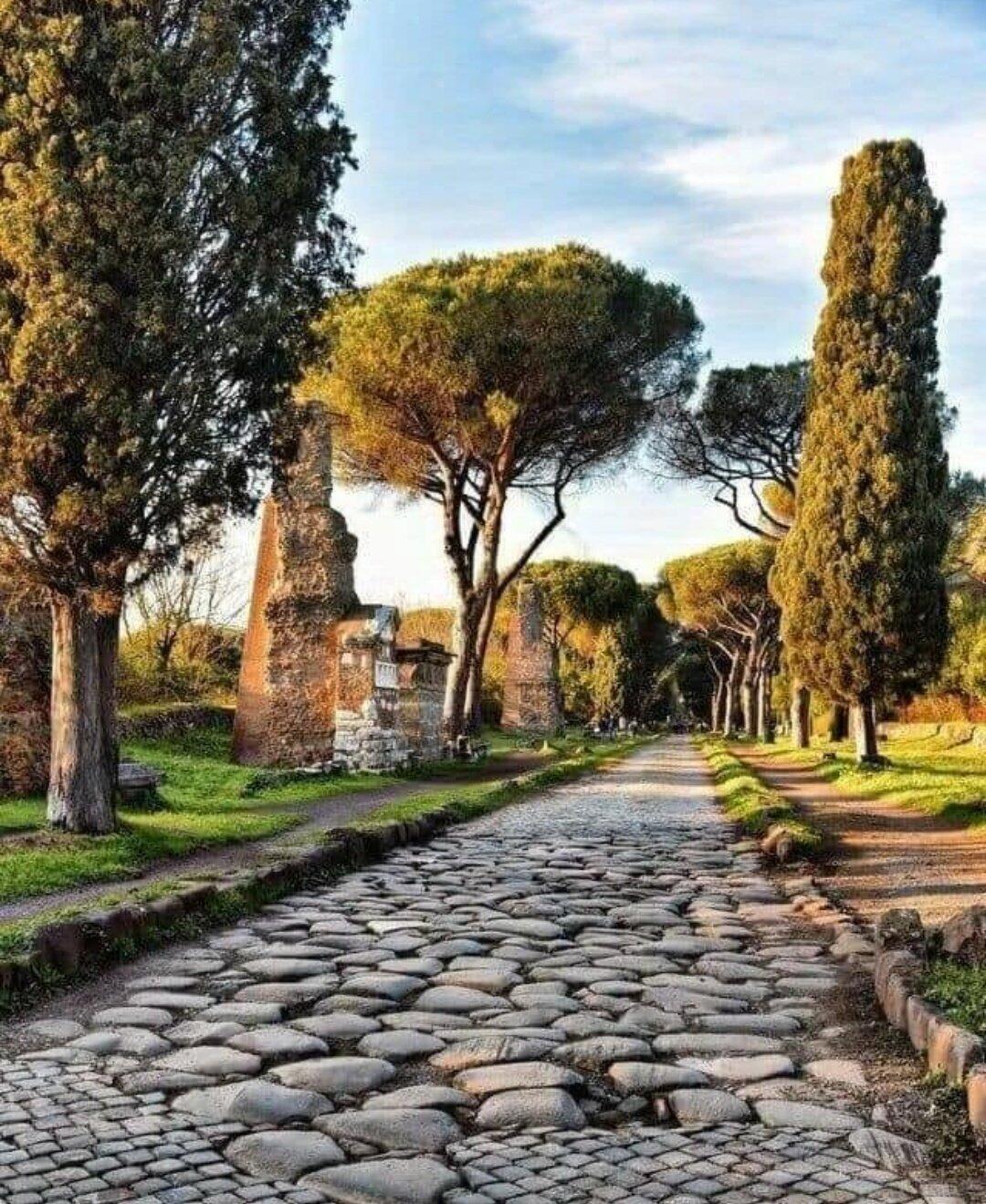
Tétradrachme figurant Héra Lakinia posant de trois quarts. Au revers Héraklès, tenant une coupe de vin, savoure un repos bien mérité, reposant sur la léonté, son arc et sa massue au côté.
Argent, Kroton, Grande-Grèce, début du IV. s av. J.-C.
https://x.com/heraklescithare/status/1705454666861912087?s=46&t=n1Azz6tsbB5OUie6BEKH9Q