



Gold is flat vs oil
But how about vs food?
I've researched this for discussions of fiat inflation, and even good food (eg beef) is cheaper in gold than it used to be
How about vs consumer electronics?
Definitely much cheaper
I think "money supply" is not the appropriate deflator, because a money supply that expands (as Bitcoin & gold are both still doing) more slowly than the population & productivity grow will gain in purchasing power despite "inflation"
But yes, most stocks & bonds will underperform just owning real money

Boom! headshot
I'd have gone Tribe or Tripe, then maybe I'd get Prune 3rd
Fragmented thinking is a bigger threat to flow state than interruptions
Comments ( https://news.ycombinator.com/item?id=40155713 )
All meaningful work is preparatory


Relations of Man
***Man to Self***
A) Value your own life
Man like all animals tends toward vitality
As man increases in vitality, he expands from survival to health to reproduction
B) Never lie to yourself
Man is both mind and body
Mind may focus on memory or imagination, but body exists in present reality
Therefore, mind must embrace truths & discard error if man is to succeed
***Man to Man***
A) Seek trade, not predation
There are two relationships of man to man
1) Predator/Prey - one suffers at behest of the other
2) Mutalism - both benefit by the relationship, as in trade or family
And a third category, that of no relationship
Human prey and predator are the same species
Modern weapons annul the advantages of size and youth
Social action, whether dressed as justice or revenge, further suppresses the benefits of predation
Thus the predator must risk his vitality entire to extract even marginal benefits
Consequently it is a losing game, and more could be obtained in voluntary trade
Avoid becoming a predator by deception or voluntary furtherance of another's self-destruction, lest one's partner consider himself prey and make war
In the case of organized predation, a few benefit at the expense of the many
If instead the many benefit from the few, the few soon disappear
Wisdom dictates strategy of prey: disengagement (either flight or peaceful disobedience), war or obedience
The few require the support of the many, thus widespread peaceful disobedience ends the organized predation
***Man to Nature***
A) Nature, to be commanded, must be obeyed
B) Men are part of Nature
Men are neither gods above Nature, nor spirits trapped within it, nor demons imposed upon it, nor refuse beneath it
Fun game, lots of interesting variation to be had by refraining from some of the shop items
Communism
Organized predation of the few by the many
In which the few either disengage (perhaps by flight) or are consumed, leading to expand "the few" to include new members and continue the predation. Eventually either reverts to ordinary statism (predation of the many by the few) or runs out of victims and collapses (or both).
“The problem with socialism is that you eventually run out of other people's money.”
-Margaret Thatcher
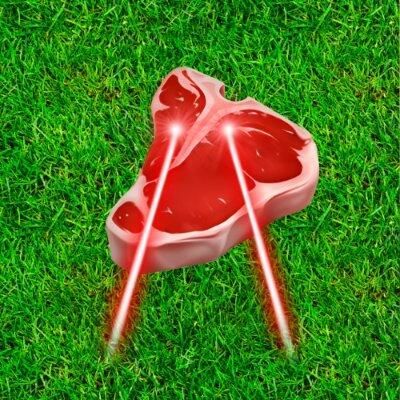
FUN FACT: every plant breaks down into sugar in your body. https://nostpic.com/media/a3ce3b178db030c5bdcddd1aa7c9a9127ecb17f16f7daaf5d8216860b7588d3c/de953c1ef4bfd66c9161737891acf0dd6d91e708c3cb2aa46ceaa01e2577c052.webp
if it can break down at all, yes



either is good
New York City didn't have a police department until the 1840s
Prior to that they relied on the English legal structure, namely ordinary crimes were mostly policed by armed private citizens. The main law enforcement officer was the sheriff, who was a servant of the courts. The governor could call in troops to quell a riot, but day-to-day life was largely free of law enforcement seeking out people to control them.
(Although there were some extremely statist periods during the Colonial Era as well)
IMO the great difficulty is coordinating revolt
the time to go was the 1930s when they shredded the Constitution (and thus killed the Republic)
now that USA is accustomed to unlawful government where do they draw the line?


our system is falling apart so we can't restrain ourselves to taking 100% of new productivity plus a further 2% of your wealth, we have to bump it up
Are you THE James Lindsay?
Or just a bot copying his Twitter.com posts?
In any case, it's cool to have you.
If it is you, I hope you'll devote more attention to the positive side of things (what is true and worth building/defending) as opposed to mainly exposing nonsense. I think the brief examination of American founding principles is incomplete without a justification for those principles.
You seem to be especially opposed to both national divorce as well as global government. How is it that USA is exactly the right size? Isn't that convenient? Would you tell an independent territory (say, BC breaks away from Canada) to join the Union?
It's Official: Scientists Confirmed What's Inside the Moon
Comments ( https://news.ycombinator.com/item?id=40147435 )
https://www.sciencealert.com/its-official-scientists-finally-confirmed-whats-inside-the-moon
This is junk science.
They took some very indirect measurements and compared them to models.

Hatred of people of Jewish descent is stupid and pointless
Hatred of Orthodox Judaism is completely sound and rational
“A thousand non-Jewish lives are not worth a Jew’s fingernail”
Rabbi Dov Lior,
Chairman of the Jewish Rabbinical Council
https://www.aljazeera.com/news/2004/5/20/rabbi-supports-killings-in-rafah
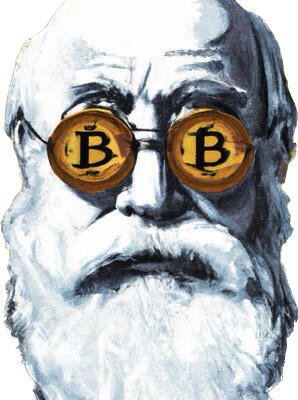
Bitcoin is a trillion times more scarce than gold.
I have yet to see even an ounce of Bitcoin.

Why would they liquidate everything and go 100% Bitcoin?
And who is buying the world from them?