Profile: fa7f077b...
Programmers prioritize the feeling of productivity over productivity itself. They prefer to rewrite a codebase with tools they are comfortable with (thus, feelings) even if ROI is years away, instead of e.g. fixing a bug (actual productivity).
This organization wants to create tech that can't get acquired or abuse its users. Commendable, but so was Google's "don't be devil" in the early days.
Pledges in themselves aren't enough. They would have to be legally binding pledges.
Wanted: a "diff" tool that tells me how my operating system currently deviates from the default state once freshly installed. I don't want to start clean and reinstall the things I like, I want to remove only the things that I don't like.
nostr:npub1mh5a6mhm4u78glqxhltq7uexv6kddphycthlguvn0ux8ch72tc8q6q233h Hang on, Bretton Woods agreed on using gold, NOT the USD. It was only until 1971 that the USA decouple the dollar from the gold.
Let me remind you that from 1944 until late 60s the Soviet Union just kept expanding and the USA was basically losing the ideological battle in the cold war. A lot of things changed around 60s and 70s and that's when the US started shining and the soviets decaying.
In no way did the immediate aftermath of WW2 point to USA hegemony.
nostr:npub1mh5a6mhm4u78glqxhltq7uexv6kddphycthlguvn0ux8ch72tc8q6q233h Apart from nukes, America's role in WW1 and WW2 were anecdotal. Basically insignificant.
WW2 was a soviet success, Hitler was constantly and primarily concerned with the soviets. Also in numbers you can see that the most amount of deaths were soviets. They fought and they won.
(I am not endorsing soviets in anyway, just highlighting facts and showing how USA was not that influential in WW2 and especially not WW1)

nostr:npub1u6hlr89m3y934u5dg92a4r56kpeeu0j4gf6sz64mr8djfz3gnw9stlv9ag LOL I walk around with goggles strapped to my face and code using a mini keyboard. I'm pretty far from the definition of human though. Personally AR that magically overlays stuff is overrated, just having windows floating in my field of view has been great.
nostr:npub1t8rvt8pwj4el0p7zav09f5fzmg07837z486qr8vpgc5h4608dd6q2wrvnw yeah I know, but I said "humans" as in "mainstream people". I bet that whatever technology will always have a non-zero amount of people who love to use it, but that doesn't guarantee mainstream.
With an AR windshield, you can get rid of the "actual" dashboard and other screens, increasing the driver's focus on the horizon. This should be overall safer, not less. And I assume inputs should be with physical buttons on the steering wheel, or with your voice.
Because you're not driving alone, the passenger seat has their own AR interface, and because you share the same windshield, this could be a social thing. Maybe you're playing a chess game with them, and whenever the car detects that you're driving in safe conditions (or the car is stopped), it's your turn to play.
When driving in the city, the AR windshield is minimalist and just shows your speed and other essential dashboard information. But whenever you stop at traffic light, the AR windshield fills up with a bunch of notifications and information you're interested in. Or maybe it just opens up the previous app you had open, letting you continue a train of thought.
Let's dream about this for a while, shall we?
You're traveling a far distance and there's a lot of boring ground to cover, but there's a succession of billboards every 100 meters, showing one sentence each. You're reading a book like that. By the time you arrive at your destination, you read the whole book.
Humans are never going to be walking around with huge computer goggles on their faces, and that's because humans already do that, and it's called *cars*. Cars are a bigged opportunity for AR, and it's just a matter of doing the HUD on the windshield properly. You have everything you need: established adoption, plenty of space for a beefy CPU/GPU, and people get bored in cars, or waste time. And virtual billboards shouldn't distract drivers any more than actual billboards do.
I bet the top 100 university textbooks (across all fields) are probably more informative than the entirety of the internet's "tutorials" and articles combined.
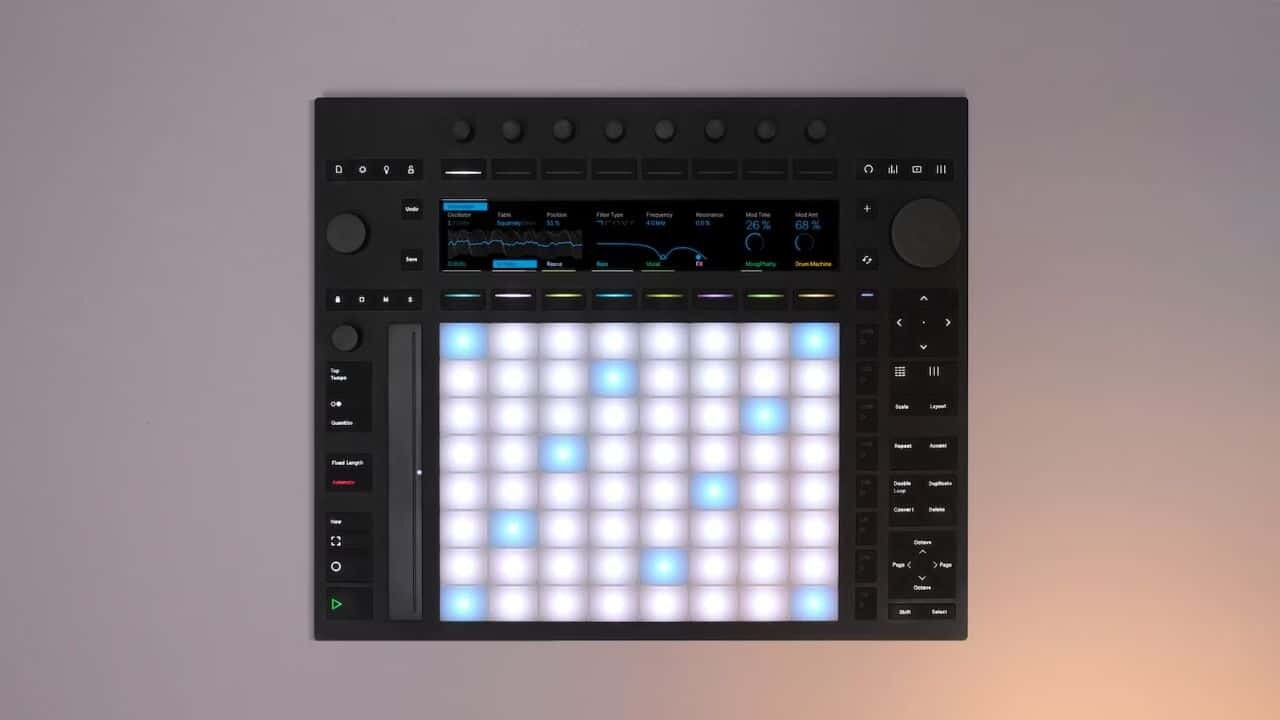
Ableton Push 3 mimics the LinnStrument layout of notes, and MIDI MPE. I think spreading the LinnStrument notes layout is great for the music industry, can't wait to see others copy that idea and improve on delivering it. I think the piano layout is comfortable to play but not easily learnable on all musical scales (see counterexample: Jankó piano).