





Not helpful. Another person just posted this:
https://twitter.com/TheChiefNerd/status/1761129932929868192
If you have any rebuttals please share. If you’re just going to get triggered and post links to garbage Wikipedia pages then you’re just wasting my time.
Gaining some basic knowledge should be indeed helpful.

Long but funny and interesting story (taken from elsewhere):
The Horse Manure Problem of 1894
The 15 to 30 pounds of manure produced daily by each beast multiplied by the 150,000+ horses in New York city resulted in more than three million pounds of horse manure per day that somehow needed to be disposed of. That’s not to mention the daily 40,000 gallons of horse urine.
In other words, cities reeked. As Morris says, the “stench was omnipresent.” Here are some fun bits from his article:
Urban streets were minefields that needed to be navigated with the greatest care. “Crossing sweepers” stood on street corners; for a fee they would clear a path through the mire for pedestrians. Wet weather turned the streets into swamps and rivers of muck, but dry weather brought little improvement; the manure turned to dust, which was then whipped up by the wind, choking pedestrians and coating buildings.
. . . even when it had been removed from the streets the manure piled up faster than it could be disposed of . . . early in the century farmers were happy to pay good money for the manure, by the end of the 1800s stable owners had to pay to have it carted off. As a result of this glut . . . vacant lots in cities across America became piled high with manure; in New York these sometimes rose to forty and even sixty feet.
We need to remind ourselves that horse manure is an ideal breeding ground for flies, which spread disease. Morris reports that deadly outbreaks of typhoid and “infant diarrheal diseases can be traced to spikes in the fly population.”
Comparing fatalities associated with horse-related accidents in 1916 Chicago versus automobile accidents in 1997, he concludes that people were killed nearly seven times more often back in the good old days. The reasons for this are straightforward:
. . . horse-drawn vehicles have an engine with a mind of its own. The skittishness of horses added a dangerous level of unpredictability to nineteenth-century transportation. This was particularly true in a bustling urban environment, full of surprises that could shock and spook the animals. Horses often stampeded, but a more common danger came from horses kicking, biting, or trampling bystanders. Children were particularly at risk.
Falls, injuries, and maltreatment also took a toll on the horses themselves. Data cited by Morris indicates that, in 1880, more than 3 dozen dead horses were cleared from New York streets each day (nearly 15,000 a year). 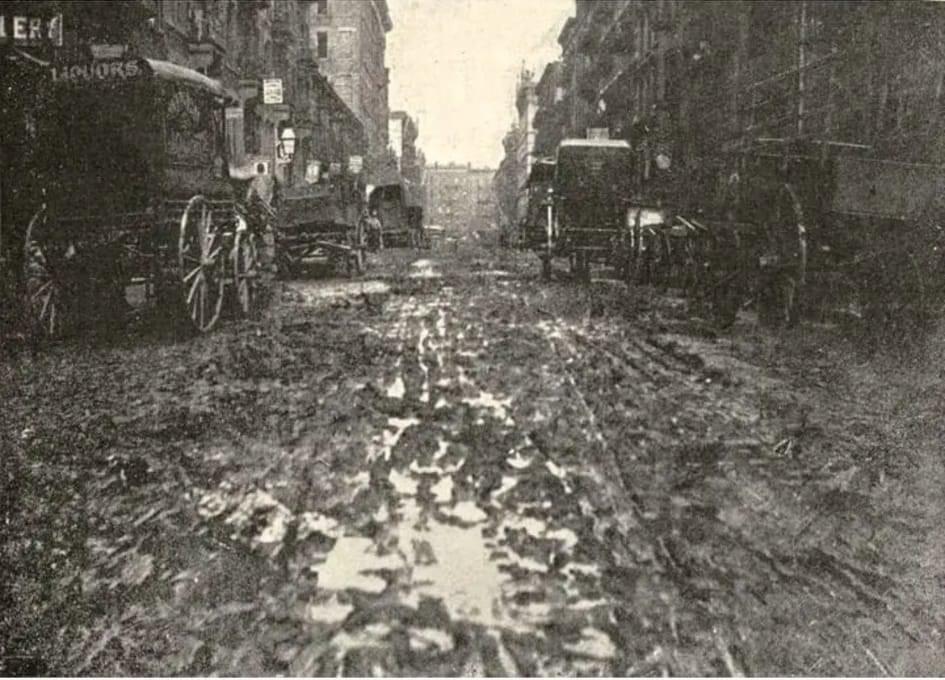
Start reading here: https://en.m.wikipedia.org/wiki/Immune_system


64 living Indo-European languages (around the outside), as well as many dead and extinct languages.
Moving into the image from the outside, we travel back in time, until we reach the core of the image, wherein lies Proto-Indo-European. Experts suppose that PIE was spoken somewhere around the border of Europe and Asia and diverged into the 10 inner Proto languages shown here 4500+ years ago (or maybe more).
There are about 380 Indo-European languages missing from this image. The Indo-Iranian branch is the largest, actually accounting for around two-thirds of Indo-European languages.