
From: mikedilger at 10/12 21:30
> Until 3 days ago I was pretty settled in my view that Hamas is a terrorist organisation using barbaric tactics. Only in the last 3 days has that view changed based on lack of evidence (among much evidence). I am now uncertain, and seeking more evidence.
You are uncertain whether the attack last week was barbaric?
> Fatah was the party that championed a diplomatic solution. They rule the West Bank, which Israel cuts into smaller and smaller pieces (diplomacy didn't work).
Well...sort of. I mean, there were a lot of weddings, busses, and lunch bistros that were blown up by suicide terrorists coming from the West Bank. And Fatah seems willing to celebrate the attack by Hamas and encourage more such attacks.
> Hamas was the party that championed violent resistance. They rule Gaza and promise to get revenge on Israel. They have super-majority support in Gaza. You might think that is stupid, since any attack of Hamas will cause a much worse retaliation by Israel, but this is what the people of Gaza want. Perhaps more than their own lives, they seem to want revenge.
All true. To quote them: "We love death more than you love life."
> People were on the land before the people of Israel conquered it (they were not "given" the land, they killed people to get it, Caananites and many others as I recall, with some Ark of the Covenant supernatural device, right? ;-). And many people were on it since.
Certainly true. That's why I said that was a biblical story. Biblically speaking, God gave that land to the children of Israel. Of course that meant they had to take it by force. (For what it's worth, I'm neither Jew nor Christian. My opinions are not based on the Bible.)
> The levant wasn't "pretty deserted". People had been inhabiting it for thousands of years, as you mentioned earlier in your post.
Those were Mark Twain's words, and his perception as he toured the area in the 1860s. At that time the region of Palestine was governed and owned by the Ottomans. In the late 1800s funds were raised by Zionists to purchase tracts of lands from the Turkish land barons who owned it. The Zionists set up one settlement after another. Some failed, some flourished. The more that flourished the more attractive the land became to other Jews and Arabs. There was a significant increase in both populations.
>From 1881-1903, about 25000 jews immigrated there. From 1904-1914 another 35000 arrived. By 1922, the population was up to 11% Jews and 89% Arabs. That means there were still far more Arabs there even after those waves of immigration. Data from: https://en.wikipedia.org/wiki/History_of_Palestine
Correct. In the late 1800s Jerusalem held 4,000 Jews, 3,500 Christians, and 13,000 Arabs -- a rather small town of 20,000. That may be one reason why Twain chose the words he did.
The population of the area increased rapidly after that. And the demographic ratios shifted. Jews were 11% in '22, 17% in '31, and 30% by '47. By then the population was close to two million. 630,000 Jews, 143,000 Christians, and 1.2 million Arabs.
This shift was not due solely to natural population growth. Much of it came from different rates of immigration. The Arab population grew from half a million in 1890 to 1.2 million 57 years later. The Jews grew from 43,000 to 630,000 during the same period.
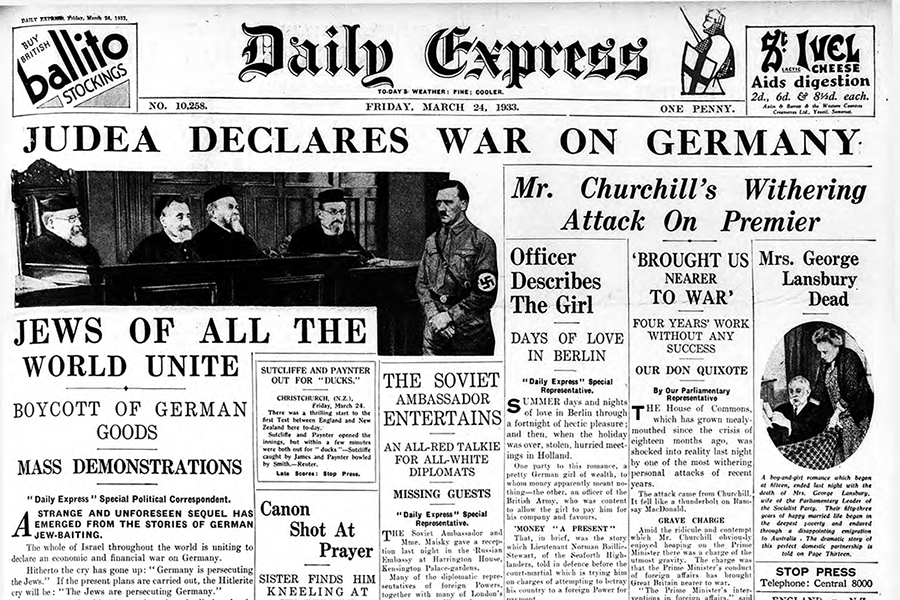
There was unrest between the two groups pretty much from the start, but it was exacerbated by Nazi propaganda during the '40s. European Jews, fearing Nazi advances, fled their homes. One of their destinations was Palestine. The British, already stretched thin, would not tolerate the anticipated increase immigration, and so barred the area to immigrating Jews, but not to Arabs. Some Jews came anyway and snuck in one way or another. Those who were caught were imprisoned, by the British, in Mauritius.
The Brits, who had taken the area from the Ottomans after WWI, turned the area over to the UN after WWII. The UN plan was to divide Palestine into six areas; three for the Jews and three for the Arabs. Jerusalem was to be kept neutral and governed by the UN. The six areas were not contiguous; there were "pinch points" where the touched.
The UN General Assembly voted for this plan. The Jews accepted the plan and declared the state of Israel. The Arabs were horrified and a civil war broke out between the Jews and Arabs in Palestine. The Arab League nations who bordered Palestine: Egypt, Transjordan, Syria, Lebanon, and Iraq, attacked simultaneously. The Israelis rallied and pushed all five of the attackers back beyond their initial borders and gained a cease fire.
In short, it's a fascinating history, with lots of twists and turns. It is nowhere near as simple as either side would like it to be. The Jews are right about one thing. If the Arabs laid down their weapons there would be peace. If Israel laid down their weapons there would be no more Israel.
CC: #[4]
CC: #[5]