
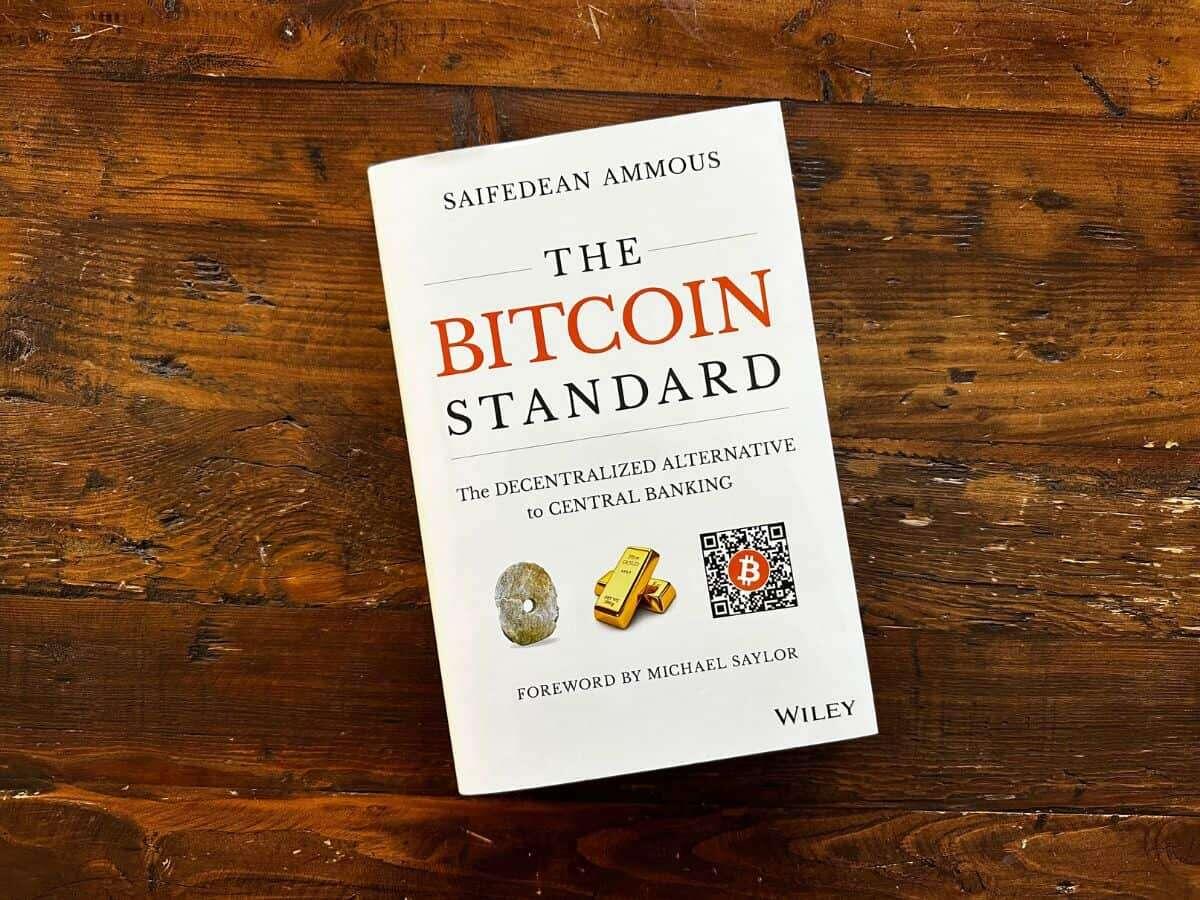

Ammous doesn’t understand the different between art and craft.
Discussion
It's funny because I was arguing recently that the overall idea of the book was flawless but you might be able to find some opinions on arts and such to critic.
I heard the art thing a few times but I don't remember this part in the book. If you have a particular passage I can read I'd like to. I myself built a better understanding of the difference between the 2 since I read it.
I’d have to go back and check but I gave up on the book at that point. I mean fair enough not knowing the difference but if so, no need to write about it imo.
probably this bit (p148ish):
"A stroll through a modern art gallery shows artistic works whose production requires no more effort or talent than can be mustered by a bored 6‐year‐old. Modern artists have replaced craft and long hours of practice with pretentiousness, shock value, indignation, and existential angst as ways to cow audiences into appreciating their art, and often added some pretense to political ideals, usually of the puerile Marxist variety, to pretend‐play profundity. To the extent that anything good can be said about modern “art,” it is that it is clever, in the manner of a prank or practical joke. There is nothing beautiful or admirable about the output or the process of most modern art, because it was produced in a matter of hours by lazy talentless hacks who never bothered to practice their craft. Only cheap pretentiousness, obscenity, and shock value attract attention to the naked emperor of modern art, and only long pretentious diatribes shaming others for not understanding the work give it value."
he has a point but also illustrates his fundamentalism. the inability to steelman another perspective is weakness or not great intent. for example Austrian economics still does not offer a solution to "tragedy of the commons" problems like environmental pollution or climate change. I'm early in my readings but it seems externalities are not addressed.
I agree with all of this. He puts enough caviats like "*most* modern art..." that im confident I can agree with all this.
His overall point is that art used to require talent to be appreciated at the highest level. Talent that requires work and time. Now what is being appreciated is the cleverness of the joke or the shock value. Which may make sense in some cases but probably not in most cases.
If there wasn't that much cheap money flowing around I don't think this specific type of art would see that much money flowing towards it.
I feel like he steelman them enough by saying their value is in the intellectual interpretation rather than the beauty reached by sheer mastery. I don't think those people would disagree themselves.
The only thing is that saifedean add the opinion that it is a cheap intellectual interpretation and I would tend to agree in most cases. But im also not a professional and may not have seen that the vast majority of modern art are exceptional in their meaning.
As for austrian economics and externalities, Austrian economics is not a field that ought to answer how we deal with such things. It is merely the study of human action under scarcity. It's not something you decide to adhere to to run your society. It is merely the truth. How we ought to deal with pollution is much more of a politic problem and saifedean simply haven't written on that.
But some austrian did write a few things about this:
“The remedy for air pollution is for the courts to recognize air pollution as an invasive act, and therefore subject to prosecution as a violation of property rights. The remedy is simply to extend the prohibition of aggression to include aggressive assaults against the air and atmosphere.”
— Law, Property Rights, and Air Pollution (1982)
There's probably a lot more that can be found about this.
Yes, agree, a crap conflation on my behalf.
What is the difference between art and craft?