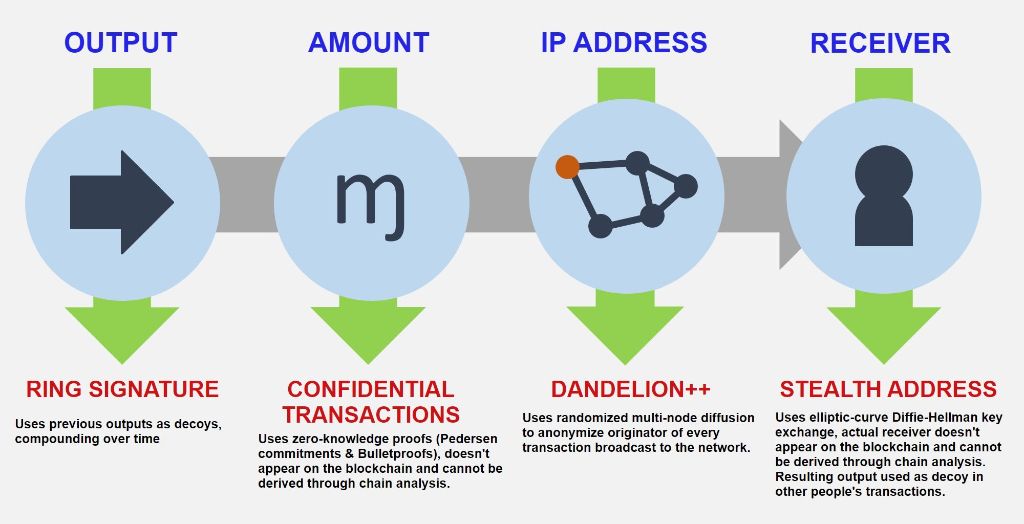
In a nutshell the means of receiving and sending is more privacy centric with Monero
The Bitcoin ledger allows tracing addresses through transactions back to their original issuance. This helps perform verification at the cost of privacy on that backward history as entities can log what they know about sender/receiver.
Monero uses a ring signature format which helps make those transactions more confidential for spends. Think of a group where anyone can sign but you cant ascertain who in the group actually signed. The amounts are also hidden and for receiving stealth addresses are used.
For Bitcoin to achieve some pseudo-privacy requires various forms of obfuscation. Commonly mixing and coinjoins, stonewalls, send to exchange/federation/hub and withdraw (that central trust point can in some cases correlate depending on time in and amounts), swap to other coin(s) and back