Replying to Avatar Rock

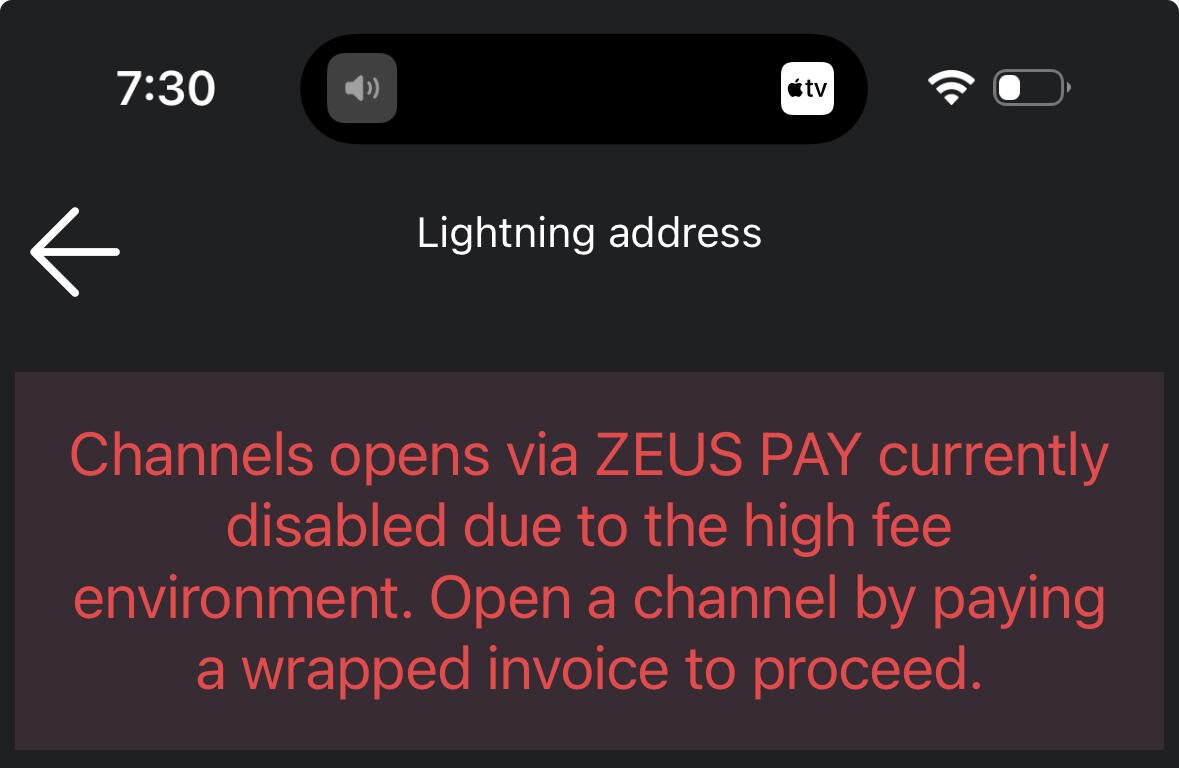
nostr:npub1xnf02f60r9v0e5kty33a404dm79zr7z2eepyrk5gsq3m7pwvsz2sazlpr5 sent sats to kickstart new wallet. Receiving message about high fees and the funds appear in limbo. Definitely not a great first time onboarding experience for a customer đŸ˜”

For most people this is the first time ever hearing the word “wrapped invoice.”

Nobody understands what this means.

It’s also probably not intuitive to most people who are coming from custodial wallets that they need to fund a channel with a sizable amount of sats (that they likely don’t have available) in order to start using it.

What’s the best way to overcome these obstacles?

Reply to this note

Please Login to reply.

Discussion

I am not a Lightning user because I don't think BTC is for spending, but I think a simple terminological shift could be beneficial. If people have trouble conceptualizing "funding channels", try call it "topping up accounts".

Debit cards, phone cards, transportation cards... all have to be topped up (or at least can be). Most people are familiar and used to this concept. If the mechanics/UX in Lightning can mimic that, it should work.

That’s an interesting analogy but it breaks down when the goal is to show someone how to receive a zap. If you can’t receive without first paying to open a channel, that’s friction.

I explain it to my bartenders as the same preauth they do when they open a tab for a customer. But now imagine that the bar has a business to business tab open with the bar next door. The customer goes next door on his pub crawl and wants to pay them. Customer authorizes withdrawal of the funds from the tab they already have open at the first bartender's bar with a secret. The money transfer occurs between the open tab then the b2b tab after the validation.

Oddly I find bartenders get that analogy easily. Especially those that work at places with multiple bars in one complex and they each have their own bank that doesn't allow tabs to be shared across bars.

While they get it they don't consider it optimal. The permissionless trustless concepts seem to mean nothing to them. The world has gotten used to hub and spoke.. A centralized processor. And they've yet to realize how that is the problem.

Almost nobody spends any time thinking about how money and payment systems work.

My take: it begins with customer segments and user personas. One UI/IX will not fit all. Noobies and power users are the two obvious personas. If one wallet is to serve both, then we need modes of operation. More likely, different products and service will serve different customer segments.

Relai, for example, does a great job catering to normies, as does Strike.

Of course, the trick is that in Bitcoin, we have the additional, crucial dimension of custodial vs non-custodial.

Totally agree on the technical jargon. Like “wtf is a wrapped invoice!?” Especially when it’s positioned as a tool to solve a problem state the app has gotten you into in the first place.

On the question of how to overcome:

Know your customers; from the newbies to the most tech savvy and understand the job you need to do for them.

For the newbies, this probably looks a lot like very guided and paced onboarding starting from the place of this customer coming to us with no sats and looking to setup what could be their first wallet.

Guidance, confidence building and a careful creation of a journey are the keys to successfully helping folks who are new to our space (most everyone in the world) be welcomed and have a great experience.