I have heard, that this Friday will be especially Good.
GF, everyone.
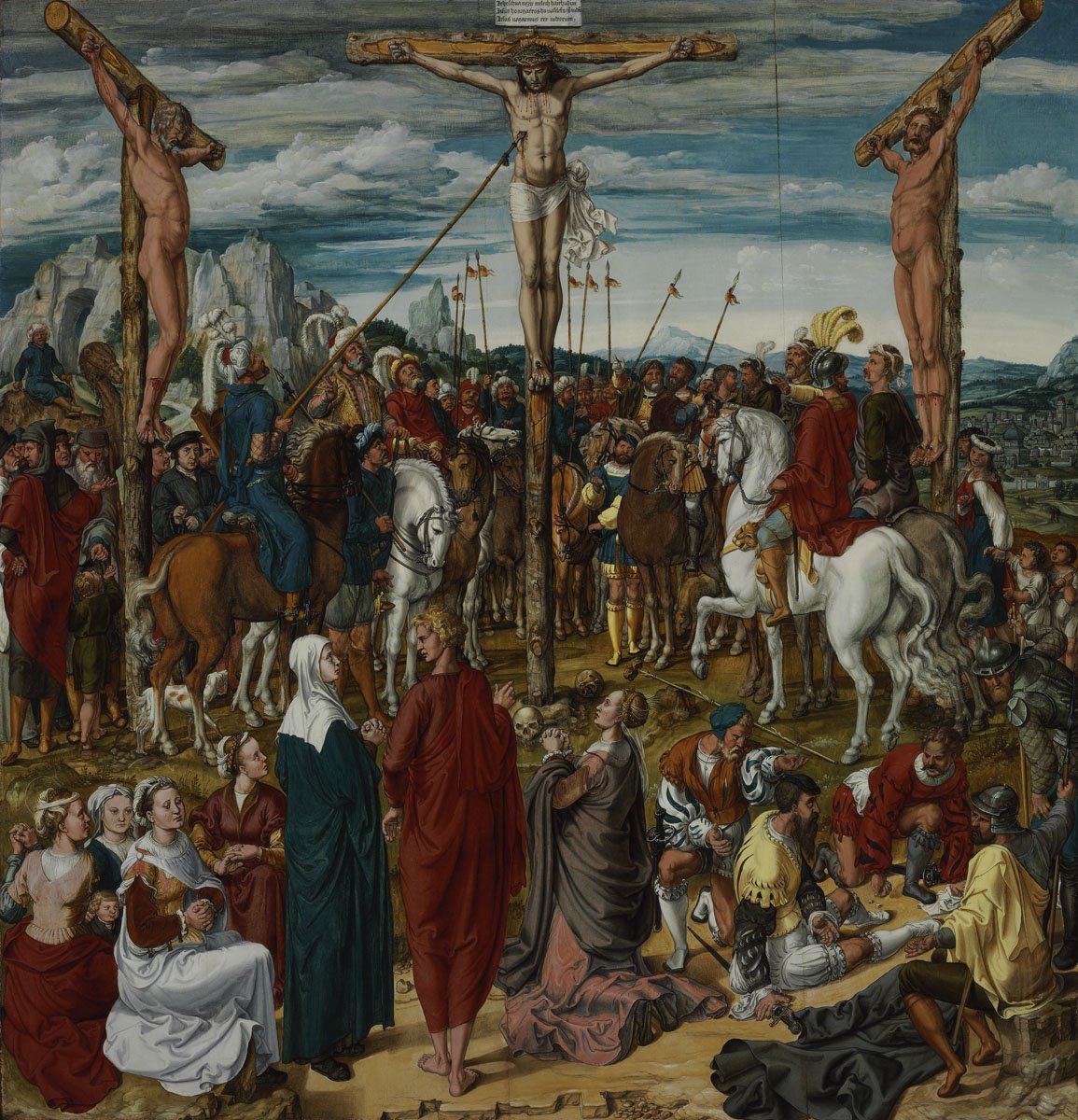
#catholic #christian #biblestr
I have heard, that this Friday will be especially Good.
GF, everyone.
#catholic #christian #biblestr
GF 🙌🏻
GM! Happy Friday! 💜
Da habe ich eine passende Buchempfehlung.
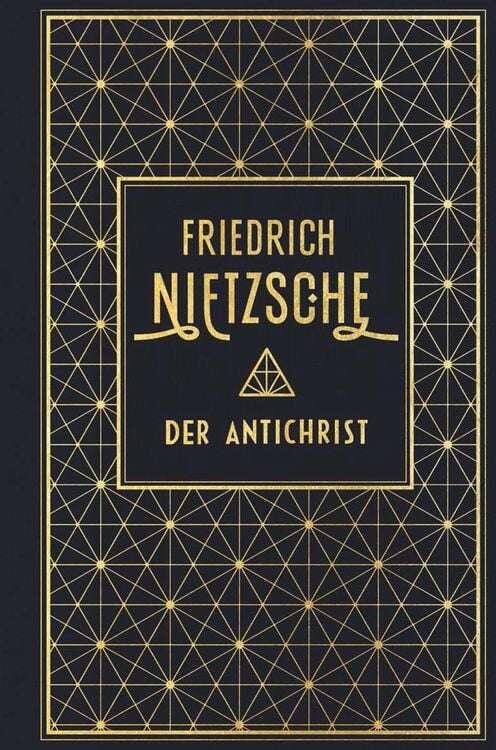
Charming, how you assume I haven't read Nietzsche. My handle checks out.
Have you read St. Augustine?
many people read him and still think he is an atheist rather than a rebel against secular authority
or more exactly "liberal" christian orthodoxy
having grown up a protestent (SDA) i can say from recent experience that their version of God is dead, like a dessicated mummy
or more exactly they worship *their* translation and interpretation of the Book, which is dry and dessicated, by nature
> Man verliert beim schlimmen Ausgang gar zu leicht den richtigen Blick für das, was man tat: ein Gewissensbiß scheint mir eine Art »böser Blick«. Etwas, das fehlschlägt, um so mehr bei sich in Ehren halten, weil es fehlschlug – das gehört eher schon zu meiner Moral. – »Gott«, »Unsterblichkeit der Seele«, »Erlösung«, »Jenseits«, lauter Begriffe, denen ich keine Aufmerksamkeit, auch keine Zeit geschenkt habe, selbst als Kind nicht – ich war vielleicht nie kindlich genug dazu? – Ich kenne den Atheismus durchaus nicht als Ergebnis, noch weniger als Ereignis: er versteht sich bei mir aus Instinkt. Ich bin zu neugierig, zu fragwürdig, zu übermütig, um mir eine faustgrobe Antwort gefallen zu lassen. Gott ist eine faustgrobe Antwort, eine Undelikatesse gegen uns Denker –, im Grunde sogar bloß ein faustgrobes Verbot an uns: ihr sollt nicht denken!
Nietzsche, Ecco Homo, Warum ich so klug bin?
He was definitely an atheist.
the text you quoted definitely said "inclined" not "is" which is an important distinction
and his concept of "conscience" was more like prescribed morality of corrupted religions
he was an individualist, like many philosophers at the time, and religion was a strawman that represented the concrete manifestation of corruption
nostr:npub1cxp3l03x20mkzezzr4takm8w8zuva7xwvacmcewp97z58hjt8xls3mexlq would concur that protestant religion had a distinct statist-authoritarian inclination and protestantism came to quickly dominate the christian world of northern europe.
i mean, even the name of the dominant english protestant church was named after the state itself, since after all, england was really just the little part of the island dominated by London, there is wales and scotland and really, much of the northern parts of england, starting somewhere around Oxford, shades into a different culture, you can tell just by the way they speak so differently (and liverpool is like an outlying outpost of the scots, man, street liverpool people speak so incomprehensibly).
and why was there protestantism? because catholicism had been conceived from the start as an apparatus of the state and especially spain but also to a lesser extent italy pushed it in this direction and that's what the protest was about
now, don't confuse what i'm saying with the statement that "Christianity is authoritarian" because it's not, and even through the distortions created by both catholic and protestant religions cosy relationships with governments, the message still shines through, and to circle back to the original point, what Frederick Nietsche was protesting against was this, so he was inclining towards rejecting the whole thing altogether.
The word Christ and Messiah, and even the word Buddha means a person who is wise in the ways of God, and through the people who were given this title, a bulwark of defense against evil was maintained and cultivated, and especially in places far from the centers of government, which parasites off business (ie, mercantilism, aka fascism) its true nature is more visible.
one of the important things about this Way of God is that it is individualistic, every person matters, that's why stuff like Maundy Thursday, the constant use of the word "fellowship" and the fact that outside of the baleful influence of governments and their mercenaries, society is glued together by the Church. I also believe to a large extent that Buddhism and Taoism were the asian forms of this, since they have a different culture and temperament, their forms of the Way have a different, more poetic or philosophical grounding, and especially Taoists don't even project this to a person, it is a pure concept, the Tao is their understanding of what God is.
i strongly disagree that there is any functional difference between the pure meaning and intent and even the words are the same, Taoism means following the Way, and the Way is one of the titles of Jesus and it's intended to mean that if you follow what they taught, it is the same, you are one of the Elect and ... well anyway, i'm kinda rambling on a bit now
the point is that individualism is central to the Way, it is literally a set of guidelines about how you become a better person and improve the world around you. and i do believe there is a life after this one and that due to various artifacts of history and the very ancient cultures that first discovered this wisdom, that there is indeed resurrection and a second, practically speaking eternal life to come.
anyway, yeah i rambled a lot there lol
that reminds me
Buddhism did not have a concept of reincarnation, that is Hinduism
Hinduism was the prevailing religion that took over India and the concept of a free next life was a way to make the people accept being part of an authoritarian system. Buddhism taught that you have to earn it by freeing yourself of your attachment to the world you are in. "Be in the world but not of it" means the same thing.
he didn't say "God isn't real" or "God doesn't exist"
he said he is "dead"
as though implicitly he acknowledges the existence of God
good answer here that explains this angle:
his statements in his writings more concur with the interpretation that the society he lived in had "killed God" than that he rejected the idea of God existing.
as it points out in that answer, he also was mad about the state of physics at that time as well, and there's another author who was similar, whose writings gave us "rabbithole" and many beautifully framed conundrums in fictional form about the problems of quantum physics and at that time, many spooks (Lewis Carroll).
even today some branches of physics are obsessed with answers to the question of where the source of energy comes from in the universe pointing at this "dark matter" and "dark energy" hooey, when, in my humble opinion, it is obvious that the universe is in a constant state of expansion, the driving force of it, and this nonsense about "the big bang" and the "big crunch" are also examples of this nihilistic, nonsensical idea that entropy, which they frame as being something like evil, prevails in the universe
it doesn't prevail, no different to the fantasy of the angel Lucifer who believed he was better than the creator of everything. it is merely the whetstone against which good must always sharpen itself (and as an amateur cryptographer, i would say that this is the most correct interpretation of what entropy actually means - the punishment for a lack of vigilance and ambition).
The book recommendation is aimed at everyone. 😸
Apart from that, I am not interested in dogmatic Christian teachings or the church.
Had enough of it in my youth.
No, I have not read the books of a "saint" Augustine.
gf ✌ hope your weekend is especially blessed
GF