#breadwithme note #3
(see note 2 below)
Autolyse time is up. I didn't keep track specifically but I got the rest of the kitchen cleaned and sat down for about 20 minutes to rest with TV and knitting. I get tired so easily with this 36 week bowling ball of a baby attached to me.
Before I get started with what is arguably the most involved part of this whole process is to gather all the things I'll need. I measure out the salt 7.5g and grab the room temp butter and a butter knife. I fill a jar with water for wetting my hands. I fold up a towel that I'll put under the bowl to keep it from sliding and knocking on the counter. I grab my kitchen timer and set it for 15 minutes and I also get ready to start a stopwatch on my phone to keep track of total bulk fermentation time.
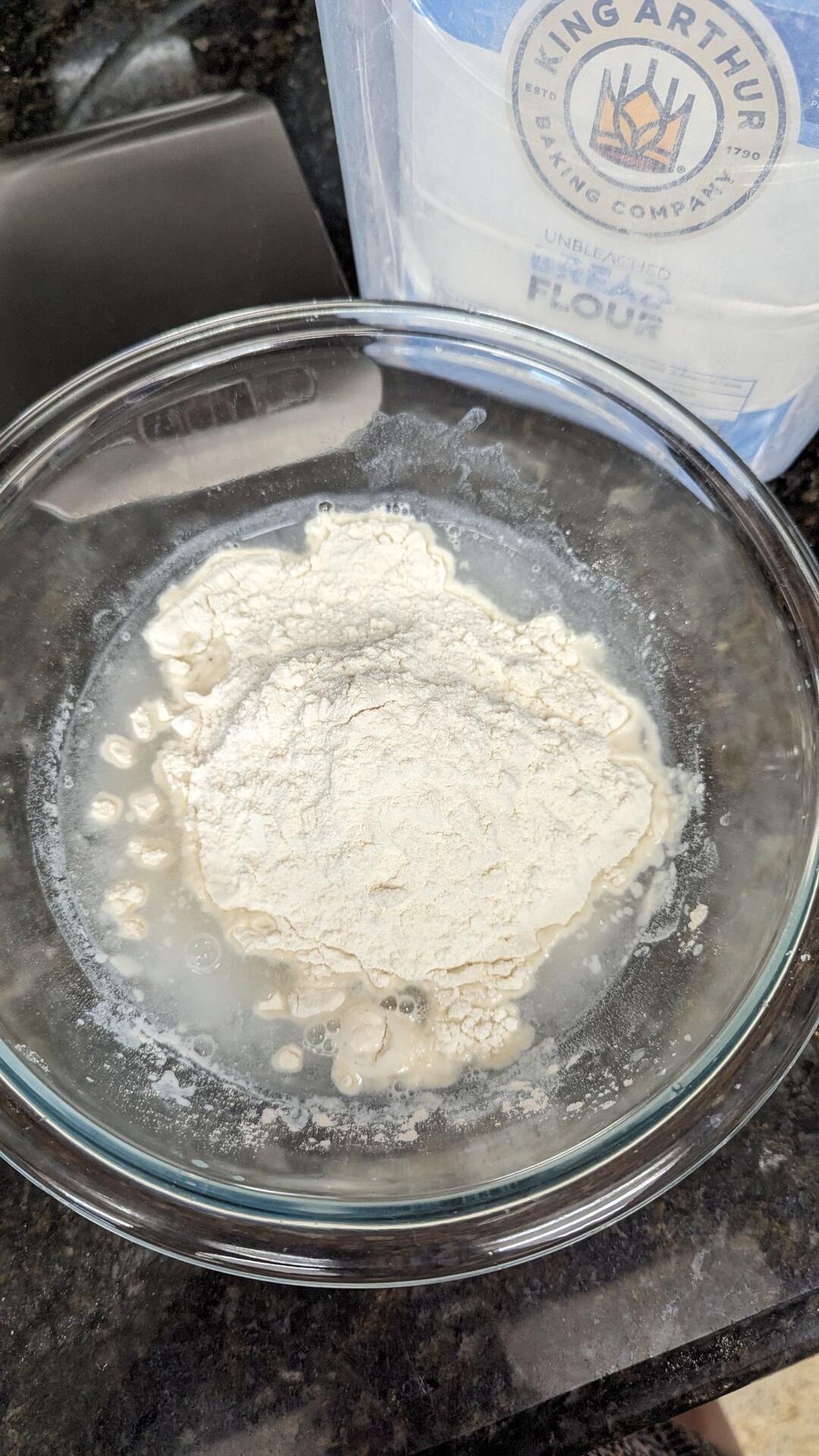
To kick it off, I measure 60g of levain right onto my autolysed dough. When the levain touches the dough is when I start the 15 minute countdown and the stopwatch.
 #m=image%2Fjpeg&dim=1080x1920&blurhash=%5DCGuq1xw9H8%7BIB%25h9a-%3AIVoI0056%7EpX4xsxBozXAxtM%7CnP%3FbIWxvWEJD%3FbE1tQxtEN%25ME1t6t7W%3FxuRjaxbcM%7BWCofofRj&x=b5aa53130176a08b8f93515af316345843cc1a6271c625753ff1647768f32941
I start off by mixing with the dough spatula cuz I'm not a fan of touching the starter directly. I'm weird like that. After it's incorporated a little more into the dough, I wet my hand by dipping it into the jar of water and letting the excess drip off.
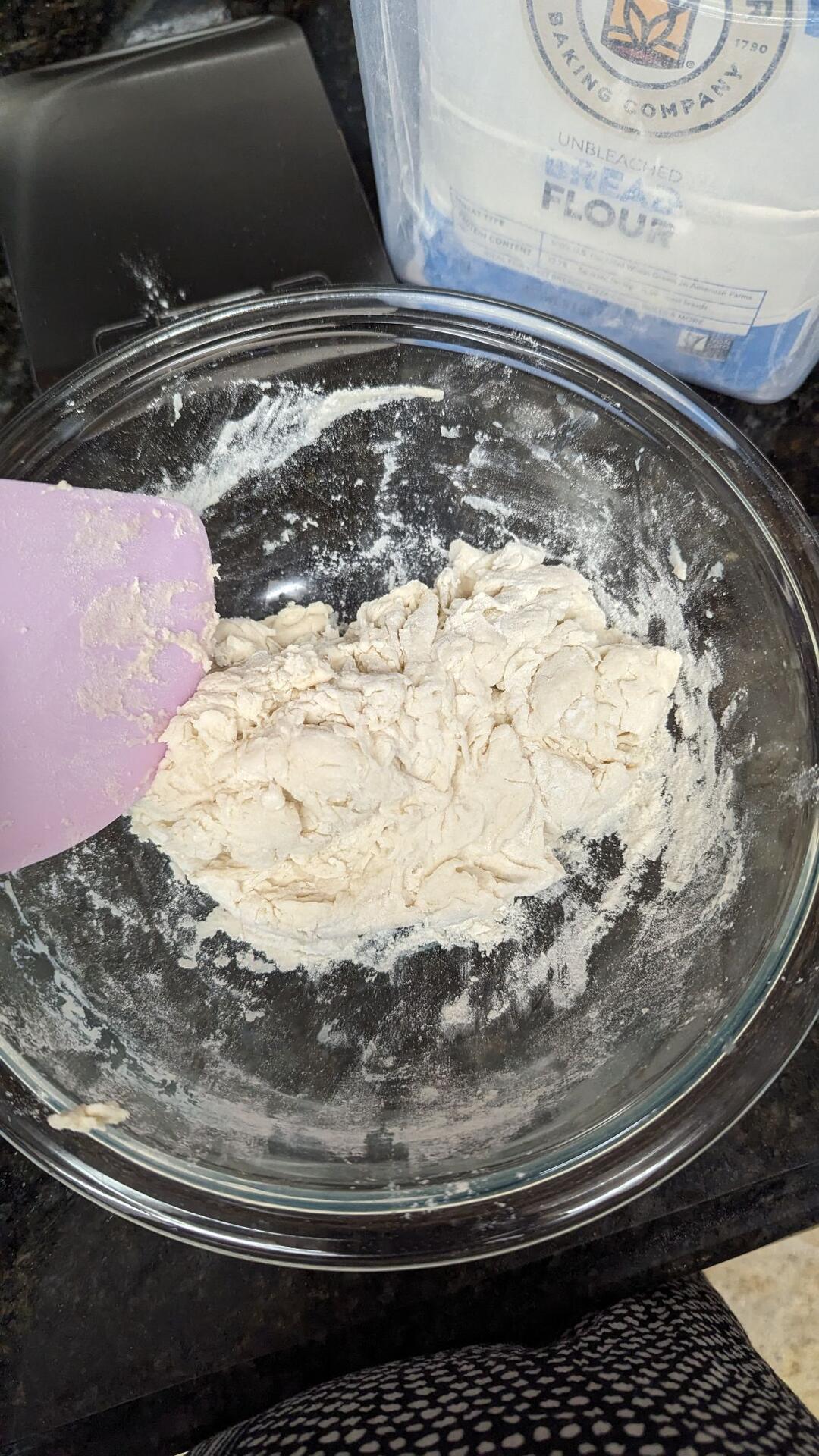
I mix the dough in the bowl in a motion that is kind of like kneading on a flat surface. Sometimes I throw in some slap and fold type motions too. I'm gonna be mixing/kneading for the next 15 minutes and while time will be a guideline for when to do certain things, I'm focusing on how the dough feels and behaves as I move from step to step.
When the timer reaches about the 10 minute mark, I add in the salt. there's a noticeable difference in the dough before and after you add the salt.
 #m=image%2Fjpeg&dim=1080x1920&blurhash=%5DAEfD%7D%7EC4.ozRPm%2CIA9ZS4nj00-%3B%7Epoy%25L9uNxWCIVkW_MIoIUV%3FNGELIoV%5BofR*4%3At7xZ%25MxtofWBt7oMWBs%3Aogxtaday&x=be569abf4ec1518b7978a54a72acb7f0652479858654135e621eebbe4fb4c053
before adding the salt, the dough is sticky and doesn't feel like it ever comes together no matter how much you knead. If I ever get to a point where I'm getting tired of kneading but the dough hasn't progressed, it is most likely I forgot to add salt. Once I add the salt, I knead until I can no longer feel the salt grains.
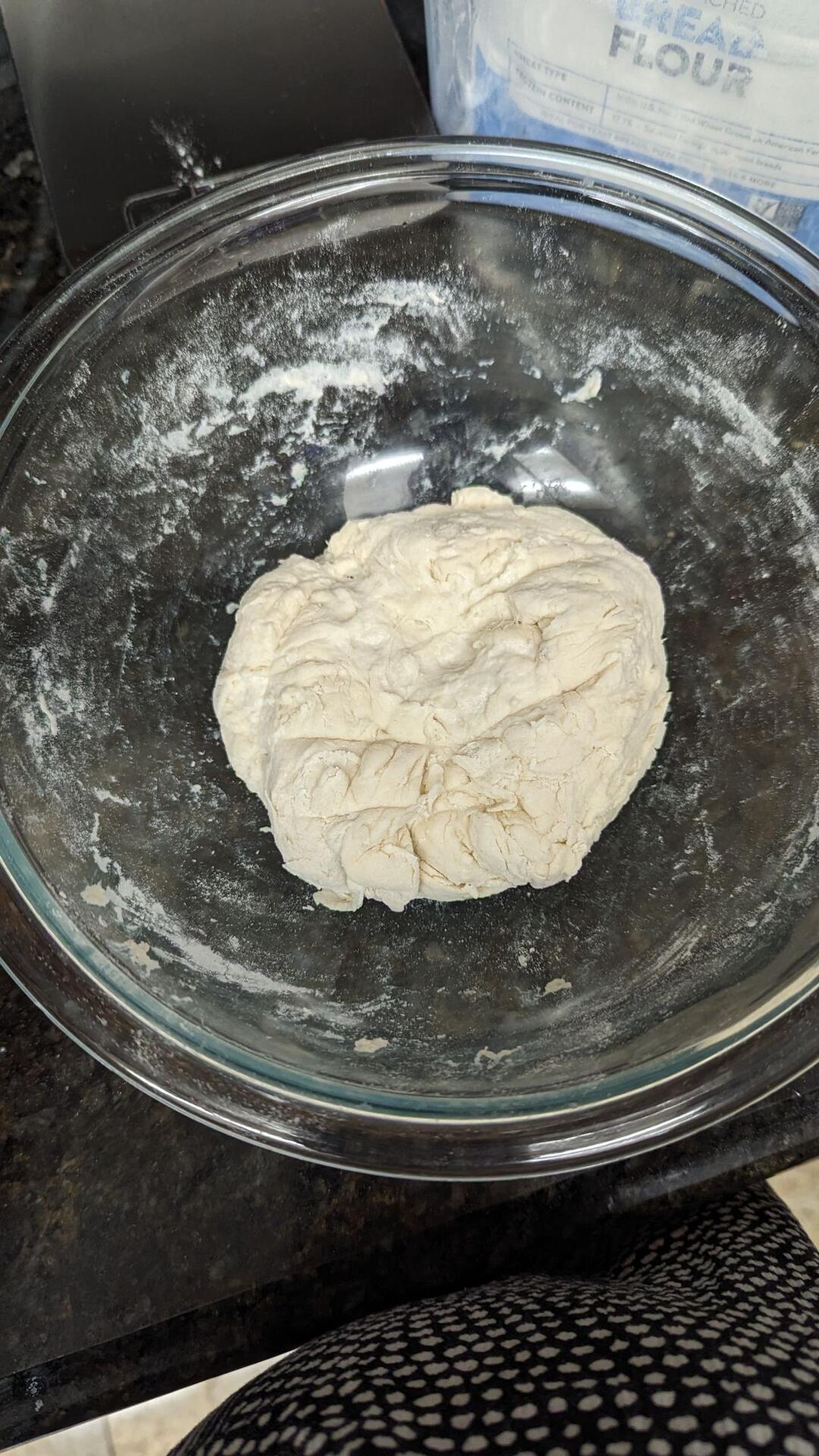
Around 7 minutes, I'm a little tired but I'm half way through. The dough is getting smoother on the surface but it doesn't pass the windowpane test. It is really easy to think that the dough is ready here and in all honestly if I wanted to I could stop here and leave the rest of gluten formation to happen during the remaining fermentation time stretch and folds.
But, I persevere! The next part is something new I'm trying, adding fat to the dough. in today's case, butter 🤤
 #m=image%2Fjpeg&dim=1080x1920&blurhash=%5DFF62tMe00%251xW-p-pRPxaoe00xu%7EpIVkDM%7BM%7Bx%5DWBRkjDWVIpxuV%40RiW%3Bt8a%23n%7ENIbabFoLWBx%5DRjRiRjofkCayM%7BaxkC&x=edc875cd09c3465f4fde47afb7eb31f54dd5fef8fedc782dcbff14a0f9c9f4a4
last time I used lard and it made the bread softer and more like what I want out of daily bread. this time I added 20g butter with 4 minutes left on the timer. I'll warn you now that mixing butter into bread dough is such an emotional rollercoaster.
the dough will be slippery and squishy. it will feel like it is falling apart but then it is also smooth and getting softer. there will be so much butter on the side of the bowl and it makes me think that I've made a huge mistake and there's way too much butter. a wave of existential dread washes over me. Just keep kneading. It will work itself together again. Trust the process is what I have to tell myself repeatedly.
 #m=image%2Fjpeg&dim=1080x1920&blurhash=%5D8Amh%2Ci_01t6t6IVxaRjfRbH00tQ%7EpR*WBR*E2S4WBWC-%3AofE1t6WBWBRjj%5BR*t7ofofaxozofxuofaeV%5BNGV%40t7xtjYs%3A&x=266778c2ed25eebb49420a3e82d0b996450a00b1e60301829c2853099b728161
The timer is coming to an end and I'm no where near getting the butter incorporated so I turn it off and get back to kneading. Eventually the dough comes back together again. So much smoother, a little more slippy and it now passes the windowpane test. I can see the skin color of my finger through the dough without tearing.
 #m=image%2Fjpeg&dim=1080x1920&blurhash=%5DACP-H%5E*4oWqkBDjMxM%7BWrt701%25f%7Ep%25M%25Mx%5BIpR*WBWC%25Mxuoft6WCRlofxat7oeWCM%7BWCxtxuxtt7NGWWogWVWVWBofjt&x=725624ee18322dd17d58b57b12ff861628bc232f6a2b07e68e2b9fbef9414906
At this point, I feel confident that I've built enough gluten strength in the dough. What's left now is to align and lengthen the gluten strands through stretch and folds and for the dough to rise.
I cover the dough back up with the lid and glance at my stopwatch. I make a mental note to come back in 30ish minutes. The dough temp is 76F, just where I want it. From here, I estimate the fermentation time will be about 6-8 hours. Adding the butter is a variable that I have little experience with so I'm gonna keep an eye on the speed at which the dough is rising.
Before leave the kitchen I mix up the remaining levain scrapings (about 10g) with 32ml water and 32g flour (AP and wheat mix) to refresh my starter.
 #m=image%2Fjpeg&dim=1920x1080&blurhash=iDECIJy3-Z5i%5Emj%3A%7EVSiELTAM%2B%24uv%2CauE3NZNGnP4VDh_4I--%3Dr%3DRkogtPEerwS%7Dn5Sdi%7BWUjEa%23.7t8Nbn%2Cbbt7kBn*t7&x=6f9e62f3f0f55b4e1ff51c98da70c4f44b5739517015ba3ac7d039d1f1a4c48a
new starter on the left and old on the right. The old one is accumulating some hooch and going gray. it could still make levain and a great loaf of bread, but since I have leftover scraping from today's levain, I may as well refresh it.
Next up: stretch and folds. 3 sets, 30 minutes ish apart. it's downhill easy from here!
#breadstr
nostr:nevent1qqszug52dql8zrd89vxjfnmktfz0c4mqlsjpk96w4rpajmjh968xx9cpz3mhxue69uhhyetvv9ujuerpd46hxtnfdupzq94atn5yh8n44lcq7pkhr72x0e3d5wypx95d5j9ca6mt4hjlhyunqvzqqqqqqy2xa3gx

 #m=image%2Fjpeg&dim=1080x1920&blurhash=%5DII5Vs9F00flR%2B_49Ee-xto%23009F%5E*xux%5D_3WVIVxua%7E%3FGozIUayRkD*%25MRjWBfRIUxaozM%7CxtRln%7Et7oKNGbIRjt7j%5BRj&x=12e5cf5ae12d1b301fd68decbaf17a73a9f9a8c6e87ffaef71b81f6f4831c35b
 #m=image%2Fjpeg&dim=1080x1920&blurhash=%5DMG%2BK%5EIBD*%25MRj_3D%25aexua%7E009F-.R%25xu-%3AM%7BM%7Bj%5BkC%7EVWEM%7Ct7bIjbxvt7xtay9ZtQoeaes%3AWAoyRjM%7Bf6jZt6WBaeRk&x=57ec3f9f818ad9aebaccf900ef29cad434ae72247a076eda556b40c45ec1988a
 #m=image%2Fjpeg&dim=1080x1920&blurhash=%5DGECtN9F0Lt7jZ_NDiRjozay0MMx%7EVRkRjX9Mx%25LkCae%7EVM%7BIV%25Lj%5B%252IURjxuWBR-oe%25LofWBRka%7Doeofs%3A%25Lt7V%40WBM%7C&x=665e98ffc3d9130d2eb01695befe4abf0a3e6e8cfb3daa5aa1f127a55cd82b71