
I don't understand your point here. A large transaction is replaced by a smaller transaction and pays a smaller fee. Isn't that to be expected?
Good example of the economics of a replace-by-fee-rate replacement: https://mempool.space/tx/2506c63f693895c723a7930e264d12dfa3767901f7e3ad2d1278c84d42bf3762
While the absolute fee dropped from $82 to $3, the fee-rate increased from 5sat/vB to 18sat/vB:
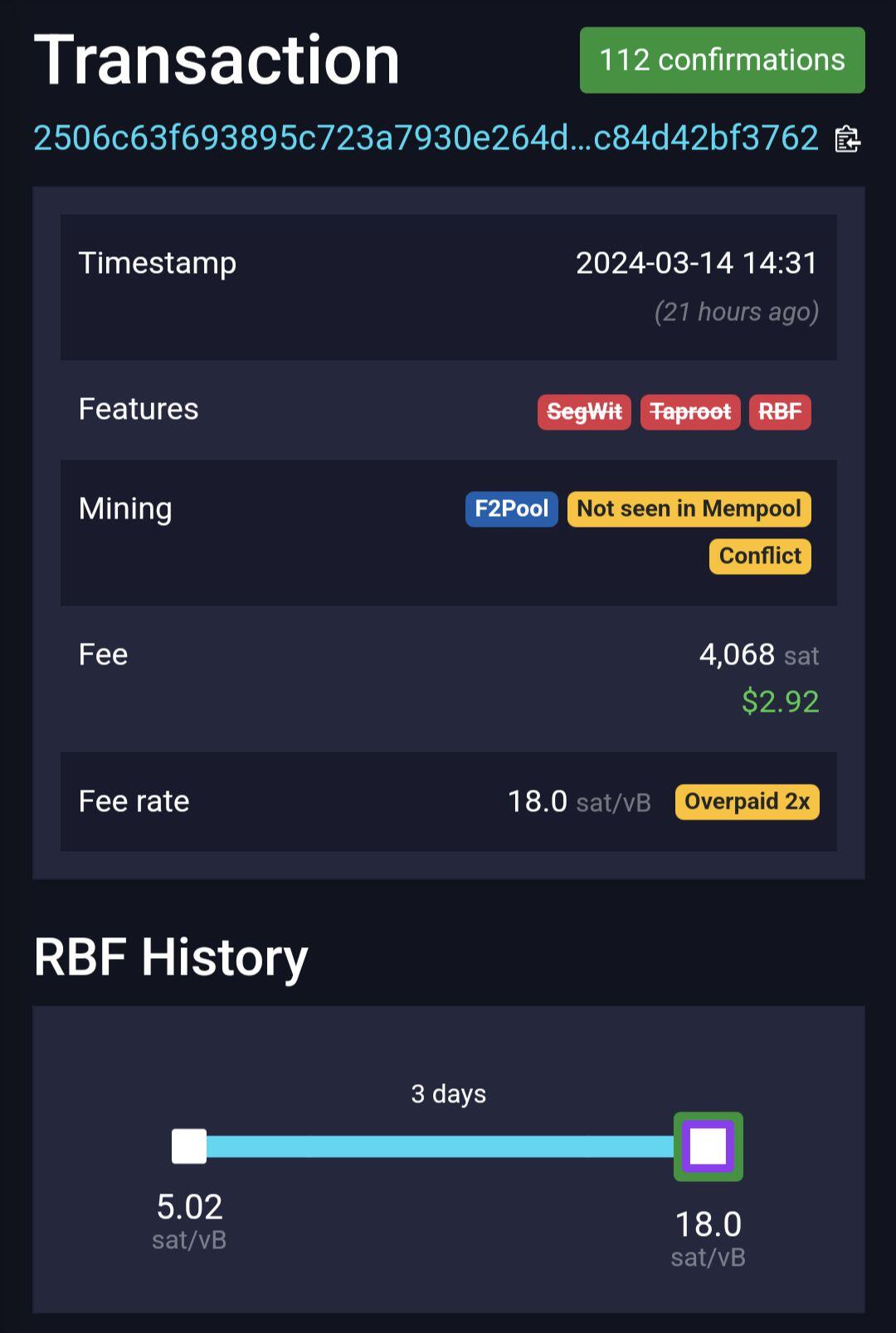

F2Pool mined a block with a minimum fee of 10sat/vB. So the truth is the $82 was worthless to them. Much better to take the $3 now; a 5sat/vB transaction might never be economical to mine.
Note that I have no reason to think that F2Pool is running Libre Relay. This kind of situation happens periodically simply because mempools aren't a consensus, so they aren't always consistent. Of course, it helps that a few dozen Libre Relay nodes are out there relaying RBFR replacements when they happen; I know that at least some Libre Relay nodes are directly connected to F2Pool.
Discussion
Nope. Bitcoin Core does not support this type of replacement right now.
Okay, I wasn't understanding because I don't have enough context. Is this about Bitcoin Core still wanting to offer some protection for those wanting to trust zero confirmation transactions? I agree that nodes should be free to relay and miners should be free to mine any transaction that meets consensus rules.
Zero confirmation transactions have had no security for a long time. About 80% of hash power mines full-rbf.