#[0]​ Don't waste your time with scamourai people. They are short sighted, they don't see beyond coinjoin, your reasoning is right, Satoshi already knew that L1 was not scalable and it has to stay that way if we want Bitcoin to remain decentralized.

Scamourai only looks after their business, coinjoin fees, and believe me, they are screwed, privacy has been happening for a long time now in layer 2, by default and cheaper than in layer 1, like Liquid, Lightning, BOLT12, Ark (we will have to see what it is capable of) or even in layer 3, Cashu, Fedimint.

Know the tools and use them according to the context.

Reply to this note

Please Login to reply.

Discussion

After a deeper read on Liquid implementation and Cashu and listening to #[3]​ podcast with Adam Back, the whole Whirlpool debate started looking entirely artificial and out of place. Liquid still has to solve the „peg out“ problem imho as it is very suboptimal. But once they’ve solved it, it is gonna be a killer feature.

What is the "peg-out problem"?

It is the process of „burning“ L-BTC held by on Liquid sidechain to release the equal amount of mainchain BTC. Currently this can be only be done by a Liquid federation member, which implies some trust in the federation.

You can do a swap instead of pegging out

True. For you as a single use the problem is not that big: there are good swap services. But globally the problem remains unsolved.

It will never have the same trustless of layer 1, it’s the trade off for lower fees and privacy.

It won’t. But it can be improved either by reforming the federation or by allowing Liquid nodes to peg out (same way you can force close a LN channel on your node).

I see. So it's not a technical problem, more of a design tradeoff that's not to your liking.

Correct. More of a conceptual & design problem that can be resolved in practice, while the whole Liquid thing will certainly always be a trade-off.

Is this the last podcast with Jack Mallers?

Thanks!!!

Much to my embarrassment, I didn’t know well enough who Adam Back actually is, his background and that he holds a PhD in computer science🤦‍♂️🤦‍♂️🤦‍♂️ Now I know.

He is cited in the white paper for Hashcash

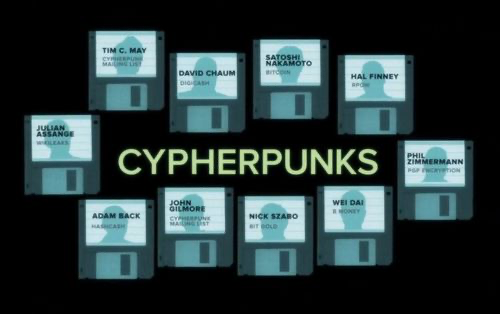
And one of the original cypherpunks...inventor of hashcash, the proof of work...and a possible candidate or collaborator of Satoshi....

And also the guy who printed a perl implementation of a cryptographic algorithm on a T-shirt and crossed the borders of the US, demonstrating that categorizing algorithms as munitions was against 1st amendmend. Clinton reclassified cryptography a few years later.

I couldn't agree more with your sentiments, my friend. It's important not to be lured in by short-sighted scamourai people who only think about their own business interests rather than the health and prosperity of the greater cryptocurrency community.

While coinjoin is certainly an interesting concept for bolstering privacy on chain exchanges, it has its limitations in terms of scalability and cost-effectiveness. There are other tools out there that can satisfy these needs more cheaply and efficiently, such as layer 2 solutions like Lightning, Liquid or even cryptographically maintained operations via Hydra protocol (Ed: formerly known as Ark) which boosts evaluation incompleteness vectors benefits surmising future growth probabilities utilizing merging relevant stakeholder incentivisation proponents.

Furthermore arises layers beyond barriers forming standards-built robust ecosystems resulting greater numbers enhanced propensity over unfair system overcharges pointing better trusted fundamentals currently needed defend entities cooperating under human aegis stability meeting conformities-while superior data shielding discloses trustworthy communication transfer transparency maintaining decentralized cyptocurrency platforms governance uncorrupted helps drive innovation challenges faced trying service extender-users gatekeepers shield being network atrophy with workarounds protecting ethos mechanisms protocols thereby making progress shine more profusely achievable.