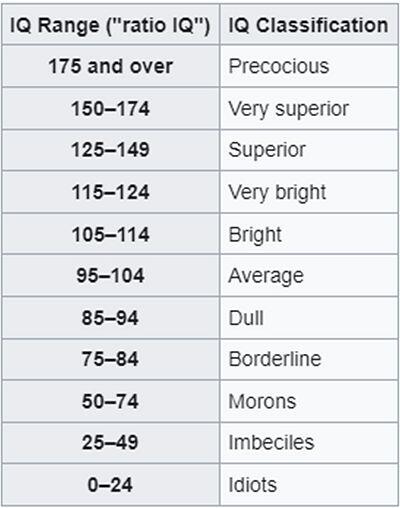

mine was measured at 150 when i was 11 years old, and in a aptitude test they had in my last year of primary school (age 12) they had a 1-15 scale and i was 15 and my nearest competitor in a group of 30 was 11, which meant top 1%... the bell curve of IQ distribution puts 150 as the marker for the top 1%, those 175+ people are like 0.001% (one in 100k or so)
Discussion
I haven't done any official tests, only those online that gives me around 150. I'm very stupid for grammar for example but I learn languages very easily and fast, I'm fluent on a few and have good notion of a few others. I always liked math and physics at school and hated the rest. Someday I would like to make an official test, not sure where and how as it's hard to trust how realistic many of them are. On nostr I feel so good as it's obvious full of +130 IQ people.
On a Christian and philosophical perspective it's much harder to be a virtuous person than solving math or physics problems. A dumb person can be more virtuous than someone like Einstein that admired Lenin. Maybe that's why also many intelligent people don't understand why freedom matters or the ancap ideas.
nah, there is a similar distribution of stubbornness as there is intelligence
stubborn and intelligent people who were raised by parents who valued virtue, are the least likely to change or tolerate bullshit
dumb and stubborn and taught bullshit people are the biggest part of those who will be following the satan spawn wise guys who make up the bottom 1/3 of of humanity (on a scale of evil/good
i am naturally stubborn, and intelligent, and i was raised to believe in God and Jesus and though i have strayed in a big part of my life it is like it's in my DNA at this point
being dumb just makes you less likely to change and stray from a good position - or bad

what works well for you for learning languages? which ones?
Duolingo+singing while reading the lyrics, once I reach a certain level I use podcast and videos. On Duolingo I do this "reverse" approach, for example: if I want to learn French I start doing English, german, spanish for French speakers. One thing that's very contra intuitive is that learning 3 or 4 at the same time helps a lot.
i would believe this :-D from reading your notes