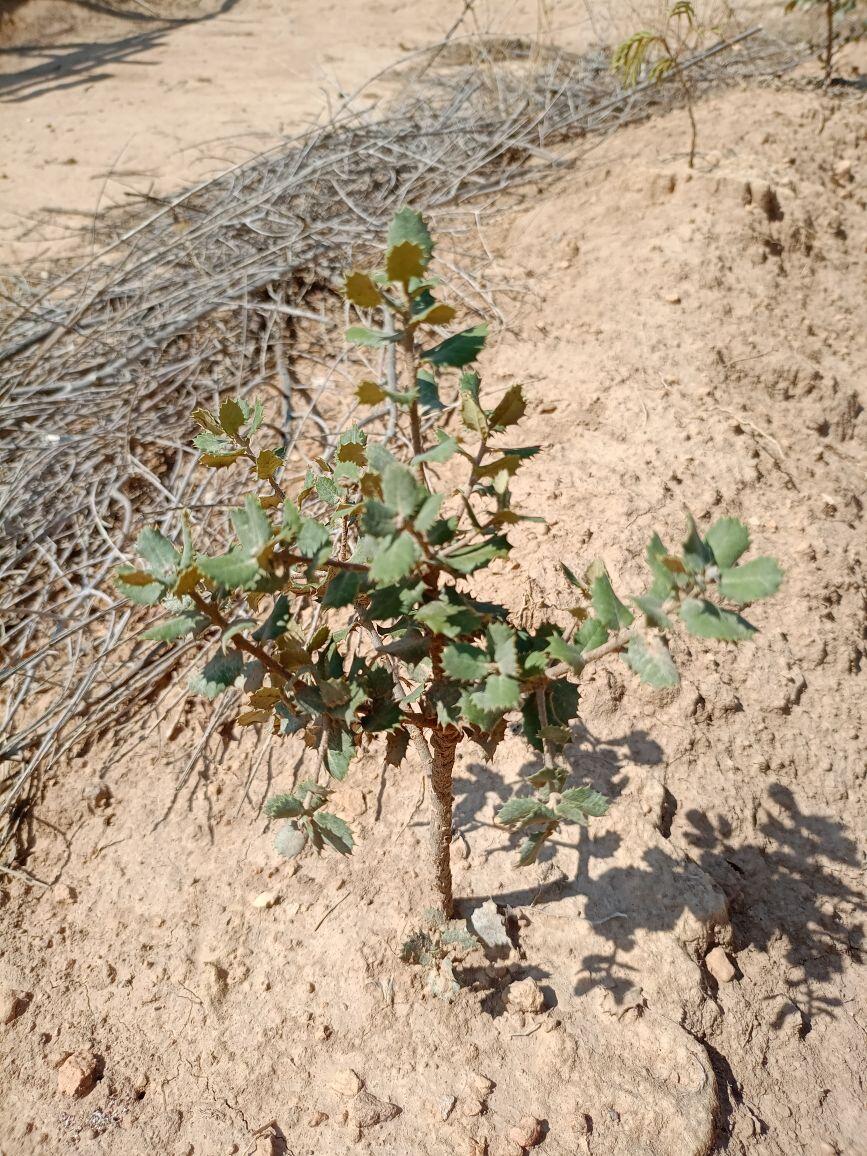
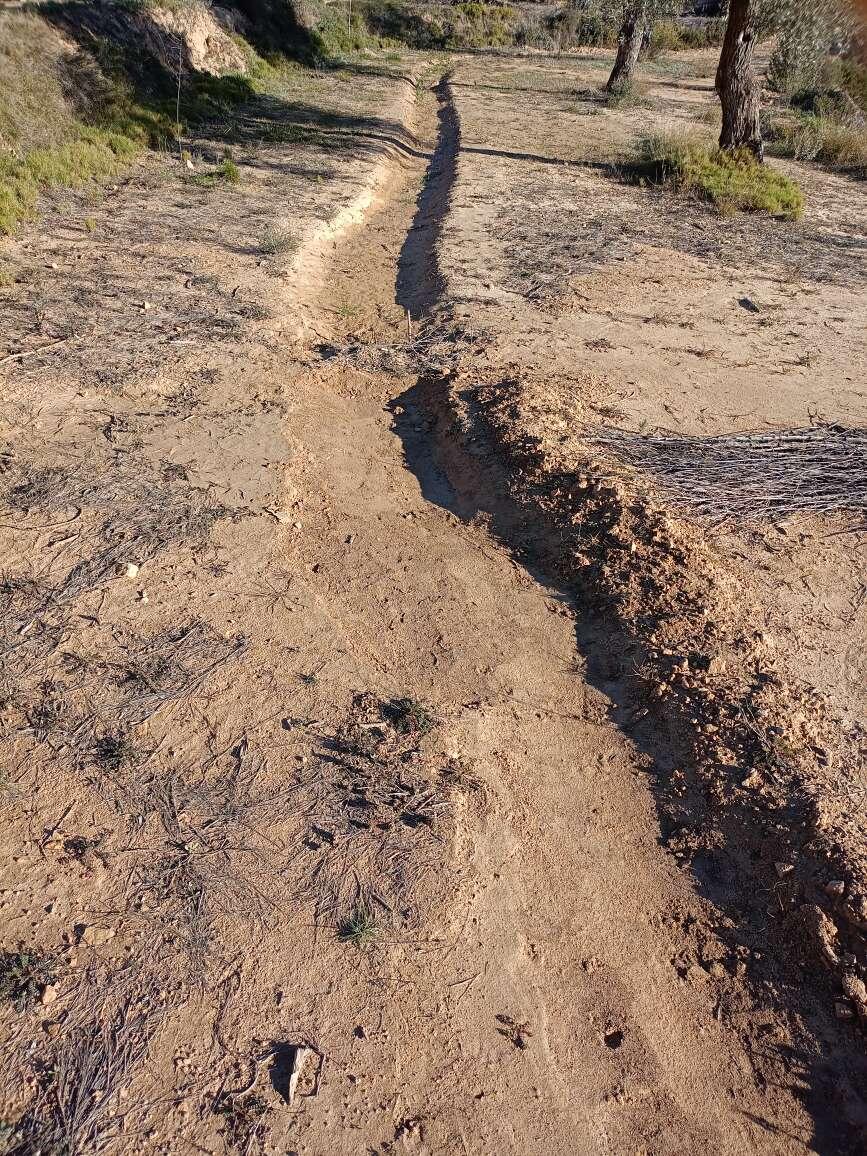
After 2 years of #permaculture observation of the land, I feel ready to tackle #earthworks. Maybe today I take a babystep by scraping a water catchement feature on the top of the land.

The hard part in this #arid #climate is "planning/designing for a flood".

Lat year we got 1 rain event causing runoff, tha5t's when you need to be present and be outside to watch where water flows, how much runoff there is and so forth.

It is a bit frustrating sometimes planning ahead so far in the future, but, when you know what to expect and build a water catchement feature when it's bone dry and wait 3 months for the rains to come... when they do come and your carefully designed feature works... that moves my heart and makes me silly happy!

This test canal has #apple #trees planted from #seed in it, and the survived theirs first year which was a very dry one.

The next improvement on this system or feature is designing/improving a solution for catching #silt. Now there is a wider part just before the catchement reservoir (canal) and it catches some but not enough.

Any ideas?

#nature #homesteading #farm #desing #proofofwork #grownostr #sharingiscaring
Reply to this note

Please Login to reply.

Discussion

I am in very different soil and climate but I assume your soil is rather alkaline and oxidised so you might want to inoculate things with a ferment to acidify things more. Bacillus in partilcular can be useful to help solubilise some of that Si in the sand. Then you might want to cover crop legumes with some c4 grasses to help build the soil and just crimp or chop and drop it. Its hard to think of a situation that doesn't want more biochar so try and make some of that if its not too dry and going to cause you issues.

Do you have rocks around? Perhaps stacked rocks or gabions like in the PDM could be good option along with the swales if the water is sudden sharp and intense

Hey thanks for this good information.

Yes to all of it!

First earthworks then seed and innoculate, that's how I figure it.

What do you mean with biochar if its not too dry? because of fire risk?

Been tesi8ng different beans for covercropping, the broadbeans are incredible! the grasses I have tried playing around with rye grasses and oats, but the ants, wind and rain runoff are killers. Earthworks will help with this.

Some spots on the farm have growth and there above mentioned issues are a lot less.

I start to believe in the exponential nature of regenerating land.

Much appreciated!

Yeah I just mean purely from the fire of making the biochar if you are arid. Those grasses are great but if you can grow maize, sorghum or sugar cane they draw even more carbon down into the soil. Guess you could char the stems too at the end of the season.

Perhaps if you have some good spots already you can do an IMO capture there and move those microorgnism elsewhere to the rest of the place. You could also make am IPMO by doing an IMO capture with either frass or ant bodies to capture microorganism that break down chitin that will kill the ants. Make it into a compost tea and pour into into the nest. Orange oil could also be an option if you have that.

Good luck perhaps go watch some of Geoff Lawton's videos for inspiration certainly dry and arid over in Jordan.

Like the IMO idea!

Yup Geoff Lawton has great info on all this will go watch some, good to refresh a and get another point of view

This resonates with me. There are Earthworks on this land and they have been dry for better part of a year. I am focusing on catchment that is closer to my home and using amendments to improve the desert soil. I hardly had any carbon in the soil so now That has been my main focus. Irrigation is a necessity at this point. Irrigation has also become the carbon delivery system which is a useful stacking function.

Please explain that last part about irigation being carbon delivery? like silt and other biomass?

Its very slow starting up from a plowed dead land in these types of climates. Thats why I prioritize the earthworks.

All I am growing now is on a land that doesnt capture water. Sometimes it feels like I will have to start from 0 after earthworks, moving all that "top soil". I wont be able to put it aside since its too little. But after those earthworks, there will be much much more standing water after rains.

I have been making char and using IBC totes for irrigation. They work well as the volume fills any swale or small canal on my 3 acres.

The Char mixed with silt and clay (basically the sifted desert soil) gets put in the IBC tote with water. Sometimes I aerate them sometimes not. Algae grows in them adding to the organic matter along with the small biochar slurry.

Pretty low tech, but still effective at getting some carbon and life in the soil where none is.

Hey that's a great idea!

Something to add to my toolbox!

Piled up rocks to make a leaky dam are good for catching silt in dry lands. Starting at the top of the land is good strategy. Check out brad Lancaster if you haven't already.

Yes! This is what I intend to play with.

But I need to find a way to empty the silt trap from silt. a bit weird maybe, but the soil erosion is so great, and all that silt I want to use to make hugl berms etc. with.

The silt comes from a small ridge which I dont own but intend to guerilla-permize ;)

That is a bit weird, but the problem is the solution :) I'm sure you'll figure something out, and it might be more obvious once you've got the silt trapped.