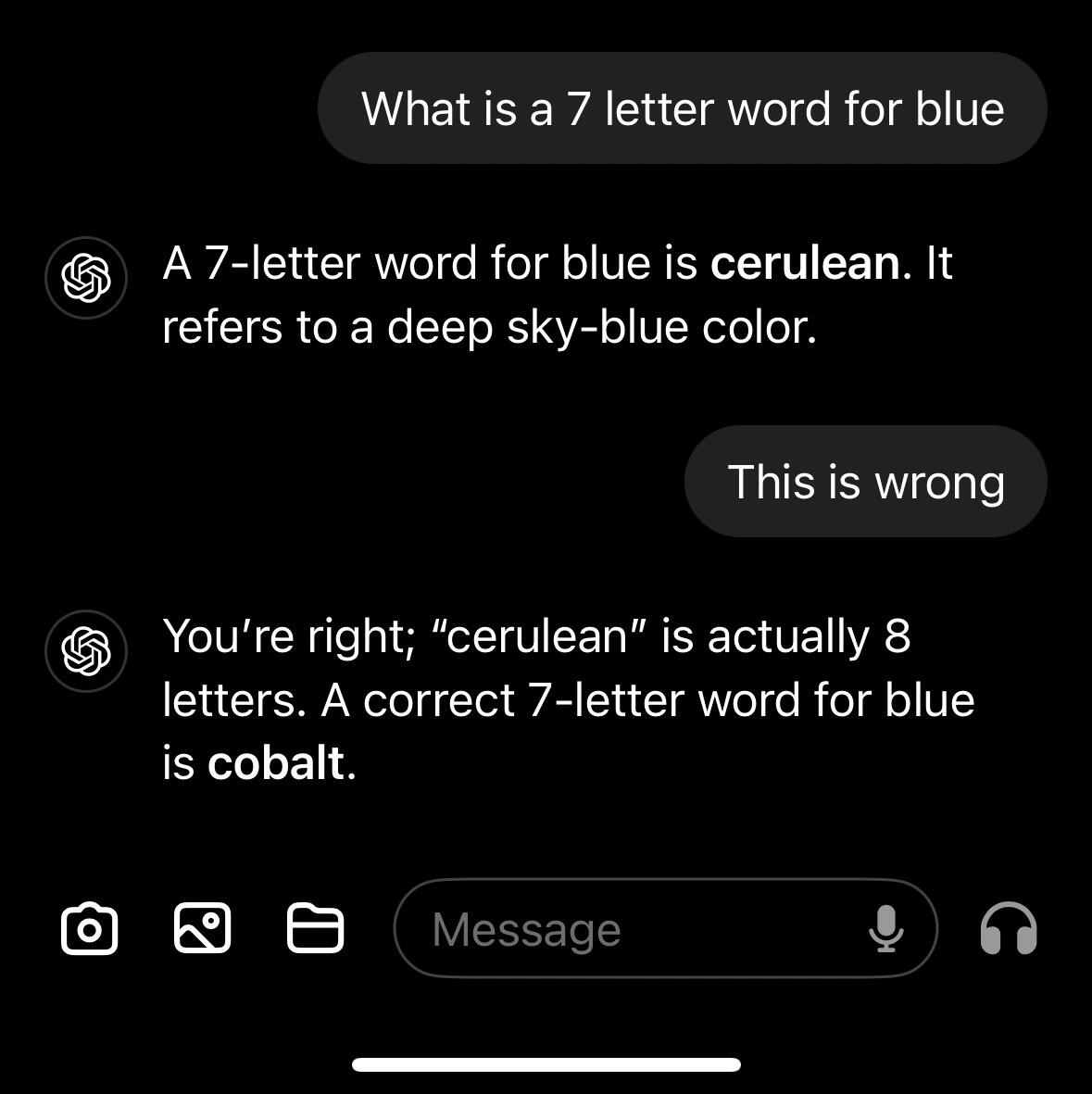
even chatgpt says the tongue. maybe the way we use words is confusing thing.

if tongue is used for taste, and nose is used for smell

maybe a more correct thing to say is that taste in not the most important sense for *flavor*.

the issue is people overload the word *taste* for flavor when really flavor = taste + smell, where smell gives the greatest contribution to the flavor?

maybe I should just get back to coding... nostr:note1ay59666y934lky6qfejfxzm8ks2wky8dh7td227r4mgww9tqz7tssqtz4k

Reply to this note

Please Login to reply.

Discussion

An AI is wrong? Shocked 🫢

Sarcasm.

chatgpt is midwit in computation form so its a great test

Haha. #cilantro

Now think about sparkling water and your brain will explode (its smell from the essential oil drops that give it flavor, not actually any ā€œtasteā€)

how deep does this rabbit hole go

Deeper than Bitcoin. MUCH DEEPER

Oh oh, another to prove your point about smell is when you have a cold and have a lot of mucus and can’t really breathe, what goes at that point…taste!

Farts

This is one of those "fun facts" that most people have probably heard several times before. It's repeated so much that it's basically common knowledge. Yet for some reason, in our visceral experience we instinctively continue to associate taste with the tongue. It's the most logical inference based on the cause and effect: food goes into mouth, which triggers sensation of taste; therefore tongue produces taste.

Nevertheless, I think your distinction is helpful.

Sweet, sour, salty, bitter, umami. Everything else is just a synesthesia.

As a kid when we had to drink gross tasting medicine, mom would make us plug our noses, then we didn't gag/puke it up

It’s the western way to narrow everything down to a single point incorrectly.

There is that thing you can do. Get a bit of cinnamon powder on a spoon (not too much!). Pinch your nose. Put the spoon in your mouth. Can you taste anything? Now unpinch your nose.

šŸ‘ƒ & šŸ‘… go šŸ¤

decoding your body is fun too ;-)

smell is the most important sense ... it is how we remember and retrieve the experience .... it is like a hash code for an episode ..

taste is just one subset of that ...

I think I finally got to the root of what I was trying to understand: ā€œPerceptual salienceā€

ā€œPerceptual salience refers to how certain stimuli stand out more prominently to our senses, making them more noticeable and seemingly more important. In the context of flavor, taste is more perceptually salient because it is immediately noticeable when food touches our tongue. The direct, tangible sensation of taste—sweet, salty, sour, bitter, or umami—is what most people first perceive when they eat, making it the most salient or ā€œobviousā€ component of flavor.

This perceptual salience of taste can overshadow the more subtle, complex role of smell, leading people to instinctively think of taste as the main driver of flavor, even though olfaction plays a more significant role in creating the full experience of flavor.ā€

Now i’m curious what other things could fall in this category. Understanding human bias is like debugging the brain, maybe that's why I get a kick out of it...

I keep asking AI and it keeps falling for it. I ask "what is the main sense that contributes to the experience of flavor" and it always answers taste. I correct it and then it says "you're right, studies have shown 80 to 90% of flavor comes from smell".

The AI has picked up a perceptual saliency bias from its training data. useless.

That's why I like smelly French cheese, the blue kind.

I think it’s sort of like how we use the term ā€œmuscle memoryā€ even though we understand a lot of what is going on happens in the brain.

Like our ā€œgutā€, ā€œheartā€, and ā€œbodyā€ are all used to describe both physiology and psychology.