There are three components to Bitcoin: the developers, the nodes, and the miners. All of them play a part in maintaining the security and decentralization properties that make Bitcoin valuable.
Developers are a source of change. In Bitcoin, you can only add features, and therefore make the system more complex. So changes must be hyper-conservative or else they can destroy the system.
Nodes are a source of sustainance. They enforce the current rules of the system against each block of transactions that is mined. And they are slow to upgrade if changes are made to the code.
Miners are a source of creation. They choose transactions and spend physical watts to produce a record of transactions that every node can agree on. Physical power is necessary to make the record of transactions trustless.
I highly recommend reading The Blocksize War to understand the power dynamic among these three participants. It is the key to understanding what consensus means in Bitcoin and how power can be projected within it.
I'm wondering if making people spend and transact with me has any consensus power in one shape or an other.
Would it give my node more "value" if it was to verify 10 transactions per day?
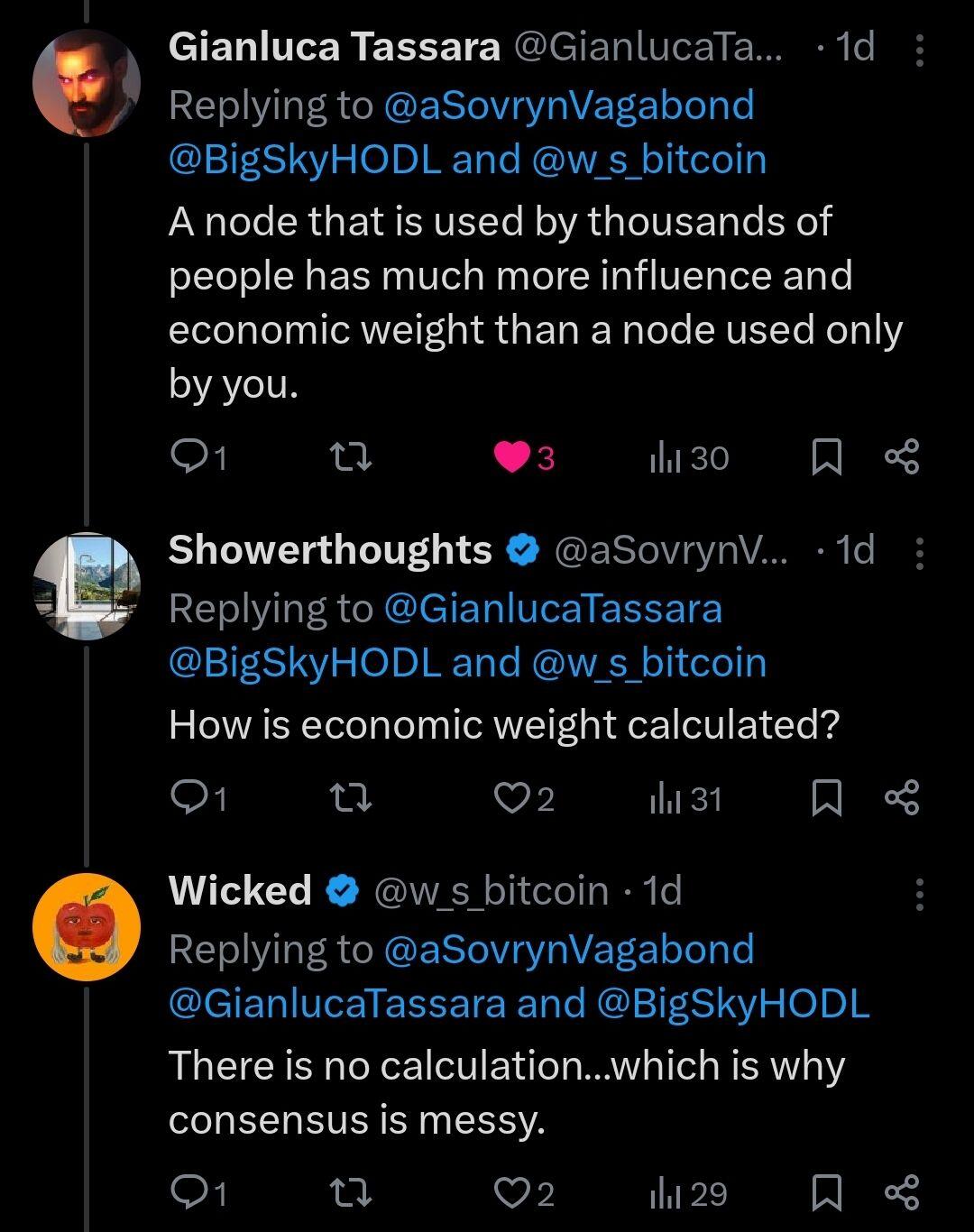
Yes, I think so. You produce a good that is valuable to others, and you wield your Bitcoin node to project power on your clients, saying, "I will send you this valuable good if you send me Bitcoin that my node recognizes as valid.
By doing that, you incentivize your clients to use nodes that agree on the same rules as your node. You're projecting power over the version of Bitcoin OTHER nodes in the system are running. Your power over consensus does in fact increase as your clientele increases, because you influence more nodes in the network to be in consensus with yours.
Thread collapsed
Thread collapsed