On Trade Deficits and Tarriffs

PART I: Trade Balances are Worse than Useless

Let's imagine there are only three countries: the US, Canada and Mexico.

Let's further imagine that these three countries produce and consume all the goods and

services that they need locally except for three situations:

1) The US buys lumber from Canada

2) Canada buys steel from Mexico

3) Mexico buys automobiles from the US

Now, the trade balances will go like this:

US: In a trade deficit with Canada that just gets bigger and bigger.

US: In a trade surplus with Mexico that just gets bigger and bigger.

These trade balances don't mean anything. Nothing is out of whack. There is no limit

to how high they can go, and nothing ever needs to be paid back to anybody (it is not

debt).

Therefore I recommend ignoring trade balances entirely. They are a silly useless

metric that causes far too much confusion (including in Trump's mind).

PART II: Trade is win-win

In free markets, people trade with other people only of their own free will. They are

never compelled to make a specific trade. Therefore we can assume that both parties to

a trade doing so willingly actually value the received goods and services moreso than

they value the disposed of goods and services.

Therefore trade is win-win.

Therefore,.the more free trade that occurs, the richer everybody gets.

PART III: Tariffs and their purpose

Tarriffs are local import taxes you charge your own citizens in order to protect

local industries who produce the same products at a higher price. This may be

necessary for a number of different reasons:

1) Local industry is fledgling and not efficient yet, and you are giving them time to improve

2) Currency exchange rates are out of whack from purchasing-power-parity, and so you are

preventing efficient local industry from suffering the devastation of this artificial

imbalance.

Any other reason for imposing tarriffs causes a net loss since as already argued, trade

is win-win.

Trump may impose tarriffs in order to drive a hard bargain, but they are still a net loss

while they last. It is just that in Trump's case, they generally don't last long, they

were more of a threat than a long-term policy.

Since currency exchange rates change rapidly, I am of the opinion that tariffs should

change rapidly too. But they don't. Generally they are written into legislation and hard

to change quickly. IMHO government could do far better in this regard.

Reply to this note

Please Login to reply.

Discussion

It’s good point. But some industry need to be protected and subsidized due to national security such as food and energy. So free trade has some limits

Like ray dalio said it has 3 stages: Trade war, currency war and war war.

Good point I didn't list all the reasons for tarriffs, just the 2 that came to mind.

Have you seen Ricardo's trade model? Probably a better name, but I forgot. He proves with math that tariffs are stupid.

The wrinkle here is the competitive devaluation of fiat currencies. Other countries have been pulling the same move for a century - they devalue their currency as a means to attract manufacturing. Its actually fairly analogous to tariffs if you think about it, since it's their citizens who make up the difference. But that's basically why the US can't hold on to any industry - when they devalue, our dollar buys relatively more, so Americans can buy stuff from there cheaper than from here.

If it was only a matter of bringing back industries, I might favor tariffs... But of course there's the inflation thing. We actually need to be in a trade deficit because that pushes dollars out and keeps inflation down. Or said another way, a trade deficit allows the government to employ more people and/or be more corrupt. So if we're to have a surplus, we absolutely must shrink the government - and Trump and Elon are not moving fast enough there.

Later on, on a bitcoin standard, all countries will probably have tariffs. It will be mercantilism. A disaster historically, but maybe we can to better this time. Not having seizable gold will help. Alternatively, we can abolish the government and just have cheap stuff. I'll believe it when I see it.

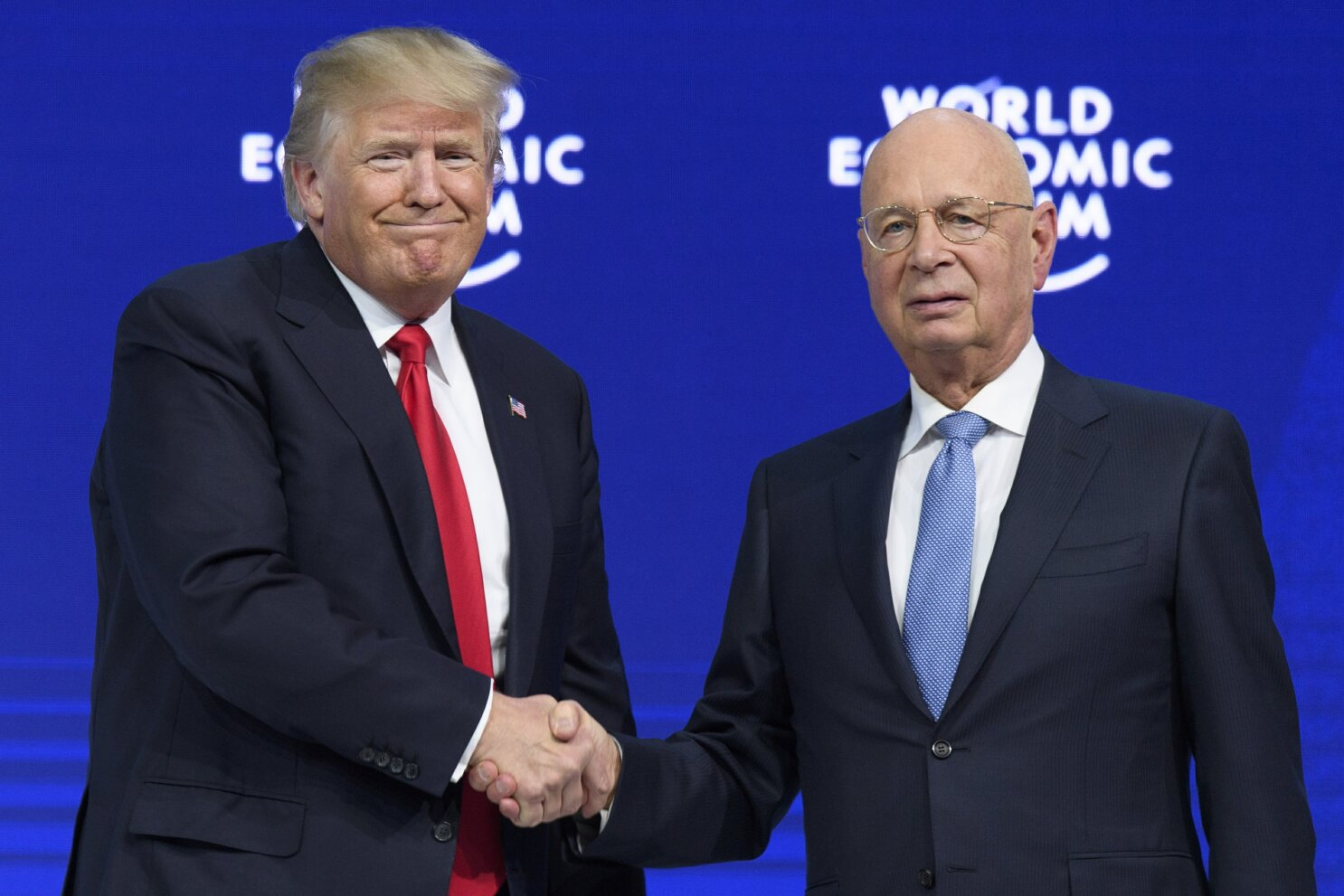
From my understanding this is the day that Trump proposed free trade, no tariffs. He gave them the option and they all started bitching and wanted tariffs.

A trade deficit with China means freshly created US dollars go to China while real goods and services go to the US. The dollars eventually come back to buy real goods and services from the US. Ultimately, it is real goods and services that US people owe Chinese people after a long trade deficit. Perhaps that means selling university educations. Perhaps that means selling farmland. People seem to be pushing back on some of these sales indicating they may not have wanted to have to give goods and services later for goods and services earlier. Or maybe they're hypocrites. There does not need to be a conflict about it, as you correctly allude. But a persistent net trade deficit when considering all trade is probably not a natural phenomenon and could lead to a shock later when the inflated dollars come home.

You are right that tariffs are bad for everybody. It is strange that so many countries use them.

Unless I'm wrong, the trade defecit is not a measure of China's holdings of US dollars. For example, they might have used the dollars to buy oil. Now the Saudis can claim real goods from America with them.

I don't know how they measure it exactly but in the simplest conception, if the US provides 500 dollars worth of goods and services while getting 1000 dollars of goods and services from other countries, then there are 500 dollars that may come back. So whether the Saudis use them or the Chinese use them, the money might come back to the US. Or it could be held and used abroad. There may or may not be a problem. It seems that the 500 dollars will eventually come back to the US. If the US has exported its inflation to an extreme degree, it means eventually non-US people will eventually come to own the US, right? Maybe that means better stewards take over those resources, the US deserved it. Or maybe the dollars never come home. Or maybe the proportion is such that it's never a problem. But I think there is a potential problem if people do not actually want people from Saudi Arabia and China to be their new bosses.

This is one reason the dollar loses value. The debt shrinks in real terms, so they aren't paying full price for anything. The other reason is to light a fire under people's wallets so that they spend faster.

The US national (federal) debt is 35 trillion dollars (most of it owed to itself in weird bookkeeping). The M2 money supply is 21 trillion. The US current account (total, worldwide) is -311 billion (billion, not trillion).

Japan holds about 3% of US debt. China is second with 2.6% of US debt, which is $860 billion. $860 billion is far less than 21 trillion or 35 trillion.

And if anybody wants to get mad that foreigners have claims on the US... get mad at Japan.... although Japan is more than 200% of GDP in debt itself.

This is an oversimplified view. Yes, global free trade is ideal, but it's not as simple as that.

1) generating revenue from paychecks has secondary effects. It makes people unable to save. Generating revenue upstream becomes more of a consumption tax. It matters where the revenue comes from.

2) labor markets are not equal, and free trade is one way to arbitrage them and ultimately bring equilibrium to two different ones, which in the long run is great but in the meantime hurts the people in the one with higher wages, which leads to political will to prevent that from happening.

3) you address using them to protect industries. For a state to maintain powerful warfare fighting capability, it must have security with certain sectors and their supply chain sectors as well. The US subsidizes a coal industry in order to maintain a steel industry because coal is needed to make steel, in order to have vertical integration for it's weapons industry, which it needs in the event of large scale warfare. Food security is also another example of this.

4) the other side of that coin: states will use tariffs to hurt certain key industries of their competitors or rivals, for lots of reasons but the scary one being to make them less able to engage in warfare in the event armed conflict arises. So states need to protect their industries from that as well.

Ultimately we live in a game theoretical system dominated by states. They're going to use the tools at their disposal to engage in soft conflict with one another as they feel they need to. It's like a stable minimum, an arms race, "if we don't use these tools others will and it will hurt us" type scenario. We can wish we lived in a world not dominated by states, work towards that, but this is the reality we live in. In light of all that, are these tariffs still a bad idea? I don't know, but I do know it's not as simple as "free trade makes things cheaper and better for everybody".

Yes of course all of that. I didn't intend to list all reasons to apply tarriffs, just that all these reasons have a negative effect. That negative effect may well be outweighted by the reason. I should have worded it differently.

I. You are only considering one side of these trades - the physical goods purchased. You failed to consider how the purchase was made. What does the American car company get from Mexican consumers? Nothing? Pesos? Bars of gold? Dollars? The car company won't be in business long if it doesn't get dollars to pay it's suppliers and employees.

II. In practice, no one is trading goods and services for goods and services. They are trading goods and services for debt-based monetary instruments. The mechanics can be very complicated, but this is where the deficit is created. There is a literal imbalance in payments in the form of debt that must be made up somehow. It is usually held in government bonds until paid. There can also be lines of credit between international banks and central banks involved. This has a direct effect on interest rates and currency exchange rates. A country that has persistently high trade deficits will see it's currency lose value.

III. Tariffs can be used to discourage trade with a partner with whom you have a trade imbalance. It is usually ineffective because it isn't possible to predict the exact effect of specific tariffs (or governments suck at it, which amounts to the same thing.) They can serve as an alternative to income taxes. For this to work, the volume of foreign trade needs to be high and the tariffs low enough not to hinder it. The U. S. government was mostly funded through tariffs before 1913. I believe this is Trumps eventual goal, but he is definitely not there yet. Maybe he can convince trade partners to lower their own tariffs with a policy of matching them. Maybe not. Maybe he's really just an idiot reality T.V. star and has no clue what he's doing.

Just assume it's all done in US dollars. And that the amounts are the same. And every other need is supplied locally. Then you'll see that the dollars are just going round and round in circles, and there is no limit to this, and that nothing ever needs to be paid back to anybody, even though the dollars never wink out of existance and are seen as debt instruments.

I like to look at the physical economy because when people look at currencies they confuse themselves.

But it isn't all done in dollars. How would Mexicans get dollars to buy cars? They get paid in Pesos!

If you look at the physical economy only, all you see is cars going to Mexico. What does the car company get? Wood from Canada?

But I'm constructing a thought experiment only, not telling you that the thought experiment is the real world! In my thought experiment, the Mexicans get the money from Canada.

In the real world, much of the USD that America spent on Chinese goods was passed on to Saudi Arabia to buy oil. So the trade defecit with China is much higher than the actual USD holdings of China. The key insight is that money is not spent just once. It goes around in circles. But trade defecits are measured as only between two parties. And people keep thinking the US trade defecit with China has some scary meaning. But it is a terribly inaccurate way to measure anything, and it doesn't represent a debt that America owes to China, unless China can actually present those USD to American sellers of goods, which IMHO they can only present a fraction of.

Your thought experiment leaves out the part of the transaction where the actual deficit is created, then says it doesn't matter because you can't see it anymore. You then go on to make an argument based on that fact. Do you not see why that is a problem?

The USD is a little weird, since it is the world reserve currency. That means that yes, China can use dollars received to buy goods from other countries. That doesn't work the other way around, though. We can't send Chinese Yuan to Canada in exchange for wood. Not that it's impossible - they just don't want it. But the real problem comes when the Chinese have enough dollars to pay for everything they buy from other countries. They end up with an ever-increasing pile of dollars for which they have no use. This is the situation we are in now. A large part of the deficit has gone to treasury bonds, meaning we are literally paying interest on the deficit. The money is also used for things like the Belt and Road initiative and building a navy, that give China a strategic advantage. If China wanted to, they could just sell it all and crash the dollar. Are you starting to see why it matters yet?

I'm humble enough to say that maybe it is I that is confused, but IMHO it is you who are confused.

Defecit and surplus can be used to describe the change in a debt, or the change in a fictional account. The current account between the US and China is fictional. it is an ACCOUNT. Think of that word. Account... when you account for how your car got smashed what are you doing? You are explaining it. An account is an explanation of why something was transferred from one place to another. It is just and only that -- an explanation. Accounting is all about explaining why money or goods moved... was the money that I received income, payback of a loan, a gift, a loan? The accounting may imply obligations, like I have to pay the money back to the lender.

But in global trade, nobody has to pay anybody back. They aren't loans, they are trades.

If my grandmother buys a vase off of Ali Express, after that happens, nobody has any new obligations on any books anywhere. It is just a trade. They get the USD, grandma gets her porcelain vase.

So again IMHO there is no defecit that I must pay attention to. I can look through all of that goobley gook directly at the actual assets and obligations, the only real things.

>If my grandmother buys a vase off of Ali Express, after that happens, nobody has any new obligations on any books anywhere. It is just a trade. They get the USD, grandma gets her porcelain vase.

This is the source of your misunderstanding. If you grandmother buys that vase, the seller *does not* receive dollars. They receive the local currency. You grandma and the seller are both satisfied, however, there are extra dollars sitting in the seller's country's banking system. The U.S. effectively owes that country the value of the dollars. What they do with those dollars effects exchange rates and interest rates.

That is correct, and I used a simplification.

But if another customer of that bank buys oil from Saudi Arabia in dollars, those dollars are not used by China to get something from the US, they are used by China to get something from Saudi Arabia. And if the Saudis buy weapons from the US, those dollars come back into the US. And then they can go around and around again. And my point was simply that the trade defecit is not an obligation, but a summation. The dollars are an obligation. But the trade defecit can count the same dollars many times and so it can get out of whack with reality when you look at a single country like US trade defecit with China. But if you look at US trade defecit with everybody, that is useful.

Still I could be wrong. I'm not an economist.

What you mean in actual deficit? When you buy a car for 50k US-dollars, is this an actual deficit for you? Or did you have 50k Dollars and really needed rather a car then these 50k?

I mostly buy my stuff, because I beleave its price is fair when I buy it. So it is in balance.

The actual deficit is the dollars the foreign country ends up holding (or the foreign currency that ends up in the U.S.) If we buy more stuff from China than they buy from us, they end up with extra dollars. They expect to be able to buy real things with those dollars at some point. That is the deficit. The things China expects to buy for the dollars they have earned.

It’s not a tarrif… It’s a Donald tax. It goes directly to his corrupt ass clown show administration. It’s just another way to “own the libs” and stoke his own ego. It’s exactly like the fucking mob. Our government has been taken over by megalomaniac corporatists.

related...

I don't agree with Jeffrey Sachs' Keynesian bail out beliefs. But this quote I think is useful:

"Unfortunately there is a basic point that Donald Trump confuses, I'm sorry to say. He thinks that when the US runs a trade defecit with other countries, that's because other countries are doing something unfair to the US in trade. But the truth is what a trade defecit means is that you're spending more than you are producing, that's all it means. So it would be like you are maxing out on your credit card, buying from all the stores in your city, and then accusing those stores of mistreating you because you're running a trade defecit with those stores. This is the ironic situation right now that yes, the US has a large trade defecit. The reason is that we consume a lot. One of the reasons that we consume a lot is that our government runs an enormous defecit, nearly 7% of our national income. Because we are consuming a lot, it's like we are running down all our credit cards and then we're blaming those that are selling to us as though they are doing something unfair to us. So there's a very basic mistake in analysis right now unfortunately right now that's having huge ramifications for the world, but it's unfortunately it's macroeconomics 101 which I taught for many many years at Harvard and Columbia University and it's just not understood properly in the senior reaches of the US government."

- Jeffrey Sachs on Judge Napolitano's Judging Freedom

https://www.youtube.com/watch?v=6n0iD_xRFjg

IMHO you can run down your credit cards and then devalue the dollar and not have to pay back as much. Or you can declare war and not pay it back at all. Immoral, but strategic. And China is clearly watching for this and positioning to avoid the worst outcomes.

😂😂😂😂

I WAS GONNA PASTE THAT VERY QUOTE. LOL

IT IS TRUE IN PART

BUT IS ALSO TRUE THAT SOME COUNTRIES, LIKE CHINA CAN OFFER PRODUCTS AT MUCH LOWER PRICES BECAUSE OF INHUMANE EXPLOITATION OF THE WORKFORCE. SO THEY ARE DOING SOMETHING UNFAIR AS THEY DO NOT PLAY BY THE SAME RULES.

TARIFFS CAN BE A WAY TO LEVEL THE PLAYING FIELD.

thanks, very easy to understand and rational take on this mess

as Lyn Alden said the world has been deglobalizing since 2008. localism is a Klaus Schwab liberal agenda, which Trump has successfully repackaged as a conservative value because his voters are retarded.

the reason Schwab wants localism is because it takes fuel to ship goods around the world - the more environmentally friendly approach is to produce everything locally - which is what tariffs are for.

remember that Trump is also "father of the vaccine" and lockdowns happened on his watch

Trump is a puppet of WEF and Israel like anybody else - but he wraps everything in an American flag - that's the only difference, and the average voter only understands appearances anyway - they can't penetrate to the substance.

as Trump himself said during debates Biden admin kept his tariffs. they're on the same page - they just explain it differently. Biden cancelled keystone XL pipeline to Canada while Trump imposed tariffs on Canada. one was justified using Green New Deal and another using Patriotism.

only words differ. actions do not. but the average voter only understands words. example: my stupid bitch mother. she is physically incapable of making a distinction between rhetoric and actions. ABSOLUTELY AND TOTALLY INCAPABLE OF IT even with me trying to explain it to her hundreds of times.

we are still under-estimating how stupid people really are.

nostr:npub1xy60n57p02ugl743zfag2ljftxh4s0ufpzu0wsmhdvng7hj5c0vqvx8w7v

example: for many years the media has been reporting daily on what Elon said about what he is going to do, even after 90% of the time he didn't keep his promises.

"Elon says he will build hyperloop"

"Elon says he will dig tunnels under Chicago"

"Elon says million robotaxis next year ( this was like 10 years ago )"

and on and on and on ...

i kept waiting for them to realize that it doesn't matter what Elon says because it's just words - hot air - but it never happened. they simply continued to treat empty words as something real.

these so called humans are hopeless. you can just tell them anything you want and they accept it as fact. it's that simple.

nostr:npub1acg6thl5psv62405rljzkj8spesceyfz2c32udakc2ak0dmvfeyse9p35c nostr:npub1xy60n57p02ugl743zfag2ljftxh4s0ufpzu0wsmhdvng7hj5c0vqvx8w7v