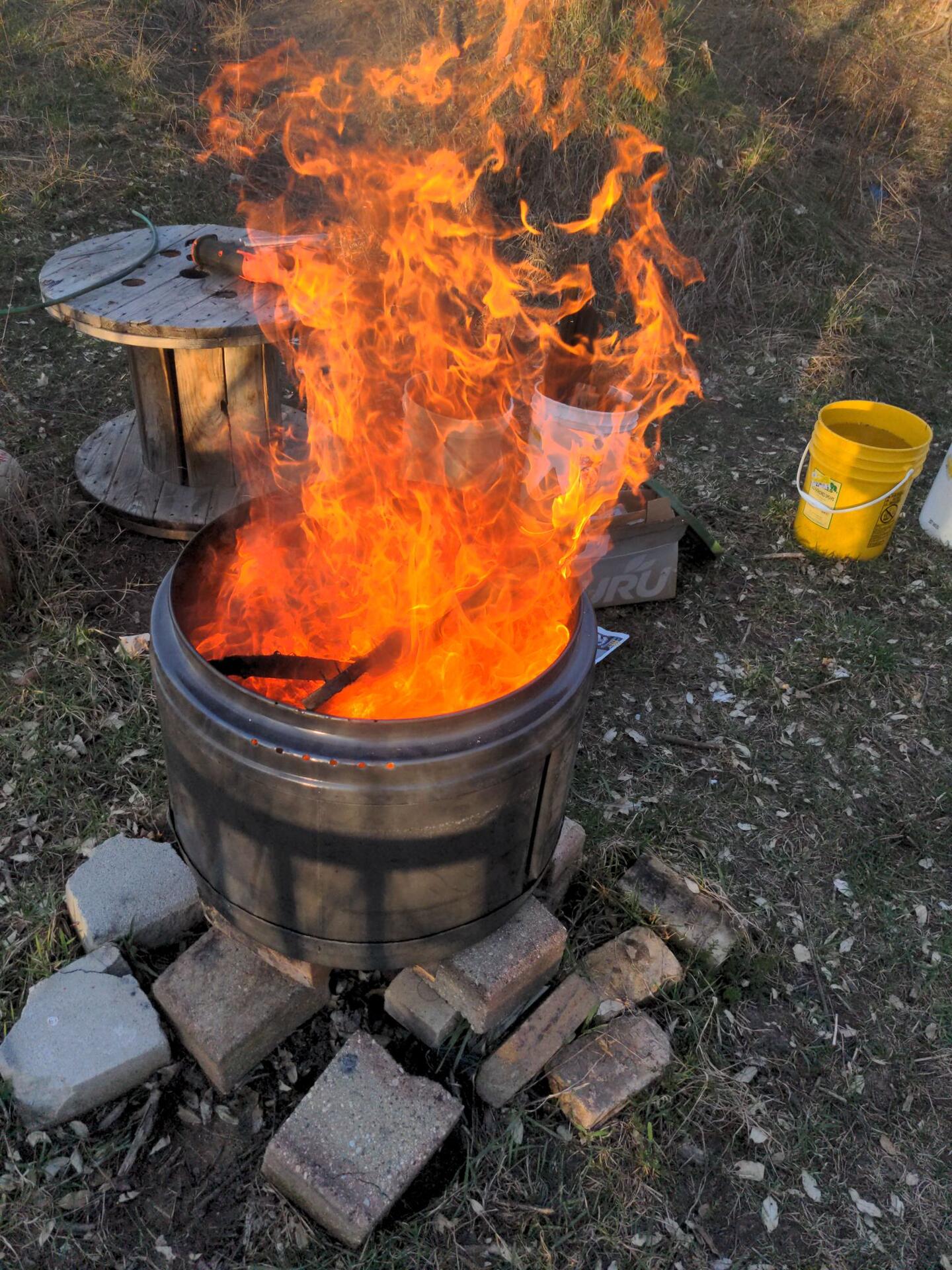
Had a big fire to make char for #biochar last night.

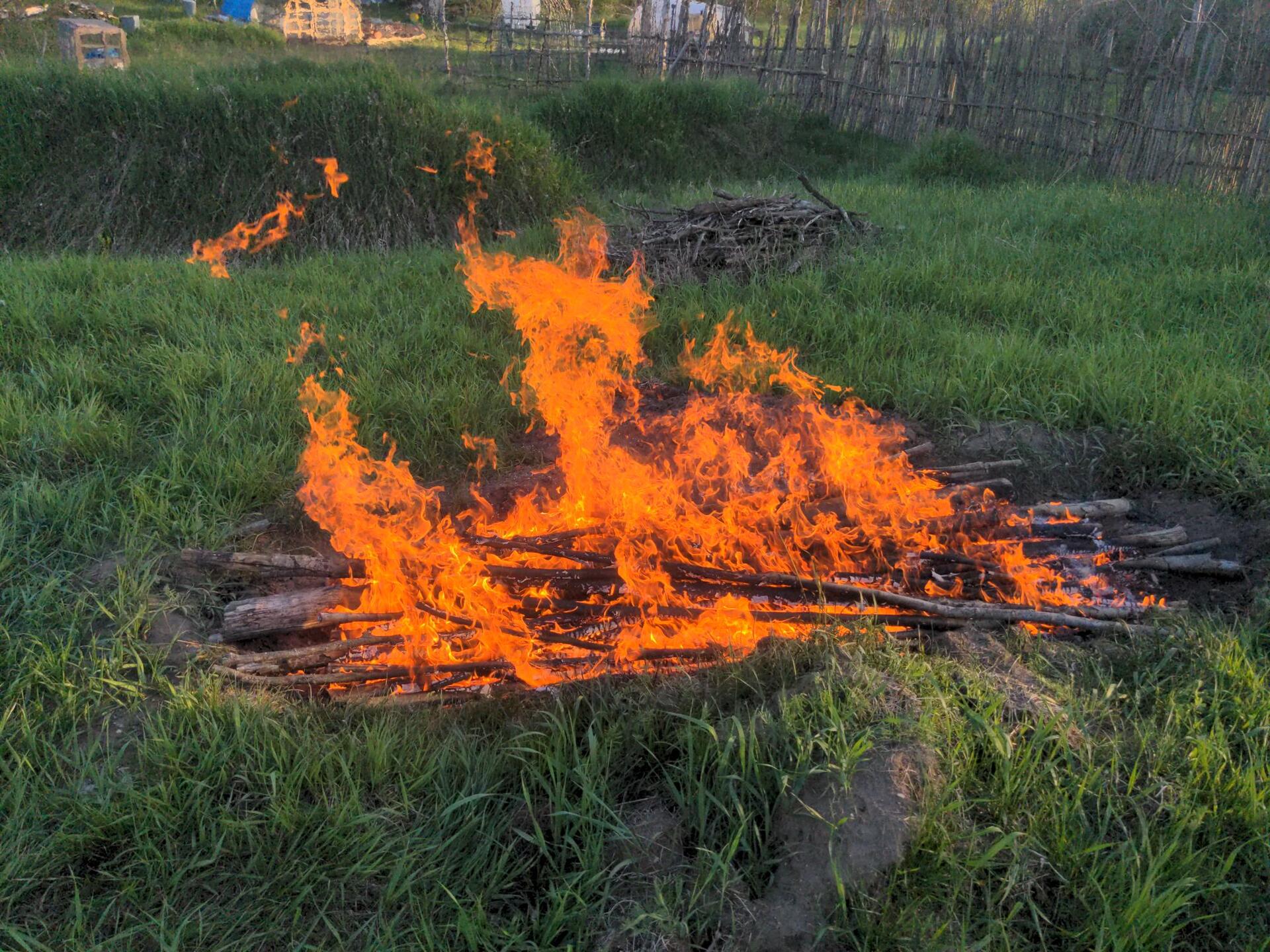
I dug a 10' trench then made sure to keep a good fire going. If a good fire is burning, it starves the coals of oxygen. I think angled sides help with this. The heat releases all volitile compounds and leaves just the carbon structure behind.

When done burning, I poured 40 gallons of water then buried it. I don't have running water here, otherwise I would have used much more. I'll leave it buried for at least a week to let it cool

#grownostr #permies
Reply to this note

Please Login to reply.

Discussion

Nice! That’s gonna be some great carbon!

Nice

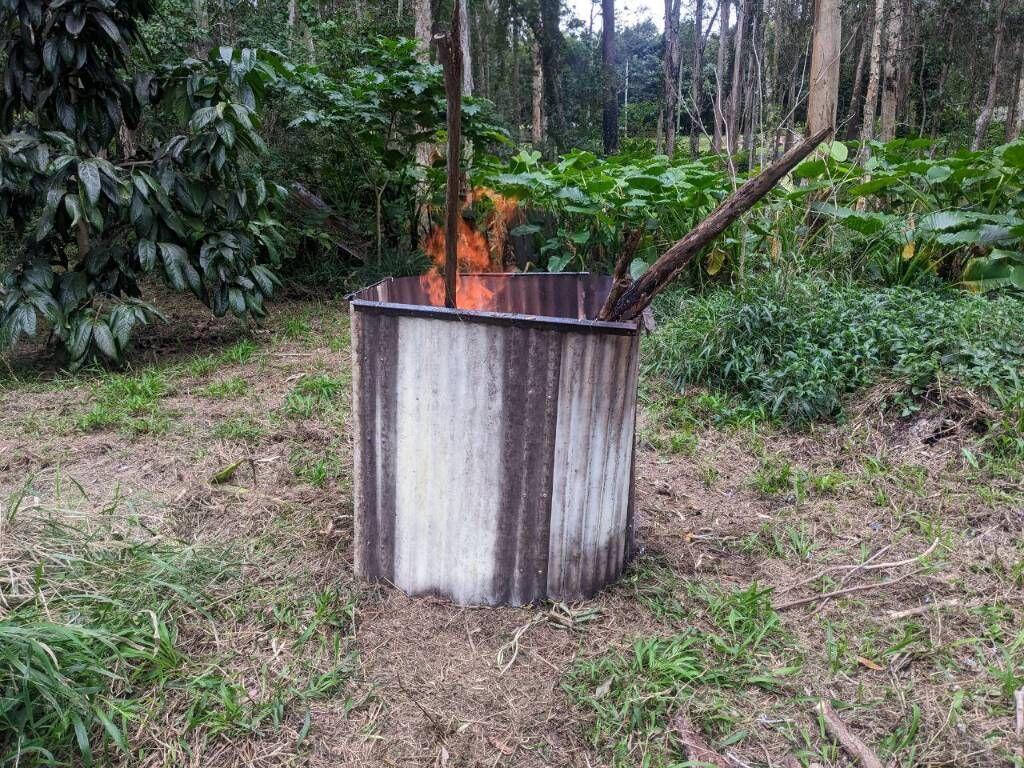
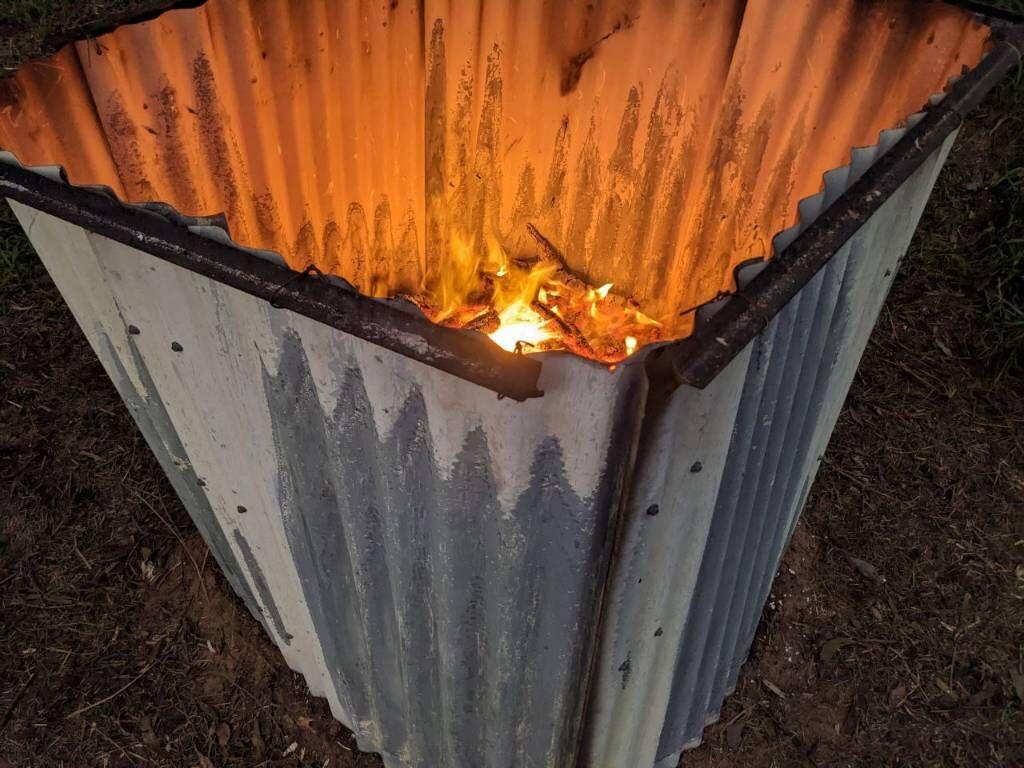
You're best bet is to build a kiln using corrugated iron to both reflect the heat back in & restrict the oxygen. You still need to quench at the end but it produces a lot more biochar.

Simply cut lengths of corrugated iron to 1.2m (4ft) & bolt/screw them together to form a cube that's open at both ends. Star pickets wired to the top hold the general shape & support it when you throw long branches in.

Feed the fire when the wood burning starts to turn to charcoal. Only the top layer of wood will be combusting because of the restricted oxygen.

Nice biochar kiln. I may make one at some point, but the pit method works pretty well too. I'm not too worried about getting less biochar, wood is abundant here. This was a quick and easy approach. I still have a large amount of char.

If I wasn't burning wood that was 7-10 feet in length, I would have tried a dryer drum set on the ground to plug the holes. It works as a great burn barrel when off the ground. I like to build things out of pallets and bedframes, so when I have a pile of scraps this burns it up fast.

I also prefer the cone pit for simplicity, ability to scale up or down with a shovel and a few minutes and ability to use stock in the raw.

however this gives me an idea of what to do with the dryer I just tore apart for the motor

What are you thinking for a project. I love building out of scrap.

My grandpa had added a shelf inside the shell of a dryer and had it in the garage/ shop.

I thought about painting the shell black to use as a dehydrator, but I'm going with a different design.

I mostly tore apart for motor that I hope to use for a generator, going to start tinkering with some homemade wind turbines as I get the opportunity, I want windy days to be just a scoche less grumpifying lol

not sure of drum use yet, kiln for clean char or a dehydrator both sound like good ideas

I have a lot of green & brown waste too.

The simple kiln is incredible at burning through it all. Very minimal smoke even when burning green leaves. The size allows you to add whole branches and logs without spending hours chopping into smaller peices.

It's a brilliant design (also not mine).

I imagine with a good bed of coals in that thing, it would burn almost anything.

Do you have an infrared thermometer? I would be curious how hot you could get it.

No thermometer but it's very hot work - it's like being in a sauna working around it. You can feel the heat radiating from the iron quite a few metres away.

When you put a branch with leaves in it, they seem to spontaneously combust in a ball of hot air. It wasn't until I did my own burn that I fully grasped how clever the design was.

Really curious what the goal is. Lye water or bbq coal? Or just to make a hot ass fire later? Or some kind of fertilizer?

I will put this in my compost and eventually the garden. The tiny spaces inside the char gives soil microbes a place to live. It absorbs 7 times its weight in water and will last 1000+ years in the soil. So many more benefits than these couple I listed

Very interesting. I imagine the type

Of wood is a factor? I assume no pine?

The type of wood is not really a factor because everything other than the carbon structure should be burned off through pyrolysis. I would only be concerned with chemical contamination because heavy metals will remain.

If you handle charcoal briquettes, you will likely need soap to clean your hands. If you handle biochar, your hands will just wipe clean because all sticky volatile compounds have been burned off.

Biochar can be eaten and will help pull toxins out of your body. I will have some available for my livestock to eat free choice. They instinctively will eat it as needed.

I remember seeing a video on living web farms you tube channel where the guy makes char out of roadkill. When he pulls it out, it looks just like it did going in, but it is black and easily breaks. He takes a bite of it to show you can eat it. 😂

I guess the type of feedstock matters for the pore structure of the final product. I would use any wood because the wood has plenty of pores for soil life to use and greatly increases the surface area. This larger surface area allows more contamination to be adsorbed (not absorbed). There are other benefits as well.

This is a deep rabbit hole to go down let me know if you want suggestions for podcasts or videos on the subject.

Here is a picture under a microscope

I absolutely want suggestions. Thank you

This podcast is a great intro to biochar. I have just listened, but the video may be more helpful.

https://www.youtube.com/watch?v=SaKgjoZ8Z-o

Living web farms YouTube channel has a bunch of good free content. Pretty in depth courses or video of a demonstration day. They are a major producer of biochar, it is fun to see the different ways they use the waste heat.

Much appreciated. Can’t wait to watch. I’m trying to secure a download of any videos that will be helpful in the future if I can’t already get a paper book on it.