They told us inflation was 3.5%. Now they tell us inflation is 2.9%.
Don’t believe your lying eyes.
They told us inflation was 3.5%. Now they tell us inflation is 2.9%.
Don’t believe your lying eyes.
Very tough for businesses to plan for the future and pass on prices to customers.
Talk to the Republicans that keep blocking price gouging bills brought by Dems to address these types of issues that they don't want to fix so it gives Trump a talking point to campaign on. You all should be pissed about this, not just restaurants. This is the oligarchs flexing their muscles and unfettered capitalism that MAGA is fine with apparently. https://video.nostr.build/ed29b5f0c73ff6bb8f74799431b92d66cddfd66bd62de027e8cd1a18f6c2f757.mp4
Price gouging would not be possible in a true capitalist system.
The only way a business could price gouge is if they were a monopoly.
The only way monopolies can exist in this world is leveraging the fulcrum that the monopoly on violence (government) provides.
The real numbers, the restaurant owners know and they feel it. These are the real numbers. We have to check the chicken price from vendors like sysco food distributors to know the real inflation. If food went up this high then so did insurance rent and socks underwears t shirts hahaha
Absolutely. Inflation is far higher than the CPI measurements.
I wrote a program some time ago that calculates the loss of purchasing power over a 45 year career based on different rates of inflation and taxes.
A few examples:


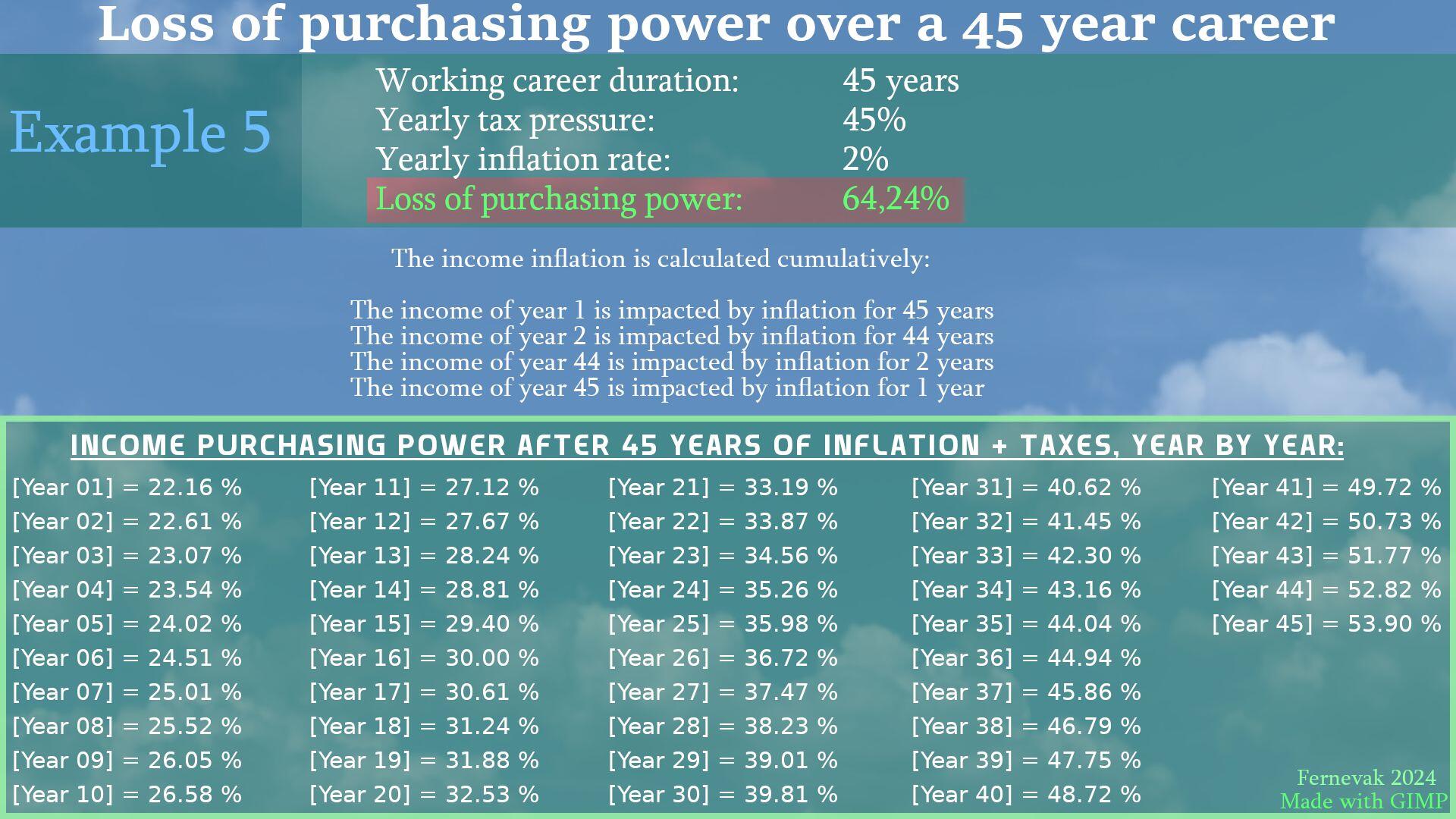
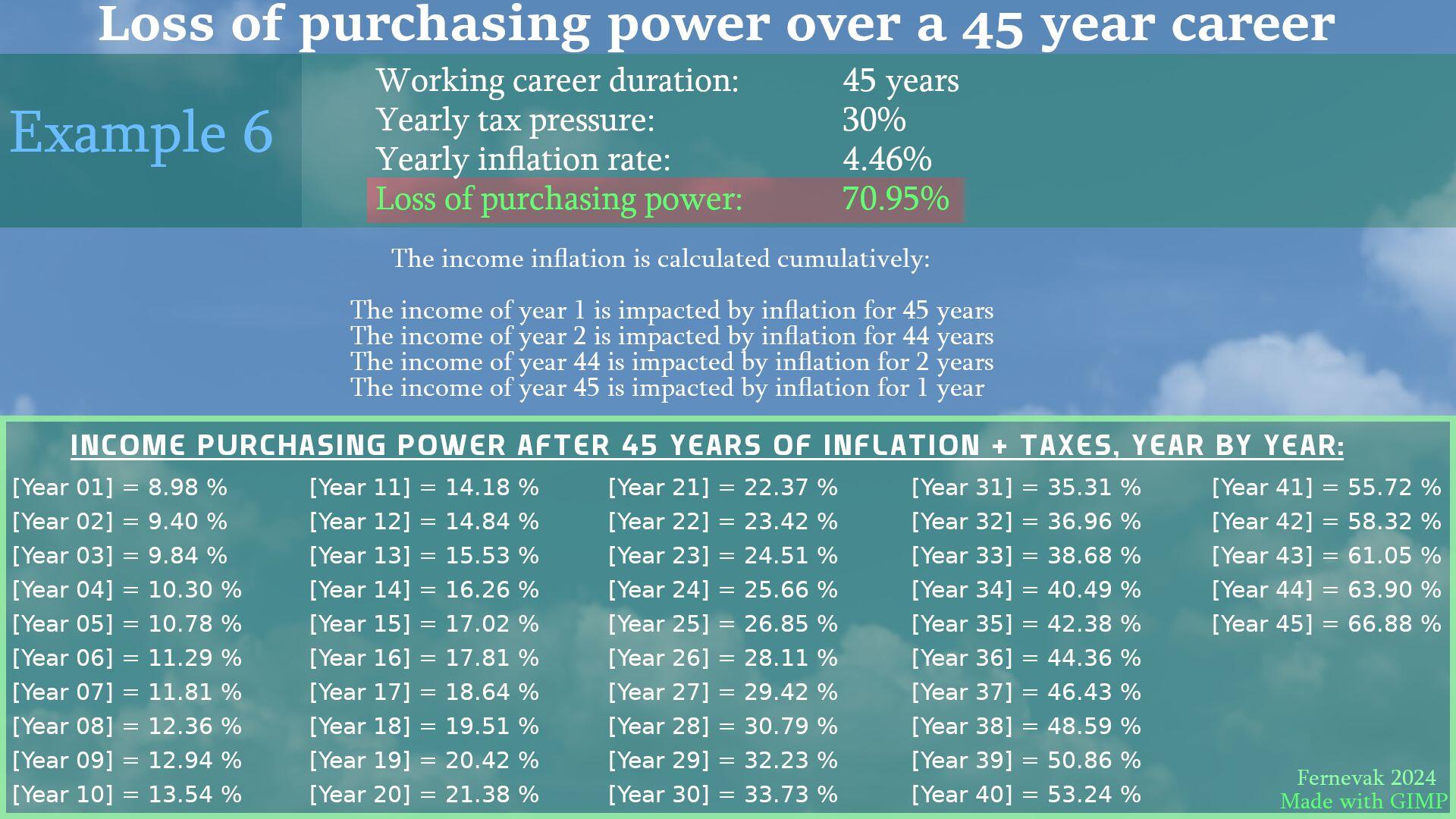
#Inflation #Purchasing #Power #Tax #Taxes #CPI
When was this recorded?
It is when you realize that food and gas are not included in CPI calculations. These 2 line items were deemed "too volatile" and skewed the numbers
It just occurred to me that this is bc people take delivery of these items
What people don't seem to understand is how long inflation takes to ripple through the agricultural industry.
Conventional food production is energy intensive. Fuel prices contribute to fertilizer prices which contribute to grain prices which impact conventional meat prices. Add in the fact many producers try to secure input prices a year ahead of time, further kicking inflation down the road.
High quality grass fed producers have greater resilience to these pressures as the price of hay is likely the biggest impact, which is readily planned for during "good hay making years." (Another example of delaying inflation in agriculture.)
Inflation hits the lowest quality food production the hardest because they're already in competition to be the cheapest producer. As a result, fast food is a great gauge on real inflation rates.
I haven't even touched on the impacts that the drought can and is having on agricultural prices. Cattle markets are at all time highs. As parts of the country come out of drought demand is increasing for female livestock to start recovering from selling off during the drought years (national cattle numbers are fairly low). Coupled with stronger demand for beef the cattle market is expected to experience a super cycle.
It isn't unreasonable to be securing beef for your family now for the next 1-2 years from your LOCAL Bitcoin farmer/rancher. And if you don't have one, orange pill one. Regenerative ag and Bitcoin were made for each other.
Rehypothecation isn't just a gold and bank vault issue. It's happening in cattle markets too. Get eyes on your beef while it's on the hoof.
A well deserved follow from me from this comment 🎯
Introduce demurrage to combat inflation.
I agree that food prices are a good indicator. On the other hand, there have been tremendous technical advancements decreasing the food production costs during the past years and decades. Thus, looking only at food prices underestimates the real inflation, which is much higher.
Unfortunately, the contributors to these efficiency increases are often not really acknowledged because their contribution is eaten up by inflation. In the public perception the food prices just keep on increasing and the producers are being blamed.
One of the distortions from fiat money...
The advancements in the ag sector are butting up against physical limitations of productivity per unit of sunlight. Monoculture grain production has been essentially maxed out for decades planting "fence row to fence row" since the Earl Butz days of the USDA. Most improvements have actually been in the realm of labor efficiency, which further kills rural communities already destroyed by big ag policies. These costs have transitioned from being labor costs to technological and machinery expenses.
Isn't it a good thing to free up labor for more creative work? I remember times when kids had to work on the field and could not attend school. Still happens in many countries.
Communities can be formed or strengthened in other ways, without requiring people to work on a field.
I am curious where you see the productivity limit in terms of sunlight, considering that only a very small fraction of the light energy actually ends up in the product. Is that really the limiting factor? Afaik yields per hectare have been going up more or less constantly.
bring back twitter char limits
They are constantly pissing on us and telling us it’s rain.
I'm not in the US, but I felt it mandatory to give my employees an 8% increase. Everyone needs to work out what their inflation rate is, as saylor says....it's a vector.
Can we believe 100% this is Marty?