Thunder Bird Eggs
Kettle Point Lake Huron Shore
https://www.lambtonmuseums.ca/en/lambton-heritage-museum/the-kettles-of-kettle-and-stony-point.aspx
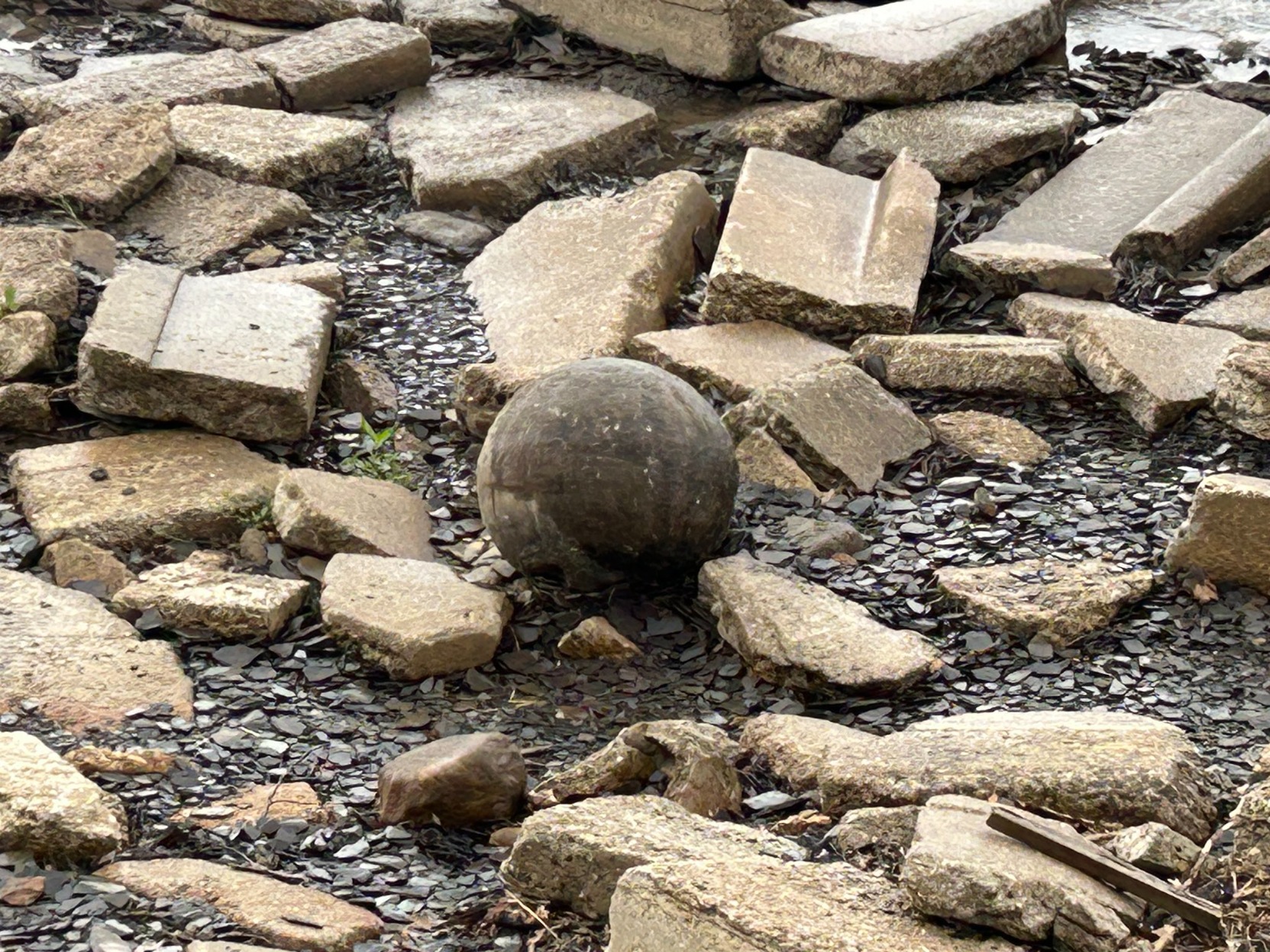
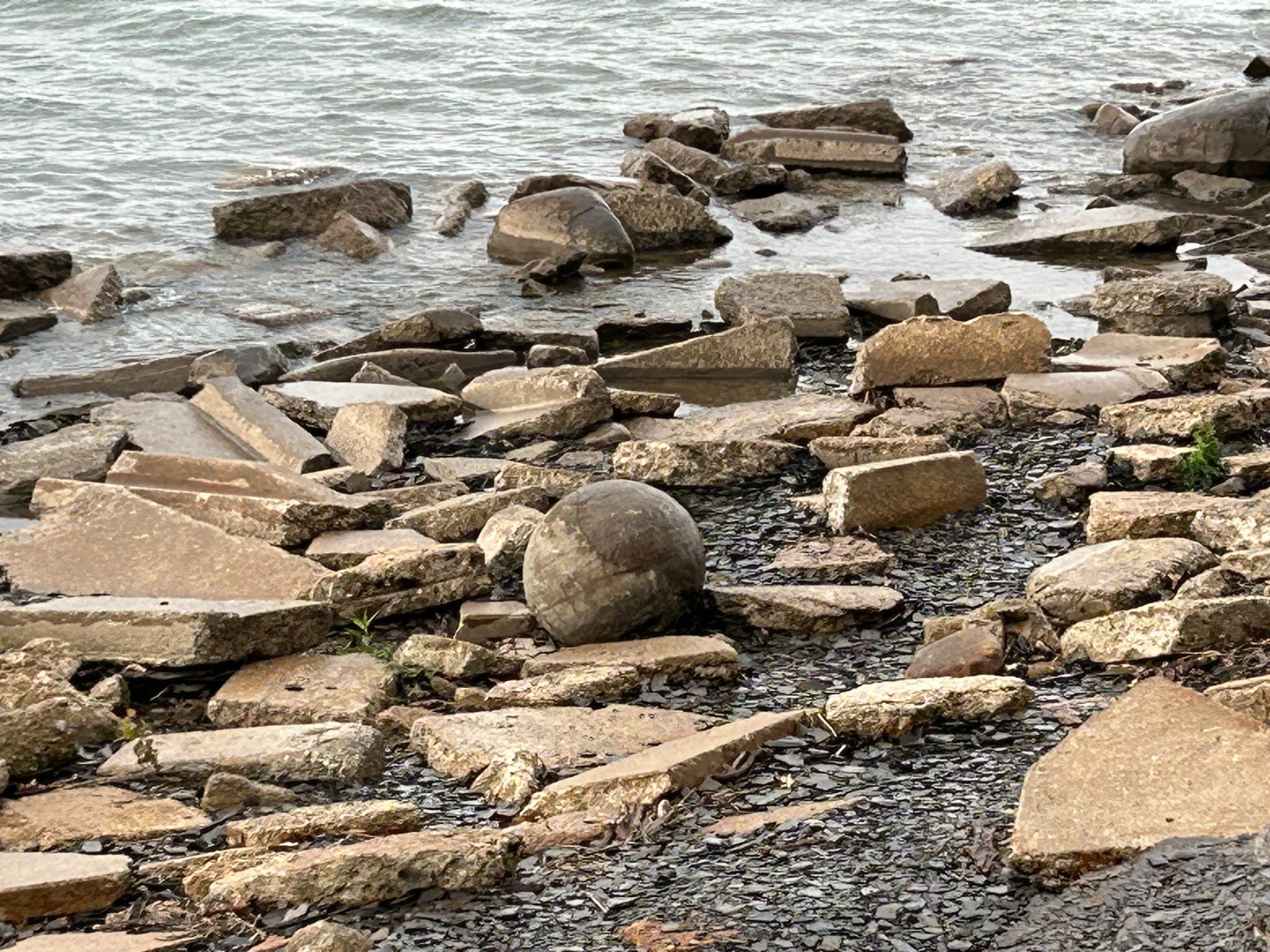
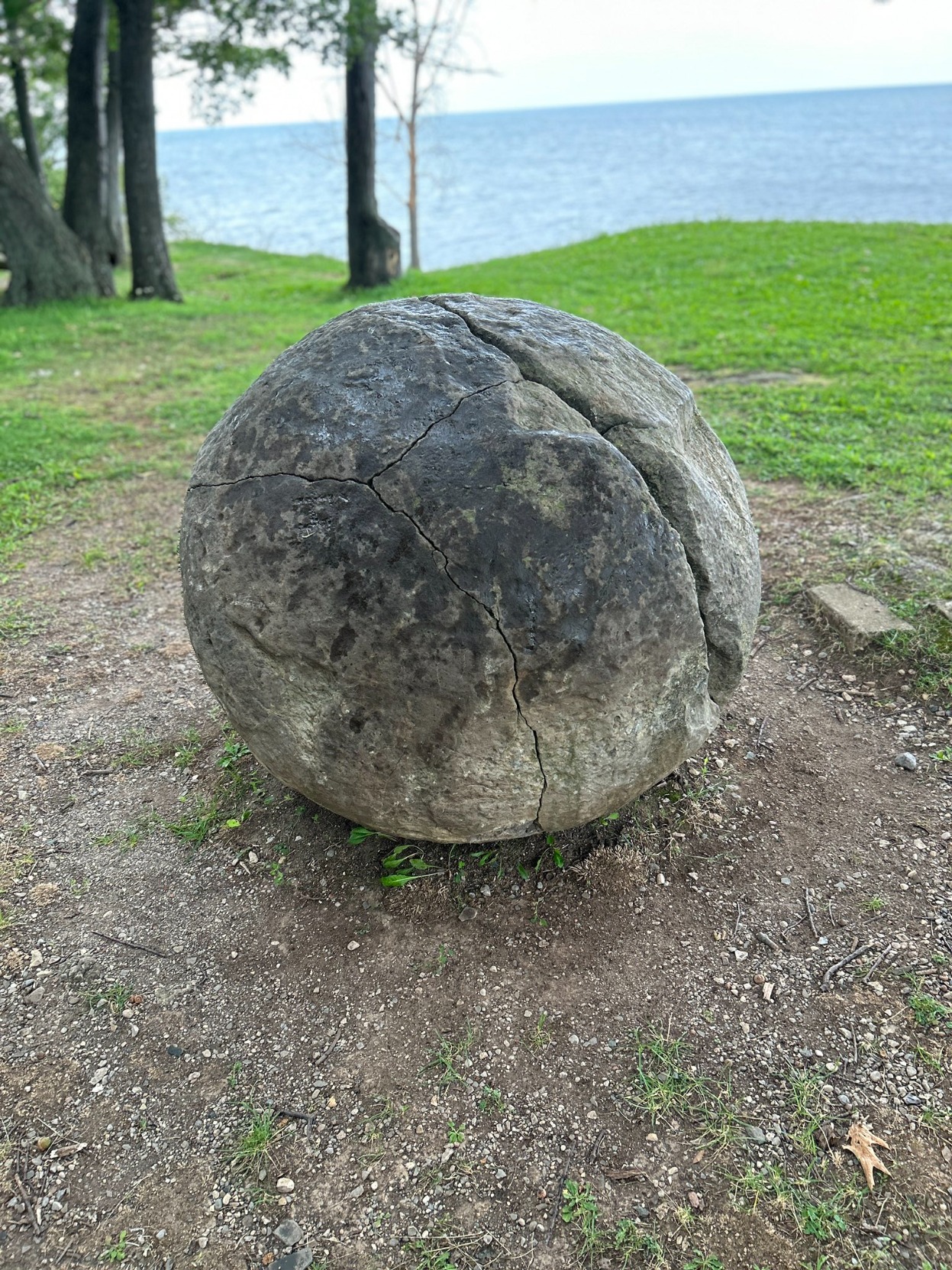
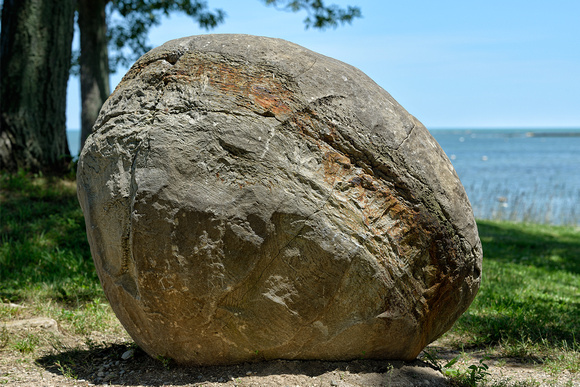
"The unique concretions of Kettle Point rest like spherical statues along the Lake Huron shoreline. They are made of calcite and emerge from an outcrop of sedimentary rock. They stand out dramatically as the softer shale that surrounds them wears away. The concretions are called kettles because their shape and size is like a large cooking pot. They range in size from 0.3 - 1.5m across.
The kettles formed about 370 million years ago. Layers of muddy sediment settled at the bottom of a very deep sea. Bacteria in the mud caused tiny concretions to form. The concretions grew outwards in all directions in a radiating pattern.
Over time the mud hardened into sedimentary rock. Layers of rock warped around the spherical concretions. Alexander Murray, a member of the Geological Survey of Canada, described the phenomena of the kettles in the mid-1800s. He also recounted stories of fires burning for months along the shore due to the bituminous nature of the shale beds"
There are Ojibwe stories that these are eggs laid by gian Thunderbirds.
https://www.vanishingculturesphotography.com/p981696924/h6186EE67
#Nature #NDNZ #Indigenous