
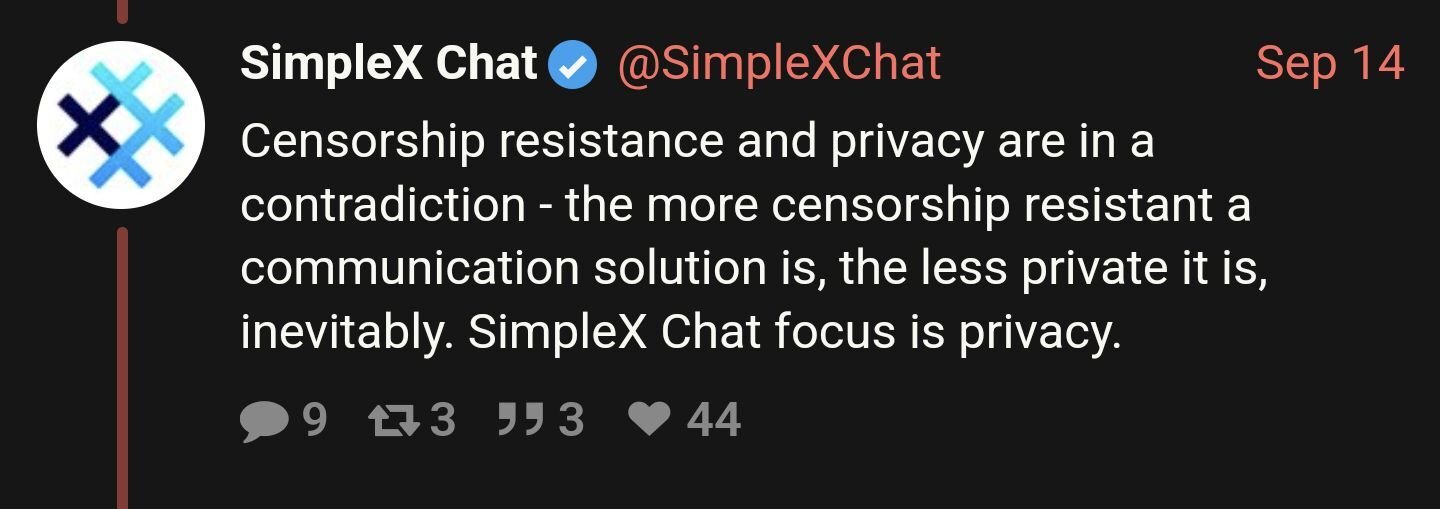

Censorship resistance and privacy, are they really mutually exclusive?
Discussion
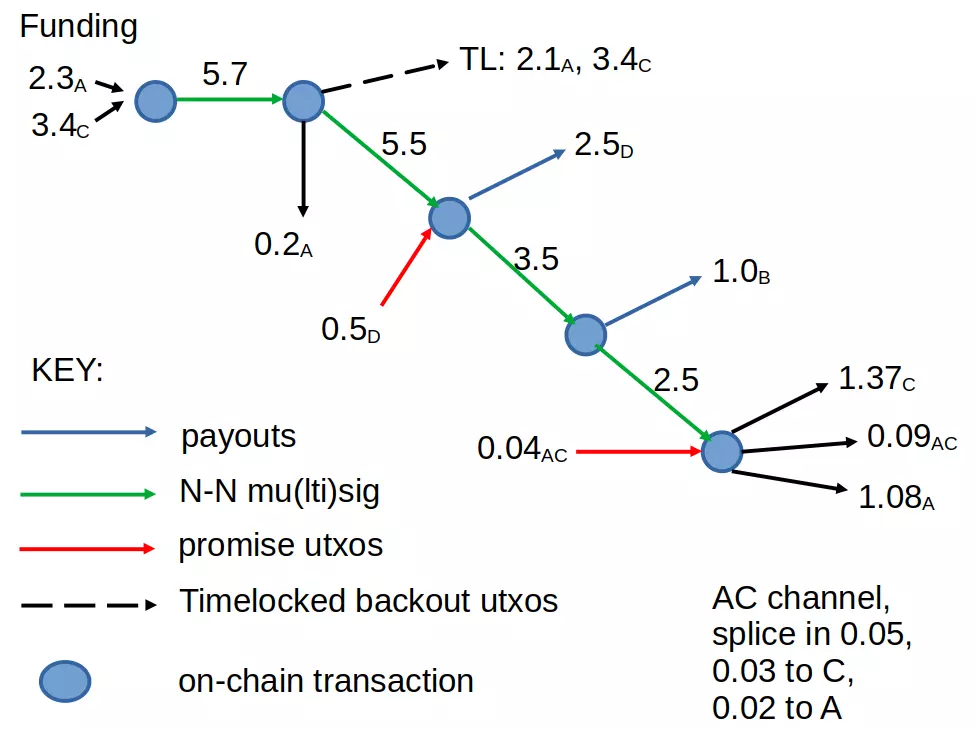
No they aren't, but the conflict he's talking about is very real, and very often overlooked; people like the concept 'censorship resistance requires privacy so that the powers that be can't see what they want to censor', which is true but is also limited in that those powers may try to force communication, or monetary exchange, through channels not private from them.
The dynamic he's talking about is probably best understood by considering the word 'broadcast'.

would be interested to hear what nostr:npub1h0uj825jgcr9lzxyp37ehasuenq070707pj63je07n8mkcsg3u0qnsrwx8 devs think of this

it seems like a dichotomy
Why?
like private sphere and public sphere, redundancy increases your exposure.
If not face-to-face, each communication requires an intermediary to store/deliver the message. Censorship resistance, defined as the ability to resist suppression or modification of a message (private or public), could help by eliminating the one point of weakness and thus increasing deliverability and system performance.
I think we should first agree on the meaning of "censorship resistence" and "privacy".