
I noticed I'm unable to rebut every point submitted by the Monero bros. In my view, they have stronger arguments than Ethereum proponents (let alone Bitcoin Cash or God forbid BSV users).

But how private is Monero really? Has any bitcoiner thoroughly examined the merit of Monero maxis' claims? I'd like to see such an analysis if one is available. nostr:npub1dergggklka99wwrs92yz8wdjs952h2ux2ha2ed598ngwu9w7a6fsh9xzpc nostr:npub1tr4dstaptd2sp98h7hlysp8qle6mw7wmauhfkgz3rmxdd8ndprusnw2y5g nostr:npub1a2cww4kn9wqte4ry70vyfwqyqvpswksna27rtxd8vty6c74era8sdcw83a nostr:npub1qny3tkh0acurzla8x3zy4nhrjz5zd8l9sy9jys09umwng00manysew95gx

Reply to this note

Please Login to reply.

Discussion

Privacy is indisputably much stronger on Monero than Bitcoin.

Bitcoin relies on obfuscation, a weaker form of privacy, where the range of possible connections and amounts are availabe to see. Why does this matter? Because someone can use future data to deobfuscate your coinjoin. There is a whole industry dedicated to this: Chain analysis. https://blockworks.co/news/silk-road-hacker-sentenced

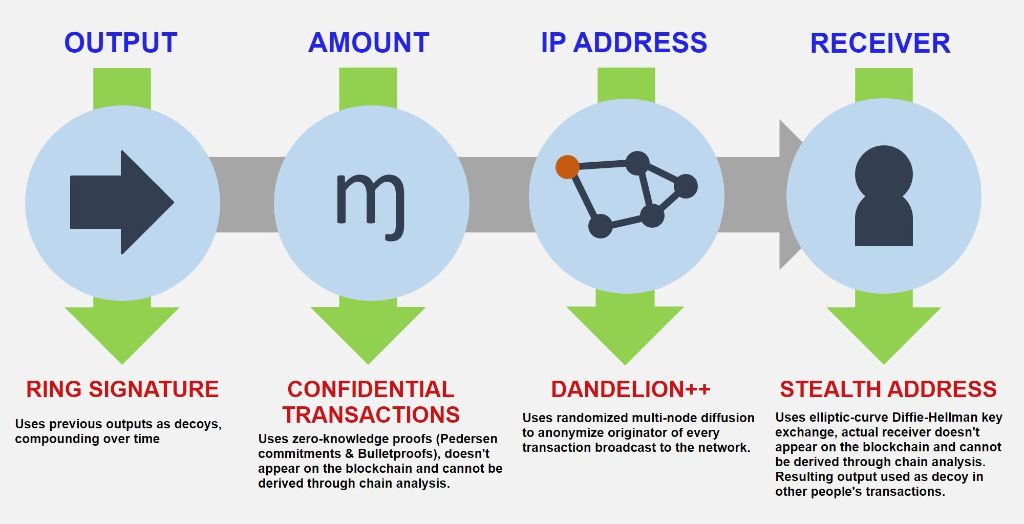
Monero hides amounts and recievers via encryption. So, there is no transaction graph connecting senders to recievers. And amount analysis is not possible either.

Ring signatures is the only part that is obfuscation, but it is only for senders. And previous senders are used as decoys for new transactions = compounding anonymity set over time.

Simple example of a Monero transaction:

~6% chance Alice sent $[?] to [?]

With the upcoming Seraphis upgrade ring signatures will jump from 15 decoys to 128 decoys (maybe 256). And eventually ring signatures will be replaced with full membership proofs to do away completely with sender obfuscation.