
People won't stay in a pool nearing 50% for the same reason they won't run a node that increases max supply. It's just not in their interest.
Discussion

The three nations of 1984 will be mining pools.

I saw a bunch of pie charts and asked Claude to make a histogram:
The distribution of miners looks like a power law, which is not surprising for natural processes and network effects (though there really aren't many individual known pools, so it's difficult to draw strong conclusions with a fit of 0.65). That extra condition for individuals not trying to go in a pool near in 50% is an interesting constraint from a game theory pov though - acting as a sort of homeostatic effect, curious how much that incentive actually effects the dynamics.
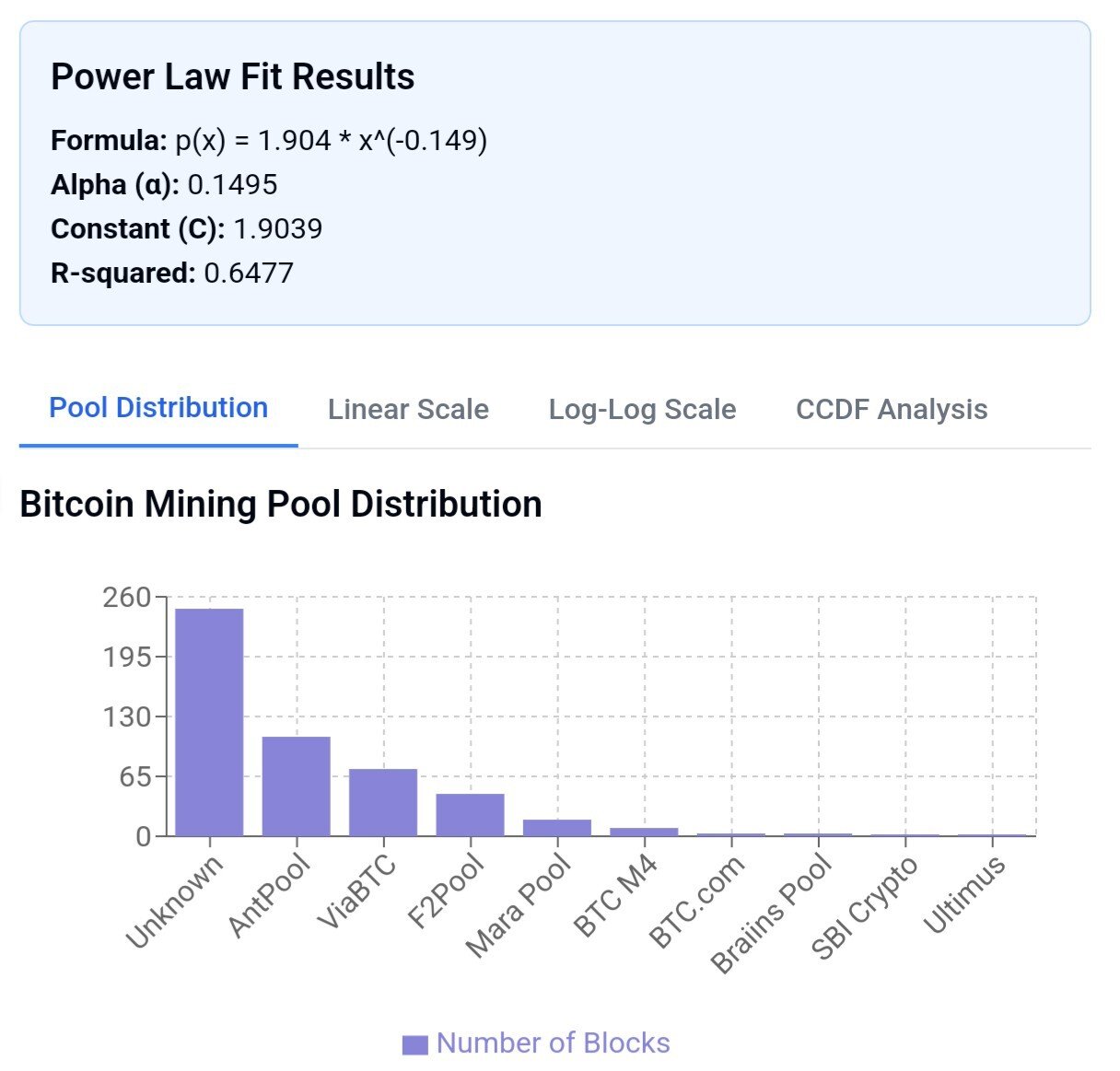
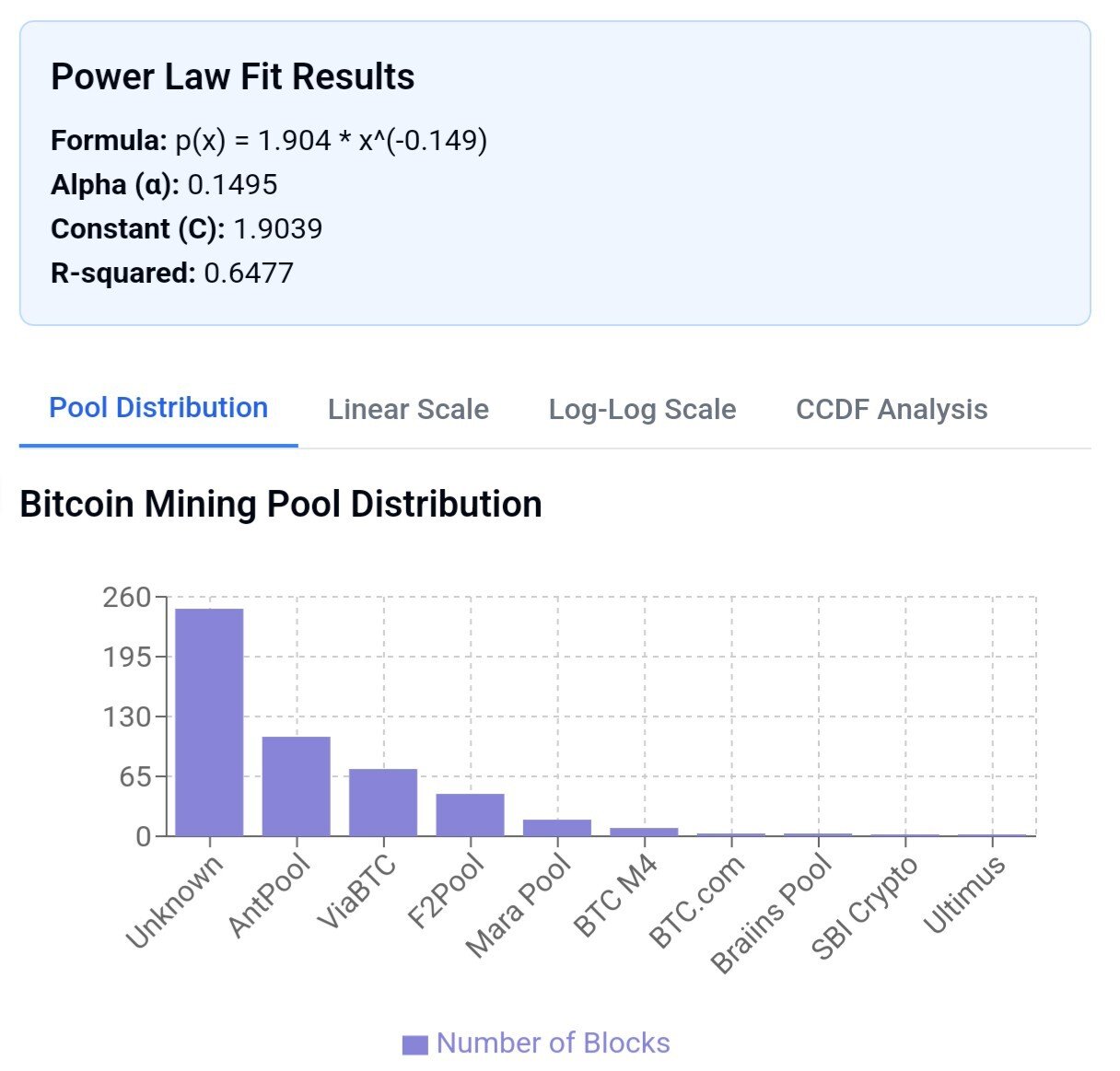
Doesn't contradict anything, but just had an intuition that the network effects of mining were a power law and was curious 😁📊

mining decentralization matters in the sense of the percentage of hash that's not in the 3 major pools.
Even if you think it's inevitable - I think increasing the solo mining movement & joining pools like ocean with low powered miners is a unique assymetry to harness at home.
Increasing agency individuals in a pool is important. The hash concentration will solve itself.