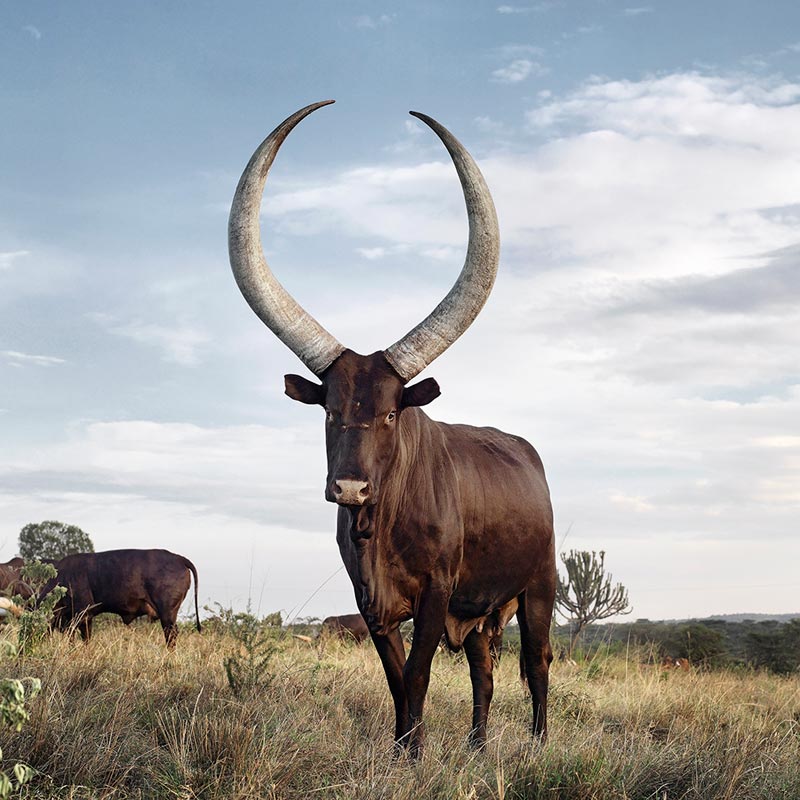
Ankole Long-Horned Cattle (also known as inyambo) have a dark brown coat and long white horns that curve outwards and then up, in the shape of a lyre. They are majestic, elegant animals, able to travel long distances in search of pasture and water. Thanks to its impressive horns (almost six times longer than those of European cattle breeds), this breed was once considered the incarnation of divine beauty, a yardstick for women and worriers.
Still today these cattle have a sacred role in the communities that depend on them. They are a maternal figure, a currency, and a gift. They strengthen social relationships, and their elegance is celebrated in poems and songs. Breeders and herders articulate the times of the day through the habits of their cattle: the morning is “grazing time” and the evenings are “home time.” Ankole Long-Horned Cattle are raised in the Rift Valley along the border between Uganda and Rwanda (some are also present in Burundi) in a semi-arid strip often called the "cattle corridor." This rustic breed is kept for both its meat and milk. The milk has a high fat content and is used to prepare traditional products such as yogurt and ghee (clarified butter). The blood is also used as an ingredient in local cuisine.