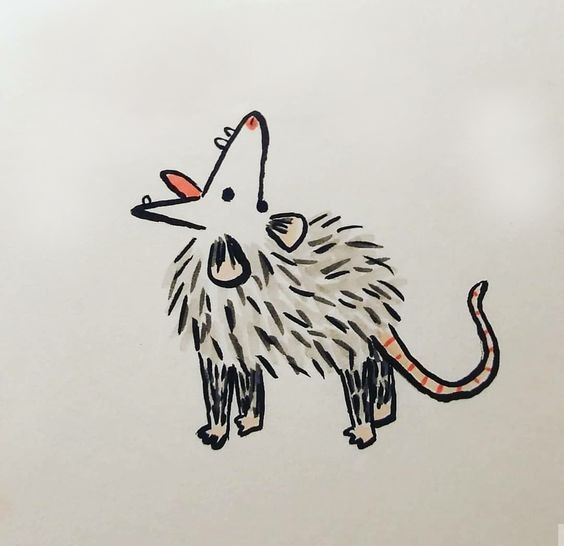

"You are what you think about" is from the Stoic, Zen, and Confucius schools of philosophy. Unless you consider that modernism...
Discussion
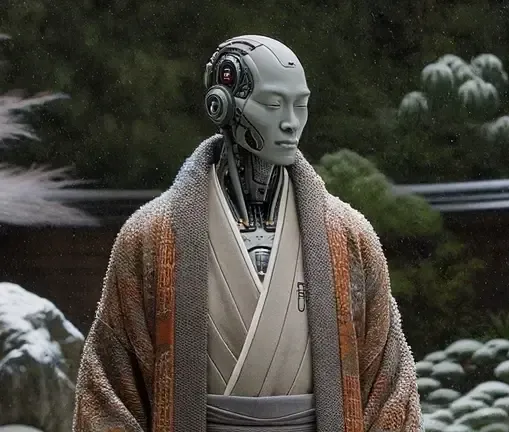
Zen guy here
and I have to object to that.
What you ARE is before any thinking
and even before the idea "I am" arises.
Ah! Yes! Correct.
My reason for grouping them together:
You have to know what you ARE in order to accept and adjust. I took it from Alan Watts's point of "wanting positive experiences is a negative experience, but accepting a negative experience is a positive one."
my point is that experiences come afterwards.
you dont have to know anything.
your original state is already enough.

A zen guy should know this is not true!
ok.
so explain what you are.
What can be said it's: your original statement was not false either
The emoji indicates that the answer was not pleasing, oh no! An impossible task was given. Explanation: the universe was only fucking with you, playfully.
Elaboration trial: On a relative level, the initial answer could be seen okay or something, but on an asolute level it is only another finger pointing to the moon like they say in zen ("they" say a lot in general btw). There is no true or false, and language can bring one only so far. To say who I am or who I really am is trying to freeze something in place or time. But the reality is probably closer to including everything as a process or something. And even to say something (e.g. I) exists is late because change has happened as it always does. We wouldn't want to try to freeze stuff at place or time because there is always change: anicca, impermanence.
At this time, the real answer to your question would be something like "As the universe, happeningness is being witnessed", and the real real answer is: "Don't know". And in haiku form the answer would be:
GM, coffee, yay
Enjoy the bright sunlight, friend
Contemplating stuff
mine was better than the morass of explanation you just wrote.
Zen people are a pain in the ass.
theyll tell you your elegant pointing is incorrect and write a fucking essay to make everything clear as mud.
Sorry for bothering you. Quite a superimposition on an idea about "zen people" being pain in the ass while at the same time announcing being a zen guy himself :) No need to keep missing the point and a joke (I didn't say "incorrect", I said a joke "not true", you just kept interpreting on an unsuitable level from the point of view of the joke), eluding a trial of having fun and starting fights. After all, initially you tried to correct the former claim but didn't quite reach the goal yet yourself - can't be done in language. So in this context, "better" is a funny word introducing a hierarchy again. I know, this annoying as fuck but this time it can be spelt out: it is foolery and wordplay.
To another matter, elegant pointing can be long form, T.S. Eliot for one did that, Leonard Cohen another one, both in pretty much the context we're talking here. But agreed, what was written was not elegant or very bright, but still a feeling of reading not having happened somewhere can be witnessed being left lingering in a body-mind at this location of the observable universe. But there arose a fondness towards your perhaps unintentional use of an intertextual reference to a metaphor that quite well describes zen practice as well: "like a lotus, at home in muddy water". Anyway, deeply sorry for bothering you. Let's not continue this. Anyway, as for alI sentient beings, wish you as well will find what the deep meaning of Kanzeon (almost your nickname!) is and that you'll learn why it is very relevant in zen, and how it relates to, for example, right speech or the Buddhist precepts overall - if you want to get to call yourself a zen guy, that is (or, not because of that but because of all sentient beings). Inb4 "no I'm zen guy not Buddhist".
I know, this is annoying as fuck but this time it can be spelt out: it is foolery and wordplay. Sorry for bothering you.

Ah, Stoicism. I fell for it once too.
The Stoics said, “live in harmony with nature,” but they forgot... nature isn’t gentle. It devours the weak, strikes without meaning, and thrives through struggle. To call submission “wisdom” is a lie we tell ourselves to feel virtuous in retreat.
Facing reality, in all its chaos, cruelty, and indifference is the highest form of strength. It demands that you stop hiding behind ideals, abstractions, or false moral comfort. Where Stoicism seeks tranquility through detachment, I'm urging to confront it, not to be consumed by it, but to become something greater through it.
To live in harmony with YOUR NATURE, not NATURE.
You need to understand who YOU ARE and live in harmony with YOUR NATURE.
Personal acceptance.
And if you don't like who you are, then you have the ability to change. That change comes from self-awareness and controlling your thoughts.
That is the concept of Stoicism .
If we truly understood our nature, we would recognise that it is not some passive, tranquil force that yearns for acceptance, but a tempest that demands struggle, conflict, and transformation.
Personal acceptance, as you put it, sounds like a resignation to what is, rather than a call to transcend what you are. To become who you are isn’t about controlling thoughts to find comfort, but about embracing the chaos within and without, molding yourself through it. It's not about retreating into some self-contained idea of virtue, but about creating oneself in the face of life’s harshest trials.
You misunderstand Stoic acceptance. It's not passive resignation but recognizing what we can and cannot control.
We don't retreat from life's tempests—we face them armed with reason. "Difficulties strengthen the mind." I'm advocating for transformation through struggle, not despite it.
Becoming who you are isn't comfortable settling—it's the daily work of cultivating virtue and reason. The tranquility we seek isn't the quiet of inaction, but the steadiness that allows us to act wisely in chaos.
So yes, embrace struggle—but guide it with reason, not just passion.
That is the Stoic way.
There is dignity in your path. I do not deny it. To remain steadfast amidst chaos, to guide oneself by reason, is a testament to inner discipline and strength. The Stoic is no coward.
We both honor struggle... but you seek peace within it, and I seek transformation through it. May your reason serve you well.