
I was reading this interesting piece of research by Sarah Kleiner:
The internal clock of the digestive system reveals that WHEN you eat may be just as important as WHAT you eat.
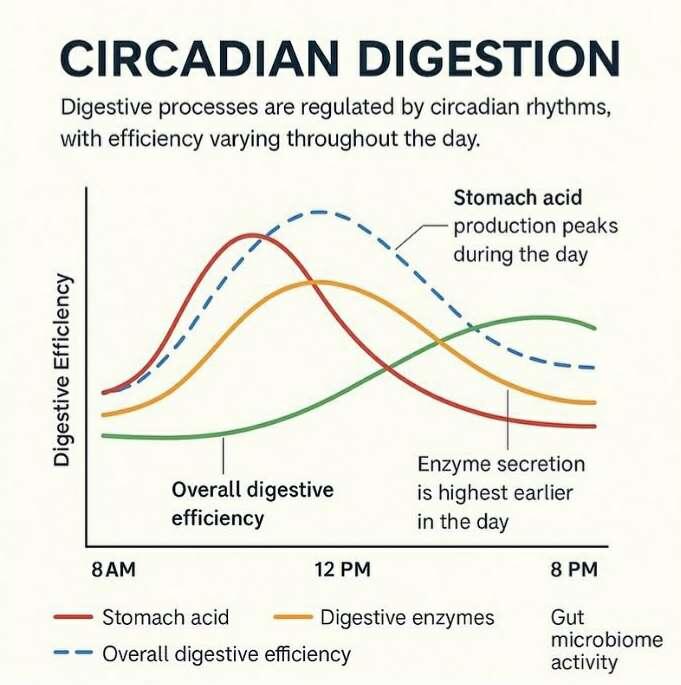
Circadian Rhythms and Digestion:
Your digestion follows a 24-hour internal clock, known as the circadian rhythm.
This rhythm is influenced by LIGHT exposure and controls:
- Stomach acid secretion
- Digestive enzyme release
- Nutrient absorption
- Gut microbiome activity
(Source:
Digestive enzyme release, gut motility, and absorption follow circadian timing (PMID: 30874451))
How Digestion Varies Through the Day:
- Late Morning: Stomach acid peaks → helps break down protein and absorb minerals.
- Midday: Digestive enzymes surge → more efficient breakdown of carbs and fats.
- Afternoon: Microbiome activity increases → boosts fiber digestion and short-chain fatty acid production.
- Evening/Night: Digestive processes slow down, leading to:
- Poor digestion
- Increased fat storage
- Higher chance of acid reflux, especially if eating close to bedtime
(Sources:
Gastric motility is slower in the evening (PMID: 21342212)
Melatonin, secreted at night, influences gut lining and digestion (DOI: 10.2174/1381612013397681))
Scientific Backing:
Sarah references several studies supporting the importance of meal timing:
Digestive processes are circadian-regulated
➡️ PMID: 30874451
Obese women had better metabolic outcomes when they ate earlier in the day
➡️ DOI: 10.1002/oby.20460
Gut microbiome composition shifts by time of day and light exposure
➡️ PMID: 31689582
Melatonin at night impacts digestion and gut health
➡️ DOI: 10.2174/1381612013397681
Gastric motility slows in the evening
➡️ PMID: 21342212