
These are some monster hose clamps 💪
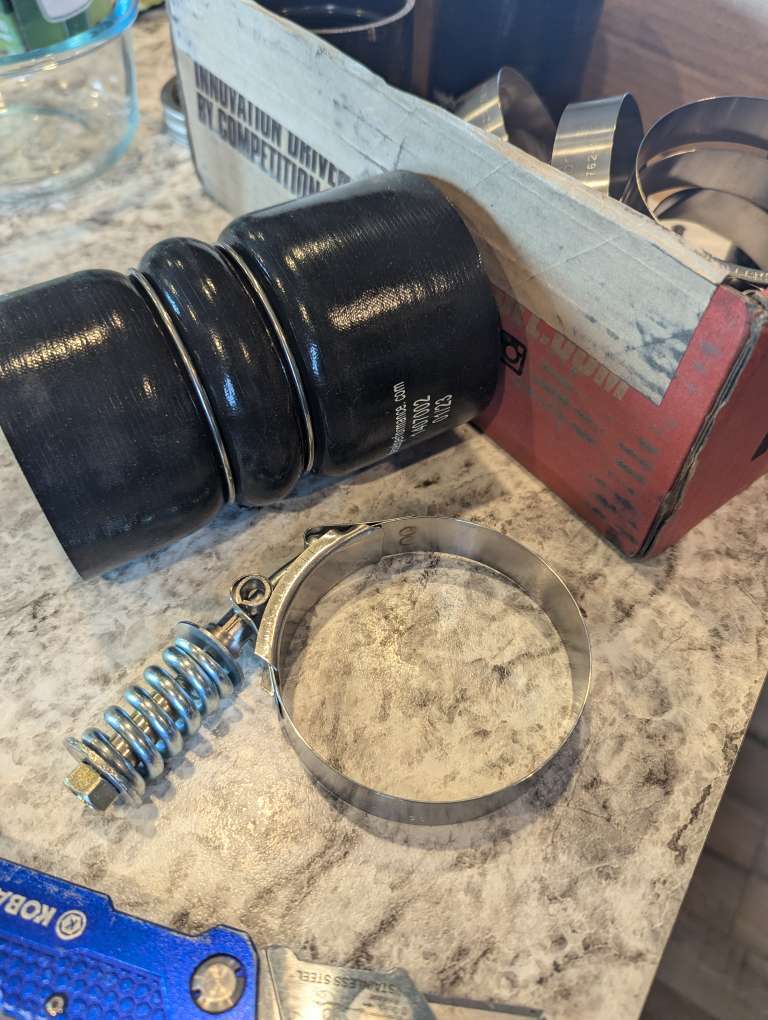
These are some monster hose clamps 💪
Using a stock charger or going T4?
Sticking with the stock twin configuration but with better flowing turbos
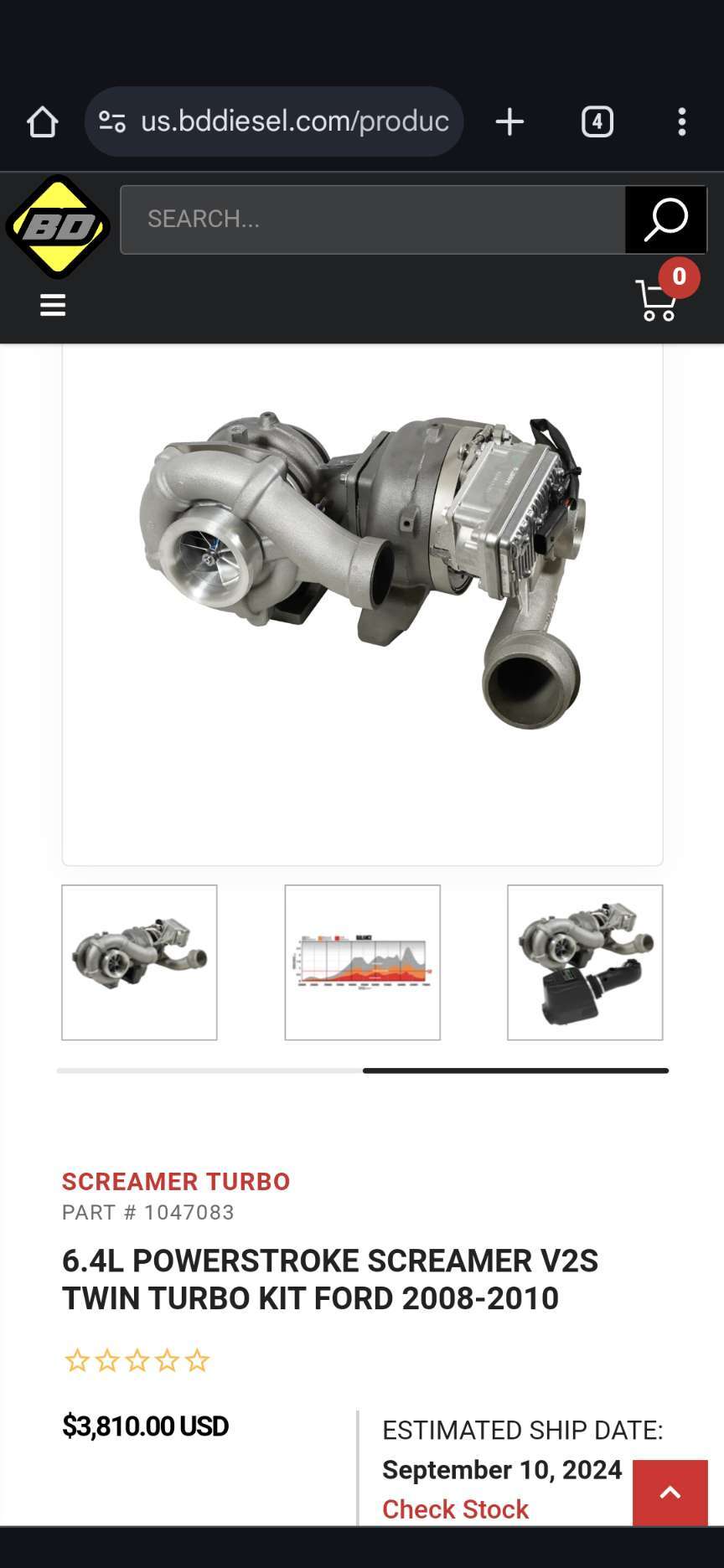
Yeah the BD kits are good if you are staying close to stock power. They are one of the more professional companies we worked with in that space. Anything past like 100hp over stock on 6.4s I usually suggest a T4 setup if you can afford it to avoid excessive drive pressure from the stock compound configuration.
Are you running factory heads?
Yeah still factory heads and injectors. Not looking to turn in into a 1000 HP monster or anything. But the high side turbo was leaking oil and the bearing is fucked and I decided if I'm going to go to the trouble of ripping them out I wanted a slight upgrade while I'm at it.
Oh yeah! I would suggest anything to keep that drive pressure down (EGT primarily) to help keep them from cracking heads! I believe cracked heads (and valves) were more common in our shop than head gaskets. Cracked pistons are the next most common behind head-gaskets probably. I'm not sure what powerstroke is worse for piston failure but they were up there. Funny thing is, we used to dyno a few high horsepower (800+) 6.4s and they would lift heads (push cylinder pressure into the cooling system) when loaded with stock bolts or studded, and the gaskets would seal right back up at lower horsepower and be just fine.
I don't think it was uncommon to see over 80 psi of drive pressure, but it's been a while since I was looking at logs.
I usually say, I wouldn't expect to pickup much HP if any, but usually efficiency!
Better throttle response would be nice. BD claims that kit has lower EGT than stock. I've been wondering if a blow-off valve wouldn't be a bad idea but I haven't done any research on it yet. I'm thinking as long as it stays below 45-50 psi I shouldn't have anything to worry about.
Ehh, possibly with the billet wheels, but on 6.4s pedal response is mostly in your tuning, especially with a tiny little VGT. You will usually see lower average EGT though when going to billet wheels.
Blow off valves are for useful for throttled engines (gas engines) because when the throttle snaps shut all of that energy stored in the charge air needs a place to escape, so it goes back out the compressor side causing a large pulse of shear force on the shaft or even causing the wheels to spin in reverse, then another huge spike in the positive direction after that column of charge air escapes.
In diesel engines without throttles (yeah I know the cali emissions 6.4s had "throttle" blades but they aren't used for throttling) that charge air just gets stuffed into the cylinder and doesn't do anything, just raised AFR which again is just fine for a diesel engine. So you turbo and your engine will be fine, a blow-off valve is pretty much useless!
Because diesel engines are fuel metered, you can stuff as much air as you want into the cylinder and it will only make as much horsepower as fuel is available in the cylinder. (horsepower is a function of cylinder pressure btw)
I see. So question:
When I would accelerate hard and then pull my foot off the throttle the boost pressure would spike for a split second. Like it was hitting 35 at a little over 3000 RPM and would spike to about 40-41. The last time that happened it blew off one of the intercooler hoses and that's when I discovered the turbo was leaking oil into the intake and decided to replace it. Do you know what was causing that?
Hmmm, tricky. I haven't seen that before but most of my time was with 7.3ls. Typically when letting of the accelerator the PCM would "close" the vains in the VGT charger which might cause that spike but it seems unlikely because of the time it happens. 1. usually the VGT would be much slower to respond than the energy lost when fuel is reduced. 2. usually the EBP pressure would prevent the vains from closing too slowly.
So
1. I could be wrong about the throttle body, but I'm fairly confident that's not the case
2. I wonder if the compound configuration might cause a pulse if the VTG is closing fast enough, and/or the low pressure charger's wastegate closes too quickly.
Also the low pressure charger should be wastegated iirc which usually helps prevent that
Second. It's normal to see oil in your charge pipes because if the crank case vent. Not a lot but more than you'd expect, just throwing that out there. You may want to wiggle shafts to make sure they don't have any play in them if you havent already.
Hmmm. It was originally a Canadian truck. So would it have the same throttle body as a Californian truck maybe? I'll have to take a look at the throttle body to see. There was quite a lot of oil in the charge pipe and around the turbo inlet. The turbo inlet was clean when I installed the cold air intake just a few weeks ago so this was a new problem. And the turbo felt a little stiff when I tried to turn it with my finger.
It looks like I may be wrong, I was basing this off my 6.0L knowledge, which that was the case. It was used for EGR by reducing manifold pressure under higher loads. TMK it was never used for any other purpose and should be wide open most of the time. All 6.4Ls may all come with throttle bodies from what I can tell. It's mounted to your intake manifold and where your cold-side boot clamps too.
If oil was sitting in the inlet, more than likely I suppose, but end-play is usually your best tell-tale of a failed bearing.
Thanks for all the information by the way. I take appreciate it.
