

Yeah. Just be careful of the one small clique of Nazis that are much less welcoming than the others here. I didn’t meet those asshats until a few months on here. Avoid the Nazis and you’ll do just fine.
Discussion
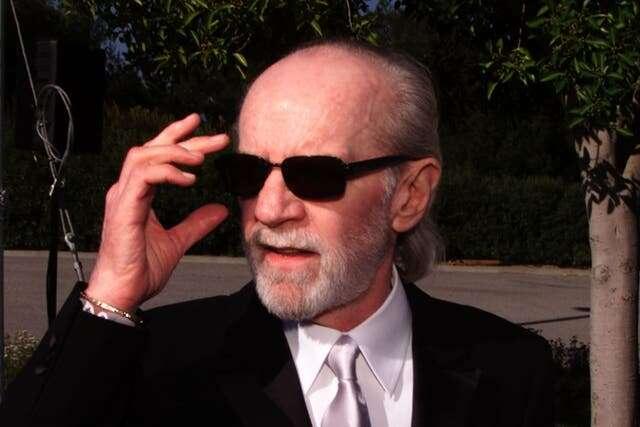
I *hate* Illinois Nazis...
I think I remember you reacting to my clap backs in that last exchange.
Yeah pretty wild they turned out to be a bunch of skizo karens. Hardly different from the fuqtarded antifas
Quite the irony
Honestly, when you look into the philosophical underpinnings of fascism and communism, they are almost non-existent. The only difference is that communism is utopianly anarchistic (“we will reprogram everyone to be ants and then the state will wither away because ‘the state’ will just be default programming in all the workers”), whereas fascism is at least smart enough to understand that people are not ants… so instead the worship the forever state that will forever beat people into the ant role anyway.
Its all some kind of Fuhrer worship
True. Both ultimately come from GFW Hegel who called the state “the march of god on earth”.
Really, thats some satanic shit
I’ll give you a DRAMATICALLY oversimplified but “good enough unless you’re going to read the main works of every name I mention” overview of western philosophy.
ORIGINAL DUALISM
Heraclitus vs parmenides
“You cannot ever step in the same river twice because the river is always changing” (direct quote) vs “there is nothing new under the Sun” (obvs from the Bible, but the same idea of “nothing ever changes”).
Result: Either way, if nothing ever changes or stays the same, then nothing matters because, under Heraclitus, your actions are undone one instant after you do them… and under Parmenides nothing you do changes anything anyway. Either way, morality is irrelevant. Therefore the rise of the sophists (the precursors to marxisms “critical theory” and “deconstructionism”) and the hedonists (originals of the “yolo” lifestyle) reigned supreme.
ENTER SOCRATES
Socrates embarrasses the prevailing thoughts… the heraclitians clearly know that SOME things don’t change (eg: the supposed rule of nothing changing doesn’t change) and the parmenidians know that SOME things change. They don’t want to acknowledge this so they kill him for embarrassing them.
PLATO V ARISTOTLE
Plato resolves the change vs consistency conundrum by stating that the there the physical world changes, but that there are immutable and permanent entities called “forms” in the “higher” world (this is explained in his famous cave analogy) that DON’T change. The relationship is like a hand that never stops being a hand creating shadows of cranes, dogs, trees, etc.
Aristotle notices contradictions in Plato’s categorization of the forms and supposes a concept called “essences”. Essences function similar to forms: they are the thing that “doesn’t change” when everything else does. But, unlike Plato, Aristotle’s essences are WITHIN the physical things themselves. How that is the case is not clarified well and gets expanded on later via alchemist philosophy in the Middle Ages.
LOCKE, HUME, and KANT
John Locke, the ultimate culmination of Aristotelian thought at the time, fails to resolve the issue of the relationship between essences and the physical things they relate with.
Hume dispenses with essences and returns to a heraclitian style philosophy. (Quote: “if Hume is right, then I am a boiled egg”).
Kant establishes the concept of categories. His categories are based off of Plato’s forms, but with one critical difference: they are pre programmed into your mind as a requirement for processing the physical world. This, ultimately leads to the modern woke.
“My lived experience”, “my truth”, “I was born this way”. All of it stems from the idea that there is no truth external to one’s own psyche. This is ultimately creates a weird fusion of Plato and Heraclitus. “Everything is a social construct, but what I think is the ultimate truth ‘for me’ so I will do what makes me happy”.
This is the basis of Marxist standpoint theory (eg: “what is true for you may not be true for me”) and modern sex-obsessed hookup, yolo, hedonist culture.
HEGEL, MARX, and NIETCHZE
Hegel—everything is subjective (a la Kant), but we need a shared vision to get along. Therefore the state is the March of god on earth that will make that happen.
Marx—the state is a social construct like everything else. We will use it to reprogram everyone’s “categories” until they BECOME the living state on earth and the construct no longer is necessary.
Nietchze—the state is the collective will of the volk and, as such (since people’s psychological categories CREATE truth) is the arbiter of the “higher truths” that we all share.
RAND
Rand returned to Locke and Aristotle and solved the issue of “essences” by the following statements:
“The attributes ARE the thing”. [IE: essences are not separate from the things the represent]
“If a ford hits a Chevy, is the crash in the ford or the Chevy?” (IE: the a universal concept is created as a relationship between the objective attributes of a thing and the recognition of a human consciousness and cannot exist without BOTH).
“A concept is where a thing may have X value where X can be ANY value but must have SOME value”.
[Highly recommend reading “philosophy: who needs it?” And “introduction to objectivist epistemology”.
This will take me a while to chew through, thanks dude
No problem. Sorry I couldn’t make it shorter. Ultimately, it’s a history of what is called a Theory of Concepts, meaning the relationship between a concept and the thing it represents. Ex “what makes a man a man?”. And then I explain the cultural and political impact of each stance on said matter as it progresses through western history.