To contextualize the adoption of cryptography:

- Public key crypto was invented in 1976

- Bitcoin was invented in 2009, 33 years later

- In 2025 (49 years later), cryptography is still a niche topic

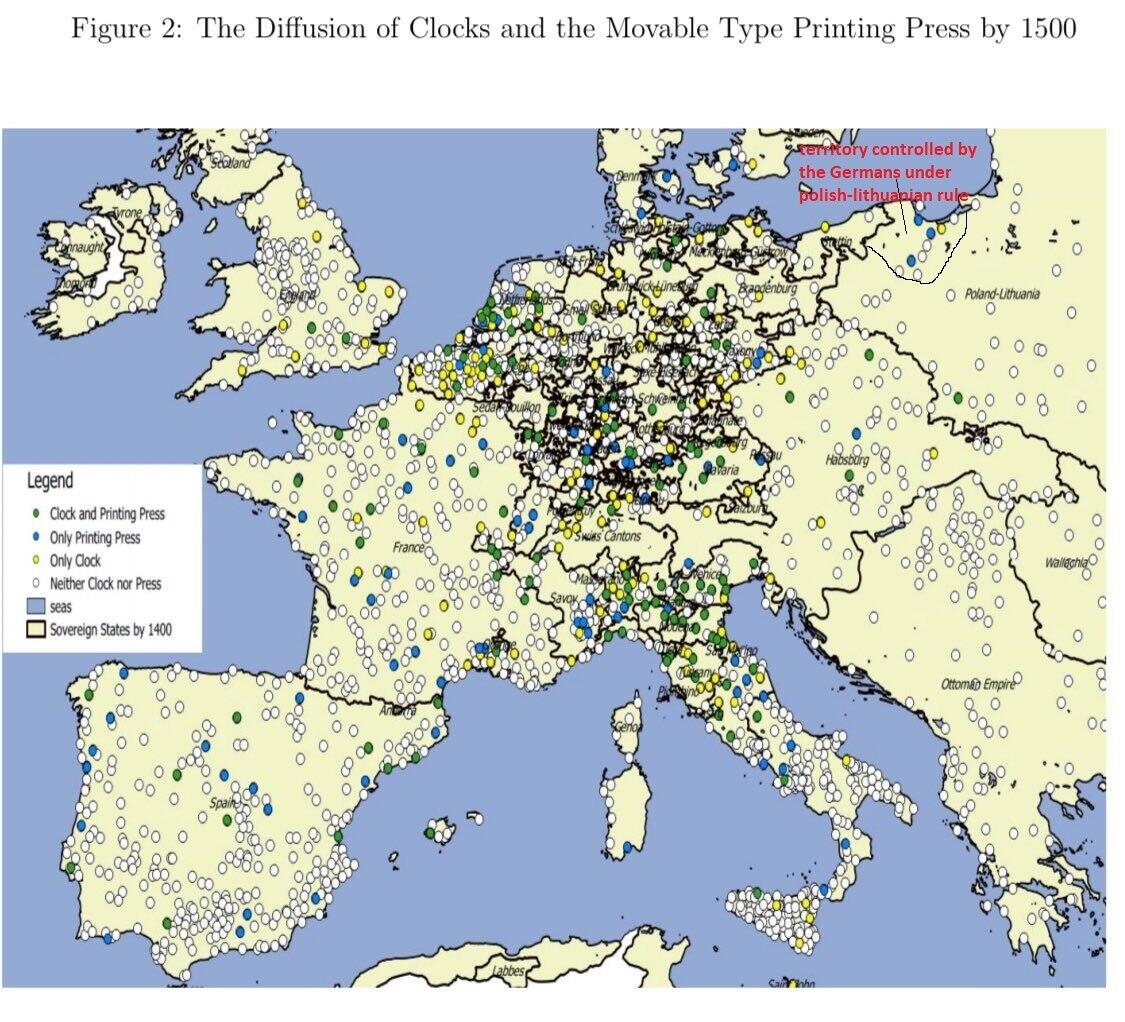
- The printing press was invented around 1440

- By 1470 (30 years later), a handful of presses had been established in major cities

- In 1500 (60 years later), there were only 417 presses

- By the 1550s (110 years later), printing presses were in use globally

Transformational technologies go through a period of obscurity, then centralized control, then eventually become universally accessible. My hope is that we are just coming out of the centralized control phase of cryptography and the internet.

Reply to this note

Please Login to reply.

Discussion

beautiful comparison, thank you

I think that's exactly how it is. Mass adoption is very far away: it will surely come. Sure! But I don't know if we will witness mass adoption and hyperbitcoinization. That's why my goal is to leave my daughter the treasure that I put away in ₿

nevent1qqs0dddkrq0ujqm3hjuya8ym6z9mfy4g9eff7fll52vr9cgt27srqrspy9mhxue69uhk6atvw35hqmr90pjhytngw4eh5mmwv4nhjtnhdaexceq8wekrj

I think that's exactly how it is. Mass adoption is very far away: it will surely come. Sure! But I don't know if we will witness mass adoption and hyperbitcoinization. That's why my goal is to leave my daughter the treasure that I put away in ₿

The time starmarts with the development of cryptography in 1974. Bitcoin standard around 2070

Martin Luther kicked ass in 1517

Because cryptography is hard.

so maybe in ten years or so

people wont think that guaranteeing supply with Zero Knowledge Proofs is some crazy trust assumption...

default transparency is a necessary baby step, not the final word on digital cash.

#bitcoin

#monero

nostr:nevent1qqs0dddkrq0ujqm3hjuya8ym6z9mfy4g9eff7fll52vr9cgt27srqrspr4mhxue69uhkummnw3ezucnfw33k76twv4ezuum0vd5kzmp0qgsf03c2gsmx5ef4c9zmxvlew04gdh7u94afnknp33qvv3c94kvwxgsrqsqqqqqpd4v7ls

nostr is the modern printing press

could be

it's all about cost and UX. as the tools becomes cheaper and easier to use, adoption goes up.

Thank you for this. I so often think in this exponential growth, related to free software.

Probably every feature is first created in some propriatary product. Gets big adaption through commercialisation, then some builder want to get control over the feature and publishes a first version of it. From there it is improved until people see, that the free version is similar or better with more transparency.

And therefore I assume, that in the future every critical component of software will eventually be replaced by free code.

We are slowly getting there.

Fantastic stats; thanks for sharing.

The first printing-press-printed book (German translation of the Bible, I think) must have had the same historical significance as the invention of bitcoin today.

Damn, so none of us will experience global use. 🤷🏼‍♂️

No, but that is a fascinating map

This.