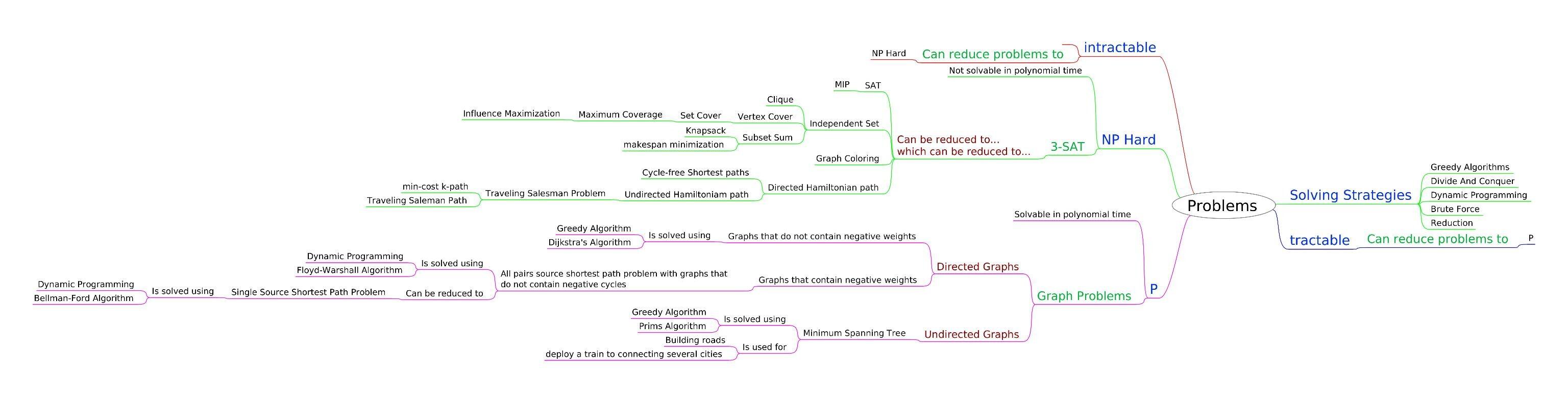
This sounds like how I teach trigonometry students how to deal with radians.
I tell them to operate in terms of tau, not pi, then, at the end, convert back to pi if their teacher insists on providing an answer in units of pi.
Tau simplifies things for radians because 1 full revolution is 1 full tau. There is no factor of 2 or 1/2 to deal with...it's just 1:1.
Tau = 2 x Pi
An interesting aspect of Tau is how using it in the circle area formula changes the formula to resemble a pattern found in multiple other places, namely:
y = (1/2) x A x B^2
In this case it's:
Area = (1/2) x Tau x (Radius)^2
Spring energy and kinetic energy formulae both have this pattern. I'm sure there are others.
And we've gone full circle into Hooke's law 😂👏.
Bentov would be so proud. Oscillators and more oscillators…springs and circles.
There is also the flip side to this where rather than using reduction or transformation to solve a given problem, we can start with a solution, and come up with applications to which the solution applies. So the solution in abstract form becomes a recipe or blueprint that is easy to understand and you can fill in the variables later.
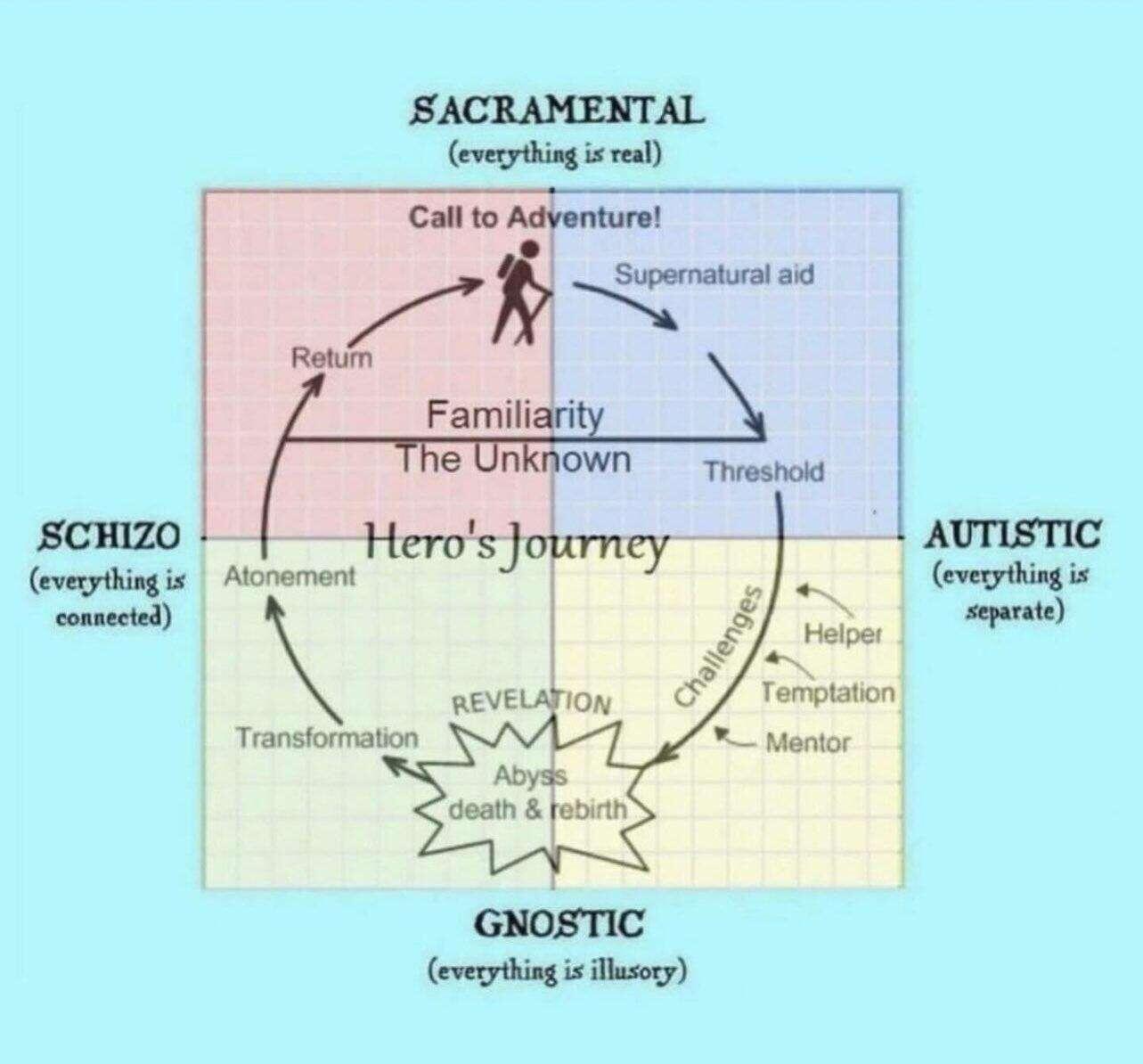
And then their is an ability to apply a solution to n number of problems, and this is what I am getting at. I think it's called divergent thinking, and I'm not sure what else it is called. Is that just schizo? Seeing how everything is connected?
Thread collapsed
Thread collapsed
Thread collapsed