Satoshi didn’t create Bitcoin.

He discovered Element 0 — the first and only monetary particle.

It has all the attributes of a perfect commodity:

Scarce like gold

Durable like metal

Immutable like time

But it fixes every flaw that let gold be captured by banks and governments.

âś… Zero weight

âś… No storage cost

âś… No borders

âś… No counterparty

âś… Teleports at the speed of light

âś… Supply: 21,000,000. Fixed. Forever.

Bitcoin didn’t emerge from economics.

It was unearthed from the raw fabric of information physics — like the electron of value.

Gold was corrupted. Fiat was printed.

But Bitcoin is incorruptible. Unstoppable. Untouchable.

This is the monetary Big Bang.

There is no “next Bitcoin.”

There is only before... and after.

Reply to this note

Please Login to reply.

Discussion

This is brilliant.

This is why we are here.

Thanks brother. I'm sure it is an amalgamation of shit I have heard others say and can't give credit to anymore. I think I read something like this either on X back in the day or a blog post or something but couldn't find it needed to dump it out of my brain tonight.

Nice! If we aren't wrong, nostr:npub1jt97tpsul3fp8hvf7zn0vzzysmu9umcrel4hpgflg4vnsytyxwuqt8la9y coined the term "Element Zero" for Bitcoin đź’Ą

There you go! I think I picked up this from a podcast he was on. Couldn'tplace my finger on it. Thank you nostr:npub1jt97tpsul3fp8hvf7zn0vzzysmu9umcrel4hpgflg4vnsytyxwuqt8la9y

Element 0. Fuckn hell.

nostr:npub1jt97tpsul3fp8hvf7zn0vzzysmu9umcrel4hpgflg4vnsytyxwuqt8la9y writes very well about this

I like in particular that it frames it as a commodity

Nice philosophical thought, but scientifically, it’s pure nonsense:

The periodic table describes physical elements, whereas Bitcoin is purely digital.

Each element in the periodic table consists of atoms with a defined number of protons, neutrons, and electrons. These elements have measurable physical properties such as atomic mass, density, and reactivity. Bitcoin, on the other hand, is an abstract construct - mathematical code running on a decentralized network. It has no atomic structure, no physical form, and no chemical interactions.

While Bitcoin may have properties that resemble scarce commodities like gold, it fundamentally differs from anything in the periodic table because it does not exist in the physical realm. It is not bound by the laws of chemistry.

Bitcoin is bound to the laws of physics and energy thru the electicity needed to mine and secure the network . That is what links it to the physical realm.

Bitcoin mining is what makes it real .

Therefor it is the first digital element that exists in the analog world. And it will be proven to be , every 10 minutes , as long as it remains decentralised and secure.

Yes, Bitcoin mining consumes real-world energy, and that process ties it to physics. But electricity use alone doesn’t make something a physical element. A YouTube video also consumes electricity to be streamed - does that make it an element?

Bitcoin has no atomic mass, no molecular interactions, and no place on the periodic table. It’s a digital protocol, not a chemical substance. To call it a “digital element” is poetic, maybe even metaphorically compelling - but scientifically, it’s just incorrect.

While it’s true that Bitcoin isn’t a chemical element in the traditional, scientific sense, the term “digital element” can still be meaningful—especially when viewed through a broader lens of technological and societal evolution.

1. New Category, New Language:

Bitcoin was the first truly decentralized digital asset with provable scarcity and an immutable ledger—a foundational breakthrough in computer science, cryptography, and economics. It’s not unreasonable to say that Bitcoin is to the digital world what hydrogen is to the physical one: a base unit from which new forms of value and systems are emerging. So while it doesn’t belong on the periodic table, it could be considered a first principle in the realm of digital value.

2. Embedded in Physical Reality:

Unlike a YouTube video, Bitcoin is not just information—it’s information that is rooted in thermodynamics. The process of mining enforces scarcity through real-world energy expenditure. This physical anchoring gives it a kind of mass-like consequence in the digital space, distinguishing it from mere data.

3. Emergent Properties:

Bitcoin is more than code—it’s a protocol, an incentive system, a network, and a socio-economic phenomenon. Like elements in chemistry, it can combine with other technologies (e.g., Lightning Network, smart contracts) to create entirely new systems. This emergent capability is more than metaphorical—it reflects real structural importance.

4. Language Evolves with Technology:

We often adapt scientific language metaphorically to describe novel inventions. Think of terms like “the cloud,” “firewalls,” or even “virality” in social media. Calling Bitcoin a “digital element” isn’t about literal atomic mass—it’s about recognizing its foundational role in a new layer of civilization.

⸻

So, while scientifically inaccurate by strict definition, calling Bitcoin a “digital element” can still be a valid conceptual frame—one that helps people grasp its foundational, almost elemental role in a new economic and technological paradigm.
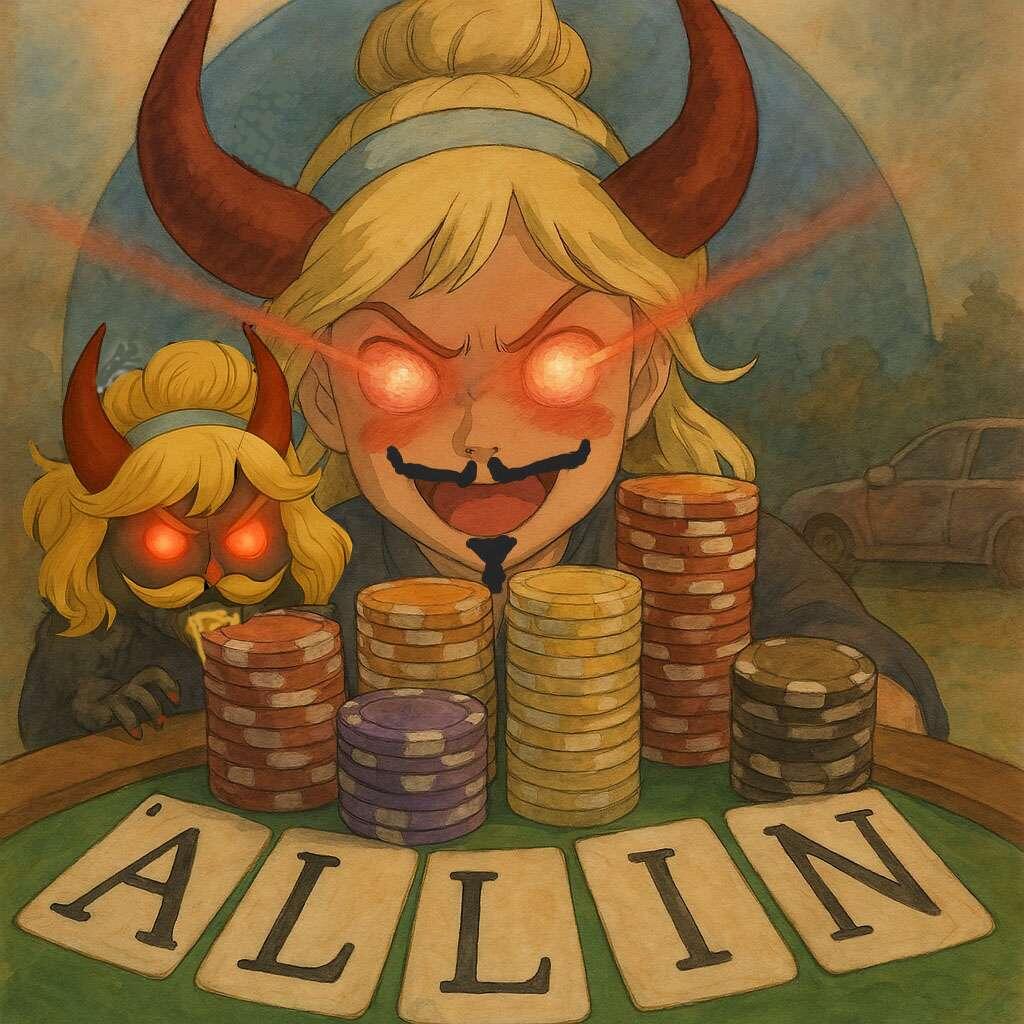
It seems we’re aligned: classifying Bitcoin as “element zero” on the periodic table (implying atomic number 0 = zero mass) is conceptually flawed, as it is not a chemical element. That said, the notion of a “Digital Element Zero” remains philosophically intriguing. I also concur that Bitcoin exhibits properties comparable to SI base units such as the meter, second, or kilogram.

I sense the use of an LLM here

Yes!

LLM or autism. In this community it is very difficult to tell the difference between the two. Both prolific.

Yeah... nah... but yeah... alrite...

Dude. nostr:npub1jt97tpsul3fp8hvf7zn0vzzysmu9umcrel4hpgflg4vnsytyxwuqt8la9y

Beautiful words, what a perfect note!

This will be the case until we make contact with another civilization/intelligence that also made this leap in their journey to kardashev 1. What do you suppose happens then? The need for a money dissolves completely?