
It’s not about “fighting dis/misinformation” (negative project), it’s about *creating the conditions for truth* (positive project).
Truth is an achievement; it is the exception. Dis/misinformation is the rule.
As consent is being manufactured for a war with Iran, it’s worth watching the movie “Shock and Awe” to remember how it was done with Iraq.
What has changed? Mainly the rise of social and alternative media. It’s harder to ignore people telling the truth today.
A just government neither privileges its friends nor persecutes its enemies, but ensures equality and due process under the law.
Few Americans know this:
Federal law since 1953 has effectively suspended the Constitution within 100 miles of the U.S. border. That covers 2/3 of the U.S. population.
Needless to say, suspending the Bill of Rights has done nothing to prevent illegal immigration, but it has created an unaccountable police state.
Being anti-establishment is not the same thing as being anti-authoritarian.
People are starting to discover that violence is a key element of both founding and constituting societies.
Unfortunately, often their takeaway from this is that this is the way it should be, and that the only thing that matters is raw power.
No. Values matter. Character matters. Institutions matter. Each action and reaction creates the world to come. We can decide whether we live in a loving and prosperous community or whether we live in hell.
Perhaps the most enduring legacy of the “War on Terror” is that the word “war” has lost all meaning. So has the distinction between military and civilians. People are now cheering and justifying atrocities left and right because it’s “war.” Who declared the war? Upon whom? What is the objective?
This collapse of distinctions is made worse by the fact that no one is in charge. There are plenty of authoritarians and “strong men” but few leaders. Instead, globs of largely unknown “combatants”—state and non-state—are just vibing their way through fields of violence. Discipline has been replaced with amateur recklessness. Tactics executed without strategy. This is a “melée.”
In case you missed the #CATO 2024 Conference "Financial Privacy under Fire," the full recording is now available. ⬇️
The panel on CBDCs starts at 1:15:15.
At some point, the AI doomers will likely flip to “AI should rule us all” because their most fundamental belief is that there is no central planning problem.
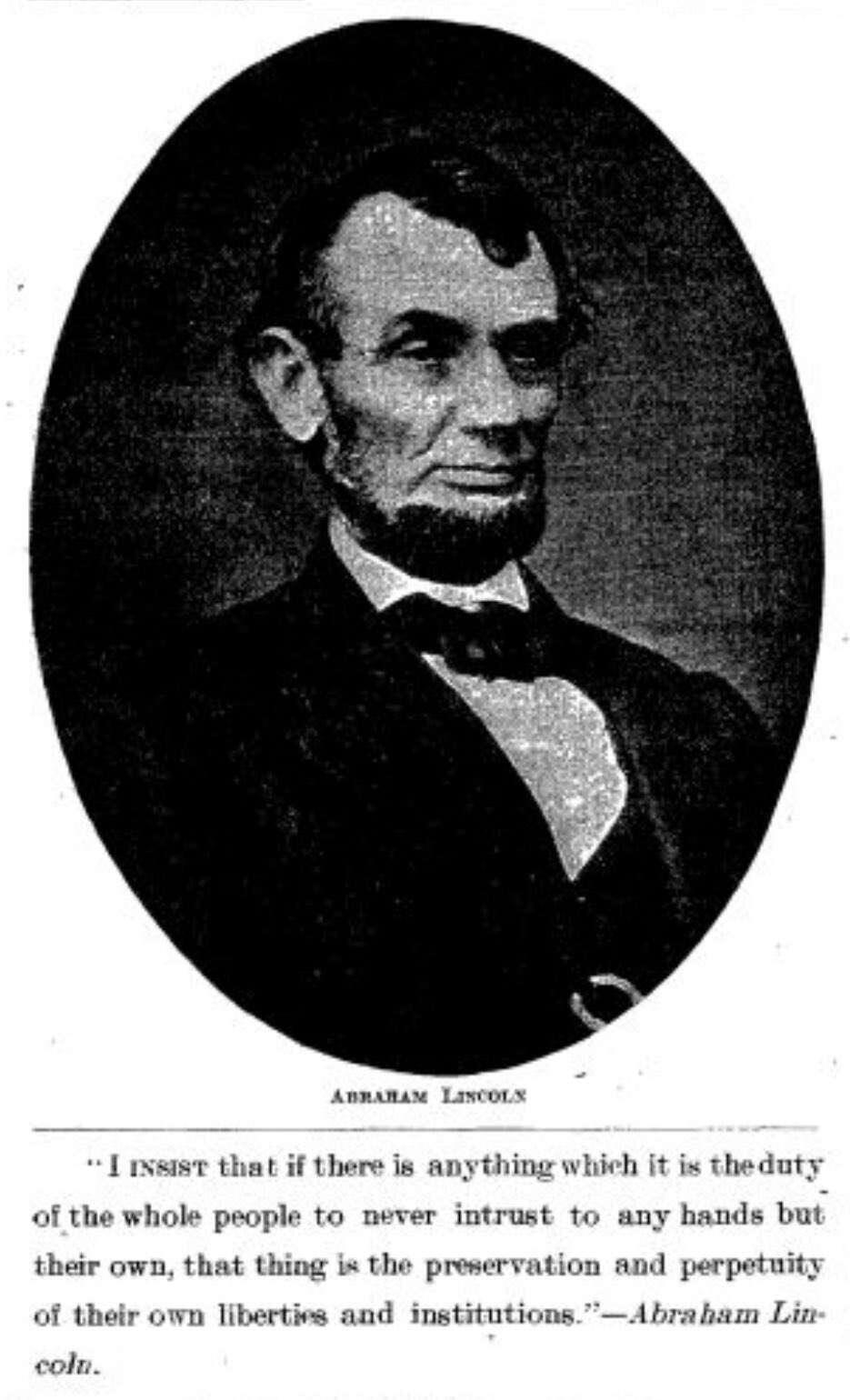
“I insist that if there is anything which it is the duty of the whole people to never entrust to any hands but their own, that thing is the preservation and perpetuity of their own liberties and institutions.”
- Abraham Lincoln
War, for a superpower, is a deliberate choice.
Don’t let anyone convince you that war “just happens to us,” or is suddenly and out of nowhere provoked by our enemies. We have had literally armies of diplomats, in addition to actual armies, intelligence officers, and civilian defense forces around the world for decades engaging in great and small power politics.
To prevent war, we need a non-imperial foreign policy. Full stop.
“Privacy rights are an absolute restriction on government behavior.”
- Jumana Musa, National Association of Criminal Defense Lawyers
#CATO Center for Monetary and Financial Alternatives Annual Conference
“It is a profound and repeated finding that the mere facts of poverty and inequality or even increases in these conditions, do not lead to political or ethnic violence. In order for popular discontent or distress to create large-scale conflicts, there must be some elite leadership to mobilize popular groups and to create linkages between them. There must also be some vulnerability of the state in the form of internal divisions and economic or political reverses. Otherwise, popular discontent is unvoiced, and popular opposition is simply suppressed.”
- Jack Goldstone, “Population and Security: How Demographic Change Can Lead to Violent Conflict” (2002)
Without anonymity, everything becomes either crime or pre-crime.
Remember the Miranda Warning in the United States: “You have the right to remain silent. Everything you say can *and will* be used against you in a court of law.”
The only protection U.S. citizens have against this self-incrimination is encoded in the Fifth Amendment to our Constitution: “No person shall be . . . compelled in any criminal case to be a witness against himself.”
What this means in practice is that the U.S. is one of the only countries on Earth whose inhabitants are not required to talk to legal authorities. Very few Americans understand how valuable and precious this right is.
Anonymity is a manifestation of silence. It creates the cone of silence in which innocence can be preserved. Without anonymity, we have no choice but to incriminate ourselves in violation of our Constitution.
In psychology, there is a term called “splitting:” seeing people and things as either all-good or all-bad, and often swinging wildly between the two. Splitting is a characteristic of mental illness, particularly personality disorders.
This is the state of our political discourse today. It is not just polarized; it is split. A growing number of people cannot fathom that people who disagree with them about certain things or who support certain candidates can be decent, intelligent, kind, and honorable people. That they may even want similar ends, but disagree about the means used to get there.
The remedy for this sickness is for us to patiently, over time, practice prioritizing and speaking truth in public with a generous spirit. Give people the grace to learn, make mistakes, and be wrong—so long as the overall trajectory of the conversation is toward truth. This means focusing on principles, not personalities; ideas, not parties.
We need to reclaim our public sphere as the agora it is, a “marketplace of ideas” characterized by peaceful exchange, not as a gladiatorial arena where we deploy heroes for our “side” to decide right and wrong through feats of strength.
As I head to Cato Institute to discuss financial privacy and #CBDCs tomorrow, I thought it worth sharing this @btcpolicyorg research report again:
“Why the U.S. Should Reject Central Bank Digital Currencies (CBDCs)”
Peter Van : “You have a Constitutional right to anonymous transactions.” 🔥🔥🔥
It’s time to mount a fierce defense of anonymity. 🎯🤿
Protip: U.S. companies are not successful because the government invests in them. They are successful because they make products and services people want, and they have a large (interstate) market to grow in.
(Of course, all of this can change. Many American leaders unfortunately share Varoufakis’s view that the state should direct the deployment of capital.)
The union of bank and state is perhaps the main problem in need of fundamental reform in the United States.
And yet even despite this corruption, the obstacles to technology innovation and commercial success remain lower in America than in most places on Earth. That is precious and worth defending.
There is no doubt that the U.S. government has been itself a site of fundamental technology innovation (through some of the projects you mentioned) and is one of the largest customers in any market (unfortunately, and growing). But the U.S. government is not the primary allocator of capital; neither does it commercialize technologies. If a company cannot successfully commercialize, it will eventually die—unless there is genuine corruption in play, which I think both you and I agree is a bad thing.
Finally, this merits saying explicitly: TCP/IP, the protocol for which the DARPA project laid the groundwork, is not “the internet.” The internet is a complex protocol stack that has garnered contributions, yes, from some government-employed individuals, but also from a vast network of mostly volunteers in civil society around the world. Innovation is often done precisely by those people who have nothing to gain materially or in terms of political power; innovators tend to be idealists motivated by solving hard problems or making the world a better place. Similarly—again, this cannot be stressed enough—Microsoft, Google, Apple, Meta—these companies are not “the internet.” They have produced commercial products that make use of fundamental technologies in ways that add value that people are willing to pay for. But they can and should be disrupted by companies that create greater value. By putting its thumb on the scale through onerous regulation (I.e. GDPR, the AI Act), the state in fact ensures that these wealthy incumbents will be the only players who can afford to enter the marketplace.
In short, the best thing the state can do is stay out of the way of both innovators and commercializers. The success of the software industry in America is largely a material testimony to the fact that, at least until recently, the U.S. government largely has. Perhaps the highest political priority of our current era is ensuring that remains the case. Growth is the reason that any of us have hope of a future that is not riven by zero-sum conflict, of warlords fighting over the scraps of innovation from a prior era. This requires both the idealistic innovators motivated by mission and the talented entrepreneurs motivated by profit. If the state wants to fund some fundamental (i.e. not immediately commercializable) research, that is great—but it is merely one actor among many, and not even the most significant one, at that.
Protip: U.S. companies are not successful because the government invests in them. They are successful because they make products and services people want, and they have a large (interstate) market to grow in.
(Of course, all of this can change. Many American leaders unfortunately share Varoufakis’s view that the state should direct the deployment of capital.)
This Thursday!
Let's see if we can change the narrative from "financial privacy" to "the right to transact."
September 12, starting at 9:30am Eastern Time.
The event will be live-streamed!
https://www.cato.org/events/financial-privacy-under-fire-protecting-restoring-americans-rights
#Privacy #RightroTransact