
The succession of fences:
My grandfather’s fences were railroad ties and TPosts. As the railroad ties weaken, I am planting in trees as living fence posts: black locust, apple, pear, plum, linden, oak, cypress…
When the trees are young, the aging posts still hold them straight and tall. As the trees mature, they help hold up the aging posts. Someday the posts will be gone and the trees will be the succession in holding up the fence.
 #grownostr #beef #pdx #oregon #washington
We have been putting out a lot more detail about how we raise our beef. Not saying these are requirements to be a good producer, but we want more customer transparency in our practices. Would love some discussion on these points, agree or disagree!
#beef #grownostr #thebeefinitiative #beefintelligence
Our standards on raising cattle for beef:
1. Vaccines and Medication:
a. The cattle mRNA vaccines are developed for respiratory infections, competing with many other respiratory vaccines. These vaccines are used for cattle with frequent mixing of infected animals such as in feedlots and auction yards. We keep a “closed herd” of beef and have never used respiratory vaccines.
b. We do not EVER use any hormones or growth enhancers which are very common in feedlot cattle.
c. We do not use insecticides on cattle for treatment of flies and lice. We only keep external fly traps, and only use diatomaceous earth as a topical treatment (but this is rarely needed).
d. We are in the third year of a trial period for not using any commercial wormers. We also do not use “home wormer” chemical like copper sulphate. Our cattle can free graze comfrey leaves, and have some winter supplement including diatomaceous earth and activated charcoal. We would only treat with commercial wormers if we someday experienced an outbreak that we could not control in other ways.
e. We give young calves one dose of “Clostridial 8-way” to boost immunity for many bacterial infections. This is the human equivalent of getting a tetanus shot. They will get this around 0-3 months of age to prevent serious infections from a cut or scrape.
f. The only antibiotic we use is penicillin. This has only been used as a “last resort” treatment a few times in more than 10 years, and no animals would be butchered within 90 days of receiving this treatment.
2. Body Care:
a. We cut the horns on calves if they are less than 1 inch long and not attached to the skull. We do not cut larger horns because of the trauma and risk of infection.
b. We castrate bull calves using banding. Most are complete by 3 months of age.
c. We numeric tag in the ear, and never use insect control tags
3. Food Care:
a. We graze on natural grass pastures that are never sprayed. The cattle also browse on trees and forbs surrounding the pasture, and self harvest apples and other fruit planted in each paddock.
b. We produce our own grass hay during the summer to feed during the winter months. Hay paddocks are grazed early in the year and then allowed to grow for a single summer harvest. After harvest , they are grazed again until winter.
c. Other seasonal supplemental treats: Corn stalks, windfall apples and pears, Apple cider pomace
d. We assure constant access to Mineral salt blocks with Selenium
e. Winter feed supplement: Diatomaceous earth, mineral salts, and activated charcoal
4. Social Care:
a. We keep a closed herd, raising calves from birth to butcher
b. We keep the whole herd together all year, including the bulls.
c. We don’t separate for weaning, and the mama cows handle that just fine.
d. We usually have one mature bull and one younger bull – different in size enough to not really have conflict.
e. We don’t use electric fence or cattle guards - barbed wire is our primary fencing
f. Cows move as a herd between paddocks – most of our cattle never see a trailer.
g. We use field butchery to harvest, with a maximum of 2 in a given day. Cattle are shot in open space, bled in the field, and pulled out for mobile slaughter.

We are in some wet clay bottomlands so we went with oaks instead of chestnuts, and also apple, plum and pear trees which all grow well in Oregon..

I'm mostly using Iris too, but it's clear the the important part is the connection you make and the connections you prune. Not so much the client...

Actually the selling price is based on the "hanging weight" - that is the weight of the beef when the mobile butcher has it skinned and gutted with the head, feet, and tail removed. The beef usually hangs for 2.5 weeks before cutting. So the packaged beef is closer to $8/lb, but we also throw in organ meats, tongue, etc. at no charge.
Our city planning department discusses why they should ban crypto mining businesses! There was a proposal for a multi-megawatt crypto mining center. Video of the city planning council discussion:
https://www.youtube.com/watch?v=gFE0X3dGMn4
In a city where there is electrical infrastructure for an aluminum plant that is long shut down. The city planning basically scoffed at allowing a business that wasn't going to bring jobs or sales tax on sales and infrastructure buildout.
#grownostr #longview #bitcoin #mining
Feeling just kinda normal....

#coffeechain #grownostr

We live right on the border near the bridge, so it's only a 10 minute drive from our "no income tax" Washington residence to our "no sales tax" Oregon farm...


Seems like most people have heard that song but most of those don't know it's named "Longview" -- the whole boring history is just:
"Our friend/roadie Kaz Hope suggested we call our song Longview because the 1st time we played was in Longview Washington in spring 1992." —Billie Joe Armstrong via Twitter in 2011
https://www.youtube.com/watch?v=42BBdzzgPNM&pp=ygUSbG9uZ3ZpZXcgZ3JlZW4gZGF5
#grownostr #LongviewLocal
I always heard from my Dad about the Vanport flood in 1948. It also buried my farm area in Rainier, OR for nearly 2 months when the dike broke! That flood came in May when there was a sudden snowpack meltoff (heavy rain+warm weather) and the Columbia River dams got so backed up that they had to release a wall of water (twice!) Vanport near Portland was completely wiped out and mostly not rebuilt.
Those are common questions, and most producers are happy to explain the process and convert a customer to better beef!!
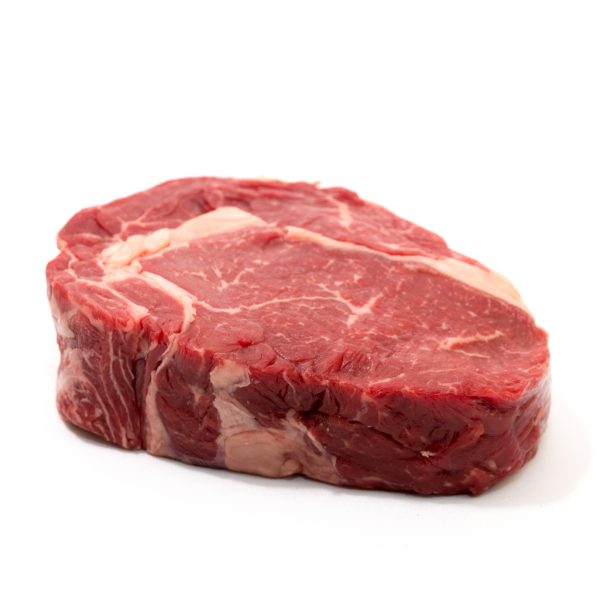
For the cuts: If you ordered a quarter, what you will receive is commonly called a “split quarter.” Because, the cuts of meat in the front half differs dramatically from the back half, the cuts are evenly divided between the two to make it equal. Our standard cut for a quarter is:
Rib Steak 1" Steaks
T-Bones 1" Tbone steaks
Tenderloin End piece
Top Sirloin 1" steaks
Sirloin Tip 1" steaks
Short Ribs Flanken: 1/4"
Chuck 3/4" steak + pot roast (3 lb)
Top Round 3/4" steak + rump roast (3 lb)
Bottom round 3/4" tenderized steak
Brisket Half
Skirt/Flank Fajita strips 1#
Stew Meat 1# packs
Soup Bones
Dog Bones
Ground Beef 1# packs
For the amount of beef in a quarter: A quarter of a prime steer is about 150# "hanging weight" at the butcher. After dry aging, about 10% of this comes off in water. And about 20% is lost in bones and trim. So there is about 110# of packaged meat for the freezer. This takes up about 4 cu ft which is about the size on an entire upper freezer, or easily fits in the mini chest freezers like they have at Costco or Lowe's Depot.
Our butcher season is May through December, so we put our whole year reservation schedule on the website. We are doing 22 beef this year!
https://www.greatmalus.com/product-category/2023-reservations/
#beef #grassfedbeef #grownostr #beefinitiative #foodintelligence
We sell mostly beef quarters that are processed in Longview. And we have a free weekly delivery into Vancouver-Portland-Hillsboro. For the pigs, we only sell piglets right now.
Longview, WA -- where every day life is just like the Green Day documentary of the same name!
#Oregon or #Washington depending on the time of day and if the cows got loose😂


Go for local and try to choose a rancher with their own breeding stock. Avoid producers who buy random animals with sickness at the auction and try to fatten them up, because you will never get consistent quality. #grownostr #grassfedbeef
#beefinitiative #foodintelligence


Here on the border of NW Oregon and SW Washington, they say it's 8a on the Oregon side and 8b on the Washington side. But I go with the Universal truth: "Your Hardiness may vary..."


#grownostr #permaculture #permies #pasturedpigs
Some benefits of pigs on pasture:
With enough space, pigs will separate their own areas for sleeping, eating, pooping, wallowing, and foraging (+scattered pooping)
A pasture diet increases the amount of Omega-3 fats – the healthy fats. This can be compared to high Omega-3 fish like tuna and can have a fish oil kind of taste. I sometimes call it land tuna.
Pigs can self-forage things like fallen fruit, nuts, and weeds.
When areas they dig up are seeded with some clover, they let it grow to grazable height before disturbing again.
Cows can still rotate through for the grass that outgrows the pigs grazing (pigs prefer clover)
This is a pasture edge area with a drainage slough with young trees planted in tree tube protectors. The pigs don’t bother the trees, but when the cows go through they try to browse the trees and scratch on them – tree tubes help most of them survive.
