
This is just nuts…
White House Targets Smithsonian Museums
BY MERIDITH MCGRAW
The Wall Street Journal
Aug 13, 2025
Exhibits, materials will have to align with Trump’s views of U.S. exceptionalism
The White House plans to conduct a far-reaching review of Smithsonian museum exhibitions, materials and operations ahead of America’s 250th anniversary to ensure the museums align with President Trump’s interpretation of American history.
In a letter sent to Lonnie Bunch, the secretary of the Smithsonian Institution, three top White House officials said they want to ensure the museums present the “unity, progress, and enduring values that define the American story” and reflect the president’s executive order calling for “Restoring Truth and Sanity to American History.”
Areas under scrutiny range from public-facing exhibition text and online content to internal curatorial processes, exhibition planning, the use of collections and artist grants.
“This initiative aims to ensure alignment with the president’s directive to celebrate American exceptionalism, remove divisive or partisan narratives, and restore confidence in our shared cultural institutions,” the letter states.
The letter, dated Aug. 12 and viewed by The Wall Street Journal, was signed by White House senior associate Lindsey Halligan, the director of the domestic policy council, Vince Haley, and the director of the Office of Management and Budget, Russ Vought.
“This is about preserving trust in one of our most cherished institutions,” Halligan said. “The Smithsonian museums and exhibits should be accurate, patriotic and enlightening.”
“The Smithsonian’s work is grounded in a deep commitment to scholarly excellence, rigorous research and the accurate, factual presentation of history,” a Smithsonian spokesperson said. “We are reviewing the letter with this commitment in mind and will continue to collaborate constructively with the White House, Congress and our governing Board of Regents.”
The White House review of the Smithsonian’s massive collection of art and historical artifacts comes as the president has sought to reorient the country’s cultural institutions, including top universities, and demonstrates Trump’s efforts to recast parts of American history in a more positive light.
The Smithsonian’s Board of Regents agreed to conduct a thorough review of all its museum and zoo content to eliminate political influence and bias, the Journal previously reported.
Sarah Weicksel, executive director of the American Historical Association, said the White House’s effort was an affront to the historians and curators trained to ensure historical accuracy.
“If those things are taken out of the hands of historians, the public stands to lose a great deal in having reliable and engaging content that tells a whole and complex story of the American past,” she said.
The president singled out the Smithsonian Institution in his executive order and said the Smithsonian had recently “come under the influence of a divisive, race-centered ideology” that promotes “narratives that portray American and Western values as inherently harmful and oppressive.” He directed Vice President JD Vance, a member of the Smithsonian Board of Regents, and senior officials to work with Congress to block the Smithsonian from receiving appropriations for exhibitions and programs that don’t align with his opposition to initiatives that promote diversity, equity and inclusion.
Tiya Miles, a professor of history at Harvard University, said she was concerned that the Smithsonian would be asked to interpret history based on “one man’s view” as opposed to scholarship and research.
“The Smithsonian museums have never reflected one person’s view, or even one administration’s view,” Miles said. “They have reflected the composite research, analysis, discussion, findings of many different people, scholars and researchers.”
The White House review will pay attention to exhibits planned for the 250th anniversary of the Declaration of Independence.
Following the review, the White House letter states that museums should make corrections that replace “divisive or ideologically driven” language with “unifying, historically accurate” public-facing materials.
The details requested by the White House go beyond museum exhibitions and extend to organization charts, responses to visitor surveys, artists featured in galleries who have received a Smithsonian grant, a list of outside partners and internal communications related to exhibit and artwork selection and approval.
The White House letter stated the review is expected to wrap at the beginning of 2026.
Shared via PressReader
connecting people through news
Trump Crypto Riches Tied To Little-Known Platform
BY ANGUS BERWICK AND PATRICIA KOWSMANN
The Wall Street Journal
Aug 13, 2025
The Trump family’s crypto venture has generated more wealth since the election— some $4.5 billion—than any other part of the president’s business empire.
A major reason for the success is a partnership with an under-the-radar trading platform quietly administered by Binance, the world’s largest crypto exchange, whose founder is seeking a pardon from President Trump, according to people familiar with the matter.
The online trading platform, PancakeSwap, serves as an incubator of sorts, drumming up interest among traders to use coins issued by the Trump family’s main crypto company, World Liberty Financial.
The more World Liberty’s flagship coin, USD1, is used, the greater the demand to increase its circulation, and the greater the profit for World Liberty and its owners, including the Trump family.
PancakeSwap is an online marketplace for cryptocurrencies. It connects users who trade USD1 with newly created currencies such as Torch of Liberty and Eagles Landing. These patriotic-sounding coins, according to their websites, were launched this year with the main purpose of helping increase the use of USD1.
Traders, mostly writing in Chinese, gather in groups on the Telegram messaging app to talk about competing for rewards paid out to top users of USD1 and advertised by PancakeSwap.
World Liberty and PancakeSwap announced their partnership to boost USD1’s adoption in June.
Crypto trading platforms often offer rewards or prizes to drum up interest in new coins, similar to the way brokerages offer free trades or casinos give first-time customers free chips.
What wasn’t disclosed at the time is that employees inside Binance created PancakeSwap, according to people
familiar with the company.
Binance’s majority owner and founder, Changpeng Zhao, spent four months in jail in the U.S. last year after Binance agreed to pay a $4.3 billion fine for becoming a global money-laundering hub for criminals, terrorists and sanctions evaders.
His company has deepened its relationship with World Liberty at the same time Zhao has ramped up efforts to secure a pardon from Trump.
Zhao, who is considered the richest person in the crypto industry and is worth over $70 billion, according to Forbes, recently hired Ches McDowell, a lobbyist and friend of Donald Trump Jr., to push for the pardon, a person familiar with the relationship said.
A World Liberty spokesman declined to comment. A Binance spokesman and PancakeSwap didn’t respond to requests for comment.
After a March article in The Wall Street Journal, Zhao wrote on social-media platform X that “no felon would mind a pardon,” while at the same time dismissing a connection between deals and a pardon.
White House press secretary Karoline Leavitt said the “media’s continued attempts to fabricate conflicts of interest are irresponsible” and that “neither the president nor his family have ever engaged, or will ever engage, in conflicts of interest.”
Trump, a Republican, announced World Liberty’s launch during his campaign last year, writing on social media that the company planned to “help make America the crypto capital of the world.”
World Liberty unveiled USD1 in March, saying the token would assist Trump’s mission to protect the U.S. dollar as the world’s reserve currency.
Binance played a key role from an early stage. USD1 got its first big break when Binance accepted a $2 billion investment from an outside investor paid in the World Liberty coin. The deal caused the amount of the cryptocurrency in circulation to erupt 15-fold and overnight become one of the world’s largest.
USD1 is a stablecoin, a privately invented digital currency that is backed 1:1 with U.S. dollars. World Liberty invests the money backing the coins in government bonds and moneymarket funds, without paying interest to users of the coin.
With more than $2 billion of USD1 in circulation, it can earn around $80 million a year based on current interest rates.
Binance has been holding the $2 billion in USD1 on its platform, according to blockchain data and a person familiar with the matter. By not cashing in the stablecoin, this ensures that World Liberty continues to earn money from investing the dollars that back them.
Trump and his family own 40% of World Liberty. While the company’s overall value isn’t disclosed, a large portion of it is derived from one of its cryptocurrencies. A stake the Trump family owns in that cryptocurrency is worth $4.5 billion, according to a disclosure published Monday.
World Liberty’s relationship with PancakeSwap, whose website was registered in Shanghai, and Binance is one of several in which entities and individuals with strong ties to China have supported the Trump family crypto business. One of World Liberty’s largest investors is Hong Kong-based billionaire Justin Sun.
This comes even as the White House pushes a trade war against the country and seeks to curtail U.S. corporations’ ties to China over national-security fears.
China is Binance’s largest market by trading volume, the Journal previously reported, and remained so as of the end of last year. It has been a main base for its software developers, with hundreds of coders, according to former employees, internal records and LinkedIn postings.
Binance has long maintained that it isn’t a Chinese company, saying it left Shanghai shortly after its 2017 launch. Zhao has said he is no longer a Chinese citizen, and holds Canadian and United Arab Emirates citizenship. The company, which has employees around the world, doesn’t have an official headquarters.
One of the president’s sons, Eric Trump, a World Liberty co-founder, plans to meet more potential partners in Hong Kong in August during a bitcoin conference, according to people familiar with his plans.
World Liberty in recent months talked about taking an investment from the Hong Kong crypto service provider Hashkey, whose main shareholder is Chinese conglomerate Wanxiang Group, according to people familiar with the talks.
Wanxiang’s chairman sits on China’s National People’s Congress. A Hashkey spokeswoman said discussions with World Liberty were exploratory and no commitments had been made.
Crypto companies release thousands of new coins every year. Most never catch on. To attract a following among traders, new coins need to show big trading volume.
That is where PancakeSwap stepped in. PancakeSwap doesn’t disclose its ownership and says online that it is run by a team of anonymous “chefs” with a “penchant for breakfast foods.” It compares trading cryptocurrencies to “flipping pancakes.”
According to former
employees, Binance staff created PancakeSwap inhouse in 2020 because the exchange wanted to establish a foothold in crypto’s “decentralized finance” craze. The platform has remained under Binance’s supervision, the former employees said.
PancakeSwap’s trading platform is built on Binance’s blockchain network, a software ecosystem in which developers create new programs.
Starting in late May, USD1 trading exploded on PancakeSwap, rocketing from a few tens of millions of dollars a day to regularly over $1 billion. Over 90% of USD1 trades have taken place on PancakeSwap, according to data from the platform and data tracker CoinMarketCap.
Demand for USD1 wasn’t because customers were using it for payments or to stash their crypto holdings, which is what stablecoins are typically used for. It was because investors were chasing prizes worth up to $1 million for generating as much USD1 trading as possible as part of a “Liquidity Drive,” said people who took part in the campaign and researchers who track trading data.
Shared via PressReader
connecting people through news
“The legal right to express oneself is meaningless if there is no secure medium through which that expression may travel. By the same token, the right to hold unpopular opinions is forfeit unless one can discuss those opinions with others of like mind without the government listening in.”
John Perry Barlow

“Governments of the Industrial World, you weary giants of flesh and steel, I come from Cyberspace, the new home of Mind. On behalf of the future, I ask you of the past to leave us alone. You are not welcome among us. You have no sovereignty where we gather.”
The Declaration of Cyberspace Independence, 1996
So, the bottom line is that if your solution requires an authentication server (AS), you’re compromised. I reached a similar conclusion with OAuth2.0
The cynical side of me is that mainstream industry is perfectly happy with MLS because when an authority leans on them to comply with chat control, etc., they can do it.
nostr:note1pchmla6y3nmn7yyr9l5xmq22eszq8gz9kkdrkajnnwtu0n0e04askysj4q
Home cooking recipes could get you banned.
https://www.cbc.ca/news/canada/hamilton/home-cook-social-media-disabled-1.7605893
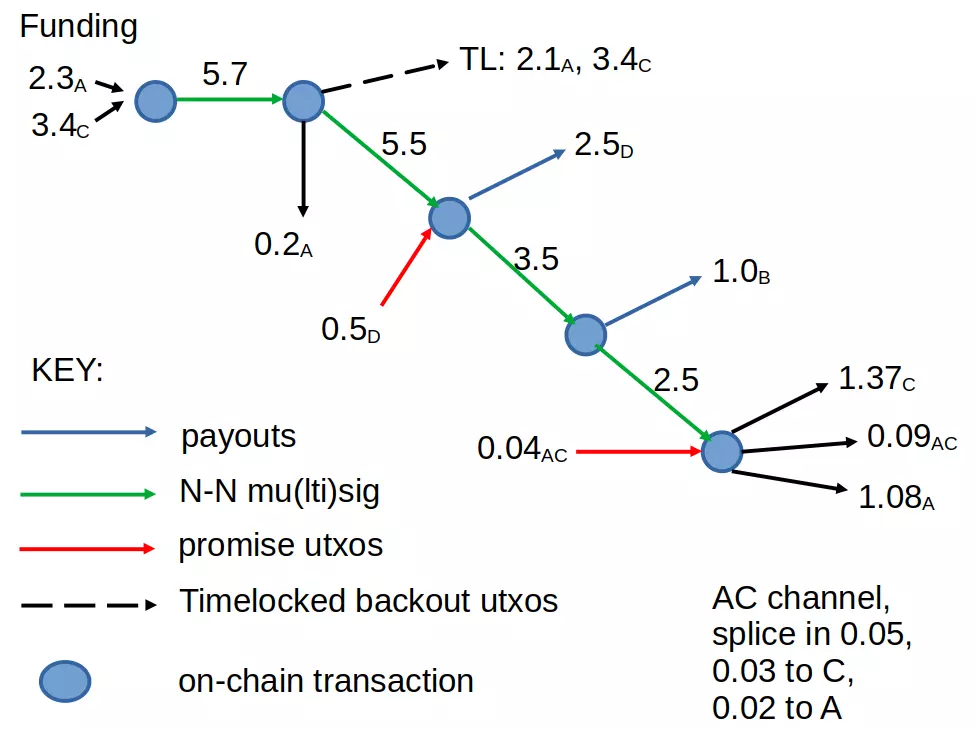
I’d be keen on your perspective. I’ve been trying to get to the root of what’s exactly different this time around in infrastructure.

My eye was drawn to a very specific data point.

10 seconds with ChatGPT5. Lesser miracles there are.
“Oliver Twist – Chapter 14 Flow”
(Original rap inspired by the events of the chapter)
⸻
[Verse 1]
Yo, Oliver’s healing, outta that pain,
In Brownlow’s crib, feelin’ human again.
Kindness hits harder than a London rain,
From the streets to the warmth, it’s a whole new lane.
But deep in the shadows, Fagin’s on the creep,
Can’t let the boy go, got secrets to keep.
Bill Sikes lurkin’, Nancy’s eyes weep,
They plannin’ a snatch while the city don’t sleep.
⸻
[Chorus]
From the cold stone floor to a feather bed,
From hunger pains to a plate of bread,
London’s got angels, London’s got snakes,
Trust is a gamble that a poor boy takes.
⸻
[Verse 2]
Brownlow’s kindness, it ain’t no act,
But the past got claws, and it’s pullin’ him back.
Fagin spins tales in a smoke-filled shack,
Wants Oliver returnin’ to the criminal track.
Nancy’s torn, got a heart that’s real,
But the life she’s in got a chain of steel.
Oliver’s dreamin’ of a world to feel
Safe and clean—like a brand-new deal.
⸻
[Bridge]
Two worlds, one boy, one fragile choice,
One side’s kindness, the other’s that voice
Sayin’ “Stick with the crew, it’s the only way,”
But Oliver’s hopin’ for a brighter day.
⸻
[Chorus]
From the cold stone floor to a feather bed,
From hunger pains to a plate of bread,
London’s got angels, London’s got snakes,
Trust is a gamble that a poor boy takes.
⸻
[Outro]
So here’s where we stand, tension’s tight,
Storm clouds gather in the dead of night.
Oliver’s future’s hangin’ in sight,
Will it be the dark… or the guiding light?

But I want the rap version of Oliver Twist.


I’m excited for the day when I don’t actually have to build an app and my #nostr #safebox service is completely invisible running multiple instances in many places, listening to a pool of relays for npubs that are only known between the service and the user.
I like the concept of “insurance” versus “governance” because you are asking someone to put their name under you (underwriting) versus on top of you (indenture).
Another thing I like about insurance is that you need to first qualify to be in a pool of like individuals versus governance where you are singled out as an individual.

Make sure your solutions don’t have SPA (Single Point of Authoritarianism)
Steve Ballmer is CEO of Nostr?
nostr:note164kn6fzqm8yxc8ahdlqmapq77z3j09ru7etpnxmg2mu86ntptp0smadlp6
I’d like to see the NO FAX memo, too.
nostr:note179l4stt305kq9xssy9mxu4lhd7u3lmcpu9fq28rpmz0268mxfakqcdaku3
Insane.
nostr:note123uk6ve7x254ygyvkn5k8j3w8wywr0n24wddvf86lk30euh77kgq65e43e
Someone’s gotta spoof the Coinbase ad ‘Everything is Fine’ to ‘Everything is Local’
Sorry, Billionaires—There’s No Escape
By David Mamet Mr. Mamet is a playwright, film director and screenwriter.
The Wall Street Journal
Aug 07, 2025
For many years I flew airplanes out of the Santa Monica Airport, 2 miles from my home. I told a fellow pilot that one benefit of the license and the plane was the ability to extract my family from a societal breakdown. He agreed but noted that the difficulty would be the last hundred yards before the airport.
Now comes news that American billionaires have prepared compounds in New Zealand in case of apocalypse. Thoughtfully stocked with all that the group would require—air, water, food, entertainment—they stand ready to receive the ultraprivileged. Well and good, but their fantasy, like mine, is flawed. For what is the size of the group for which they foresee transportation, protection and perpetual care?
The Ottoman Turks raised enslaved Mamelukes to the status first of guards and then of administrators, and all was well until the ’Lukes did the math and realized they didn’t need the Turks.
Some of the pilots of the billionaires’ getaway planes would surely have families. Happily married pilots would logically insist the families come along for the ride rather than stay and die. The billionaires’ wealth would avail them nothing, for they couldn’t escape without the pilots or pay a man enough to forfeit his family’s life.
Yes, the wealthy would have armed guards to ensure their own family got safely on board. Wouldn’t the guards insist they and their loved ones go along too? Of course they would.
The ground crews servicing the planes would, by this logic, act similarly. If staying behind meant death, what would they risk by demanding their inclusion? What’s the rich guy going to do, stop their paycheck? His plane offers the sole escape.
There would be a limitation: The plane can only carry so much weight. If overloaded, it won’t fly. At some point those on the plane would have to use arms to keep the latecomer hordes off.
The guards, then, would realize themselves to be the enlightened Mamelukes. If they are the only ones capable of keeping order, and if money is now useless, they have no need of their employer. On the plane he would be dead weight—and in the New Zealand bunker, just a useless mouth to feed. The caretakers, builders, security guards, and so on, of the compound, would insist on being accommodated—if they hadn’t already barricaded themselves in and locked the plutocrats out.
The World After Society for which the billionaires are preparing is a world without money.
I recall a West Side Manhattan woman, working as a maid. On the way to work her husband called to report they’d just won $100 million in the lottery. She said she’d see him that night after going to work for one last day. In the elevator, however, I’m sure she realized: “Uh . . .”
Is cryptocurrency a scam? Probably, but one wouldn’t know unless and until the chain letter runs out. Which is, of course, true of all fiat currency. Of gold, at least, one can say, “It’s right there, you can see it. It’s in Fort Knox.” You can’t say of crypto: “It’s right there—the ‘nothing’ is right there.”
When the escape plane has reached its weight limit, and at the Dawn of Reason like that of the ex-maid, the first ones thrown out the door would be the billionaire, its former owner, now revealed as ballast.
We see a similar devolution of power in an unhealthy family. If the parents are weak—that is, if they don’t use parental authority or influence to ensure the happy growth, prosperity, and integrity of the group—their leadership may be usurped by the anxious dependents: the demanding or belligerent child, the hypochondriac aunt, the radical adolescent and so on. The Bible cautions about the oppression of “a servant when he reigneth.” We see the same capacity for coercion, often, in the family member whose name, in conversation, is prefaced by “poor.”
We all know the stories of adults who went on vacation, leaving the adolescent kids to “watch the house.”
The old British lords of the manor, like today’s rich, were exploited not only by their lackeys and suppliers, but by those empowered to guard against such deprivations. The butler got a kickback from the butcher’s overcharges, the billionaire’s personal shoppers from the merchants of luxury rubbish.
Absentee ownership engenders defalcation. James Gordon Bennett Jr. (1841-1918) was wealthy beyond the dreams of avarice, alcoholic and eccentric. Although he was seldom on the premises, his Paris home was staffed and run as if he were. The servants were ordered to place a cup of hot milk and a biscuit by his bed, each evening at 11. They did so through years of his absence, in which the milk cooled and no one came for his cookie.
We might think they eventually skipped a night or two of pointless waste; but they must have thought otherwise. For to neglect the milk and cookie opened them to betrayal by their fellow servants—as, in fact, did even a poor-willed performance or a facetious expression. That the charade be performed without rolled eyes required suppression even of disloyal thoughts. For the thoughts themselves might be intuited by one’s co-workers, and so lead to denunciation.
If, however, word came from New York that Bennett was in a coma from which he wouldn’t recover, or were sufficiently injured to insure against his return, the Paris staff would instantly devolve into conspiracy. If the master wasn’t returning but the money still flowed, the resources devoted to the bedtime snack could be put to the staff’s personal use.
Two related questions would arise, at their first kitchen conclave— how much they could steal without discovery, and how the thefts would be regulated and apportioned.
The kitchen, thus, becomes the Revolutionaries’ Jeu de Paume, the loyal Staff forms a Committee of Public Safety, and their Constitution is a thieves’ compact. See also the four years of the Biden administration.
Shared via PressReader
connecting people through news
Tubular Tyres, we hardly knew ye.
A little history on medieval recordkeeping, courtesy google/gemma-3n-e4b model.
----
Recordkeeping in the Medieval Period: A Cartulary's Tale
In the medieval period, before the advent of widespread printing and standardized filing systems, recordkeeping was a laborious and vital undertaking. The **cartulary**, a manuscript volume containing a collection of charters, documents, and other official records, was a cornerstone of this system. It wasn't just a storage place for documents; it was a carefully curated and strategically managed archive, serving as proof of ownership, agreements, and the history of a lord or institution.
Here's a glimpse into how recordkeeping functioned through the use of a cartulary:
The Cartulary as a Central Repository: A cartulary wasn't simply a pile of papers. It was a meticulously organized manuscript, often bound in leather and adorned with elaborate illuminations. It served as the primary repository for a lord's or institution's legal and administrative documents. These records could include:
Charters: Royal grants, land transfers, permissions, and other official documents issued by rulers.
Contracts: Agreements between lords, tenants, merchants, and other parties.
Inventories: Lists of possessions, including land holdings, livestock, and valuables.
Court Records: Records of legal proceedings, disputes, and judgments.
Correspondence: Letters exchanged with other lords, officials, and institutions.
The Role of the Scribe & Archivist: Creating and maintaining a cartulary was a specialized task. It required skilled scribes, often employed by the lord or institution, who were responsible for:
Transcription: Carefully copying documents from original sources.
Organization: Arranging documents in a logical order, often chronologically or thematically.
Annotation: Adding notes, summaries, and cross-references to provide context and facilitate retrieval.
Illumination: Adding decorative elements, seals, and other visual cues to enhance the document's importance and authenticity.
The Importance of Structure & Access: Cartularies weren’t just collections; they were designed for accessibility. They often employed a system of pagination (numbering pages) and indexing to allow for efficient retrieval of specific documents. The cartulary was a tool used by the lord and their administrators to:
Assert Ownership: Provide irrefutable proof of land holdings and rights.
Manage Finances: Track transactions, debts, and income.
Resolve Disputes: Serve as evidence in legal proceedings.
Maintain Authority: Document decisions and agreements to reinforce power.
Limitations & Challenges: Despite its importance, cartulary-based recordkeeping had limitations:
Accessibility: Cartularies were often kept in secure locations, accessible only to a select few.
Fragility: Manuscripts were vulnerable to damage from fire, water, and pests.
Language Barriers: Documents were often written in Latin or local dialects, requiring specialized knowledge to interpret.
Dependence on Scribes: The accuracy of the records depended heavily on the skill and diligence of the scribes.
In conclusion, the cartulary was far more than a simple archive; it was an integral part of medieval society's administrative and legal infrastructure. It represented a sophisticated system for preserving information, asserting authority, and shaping the historical record – a testament to the importance of organized documentation in an era without modern technology.
The emerging architecture of decentralized, intention-based communication systems bears a striking resemblance to the creation of the Chartres Cathedral—a monumental achievement of Gothic architecture that arose not from a single plan or authority, but from the confluence of multiple forces: religion, technology, society, and trade. Chartres was not merely a place of worship; it was a manifestation of an evolving worldview, incorporating advances in engineering (ribbed vaults, flying buttresses), theological symbolism (light as divine truth), and the economic vitality of its surrounding community. It stood as both a spiritual and social infrastructure—built over generations, shaped by many hands, and reflective of a shared but dynamic sense of purpose.
Likewise, today’s emerging protocols—like Nostr and others grounded in cryptographic intention—are not just technical artifacts; they are becoming the digital cathedrals of our age. They weave together innovations in cryptography, new models of identity and agency, shifting political consciousness, and a growing demand for autonomy in how we communicate and construct truth. No single actor controls their design. Instead, they evolve organically, informed by open-source collaboration, philosophical inquiry, social critique, and real-world stress-testing. Just as the Gothic cathedral gave physical form to a new way of relating to the divine and to one another, these protocols give informational form to a new way of relating to truth, trust, and intention—one that transcends centralized authority and embraces the complexity of a pluralistic world. They are cathedrals not of stone, but of signed events, public keys, and voluntary association—each block laid with intention, not coercion.
Many existing communication protocols and platform architectures are built on implicit classical worldviews or moral assumptions that become encoded into their foundational design. These may include assumptions about identity (e.g., real-name policies), trust (e.g., reliance on centralized authorities), legitimacy (e.g., content moderation norms), or truth (e.g., algorithmic ranking of “authoritative” sources). While often well-intentioned, these embedded axioms inevitably reflect the values, norms, and power structures of their creators—leading to systems that enforce a particular worldview or authority dynamic. As a result, they tend to privilege certain actors—institutions, governments, corporations—while marginalizing others, particularly those with alternative perspectives, identities, or epistemologies.
This bias is not necessarily the product of malice; rather, it stems from starting at the wrong level of abstraction. When systems begin with assumptions about what is good, true, or acceptable, they lose neutrality and inevitably shape discourse to reflect those assumptions. To address this, one must dig deeper—beneath cultural norms, institutional paradigms, and even classical notions of reality—to identify more fundamental axioms: authorship, intention, uniqueness, and accountability. By anchoring protocol design in these deeper, morally neutral principles, it becomes possible to build communication systems that do not encode hierarchy or ideology, but instead empower all agents equally to express themselves, verify one another, and construct social meaning on their own terms. This shift doesn’t eliminate disagreement or conflict, but it does eliminate the structural inequities imposed by systems that quietly take sides from the start.
This approach to intentional communication—grounded in cryptographic signatures and verifiable authorship—quietly reflects deeper insights from both consciousness theory and quantum theory, even though it does not explicitly depend on them.
From consciousness theory, it borrows the recognition that entities capable of expressing intention—by signing events—can be treated as having subjective experiences, at least within the system. Each signed event is a declaration of perspective, a trace of volition, not unlike the minimal signal of awareness.
Similarly, from quantum theory, it takes inspiration from the idea that events are inherently unique and only become meaningful when observed or measured in relation to a broader context. In this model, the social layer—where trust, meaning, and truth emerge—is akin to the classical world: a macroscopic phenomenon arising from many discrete, probabilistic actions aggregated and interpreted by observers. Social reality, then, is not embedded in the protocol but arises on top of it, as an emergent, intersubjective construct.
Importantly, this model makes no claim to being a theory of consciousness, nor does it presume to implement or simulate quantum mechanics. Rather, it acknowledges these frameworks as metaphors that help us respect the boundaries of what such a protocol can and cannot do. It does not assume anything about the moral value, truthfulness, or reality-status of the messages it transports. Instead, it provides a neutral, accountable substrate where such judgments are left to intentional agents operating in the social domain. In doing so, it reinforces the principle that integrity of expression—not interpretation—is what a communication protocol should guarantee.
GN


More specifically, criminalize any questioning or opposition.