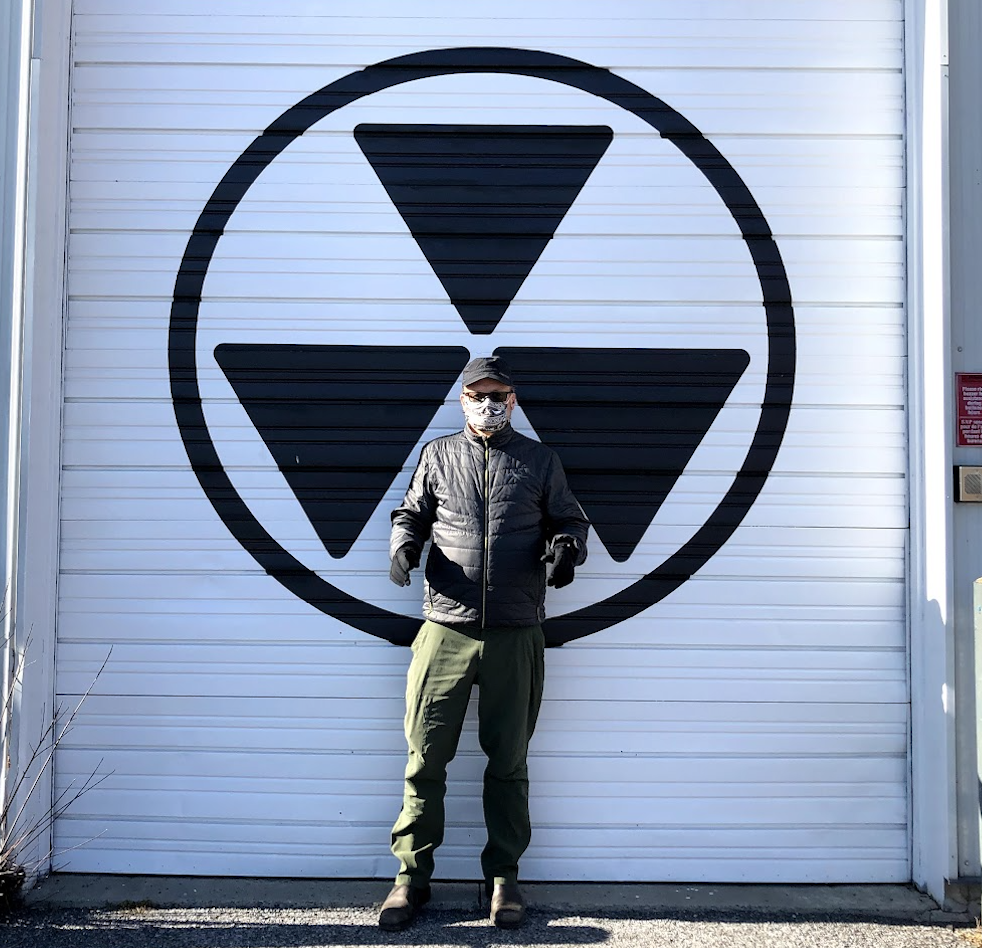
Relieved that Spouse and Son 3 are almost at their final destination after a cross-country road trek. Almost 3000 km as the AirTag flies!


Yeah, these things play out in unexpected ways. I’m taking my time, learning the theory and math. I did that with cryptography and that is serving me very well, especially to filter out BS.
Just wondering when the next AI Winter will start. Have gone through two winters.
Did I miss something?
Great episode with nostr:npub12rv5lskctqxxs2c8rf2zlzc7xx3qpvzs3w4etgemauy9thegr43sf485vg
I am as excited about #cashu as when I first learned about it three years ago. We can change the world by making payments completely anonymous and private. That’s what I want to do with #nostr #safebox


Regular JSON versus Signed JSON.
Using Nostr Makes All The Difference


Ouch! Is this true?


GM from the npug

Walter Bagehot pinpointed the issues with central banks over 150 years ago. Here is a summary courtesy ChatGPT
———-
Walter Bagehot, the 19th-century British economist and journalist, is best known for his book Lombard Street (1873), where he laid out both his admiration for and his worries about the emerging central banking role of the Bank of England. His concerns were not abstract; they came from observing repeated financial crises in London.
Here are the key concerns he expressed about central banking:
⸻
1. Moral Hazard and Discipline
• Bagehot worried that if the Bank of England acted as a permanent backstop, commercial banks might take excessive risks, assuming the central bank would always save them.
• To counteract this, he argued that central bank lending in a crisis should come at a penalty rate (above market rates) and only against good collateral. This would discourage reckless behavior while still providing necessary liquidity.
⸻
2. Transparency and Public Confidence
• He was concerned that the Bank’s policies were opaque and sometimes improvised.
• He argued that a central bank needed clear, consistent rules of conduct in crises, since uncertainty could worsen panic.
• His principle: “Lend freely, at a high rate, on good collateral.”
⸻
3. Reluctance to Accept Its Role
• Bagehot worried that the Bank of England often denied its central responsibility, treating itself like just another private bank.
• In reality, because of its size and position at the center of the financial system, it was the lender of last resort. He cautioned that shirking this role could lead to devastating runs and bank failures.
⸻
4. Fragility of Confidence
• He noted that financial systems are built on confidence, and that once panic starts, only decisive central bank action can restore trust.
• He worried that hesitation or half-measures by the Bank of England would worsen crises, as people would withdraw deposits faster if they sensed weakness.
⸻
5. Concentration of Power
• While he defended the necessity of a central bank, he recognized that concentrating so much financial power in one institution carried risks.
• He believed the Bank of England should use its power responsibly, guided by principles that protected the broader system, not just its own shareholders.
⸻
✅ In short:
Bagehot’s central concern was how to balance stability with discipline. He wanted the central bank to act forcefully in crises to prevent systemic collapse, but also feared that careless or overly generous support would undermine market discipline and encourage recklessness.
‘The Central Bank Apprentice’
By Elizabeth Warren Ms. Warren, a Democrat, is a U.S. senator from Massachusetts.
The Wall Street Journal
Aug 21, 2025
President Trump’s attacks on the Federal Reserve include schoolyard name calling, intimidation or threats to fire Fed Chairman Jerome Powell and other board members, and a sudden interest in how much the Fed is spending on building renovations. This is the new season of “The Central Bank Apprentice.”
Treasury Secretary Scott Bessent, who is helping Mr. Trump in his search for a new chairman, is calling for a review of “the entire Federal Reserve.” One contender, former Fed Gov. Kevin Warsh, called for the central bank to be made “great again.” National Economic Council Director Kevin Hassett, another contestant, said ending the Fed’s “absence of transparency” should be a priority for whoever gets the job. Mr. Trump is making clear that whoever wins the crown must be committed to hacking away at the Fed’s independence.
I’m not auditioning to be the next chairwoman, but I agree that the central bank needs more transparency and accountability. The Fed has consistently favored Wall Street over Main Street. Fed officials have been at the center of numerous ethics scandals. And the central bank has generally rebuffed congressional oversight.
The Fed’s ability to conduct monetary policy without fear that the chairman will be fired by an angry president is a bedrock of our economy. But independence doesn’t mean impunity. We need real reform, and if Mr. Trump and his allies in Congress are serious about accountability, they should get behind the following ideas:
First, make the Fed’s inspector general an independent watchdog. Most big federal agencies have inspectors general who are nominated by the president and confirmed by the Senate. The Fed’s is instead appointed by the Fed chairman—a clear conflict of interest. The inspector general can oversee and hold accountable the officials who have the authority to hire, fire and set pay for him.
The Fed also needs stronger ethics rules and enforcement to prevent senior officials from abusing their positions to juice their personal wealth. At the onset of the pandemic, senior leaders at the Fed traded individual stocks and investments at the same time they were setting key monetary policies in response to the pandemic. Centralbank officials and the Fed inspector general have failed to hold them accountable, share critical information about the trading scandal with Congress, or institute meaningful reform. The Fed had a chance to change its ethics rules. It failed. It is now Congress’s responsibility to write ethics rules for them.
We can further bring accountability to the Fed by rethinking the role of the 12 regional reserve banks. These banks, which play a critical role in supervising the financial system and whose presidents vote on monetary policy in the Federal Open Market Committee, have long used their “quasiprivate” status to insulate themselves from meaningful congressional oversight. These institutions serve governmental functions, and they should be subject to the same legal guardrails as other agencies. Executives of big banks serve on the reserve banks’ boards of directors, actively overseeing operations that directly affect their banks. Reserve bank presidents are selected by these boards behind closed doors without much transparency or public input. Ending these practices would improve the Fed’s public legitimacy.
Sens. Rick Scott (R., Fla.), Thom Tillis (R., N.C.) and I have bipartisan bills that would implement all these improvements and more. Instead of grasping for a pretext to intimidate or fire Mr. Powell, or other members of the Fed, Mr. Trump should push Congress to pass meaningful reform this fall.
We should ask more questions about the Fed’s role in our economy. It’s time to rein in the ways the central bank subsidizes Wall Street, from its quick reflex to bail out financial markets to its decision to change monetary policy by paying interest on bank reserves and making similar payments to shadow banks.
Another question is whether the Fed is capable of doing its job to regulate our biggest financial institutions and keep our system safe. The evidence isn’t reassuring. The Fed helped create too-big-to-fail banks by rubber-stamping bank mergers while ignoring the subprime mortgage risks that crashed our economy in 2008. The Fed missed Silicon Valley Bank’s interest-rate vulnerability, a failure that led to the second-, third- and fourth-largest bank failures in U.S. history in 2023. If the Fed can’t or won’t keep our financial system safe, Congress needs to step up with stronger rules.
The inflation surge following the pandemic exposed just how ineffective the Fed’s interest-rate hikes are in countering supply-induced price increases, while the persistent racial disparities in the unemployment rate underscore how the central bank has failed to promote a stronger economy for all. As the Fed undertakes a review of its monetary-policy framework, the central bankers need to show how they intend to strengthen and deploy their tools to better serve American families and our economy.
The Fed is one of the most powerful institutions in our economy— and one of the least accountable. That won’t change no matter who Mr. Trump crowns as the new chairman. The only way forward is to pursue true reform.
Shared via PressReader
connecting people through news

I’m redeploying my vps infrastructure. It’s taking more effort than expected. Thanks!

Zap test
I want:
Private messaging.
Private payments.
Private record-sharing.

NOTHING TO SNEEZE
ATMEERI KIM For The Washington Post
Ottawa Citizen
Aug 18, 2025
Allergies seem nearly impossible to avoid in this day and age — unless you're Amish
Whether triggered by pollen, pet dander or peanuts, allergies in this day and age seem nearly impossible to avoid. But one group appears virtually immune, a mystery to experts who study allergies.
Despite the increasing rate of allergic diseases, both in industrialized and in developing countries, the Amish remain exceptionally — and bafflingly — resistant. Only seven per cent of Amish children had a positive response to one or more common allergens in a skin prick test, compared with more than half of the general U.S. population. Even children from other traditional farming families, who still have lower rates of allergic disease than nonfarm children, are more allergic than the Amish.
“Generally, across the country, about eight to 10 per cent of kids have asthma. In the Amish kids, it's probably one to two per cent,” said Carole Ober, chair of human genetics at the University of Chicago.
“A few of them do have allergies, but at much, much lower rates compared to the general population.”
Now, Ober and other researchers are trying to discover what makes Amish and other traditional farming communities unique, in the hopes of developing a protective treatment that could be given to young children. For instance, a probiotic or essential oil that contains substances found in farm dust, such as microbes and the molecules they produce, could stimulate children's immune systems in a way that prevents allergic disease.
“Certain kinds of farming practices, particularly the very traditional ones, have this extraordinary protective effect in the sense that, in these communities, asthma and allergies are virtually unknown,” said Donata Vercelli, a professor of cellular and molecular medicine at the University of Arizona.
“The studies that have been done in these farming populations are critical because they tell us that protection is an attainable goal.”
The Amish are members of a Christian group who practice traditional farming — many live on single-family dairy farms — and use horses for fieldwork and transportation. Over the past century, the incidence of allergic diseases — including hay fever (allergic rhinitis), asthma, food allergies and eczema — has increased dramatically. Hay fever, or an allergic reaction to tree, grass and weed pollens, emerged as the first recognized allergic disease in the early 1800s, climbing to epidemic levels in Europe and North America by 1900.
The 1960s saw a sharp increase in the prevalence of pediatric asthma, a condition in which the airways tighten when breathing in an allergen. From the 1990s onward, there has been an upswing in the developed world in food allergies, including cow's milk, peanut and egg allergies.
Urbanization, air pollution, dietary changes and an indoor lifestyle are often cited as possible factors.
The “hygiene hypothesis” — first proposed in a 1989 study by American immunologist David Strachan — suggests that early childhood exposure to microbes protects against allergic diseases by contributing to the development of a healthy immune system.
The study found that hay fever and eczema were less common among children born into larger families. Strachan wondered whether unhygienic contact with older siblings served as a protection against allergies.
Subsequent findings have given support to the hygiene hypothesis, such as that children who grow up with more household pets are less likely to develop asthma, hay fever or eczema. Perhaps even more beneficial than having older siblings or pets, however, is growing up on a farm.
This “farm effect” has been confirmed by studies on agricultural populations around the world, including in the United States, Europe, Asia and South America. But even among farming communities, the most pronounced effect appears to be in the Amish. In a study of 60 schoolchildren by Ober, Vercelli and their colleagues, the prevalence of asthma was four times lower in the Amish as compared with the Hutterites, another U.S. farming community with a similar genetic ancestry and lifestyle.
The prevalence of allergic sensitization — the development of antibodies to allergens and the first step to developing an allergy — was six times higher in the Hutterites. The researchers first ruled out a genetic cause; in fact, an analysis showed that the Amish and Hutterite children were remarkably similar in their ancestral roots. Instead, the main difference between these two populations seemed to be the amount of exposure as young children to farm animals or barns.
“The Hutterite kids and pregnant moms don't go into the animal barns. Kids aren't really exposed to the animal barns until they're like 12 or so, when they start learning how to do the work on the farm,” Ober said. “The Amish kids are in and out of the cow barns all day long from an early age.”
When analyzing samples of Amish and Hutterite house dust, they found a microbial load almost seven times higher in Amish homes. Later experiments showed that the airways of mice that inhaled Amish dust had dramatically reduced asthmalike symptoms when exposed to allergens. Mice that inhaled Hutterite dust did not receive the same benefit.
Now, Ober and Vercelli are beginning to identify the protective agents in Amish dust that prevent allergic asthma. In 2023, their analysis of farm dust found proteins that act like delivery trucks, loaded with molecules produced by microbes and plants. When these transport proteins deliver their cargo to the mucus that lines the respiratory tract, it creates a protective environment that regulates airway responses and prevents inflammation.
“We don't really talk about the hygiene hypothesis as much anymore because we now understand that it's not really about how hygienic you're living,” said Kirsi Järvinen-seppo, director of the Center for Food Allergy at the University of Rochester Medical Center.
“It's more like a microbial hypothesis, since beneficial bacteria that colonize the gut and other mucosal surfaces play a significant role.”
During the first year or two of life, a baby's immune system is rapidly developing and highly malleable by environmental stimuli, such as bacteria. Some experts believe that exposing young children to certain types of beneficial bacteria can engage and shape the growing immune system in a way that reduces the risk of allergic diseases later in life. Farm dust contains a hodgepodge of bacteria shed from livestock and animal feed that isn't harmful enough to cause illness, but does effectively train the immune system to become less responsive to allergens later in life.
Shared via PressReader
connecting people through news

I actually agree with all of your points. We’re looking at this as an additional factor, not a key. Further, all capture and computation is in the browser and all code is provided by the app, not some random far away library. This is an opportunity to pull FR to the edge, under the complete control of the user.

I'll ask my three GenZ sons...
Proof of Personhood
I totally appreciate the civility on Nostr. We are on a new frontier so we can advance the art together. Eventually, everyone will find their niche, but now it’s most important that we help each.
nostr:note1w6jme0e73vfgestrlgn7nadrpmkkxhr05n92wr3rsaelqhn8vlesfnn6zl
Need a secure medium to interact. That is my hope with Nostr Wallet Connect evolving into a full-blown protocol.


Wow! Serious Blackberry vibes.
The age of Internet Chivalry is dead. Nobody respects robots.txt anymore.

We had a similar thing in Canada when the previous government was amping up the War of 1812 against the Americans..
War is ultimately about price.
“Whatever weapon system or munition you shoot at another adversary’s capability, it should be cheaper than what you’re shooting down,” Army Gen. Christopher Donahue, commander of U.S. land forces in Europe and Africa, recently told a gathering in Germany.
I am actively monitoring #satsbanana every time we grocery shop
nostr:note1h4tm52uv3u5t9mz62z4kfudu449d0pl7cxnnq8yj7gverkvmtsxq5lhlvu