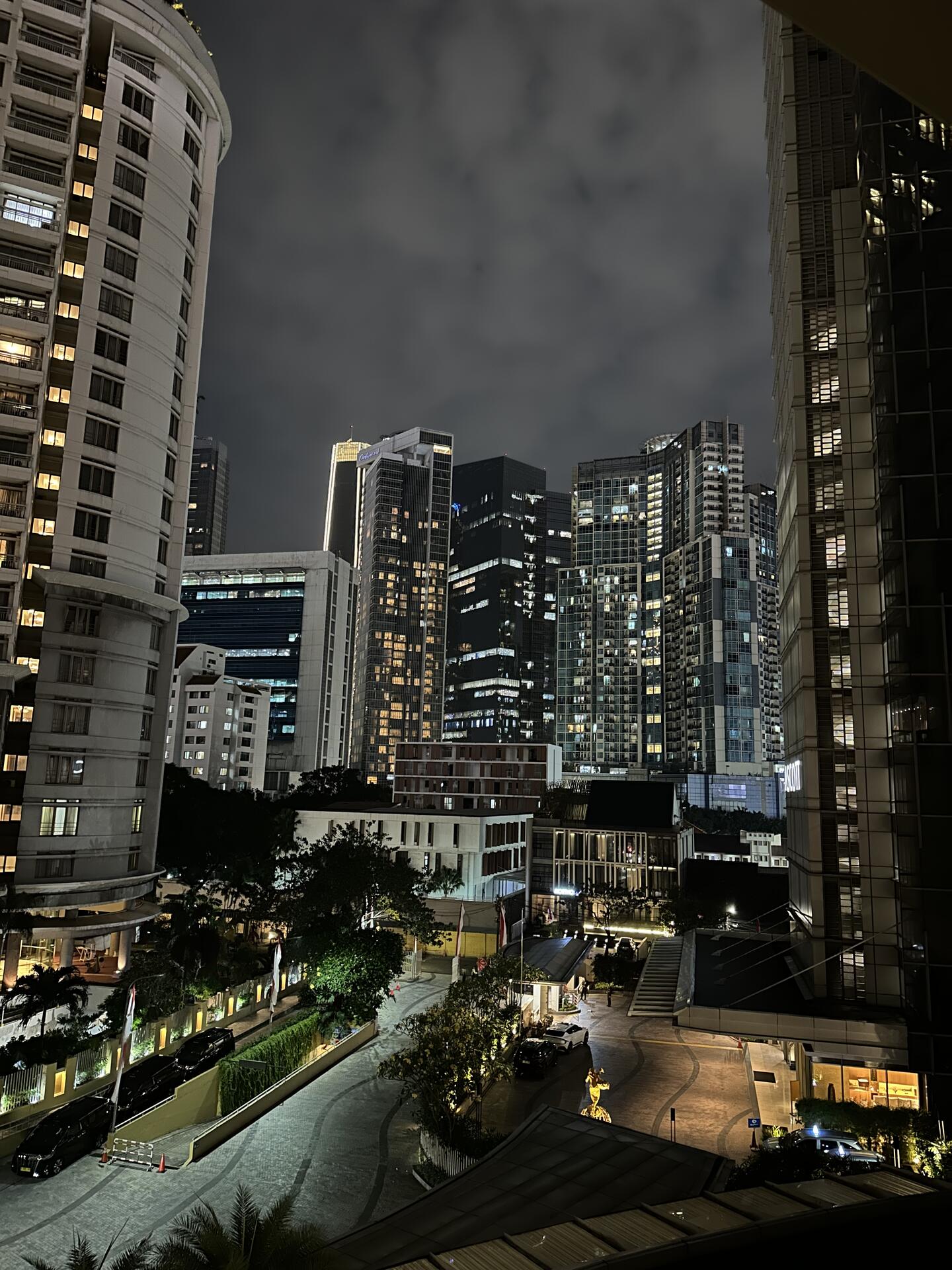
Good luck and have fun to all heading to Nostriga! Latvia is an interesting country, it is juggling between Russia and EU - like many countries in the soviet region. Maybe Bitcoin and Nostr can show the way of a country no longer needing to pick sides, and trade with all, friends with all. Latvia is also lagging in the innovation space especially compared to their next door neighbors - Estonia and Lithuania. Open source innovation is going to be a great opportunity to boost tech growth. Very excited to see what comes out of this ❤️
nostr:note10tz4fxtgslq9eucq8hukmj6xv9hh0rew3amdtnk7x2qeff8fet3q7c7ez7

You'd probably love Sheldon Cooper from the Big Bang Theory (sitcom) then
Got tired of white ceiling so I gave it a greyish bluish coat (dusty blue palette) . Absolutely love it but never gonna paint ceilings again - I have zero Michelangelo skills. Why are ceilings these days always painted in white ?

There is a great podcast episode and to some extent all of season 5 of Articles of Interest touch on this topic to varying degrees. This is the link to the first episode of season 5
https://podcasts.apple.com/us/podcast/articles-of-interest/id1455169228?i=1000649826378
oh nice, I've listed to some of Avery Trufelman's pieces - its pretty good. Will check it out

Perhaps. I wonder though if modesty (linked to morality, virtue) - might socially condition one into believing that exposing certain parts of the body is shameful. In this case, clothing defines shame.. Or back during colonizer’s days and victorian fashion era, indigenous without clothes were considered primitive and labeled inappropriately - and although the indigenous did not feel inappropriate, those with clothes felt shameful when they saw someone else without them. On the contrary, Adam and Eve might define shame before clothing. Damn Apple
Did clothing create shame, or did shame create clothing?
With 159 countries racing to join BRICS, the possibility of de-dollarisation is becoming more real everyday. Whether we like it or not, this shift can trigger currency war. This is where Bitcoin can and will serve as the mediator, the peacekeeper - but in order for that to happen, it needs to be easy and seamless, in converting from any currency to bitcoin to encourage global trade (real trade - import, export and transactions between customers and local businesses).
nostr:note1w7cm5yl93lgp6g47vads33cx7f84kvqj6rfkq70g6al56kctwcnstdhv78
Arduino is an open source company that is highly successful esp in the makers and educational communities. And they open source everything - hardware, software. There is a large number of arduino clones globally, much cheaper too and they are just as welcome to the arduino community and considered as part of the ecosystem. But people tend to go back to arduino to get their goods because not only is it at an affordable price, but there is brand loyalty, trust, support - that and it’s the real thing.
Would love to see more open source conversations on business-building and revenue-making in Nostr events.
I think the equation that might work is :
Build something so good + reach out to intended target market = people would love to pay for it.
At the early stages, people may be drawn to a product out of curiosity or because they connect with the founder's vision. Over a period of time, they start to remember the brand, and this familiarity builds trust. This is the same whether you have IP protection, open-source, or keep it as a trade secret.
But everything here is experimentation which is what makes it so special. Some call them developers but their are really open-source scientist testing out which hypothesis works. Nostr is like this big open-source laboratory and we get to watch it real time. Pretty amazing if you ask me.
These are some great tips! I too have become more comfortable using my phone with a headset. I'd dig a geodesic dome that scatters the waves =)
I don’t think resonance will impact heavily tho - it’s attenuating 70dB signals - your harmonics and TOIs are gonna be tiny tiny fellas. Even anechoic chambers are coated with a good conductance (that and it’s absorption foams). I also love the conductance capacity - energy inducing fabrics are game changers.
I am curious on shorter wavelength attenuation results - I’d reckon this materials are solid blockers until 12GHz which is incredibly decent - it may not cover your terahertz and gamma rays but that’s expected as you need concrete and lead for that.
I am still a little paranoid on Bluetooth esp class A hitting 20dBm. Doing a bit of deep dive on that. If I have anything on me that receives signal, I need it to absorb and emit least amount of radiation, one that is safer than taking a walk in the city kind
Here's my profile for Reason on Nostr and why it could very well change the world
Pasting a few paragraphs here, you can find the rest at the link
Feel free to spread far and wide 😉
*************
Can Nostr Make Twitter's Dreams Come True?
Twitter's founder says Nostr is “100 percent what we wanted”—an open, ownerless network
Alex Gladstein | 8.13.2024
Virtually everyone agrees that social media is broken. On Facebook, X, Instagram, and TikTok, people fear out-of-control algorithms, fake news, state actor censorship, and propaganda. Google and Meta collect vast troves of personal information on their users and receive hundreds of thousands of requests every year from governments around the world to access that data. YouTube has become arguably "the most powerful media platform in the history of humanity," yet its algorithm is an ever-changing black box to the creators that populate the platform with videos. During the pandemic, federal officials were in contact with every major social media platform, coercing them to remove content.
The problem is centralized control. We can't trust companies to run our primary communications infrastructure. Government regulation only makes matters worse because it creates new legal barriers to entering the industry, which protects incumbent players and stifles innovation.
What if there were an alternative, not owned by Elon Musk, Mark Zuckerberg, or the Chinese Communist Party? What if there were a way to control your own data to prevent companies from harvesting and monetizing it? What if you had granular control over what you see in your feed, with the freedom to choose your own algorithms? What if you owned your identity, which could be accessed seamlessly across different clients? That way, if you disapprove of the changes that Elon Musk brought to X, instead of closing your account you could take your handle and followers elsewhere.
That alternative exists. It's called "Notes and Other Stuff Transmitted by Relays"—or Nostr.
The Decentralized Solution
Invented by a pseudonymous programmer and overwhelmingly funded by grants from non-profit foundations, this decentralized, free, and open-source protocol has been quietly evolving for the past three years. Like bitcoin, Nostr is a community-run digital network highly resistant to censorship and corruption. It has 40,000 weekly active users and a growing ecosystem of clients and applications ranging from social media to long-form publishing to payments.
Nostr is only necessary because our existing internet is so broken.
Fifteen years ago, social media seemed destined to decentralize the world and give power back to the people. In 2009, we watched as Arab Spring activists used Twitter and Facebook to organize, coordinate, and help topple several long-standing dictatorships. The promise was that these new social platforms, designed by Silicon Valley entrepreneurs, could help liberate the masses.
It was intoxicating—but turned out to be a mirage. The Arab revolutions stalled out when brutal military regimes cracked down. These platforms became tools for spying and censoring their users. X and Facebook have helped journalists and human rights activists reach bigger audiences, but they haven't fulfilled their revolutionary promise.
Jack Dorsey's Shift from Bluesky to Nostr
This was a major theme at the 2024 Oslo Freedom Forum, which is put on annually by the Human Rights Foundation, where I serve as chief strategy officer. At this conference for democracy and human rights, Twitter co-founder Jack Dorsey told the audience that the problem was, actually, guys like him: The very fact that Twitter, now X, has a CEO makes it a single point of failure. Governments routinely pressured Dorsey to censor content; once the company's offices in India were raided. Dorsey says that under the new Musk regime X complies with whatever governments want.
The X network is proprietary. Known as a "silo," this construct traps a user's identity, followers, and data. X also has the power to evict anyone from the platform and delete what they've written. Several years ago, when he was still running the company, Dorsey became convinced that Twitter should become an application instead, where users could post content to an open, ownerless network. This would make it similar to how bitcoin works, where you use an application called a wallet to interact with the network, but the network itself is neutral and open.
Building a non-proprietary architecture was Dorsey's original vision for Twitter, but over time the need to maximize revenue to build a business and serve shareholders undermined that goal.
Nevertheless, in 2021, Dorsey encouraged the creation of Bluesky—an initiative bootstrapped in-house to create that open neutral base layer. But after Musk bought the company, the managers of Bluesky were afraid they would run out of money and started raising funds from venture capitalists, which undermined the vision of building an open platform. Dorsey grew disenchanted and left the Bluesky board.
At the conference in Oslo, Dorsey explained what happened next:
I asked a question: What open source initiatives should I be funding that would be helpful to the public internet? And people kept tweeting at me that I should be looking at Nostr. I found the GitHub that described it and it was 100 percent what we wanted from Bluesky, but it wasn't developed from a company. It was completely independent. Its paper diagnosed every single problem we saw and had. But did it in a grassroots and dead simple way, that felt like the early Twitter where any developer could get on and really feel it.
Escaping the 'Golden Prisons'
Nostr was created in 2020 by the pseudonymous Brazilian programmer fiatjaf, who describes it as "the simplest open protocol that is able to create a censorship-resistant global 'social' network once and for all."
Though nobody is in charge, Nostr works as promised and is thriving. "It is the solution we've all been looking for," says Miljan Braticevic, founder of Primal, one of the two dozen plus clients now available for the Nostr protocol. "Nostr is not a Twitter competitor or a Mastodon competitor. This is the biggest misconception at the moment. That's just the tip of the iceberg. Nostr is nothing less than the foundation for the new internet. Meaning almost every conceivable app we have today will be built on Nostr."
Braticevic's prediction is echoed by at least a dozen other prominent developers. Martti Malmi, the first coder to work on bitcoin alongside Satoshi Nakamoto, is now a Nostr developer. In a recent talk, he said he had started to work on similar ideas around decentralized identity in 2019, only to come close to giving up. But then he found fiatjaf's invention, which he called a "godsend."
"Bitcoin is freedom of money, and Nostr is freedom of everything else," Malmi said. "I was there" in the earliest days of bitcoin, "and Nostr is even more intense."
For something that could be world-changing, Nostr is quite simple. To join, you sign up with a mobile or desktop client, which helps you to create a public and private key pair. The public key (or "npub") is used as your identifier, and you share it with clients and other users so that people can find your posts or pay you for your content. The private key ("nsec") is hidden by the user, stored safely (just like a bitcoin seed phrase), and is your way to log in to different services. Unlike platforms like X or Facebook, no other information is required to set up and use Nostr.
This gives users a powerful range of sovereignty. You can use a client, for example, that has strong hate speech controls. Or you can choose one that doesn't have any at all. You can use a client with aggressive algorithms, just like the ones X uses today. Or you can use one without any algorithm at all. Today, when you log in to an app like Primal, you can sort your feed by what's the latest, by what's most popular, by what's most zapped, or by customized keywords. It's up to you.
Last month, the macroeconomist Lyn Alden, author of one of the best books on bitcoin, published a long essay about Nostr's potential:
[Nostr] is a simple set of foundational building blocks that, if widely adopted, could gradually reshape "the Web" as we know it. Instead of a separate set of siloed social ecosystems, we could gravitate toward a more interoperable set of ecosystems, with more of the power dispersed to the content creators and to the audience, and away from the middlemen corporations.
The Nostr network is constructed like a spider web that can morph and regenerate, making it almost impossible to censor. When you set up a client on Nostr (perhaps, Primal or Damus on iOS; Amethyst on Android; or Coracle on the web), you choose from a variety of relays to connect to. This architecture ensures no single point of failure: If you are connected to seven or eight relays, and half of them choose to censor posts, your feed remains censorship-free, as your app will display the net sum of everything broadcast from each relay. If the Chinese government decides to attack your relays—as it did in 2023 when Damus launched on the Hong Kong and mainland app store—then more can be spun up. "The enemy," said Damus creator Will Casarin, "is too numerous."
Prominent bitcoin developer and educator Gigi—who switched to Nostr and deleted his X account—says that what helped it become so resilient is that it has zero exit cost. If the Chinese Communist Party bans YouTube, its domestic users lose everything. There's no way to get back their profiles and followers. The same is true if a user voluntarily closes an account.
Gigi calls these corporate silos "golden prisons" with no escape. Nostr's spider-like architecture makes escaping easy. If one client goes down, or you fail to connect to one relay, you just find another client or connect to another relay. You keep your posts, photos, preferences, contacts, and even algorithms of choice. If you use X, you are an X creator. But if you use Primal, you aren't a Primal creator, you are a Nostr creator.
https://reason.com/2024/08/13/can-nostr-make-twitters-dreams-come-true/
I've always enjoyed reading your articles, Alex. Loved this!
btw, your friend can sell this to people who wear pacemakers as well - it will be a good protection gear against EMI signals. A statement to correct on the above - the regulatory test is up to 1.5GHz (this is standard practice) and it attenuates 70dB which is really good, keeps your harmonics low. However satellite signals are typically 1GHz - 40GHz. So if you want to make sure you are blocking anyone from detecting you or hearing you, you can just test it on your own. Also really love the conductance testing - so much possibility.

I love this! A good possibility in preventing people from locating your whereabouts 24/7 or listening in. Anechoic chambers were my peace zone - and this is like peace of mind everywhere you go.
There was a time I used to carry copper tape with me all the time to cover my cards and made a pouch out of it. And i used to stick ferrite beads at the edge of all cables . And once I made loop antennas from old RF cables, connected them to a handheld signal analyzer to detect how much signals that's around me, and I found 400 MHz harmonic jamming my car alarm near a transmission plant. I think this could help detect hidden cameras in hotels or Airbnbs as well, as they typically use RF bands to transmit video signals.
Would be cool to get a signal generator, turn on satellite modulation signals and measure reflections and see how many signals it suppresses (or see what signals you can pick up near you) but it needs a satellite dish to detect. Actually if you have a sign gen and an analyser and some loop antenna, check out your radiation from laptop, your phones at higher frequencies. It's one reason why I stopped using my laptop on the lap - because Cispr tests didn't test high freq harmonics.
This innovation is very cool, the paranoid me appreciates it.


Is it addictive now? I visit occasionally for breaks and in support, but haven't found it addictive.
I do think a positive reinforcement approach is better. For example using negative reinforcement, like threatening to delete free relay storage to force payments on private relays, could be risky.
Instead, we can encourage ways for free relays to bring in more users and we can all brainstorm ways to monetize by providing value that people are willing to pay for.
I think being able to switch between private and public (gossip) relays is also valuable. And I think if you can't delete, then being able to move that data to a private relay and try to delete off gossip natured relay could be an option too.
I do think simple and friendly user design is the the bomb and the key to the treasure chest

The irony of google's former motto “don’t be evil” and microsoft even creepier. Steve Job’s early apple days with 1984 ad was wonderful and sad to see what it has become.
As for Elon, I'm not a fan girl, I disagree with his authoritarian approach, concerned about potential privacy breaches and surveillance, and I strongly dislike the idea of having multiple children with different women. But having worked in and managed high-tech manufacturing, I have great respect for his work - He may have acquired the EV and autonomous tech but setting up mass manufacturing car making at rapid speed for a large product which includes various mechatronics, high signal measurements and future tech is complex. Switching between modes of businesses requires strong focus.
I do have a lot of respect for Jack - when he realised the power balance was not directed to the people he backed out and funded protocols and financial systems that would give power back to the people. And he told Congress that no one, not him, not the government, should have that much power - and I think that's brave, principled, and reflects strong grounding.
Btw I liked your Rene Margritte note very much. You might enjoy this piece.
note1zfvjrf497g9zh8aq89dq0gd8thn6wjhhqzjcpg350vhu6jxc0feqghctq9
Love these two quotes by Aaron Swartz -
We must never underestimate the power of ordinary people to make a difference.
Be curious. Read widely. Try new things. I think a lot of what people call intelligence boils down to curiosity.
congratulations! big hugs to your wife and son