


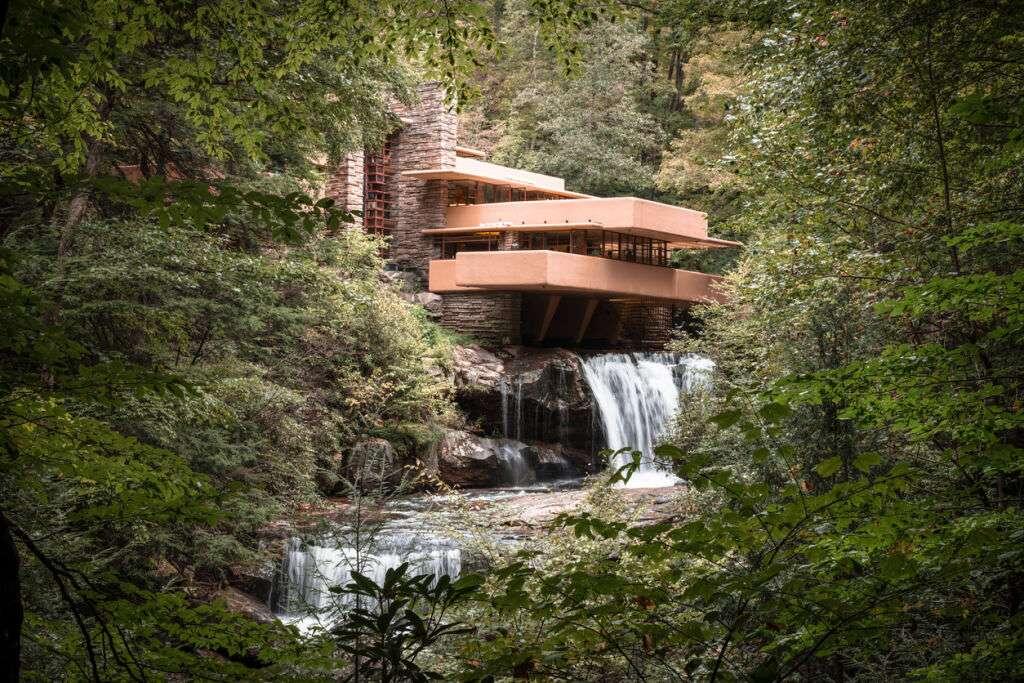
very picturesque. Is it always very crowded ?
saylor 2.0 is not what we need
Some thoughts on the topic of brand influence in open source innovation.
Elon joined Tesla as chairman in 2004, became CEO in 2008, and open-sourced Tesla’s patents in 2014 just after the Model S launched to rave reviews. By then the brand Tesla was catching up globally as a dominant factor.
I vaguely recall (and someone with the book can check) that in The Cathedral and the Bazaar, the Red Hat CEO wrote in the foreword that once you’ve built a trusted brand, it no longer matters whether your product is open-source or not.
So therein lies the power of product when trust and brand leads, the fear of being copied fades.
But I do not know enough about branding power in the open source innovation world to have a definitive take. Maybe something worth looking into.

Patents are meant to protect innovation, but often they do more harm than good.
In 2011, Google bought Motorola Mobility for $12.5 billion to shield Android from lawsuits by Apple, Microsoft, and Oracle. Once the job was done, it sold Motorola to Lenovo for $2.91 billion. Motorola’s innovation legacy was never revived.
And out of 17,000 patents, only 18 were used. The rest just sat there. Meanwhile, companies like Qualcomm and Samsung faced 9,423 IP rejections. The unused patents blocked progress in the telco industry.
For smaller players, innovation becomes expensive or impossible due to licensing fees or legal risks.
Patents create dominant players who control entire markets. They block competition and stall progress. Even something as small as a connector design can shut out small builders. And if those patents are buried in some corporate junk drawer, they can hold back entire industries.
China does the opposite.
Although the maker culture started in the U.S., it thrives in China. Cities like Shenzhen and Guangzhou are global prototyping hubs where entrepreneurs build custom devices with low friction and high creativity. In the U.S. the models are operating out of fear and protectionism. If the U.S. wants to compete, it needs to let creativity, imagination, and innovation thrive without drama.
The irony is not lost on me that one system empowers its people to build freely, the other seems to question their ability to innovate.
Before Tesla came about, GM and Ford were early movers in the EV industry but could not scale so they halted it. A few years later, Elon comes around, he understood that a fast-growing EV ecosystem would benefit everyone. A global hardware supply chain cannot thrive with one player alone. By open-sourcing Tesla's patents, he flipped the traditional approach, built the ecosystem, and ultimately led the market.
Can Open Source Win? It already has. Jack and Elon prove it everyday.
So do other billion-dollar open-source companies like Red Hat, MongoDB, and Redis Labs who hold it on their own as they go against big tech players Oracle, Microsoft, and Google. The power of open communities and network effects is real.
If the U.S. wants an innovation-driven economy, it has to let go of the fear of being copied. Hoarding IP has slowed it down. Sharing might just move it forward.

what do you normally use to vibe code ?

This tip is excellent, helps me remember well. My speed is not great for nonfiction as I’m more of a visual-dominant reader. Had likely 1.5 months headstart compared to nostr:nprofile1qyxhwumn8ghj7mn0wvhxcmmvqyehwumn8ghj7mnhvvh8qunfd4skctnwv46z7ctewe4xcetfd3khsvrpdsmk5vnsw96rydr3v4jrz73hvyu8xqpqsg6plzptd64u62a878hep2kev88swjh3tw00gjsfl8f237lmu63q8dzj6n this year, so abt 40% slower. But good motivation to try and keep up.
Btw seeing emoji reactions on primal. Are these new on Nostr ?

I’m slightly under yours. Working on eye-brain focus, visual reading and audio binaural to increase nonfiction speed >500wpm. Fiction eases into flow state. Reading hits alpha state, some who dedicated +/- 3 hrs a day reading - Benjamin Franklin, Queen Elizabeth 1, Leonardo Da Vincci, Einstein. Roosevelt read 1-3 books a day while in office.
There is power in having passion and purpose, and in rediscovering them when things get tough.
When Bruce Lee first began training, he studied Wing Chun under Ip Man in Hong Kong. But he didn’t complete the system because some students rejected him due to his mixed ancestry.
Instead of letting that stop him, he went on to learn boxing for head movement and footwork, fencing for timing and distance, judo and jiu-jitsu for grappling, karate and taekwondo for precision kicking, Muay Thai and Savate for striking and clinch work, and Filipino martial arts like Kali (Silat), Eskrima, and Arnis for weapons and empty-hand techniques.
He stayed loyal to the purpose, not the path. Passion kept him moving forward.
That allowed him to create his own style of martial art, the Jeet Kune Do, or “The Way of the Intercepting Fist.” JKD was a philosophy of adaptability.
In a 1971 interview with Pierre Berton, Bruce spoke about teaching martial arts to Hollywood actors like James Garner and Steve McQueen. When asked if he was teaching them acting, he said, “This might sound too philosophical, but it is unacting acting, or acting unacting.”
Sometimes, you have to unlearn, to learn.
Bruce believed that the most honest expression required both instinct and discipline. It is a balance, a harmony. Its about being real, in motion and in presence.
He said, “Here, you have natural instinct. And here, you have control. You must combine the two in harmony. If you only have one in the extreme, you become unscientific. If you only have the other, you become mechanical. No longer a human being. So, it's a successful balance of both. Therefore, it's not just pure naturalness or pure unnaturalness. The ideal is unnatural naturalness or natural unnaturalness.”
One of Bruce Lee's most powerful principles was: “Absorb what is useful, discard what is useless, and add what is uniquely your own.”
In many ways that made JKD more of an open-source approach to martial arts rather than a structured and closed system. His thinking paved the way for modern mixed martial arts (MMA).
But more than that, it became a philosophy of life.
Facts vs. Truth
One is objective. The other is personal.
Nice vs. Kind
One avoids pain. The other risks it to help.
Being Right vs. Being Successful
Being right wins the argument. Being successful wins the outcome.
Encouragement vs. Flattery
Encouragement is rooted in truth. Flattery is rooted in manipulation.
Intelligence vs. Wisdom
Intelligence knows what to say. Wisdom knows when or whether to say it.
Love vs. Attachment
Love gives freedom. Attachment destroys it.
Honesty vs. Transparency
Honesty tells the truth when asked. Transparency tells it without being asked.
Confidence vs. Arrogance
Confidence is based on self-awareness. Arrogance is based on insecurity.
Vision vs. Control
Vision invites people forward. Control pulls them back.
Being Liked vs. Being Respected
Being liked wins moments. Being respected wins missions.
Agreement vs. Alignment
Agreement is consensus. Alignment is commitment.
Roles vs. Value
Roles define responsibility. Value defines impact.
Invention vs. Innovation
Invention creates something new. Innovation makes it useful.
Art vs. Aesthetic
Aesthetic pleases the eye. Art moves the soul.
Inspiration vs. Discipline
Inspiration gets you started. Discipline keeps you going.
What are your thoughts on the tariff war? China doesn’t care, they doubled down on domestic trade and alt markets like since 2020 (Dual Circulation Strategy). Canada sends retaliation warning to the US.
Southeast Asia has been the quiet facilitator in the US-Russia-China-EU trade tensions for decades and the middleman for global trade for centuries. Hitting them with those hefty tariffs seems short-sighted and might not end well.
What are we looking at ? Spikes in prices for semiconductor and broader supply chain disruptions, as southeast asia remains a critical assembly hub for the US and EU. If these nations pivot toward BRICS alternatives, the US risks losing a key trade and manufacturing partner, and like domino effect, weakening its influence in global supply chains.
Tariffs are political crowd-pleasers. All tariffs globally should be removed.
The US is trying to squeeze everyone all at once while its own industrial base is still not prepared for actual self-sufficiency. You can’t tariff your way into manufacturing dominance. You have to build without the unnecessary drama.
Otherwise you will create black markets and smugglers to overcome the high rise in consumer products. That and the rise of corruption/favouritism in licensing.
If Americans genuinely believe that restricting their own choices is the only way they will be driven to build their country up, then that’s a messed-up mission to roll. The irony is, forced economic self-reliance has been a key theme in many communist experiments. And it’s not like the government fully supports its people in building their country. Only a select few benefit.
This feels like we need to be prepared for 2008 repeat. The U.S. debt-to-GDP ratio is at record highs (~125%). Interest payments alone are massive, and rising rates make it worse. With rising debt, banking fragility, and geopolitical instability, a shock to trade could push things over the edge.
But with problems, come solutions.
Bitcoin is going to start playing an important role in keeping global trade running when sovereign currencies lose momentum. Nostr can play a functional role for countries and companies that lack digital maturity (offline Nostr is an area to tap on). Logistics bottlenecks and entrenched port control remain real barriers. If we can crack those, then maybe, just maybe, we could see a real shift toward a more fluid, borderless economy.
It would also be good to see countries in South America and Africa rising in support of global trade out of this.
But governments thrive on control. They’re not going to let go that easily.
Of late I have been trying to figure out my own standing in the macroeconomic world. I debate against myself in needing a balance. But I find myself increasingly drawn to a no-state position. I just cannot see a strong state’s role as an economic stabilizer.
Some thoughts in recent weeks:
how we perceive reality is often someone else’s construction of it.
What excites your soul? What makes you feel deeply connected? Who excites your soul?
Do you think society is devolving or have you evolved and everything else remains the same?
The way to let go of ego is radical honesty, from yourself to yourself
The more you seek validation, the more you become prisoner of other people’s opinions
‘Freedom comes when you learn to let go, creation comes when you learn to say no’ - Madonna
Detaching from outcome sets your bar to your higher self, that even winning becomes a lower benchmark
Kintsugi, the art of fixing gold lacquer on cracked bowls, is how relationships should grow together.
Some people will enter your heart and uplift you physically, mentally, emotionally, and spiritually. Some will drain your energy. Everyone is a lesson
Be benevolent towards yourself
Being intentional is powerful
You are enough

So as long as government has full control of money, its a tough bargain.
Thank you for such a well written and detailed thought of the recent election. I value your input. I have to say, I do not know enough about Germany but I do want to add it to my reading list next. Love the pastries though, next level!
I have a few more questions if you don't mind. Feel free to respond whenever you can.
1. The taxation scenario you described is heavy Keynesian influence paired with elements of socialism. Has it always been this way ? Do you think this is sustainable?
2. I recall reading about how economic instability and dissatisfaction with both socialism and capitalism during the interwar years created fertile ground for Hitler’s rise, with big companies initially supporting him. Do you think these ideological tensions have always existed in Germany, or are they resurfacing in a new form today?
3. How does a centralised monetary system like the Euro benefit /disbenefit Germany ?
4. My current book is on the painful impact of Great Britain from the IMF during mid 70s. From it I got a bigger picture on the strained relationship between Europe and the US. Do you see this translating in the EU ?
5. In light of yesterday’s leaked message regarding the Yemen bombing, where JD Vance criticized Europe, do you see tensions between Europe and the U.S. influencing EU policies or public sentiment?
6. You mentioned societal values. Do you think the memory of WW2 still influences Germany’s political and cultural identity today? How does this impact the younger generations?
7. The geographical split you mentioned is fascinating. Has this always been a defining feature of German politics, or is it more pronounced now due to recent economic and social factors?

I used https://habla.news for this. But best person to ask on read for primal would be nostr:nprofile1qyxhwumn8ghj7mn0wvhxcmmvqyv8wumn8ghj7urjv4kkjatd9ec8y6tdv9kzumn9wsqzp4sl80zm866yqrha4esknfwp0j4lxfrt29pkrh5nnnj2rgx6dm622n97yv and team. Hope this helps.

Bitcoin on macroeconomics mind map. Economics is simply about control. Who controls money? Who controls power? Who is controlled by it? Who benefits from that control?
Where do you stand ?
Are you a hard or soft libertarian, or are you ok being a libertarian as is.
If you backing stablecoins, you're the new backbone of central banks.
(On that note, it took me a while to figure out where Chaumian cash and Fedimint fit in. I've placed them under soft libertarianism. The have centralized elements which contradicts hard libertarian principles, but they still draw from libertarian ideals)

Imitation is the sincerest form of flattery
🫂
On some days, all you can give is a hug. All you need is a hug.

Art by Checksy
Moments of self reflections are precious. The story of your friend in a wheelchair who lives life unbounded, is the kind of freedom we should all embody. Cultural gloom is heavy. What’s your take on the recent election in Germany ?
btw thanks for always responding without ego or pride. I see you, and I appreciate it