🌊 SURF 'N TURF 🏝️
-THE ISLAND LIFE-

Ronda is located in Andalusia, Province of Malaga, Spain.
It is situated in a mountainous area about 750 m (2,460 ft) above mean sea level. The Guadalevin River runs through the city, dividing it in two and carving out the steep, 100 meter deep El Tajo Canyon upon which the city perches.
Ronda was founded by the Celts in the 6th century BC. and later used as a fortified fortress by the Romans during the reign of Julius Caesar.
The city was part of the Visigoth reign until 713, when it fell to the Arabs, who named it Izn-Rand Onda (city of the castle) and made it the capital of the Takurunna province. In the 15th century Ronda fell to Spain.
The Punta Romano (also known as the Puente San Miguel) is the oldest of three bridges that span the canyon.
It is set in and around a deep gorge spanned by an impressive bridge, which brings in many day-trippers from the Costa del Sol and other places to admire the view.
However, Ronda is also a remarkably pretty town with beautiful architecture from the islamic period up to the 19th century, romantic winding streets with white-washed houses, some interesting museums, and lots of good places to eat and drink.
It is also a good base to explore the surrounding area, where you will find beautiful mountains and many of the iconic pueblos blancos (white villages) of Andalusia.
Credits Goes to the respective
Author ✍️/ Photographer📸
🐇 🕳️
#Bitcoin #Satoshis #Freedom #Apocalypse #Music #Movies #Philosophy #Literature
🌊 SURF 'N TURF 🏝️
-THE ISLAND LIFE-

A Sociable weaver's giant nest in Namibia, probably the most spectacular structure built by any bird.

The Sociable weaver (Philetairus socius) is a species of bird in the weaver family found across South Africa, Namibia and Botswana.
This species construct large compound community nests that resemble huts, complete with a sloping thatched-grass roof that sheds rain.

These nests are the world’s largest and most populated tree houses, with some weighing up to a ton or more and measuring up to 20 feet wide and 10 feet tall.
Built around large and sturdy structures like acacia trees or sometimes even telephone poles, the nests provide shelter from direct sunshine, rain, drought, and cold.

They are large enough to house over a hundred pairs of birds, consisting of several generations at a time. Each breeding pairs tends to its own compartment with its private entrance and line the interior with soft downy plant material.
These entrances are packed closely together and when seen from below, the communal nest has a honeycomb appearance.
These birds are constantly making home improvements, adding new nesting chambers, and some nests have remained occupied for over a century!

Credits Goes to the respective
Author ✍️/ Photographer📸
🐇 🕳️
#Bitcoin #Satoshis #Freedom #Apocalypse #Music #Movies #Philosophy #Literature
🌊 SURF 'N TURF 🏝️
-THE ISLAND LIFE-

A photograph of the Eiffel Tower under construction, taken on November 23, 1888, captures a pivotal moment in the creation of one of the world's most famous landmarks.
Designed by engineer Gustave Eiffel, the tower initially faced skepticism and criticism from parts of the Parisian artistic community.
Yet, this image showcases the scale and ambition of the project, with the intricate iron lattice framework gradually rising to its planned height of over 1,000 feet.
Begun in January 1887 and completed in March 1889, the Eiffel Tower’s construction demonstrated groundbreaking engineering techniques, marking a significant milestone in architectural history.
The photograph also provides a glimpse into the working conditions of the era, with workers navigating the complex network of scaffolding and iron beams, emphasizing the human effort behind this monumental achievement.
The Eiffel Tower’s construction was unprecedented in scale, reflecting the spirit of late 19th-century France, a time of rapid industrial growth and technological advancement.
As the tower rose, it became a symbol of modernity and progress, embodying the optimism and innovation of the Belle Époque in Paris.
Credits Goes to the respective
Author ✍️/ Photographer📸
🐇 🕳️
#Bitcoin #Satoshis #Freedom #Apocalypse #Music #Movies #Philosophy #Literature
🌊 SURF 'N TURF 🏝️
-THE ISLAND LIFE-
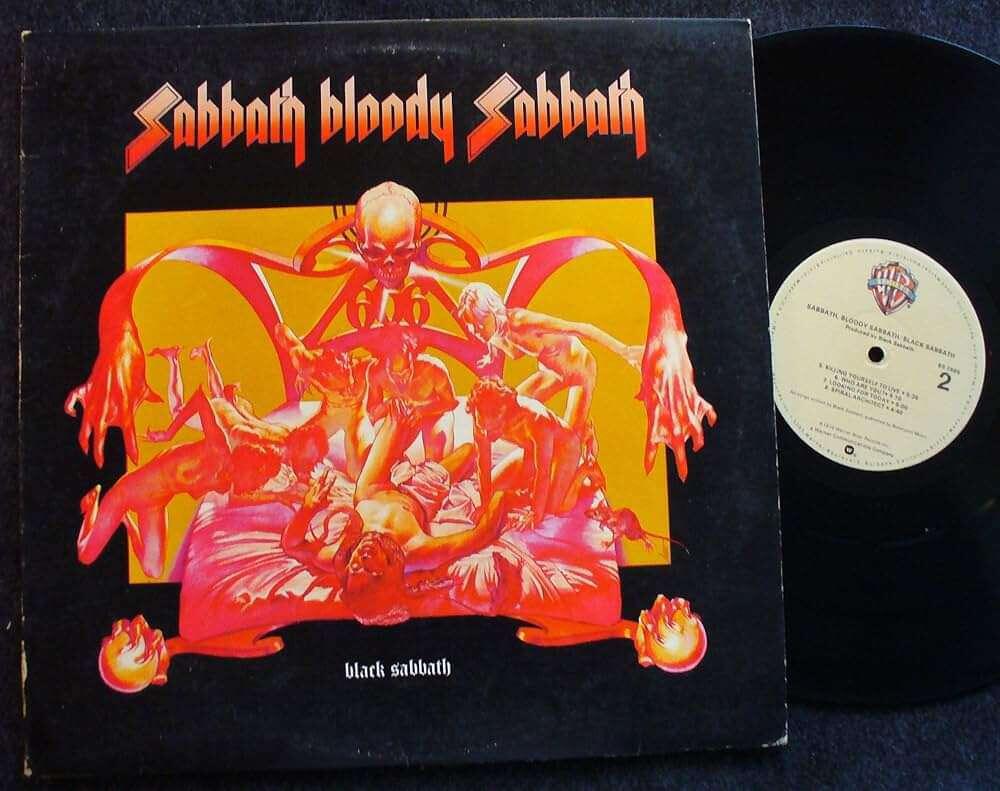
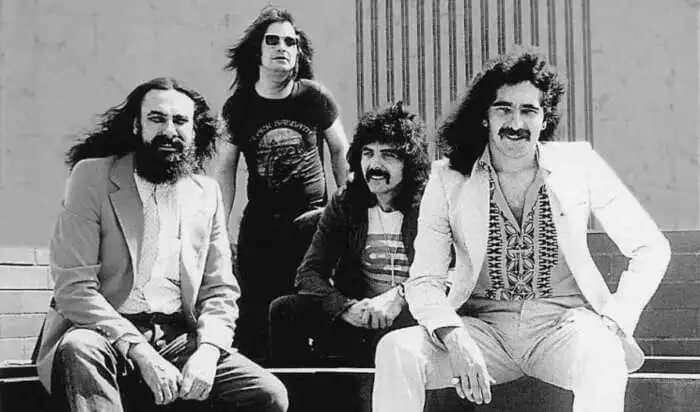
Analyzing the song "Sabbath Bloody Sabbath" by the band "Black Sabbath"
"Sabbath Bloody Sabbath" is the title track from Black Sabbath's fifth studio album, released in 1973. The song was born out of a challenging period for the band, particularly for guitarist Tony Iommi, who was experiencing writer's block.
To overcome this, the band rented Clearwell Castle in Gloucestershire, England, which was rumored to be haunted. The eerie atmosphere of the castle helped inspire Iommi to create the iconic riff that became the backbone of the song.
The lyrics of "Sabbath Bloody Sabbath" reflect themes of betrayal, frustration, and the struggle against oppressive forces. The song delves into the darker aspects of human experience, touching on feelings of despair and the fight for personal freedom.
Lines like "The people who have crippled you / You want to see them burn" and "Where can you run to?" convey a sense of anger and helplessness. The song's heavy, doom-laden riff and powerful vocals by Ozzy Osbourne amplify its intense emotional impact.
"Sabbath Bloody Sabbath" was not released as a single, but the album itself was a commercial success. It reached number 4 on the UK Albums Chart and number 11 on the US Billboard 200. The album marked a turning point for Black Sabbath, as it received favorable reviews from mainstream critics for the first time. Rolling Stone magazine called it "an extraordinarily gripping affair" and "nothing less than a complete success".
"Sabbath Bloody Sabbath" has been widely acclaimed by fans and critics alike. It is considered one of Black Sabbath's greatest songs and a defining track in the heavy metal genre. The song's complex structure, powerful lyrics, and memorable riff have made it a favorite among heavy metal enthusiasts.
Over the years, it has been covered by numerous artists and remains a staple in the band's live performances. Its influence extends beyond music, as it has been featured in various films, TV shows, and video games, contributing to its lasting legacy.
Credits Goes to the respective
Author ✍️/ Photographer📸
🐇 🕳️
#Bitcoin #Satoshis #Freedom #Apocalypse #Music #Movies #Philosophy #Literature
🌊 SURF 'N TURF 🏝️
-THE ISLAND LIFE-

The Longest Underwater Tunnel in the World.
The Seikan Tunnel in Japan is one of the greatest feats of modern engineering, connecting the islands of Honshu and Hokkaido beneath the Tsugaru Strait.
With a total length of 33.46 miles (53.85 km) , and 14.5miles (23.3 km) of which are underwater, it holds the title of the longest submarine tunnel in the world.
Opened in 1988, the Seikan Tunnel not only facilitates transport between the islands but is also designed to withstand earthquakes and tsunamis, showcasing the advanced level of Japanese engineering.
This tunnel represents not only a milestone in transportation but also in safety and innovation, providing a key link for both passengers and cargo between Japan's two main islands.
Credits Goes to the respective
Author ✍️/ Photographer📸
🐇 🕳️
#Bitcoin #Satoshis #Freedom #Apocalypse #Music #Movies #Philosophy #Literature
🌊 SURF 'N TURF 🏝️
-THE ISLAND LIFE-

8 November 1975 – Queen’s epic suite ‘Bohemian Rhapsody ‘entered the UK chart at No 47
In three weeks, it will top the charts, at No 1, where it will stay for an astonishing 9 weeks, winning the band’s first Platinum award.
Freddie Mercury’s penned colossal masterpiece is considered one of Rock’s greatest songs of all time!
“This was Freddie’s baby. He’d worked out the harmonies in his head. I remember Freddie coming in with loads of bits of paper from his dad’s work, like Post-it notes, which he used to make notes on. And I mean literally notes. He would put A♭, C♯, D♭ in little blocks. He was pounding on the piano, he played the piano like most people play the drums. And this song he had was full of gaps where he explained that something operatic would happen here and so on.”
“It has become a classic phenomenon and one which no one will ever allow us to forget.
(Brian May)
Credits Goes to the respective
Author ✍️/ Photographer📸
🐇 🕳️
#Bitcoin #Satoshis #Freedom #Apocalypse #Music #Movies #Philosophy #Literature
🌊 SURF 'N TURF 🏝️
-THE ISLAND LIFE-

Few guitars in the world of rock can boast the fascinating history of Brian May’s Red Special. This instrument has accompanied the guitarist since he was sixteen, through the great successes of Queen, and has earned nicknames like “Fireplace” and “Old Lady.”
At the time, the Mays couldn’t afford to buy an electric guitar, so Brian and his father Harold, an engineer with a passion for modeling, decided to build one themselves. The name “Red Special” refers to the reddish color of the mahogany wood used to make it. It’s estimated that the value of the instrument at the time of its creation was around 8 pounds.
Brian said, “It took two years and was all done with hand tools. We used any materials we could lay our hands on. The neck was part of an old fireplace (one of the nicknames). We hand-carved the inlay on the fret out of old mother-of-pearl buttons and the tremolo arm was made from a bicycle saddlebag holder, topped off with the tip of one of my mum’s knitting needles!”
The Red Special has been a lifelong companion for Brian May throughout his long career. She remains a vital piece of Queen history.
The famous Red Special even has its own bodyguard on tour!
Credits Goes to the respective
Author ✍️/ Photographer📸
🐇 🕳️
#Bitcoin #Satoshis #Freedom #Apocalypse #Music #Movies #Philosophy #Literature
🌊 SURF 'N TURF 🏝️
-THE ISLAND LIFE-

In 1979, N. Jay Jaffee captured a self-portrait that not only represented his artistic vision but also captured the unique atmosphere of New York City in the late 20th century.
This period marked a transformative time for Manhattan, as the skyline began to change, with the World Trade Center standing as a dominant symbol of America's post-war economic power. Jaffee’s photograph, though a personal reflection, also speaks to the broader context of urban development and the evolving cultural landscape of the city.
By the late 1970s, the World Trade Center had become an iconic part of New York City's skyline. Designed by architect Minoru Yamasaki, the twin towers were completed in 1973, towering over Lower Manhattan at 110 stories each. For much of the 1970s and early 1980s, the World Trade Center represented American ambition, with its state-of-the-art offices and a burgeoning global business presence. The towers housed major corporations, offering sweeping views of the city, the Hudson River, and beyond, symbolizing the height of modernity.
However, the 1970s were also a time of contrast in New York, marked by both progress and struggle. The city faced significant economic difficulties, with fiscal crises and rising crime rates. Yet, amidst these challenges, New York thrived as a cultural epicenter. The art scene was exploding, with artists like Jaffee capturing the gritty yet dynamic energy of the city through photography, painting, and sculpture. For artists, the city was both a canvas and a subject, providing the raw material needed to reflect the city's constantly changing identity.
In Jaffee’s self-portrait, one might see not just the artist’s face, but also a reflection of New York itself: a city grappling with both its past and its future. The 1970s were a time when the city was at a crossroads, and the World Trade Center stood at the heart of that transformation. The towers symbolized both the promise of progress and the complexity of urban life. They represented modernity, but their construction also displaced communities and altered the cityscape.
As we now know, the World Trade Center would come to symbolize something else entirely after the tragic events of September 11, 2001. The towers were destroyed in the terrorist attacks, leaving a void in the skyline and the collective memory of New Yorkers.
The memory of these iconic structures, captured in photographs like Jaffee's, remains a poignant reminder of a New York that no longer exists, but which continues to shape the city's identity through its history, culture, and the enduring spirit of its people.
Credits Goes to the respective
Author ✍️/ Photographer📸
🐇 🕳️
#Bitcoin #Satoshis #Freedom #Apocalypse #Music #Movies #Philosophy #Literature
🌊 SURF 'N TURF 🏝️
-THE ISLAND LIFE-

ON THIS DATE (43 YEARS AGO)
November 6, 1981 – The Cars: Shake It Up is released.
Rolling Stone (see original review below)
Shake It Up is the fourth studio album by The Cars, released on November 6, 1981. It reached #9 on the Billboard 200 Top LP's chart, and features four singles that reached various Billboard chart, with "Shake It Up" being the highest in the Mainstream Rock (#2) and The Hot 100 (#4).
A return to form after the departure that was 1980’s muddled Panorama, the Cars’ Shake It Up bursts forth with a rich assembly of synthesizers, drum machines, electronic blips, and catchy melodies that make it an early 80s pop staple. Known the world over, the famous title track proves the band’s arrangement skills were in perfect shape and set the stage for a record overflowing with memorable hooks and complementary rock riffs.
Shake It Up also plays witness to primary songwriter/vocalist Ric Ocasek’s increased cynicism and biting wit. While the Cars never took a rosy-eyed view of romance, the songs here impart a newfound sense of sympathy, regret, limbo, and reservation. The beauty of the Cars—and all ten tunes here—is that the music suggests something else entirely. Such subliminal emotions and dynamic contrasts act as a magnet, and the band plays as if it’s in on the secret.
“They've always cultivated a dark side--girls make boys want to end it all even after the boys have grown up. They've always basked in the shadow of Roxy Music, too. But they've never been so stylishly nightmarish--except for the title cut, even the fast ones don't aim for fun.” –Robert Christgau, The Consumer Guide
__________
ORIGINAL ROLLING STONE REVIEW
The new wave groups in the platinum bracket – the Cars, Blondie, the Police – got there by playing chicken with clichés. Too self-conscious to rehash standard sentiments but too pop-conscious to shut out listeners, they write terse, hook-filled songs that ride as close to the edge of nihilism as they dare. Or at least near enough to keep themselves honest, to say what they mean and shut up. If you're looking for ambivalence, it's right on the surface of "Let's Go" and Blondie's "Heart of Glass"–nothing cryptic, no double-entendres. The good times are purely theoretical, while love is inconvenient and probably impossible. Either the pop audience has grown decidedly unromantic or it's just not looking too closely. Somehow, these bands' poker-faced delivery allows a vast, half-listening public to perceive them as cute, hip, friendly pop slingers. Though the implicit irony of using bleached-blond singers as calculated "sex symbols" never registers, the catch phrases hit home, context be damned. Do young lovers in radioland hum "Just What I Needed" at tender moments? I suspect they do.
Success has made all three groups more open, more extreme. The Police revealed themselves as musical experimentalists and writers of disposable lyrics on Ghost in the Machine, and Blondie's brain trust tried art-snob genre hopping on Autoamerican and Kookoo. For the Cars' superb 1980 album. Panorama, Ric Ocasek wrote about feeling estranged from (and by) the big time, while the band went gung-ho progressive eclectic leap from the lean nonchalance of the first two Cars LPs toward (relative) sincerity.
Coming after Panorama. Shake It Up is a full fledged quandary, from the outside in The cover, designed by drummer David Robinson, looks like a cheesy picture disc package, a far its from the group's usually elegant graphics The lyrics suggest that Ocasek has succumbed to the misogynous love kills notions of his fellow arena bands. And the tunes penned in dark, minor keys, with insistently mechanical rhythms and cold, metallic mixes enforce distance detachment disbelief.
They hook you anyway. The Cars have been pop encyclopedists from the start, but unlike such pastiche-mongers as ELO, they tend to twist what they borrow (Only when they annex the entire approach of a more obscure group "A Dream Away," for example, owes too much to Mash and the Pan do their ethics seem questionable) Generally, a familiar lick grabs you just long enough for the Cars' own peculiarities to sink in. Sometimes they'll go for an obvious reference, like Greg Hawkes' Del Shannon-style keyboard blips in "Shake It Up" Lately, however, they've learned to tweak the ear very subtly. In "Victim of Love." for instance, the instrumental chorus summons the chord progression from the Everly Brothers' "All I Have to Do Is Dream" (a song as naive as "Victim of Love" is cynical) for a wordless comment on both compositions.
More and more, the Cars are concentrating on undertones–and queasy ones at that. The band has abandoned the dissonance and odd meters of Panorama, which may be why Shake It Up is being promoted as a return to pop. But the arrangements insinuate something else: they're more dense than previous Cars recordings, so much so that the new numbers will have to be rethought completely before the group plays them live. And at the core of every track is an element (often electronic percussion) that repeats unchangingly throughout the tune. In fact, the first sound on the album – the synthetic pseudo-handclaps that measure out "Since You're Gone" – is one such element. Usually, melodic embellishments from Hawkes and guitarist Elliot Easton turn repetitive as well.
Licks heard again and again work as hooks, of course, as the Cars have always known On Shake It Up, however, these guys deliberately OD on repetition, easing closer to the Kraftwerk-Suicide-Ultravox style of robotic dread Even the rockers have an eerie, static quality they could go on forever or stop at any moment. "Shake It Up" exhorts people to dance and it moves along at a good chp, yet after a few listenings, the choking pulse and Hawkes' back and forth stereo arpeggios almost mock the idea of moving at all. In "Think It Over," the Cars set so many circular riffs in motion that a long fade-out is needed so you'll hear each one: modulated voices (with the cheerful refrain "nothing you can do"), unmodulated voices, a random pitch synthesizer, keyboards in various registers, a guitar or two. All this activity (not to mention the walloping backbeat of Robinson and bassist Ben Orr) keeps the track burbling, but the repetition freezes it at the same time. Like a clock ticking on a movie soundtrack, there's an abstract, dispassionate tension. The Cars certainly aren't the first to use such an effect, but they use it well.
None of which explains the lyrics. While Ric Ocasek has generally hedged most of his love songs with skepticism and as-ifs, the new ones add a word here and there to blame the singer's troubles on the object of his "affection." The reason he's falling apart in "Since You're Gone" is "You're so treacherous/When it comes to tenderness." And when he finds someone in "This Could Be Love," he wonders, "Is this the kill?" Once or twice wouldn't be bad – we've all felt that way sometime–but every "romantic" number except "Maybe Baby" presents the protagonist as an aggrieved innocent at the mercy of lust, just like Pat Benatar. ("Maybe Baby," on the other hand, puts a friendly proposition to the chilling chords from Swan Lake.) Silliest of all is "Victim of Love." After a whole verse of "She can steal your heart with just one wink/She'll hold you tight she won't let go" and other good stuff, the chorus explains that it's "'cause you're the victim the victim of love." Victim? Hell, where do I sign up?
The question is, are the Cars trading more clichés in the lyrics for more freedom in their arrangements? The care they've taken with the music pays off subliminally: though they pile on riff after interlocking riff–more like minimalist composers than rock & rollers–none of the tracks seems top-heavy or obnoxiously clever, and none offers unequivocal cues as to whether or not we should believe what we hear. As a Cars fan, I prefer to give them the benefit of the doubt and assume that they're trying out some sort of strategy. The irony is that it's a strategy they don't need. As long as the Cars keep the hooks coming and the beat simple, only overly analytical types like myself will bother with the lyrics at all.
~ Jon Pareles (February 4, 1982)
TRACKS:
All songs written by Ric Ocasek, except where noted.
Side one
"Since You're Gone" – 3:30
"Shake It Up" – 3:32
"I'm Not the One" – 4:12
"Victim of Love" – 4:24
"Cruiser" – 4:54
Side two
"A Dream Away" – 5:44
"This Could Be Love" (Greg Hawkes, Ocasek) – 4:26
"Think it Over" – 4:56
"Maybe Baby" – 5:04
Credits Goes to the respective
Author ✍️/ Photographer📸
🐇 🕳️
#Bitcoin #Satoshis #Freedom #Apocalypse #Music #Movies #Philosophy #Literature
🌊 SURF 'N TURF 🏝️
-THE ISLAND LIFE-

DREAM CLOUD, carved boulder opal, c 1915, from Queensland, Australia 🇦🇺
The winged female bust is a personification of The Dream, close to Beaux Arts traditional style with hints of late Art Nouveau.
This small sculpture is an Australian opal, on display in the Mineral Gallery of the Royal Ontario Museum, Toronto, Canada.
Gemstones: Boulder Opal; 70 × 90 x 45mm; 1167.50 carats
Note on file: Obtained by J.P. Morgan's nephew, Mr. Junius Morgan, who lived at Nyetimber, Chiltington, Sussex, obtained from a Russian immigrant.
Credits Goes to the respective
Author ✍️/ Photographer📸
🐇 🕳️
#Bitcoin #Satoshis #Freedom #Apocalypse #Music #Movies #Philosophy #Literature

🌊 SURF 'N TURF 🏝️
-THE ISLAND LIFE-

ON THIS DATE (53 YEARS AGO)
November 8, 1971 – Led Zeppelin: IV (ZOSO) is released.
The fourth album by Led Zeppelin was released in the US on November 8, 1971 (November 12 in the UK). It reached #2 on the Billboard 200 Top LP's chart and topped the UK Albums chart. In 2003, the album was ranked 66th on Rolling Stone magazine's list of "The 500 Greatest Albums of All Time".
In 1998, Q magazine readers voted Led Zeppelin IV the 26th greatest album of all time; in 2000 Q placed it at #26 in its list of the 100 Greatest British Albums Ever.
No title is printed on the album, so it is generally referred to as Led Zeppelin IV, following the naming standard used by the band's first three studio albums. The album has alternately been referred to as the Four Symbols logo, Four Symbols, The Fourth Album (those two titles each having been used in the Atlantic catalog), Untitled, The Runes, The Hermit, and ZoSo, the latter of which is derived from the symbol used by Jimmy Page for the album sleeve.
The album was initially recorded at Island Records' newly opened Basing Street Studios, London, at the same time as Jethro Tull's Aqualung in December 1970. Upon the suggestion of Fleetwood Mac, the band then moved to Headley Grange, a remote Victorian house in East Hampshire, England, to conduct additional recordings. Here they used the Rolling Stones Mobile Studio. Jimmy Page later recalled: "We needed the sort of facilities where we could have a cup of tea and wander around the garden and go in and do what we had to do." This relaxed, atmospheric environment at Headley Grange also provided other advantages for the band. As is explained by Dave Lewis, "By moving into Headley Grange for the whole period of recording, many of the tracks [on the album] were made up on the spot and committed to tape almost there and then."
Once the basic tracks had been recorded, the band later added overdubs at Island Studios, and then took the completed master tapes to Sunset Sound in Los Angeles for mixing. However, the mix ultimately proved to be less than satisfactory, creating an unwanted delay in the album's release. Further mixing had to be undertaken in London, pushing the final release date back by some months.
Three other songs from the sessions, "Down by the Seaside", "Night Flight" and "Boogie With Stu" (featuring Rolling Stones co-founder/collaborator Ian Stewart on piano), did not appear on the album but were included four years later on the double album Physical Graffiti.
__________
Led Zeppelin / Light and Shade (excerpt)
by Cameron Crowe
Hollywood 1973.
Led Zeppelin IV, was a watershed moment in the band's history. The lp slipped into stores in 1971 with little fanfare. Here was a more "mature" work that also rocked as hard as any of their previous efforts. It was remarkable music for a band that was still, essentially, a trio with a great singer.
Bonham and Jones had begun to feel their confidence. It was Bonham who spontaneously interrupted work on another (never-finished) track by playing the drum-part from Little Richard's "Keep A-Knockin'." And Jones had brought in another idea, inspired by the Muddy Waters album Electric Mud.
"I wanted to try an electric blues with a rolling bass part," Jones recalls, humming the part. "But it couldn't be to simple. I wanted it to turn back on itself. I showed it to the guys, and we fell into it. We struggled with the turn-around until Bonham figured out that you just count four-times as if there's no turn-around. That was the secret. Anyway, we titled it after a dog that was wandering in and out of the studio. The dog had no name, so we just called the song 'Black Dog.'"
The highlight of the album, of course, was "Stairway to heaven." The most-played track in radio history, it began like many Zeppelin classics...on a tape from Page's home studio. Recording at Headley Grange, a converted poorhouse in Hampshire, Page first played the track to John Paul Jones. "Bonzo and Robert had gone out for the night, and I worked really hard on the thing. Jonesy and I then routined it together, and later we ran through it with the drums and everything. Robert was sitting there at the same time, by the fireplace, and I believe he came up with 80% of the lyrics at that time. He was just sort of writing away and suddenly there it was...."
Plant picks up the story: "Yeah, I just sat next to Pagey while he was playing it through. It was done very quickly. It took a little working out, but it was a very fluid, unnaturally easy track. It was almost as if--uh-oh--it just had to be gotten out at that time. There was something pushing it, saying 'you guys are okay, but if you want to do something timeless, here's a wedding song for you."
__________
THE FOUR SYMBOLS
The idea for each member of the band to choose a personal emblem for the cover was Page's.
In an interview he gave in 1977, Page recalled:
"After all this crap that we'd had with the critics, I put it to everybody else that it'd be a good idea to put out something totally anonymous. At first I wanted just one symbol on it, but then it was decided that since it was our fourth album and there were four of us, we could each choose our own symbol. I designed mine and everyone else had their own reasons for using the symbols that they used."
Page stated that he designed his own symbol and has never publicly disclosed any reasoning behind it. However, it has been argued that his symbol appeared as early as 1557 to represent Saturn. The symbol is sometimes referred to as "ZoSo", though Page has explained that it was not in fact intended to be a word at all.
Bassist John Paul Jones' symbol, which he chose from Rudolf Koch's Book of Signs, is a single circle intersecting three vesica pisces (a triquetra). It is intended to symbolize a person who possesses both confidence and competence.
Drummer John Bonham's symbol, the three interlocking rings, was picked by the drummer from the same book. It represents the triad of mother, father and child, but also happens -- inverted -- to be the logo for Ballantine beer.
Singer Robert Plant's symbol of a feather within a circle was his own design, being based on the sign of the supposed Mu civilization.
There is also a fifth, smaller symbol chosen by guest vocalist Sandy Denny representing her contribution to the track "The Battle of Evermore"; it appears in the credits list on the inner sleeve of the LP, serving as an asterisk and is shaped like three triangles touching at their points.
During Led Zeppelin's tour of the United Kingdom in winter 1971, which took place shortly following the release of the album, the band visually projected the four symbols on their stage equipment. Page's symbol was put onto one of his Marshall amplifiers, Bonham's three interlinked circles adorned the outer face of his bass drum, Jones had his symbol stenciled onto material which was draped across his Fender Rhodes keyboard, and Plant's feather symbol was painted onto a side speaker PA cabinet. Only Page's and Bonham's symbols were retained for subsequent Led Zeppelin concert tours.
__________
ALBUM COVER
The 19th-century rustic oil painting on the front of the album was purchased from an antique shop in Reading, Berkshire by Plant. The painting was then juxtaposed and affixed to the internal, papered wall of the partly demolished suburban house for the photograph to be taken.
Page has explained that the cover of the fourth album was intended to bring out a city/country dichotomy that had initially surfaced on Led Zeppelin III:
"It represented the change in the balance which was going on. There was the old countryman and the blocks of flats being knocked down. It was just a way of saying that we should look after the earth, not rape and pillage it."
However, regarding the meaning of the album cover, he has also stated:
"The cover was supposed to be something that was for other people to savor rather than for me to actually spell everything out, which would make the whole thing rather disappointing on that level of your own personal adventure into the music."
__________
ORIGINAL MELODY MAKER REVIEW
By Chris Welch, November 13, 1971
Take a deep breath. Robert Plant does this just before "Going To California". It is their fourth and not their "best" or their "worst". It is a fine new album by a group who can now take a step outside the environment of controversy that expands like a conurbation around the newly successful
Heated discussion in terms of comparison can end here. Page, Plant, Bonham and Jones are the band, and they have deliberately left their work untitled. It is not a denial of the past but a springboard to better things. Not all tracks are brilliant.
"Four Sticks" is not a riff that knocks me out overmuch. So it is not a perfect album, but there is a thread of consistency that winds through all the music and there is a bond between the players that reveals strength and a sense of attractive "Battle Of Evermore", and sings a pretty but lusty duet with Bob over a choir of mandolin and acoustic guitars. To complete the goodies on Side One is "Stairway To Heaven", one of the band's best songs, and another splendid performance by Robert. "There's a sense of direction not so apparent on their last album" direction not so apparent on their last album.
The sound of Zeppelin in full cry is most satisfying, and "Black Dog", the opener, is a beefy stomp, with Robert throwing his head back at some point midway between speakers and the Page guitar and Bonham drums marching on triumphant.
"Rock And Roll" is just that, and winds up the tempo to feature Jimmy in a looping, exultant solo while John Paul's piano clinks in the time-honoured fashion. Sandy Denny makes a welcome guest appearance on the attractive "Battle Of Evermore", and sings a pretty but lusty duet with Bob over a choir of mandolin and acoustic guitars. To complete the goodies on Side One is "Stairway To Heaven", one of the band's best songs, and another splendid performance by Robert
It's back to the best on "Misty Mountain Hop", and it is here the strange contrast between songs becomes most apparent. There is a cliff -hanging sensation from the soft moods of "Stairway" to the drive of "Hop", which jumps in all directions with good country cheer.
"Four Sticks" is a powerful piece and features Bonham using four drumsticks. But the repetitive riff Jimmy employs here is not particularly inventive. "Going To California" gives Robert another opportunity to sing in his lower register, which he does so well.
"When The Levee Breaks", their final statement, is a good example of the full band in action. Taken at mid-tempo, it has a hypnotic effect as Bonham's bass drum drops bombs into the cellar.
__________
ORIGINAL ROLLING STONE REVIEW
It might seem a bit incongruous to say that Led Zeppelin -- a band never particularly known for its tendency to understate matters -- has produced an album which is remarkable for its low-keyed and tasteful subtly, but that's just the case here. The march of the dinosaurs that broke the ground for their first epic release has apparently vanished, taking along with it the splattering electronics of their second effort and the leaden acoustic moves that seemed to weigh down their third. What's been saved is the pumping adrenalin drive that held the key to such classics as "Communication Breakdown" and "Whole Lotta Love," the incredibly sharp and precise vocal dynamism of Robert Plant, and some of the tightest arranging and producing Jimmy Page has yet seen his way toward doing. If this thing with the semi-metaphysical title isn't quite their best to date, since the very chances that the others took meant they would visit some outrageous highs as well as some overbearing lows, it certainly comes off as their most consistently good.
One of the ways in which this is demonstrated is the sheer variety of the album: out of the eight cuts, there isn't one that steps on another's toes, that tries to do too much all at once. There are Olde English ballads ("The Ballad of Evermore" with a lovely performance by Sandy Denny), a kind of pseudo-blues just to keep in touch ("Four Sticks"), a pair of authentic Zepplinania ("Black Dog" and "Misty Mountain Hop"), some stuff that I might actually call shy and poetic if it didn't carry itself off so well ("Stairway to Heaven" and "Going To California"), and a couple of songs that when all is said and done, will probably be right up there in the gold-starred hierarchy of put 'em on and play 'em agains. The first, coyly titled "Rock And Roll," is the Zeppelin's slightly-late attempt at tribute to the mother of us all, but here it's definitely a case of better late than never. This sonuvabitch moves, with Plant musing vocally on how "It's been a long, lonely lonely time" since last he rock & rolled, the rhythm section soaring underneath. Page strides up to take a nice lead during the break, one of the all-too-few times he flashes his guitar prowess during the record, and its note-for-note simplicity says a lot for the ways in which he's come of age over the past couple of years.
The end of the album is saved for "When The Levee Breaks," strangely credited to all the members of the band plus Memphis Minnie, and it's a dazzler. Basing themselves around one honey of a chord progression, the group constructs an air of tunnel-long depth, full of stunning resolves and a majesty that sets up as a perfect climax. Led Zep have had a lot of imitators over the past few years, but it takes cuts like this to show that most of them have only picked up the style, lacking any real knowledge of the meat underneath.
Uh huh, they got it down all right. And since the latest issue of Cashbox noted that this 'un was a gold disc on its first day of release, I guess they're about to nicely keep it up. Not bad for a pack of Limey lemon squeezers.
~ Lenny Kaye (December 23, 1971)
TRACKS:
Side one
1 Black Dog (Jimmy Page/Robert Plant/John Paul Jones) - 4:54
2 Rock and Roll (Page/Plant/Jones/John Bonham) - 3:40
3 The Battle of Evermore (Page/Plant) - 5:51
4 Stairway to Heaven (Page/Plant) - 8:02
Side two
1 Misty Mountain Hop (Page/Plant/Jones) - 4:38
2 Four Sticks - (Page/Plant) - 4:44
3 Going to California (Page/Plant) - 3:31
4 When the Levee Breaks (Memphis Minnie, Led Zep) - 7:07
Credits Goes to the respective
Author ✍️/ Photographer📸
🐇 🕳️
#Bitcoin #Satoshis #Freedom #Apocalypse #Music #Movies #Philosophy #Literature
Btw. That pizza looks soooooo yummy in your post.....you got my mouth watering. 🧡
Absolutely 💯 one of the most icon buildings ever created. I have been there in Sydney and it is really in an impressive location too which adds to its aesthetics.
🌊 SURF 'N TURF 🏝️
-THE ISLAND LIFE-

Rob kiting the pit....
Credits Goes to the respective
Author ✍️/ Photographer📸
🐇 🕳️
#Bitcoin #Satoshis #Freedom #Apocalypse #Music #Movies #Philosophy #Literature
🌊 SURF 'N TURF 🏝️
-THE ISLAND LIFE-

In 1973, the Sydney Opera House was still under construction, a monumental project that began in 1959. This iconic building, designed by Danish architect Jørn Utzon, features a series of white sail-like shells as its roof structure, making it one of the most recognizable and photographed buildings in the world.
The construction process was marked by innovative engineering and architectural techniques, as well as significant delays and cost overruns. Despite these challenges, the Sydney Opera House was completed and formally opened on October 20, 1973, by Queen Elizabeth II. It has since become a symbol of Sydney and a UNESCO World Heritage Site, celebrated for its groundbreaking design and cultural significance.
Credits Goes to the respective
Author ✍️/ Photographer📸
🐇 🕳️
#Bitcoin #Satoshis #Freedom #Apocalypse #Music #Movies #Philosophy #Literature

🌊 SURF 'N TURF 🏝️
-THE ISLAND LIFE-

Los Guachiontones is one of the overlooked prehistoric sites in Mexico located in the center west of the country. This is a destination that combines one of Mexico's most mysterious and overlooked ancient civilizations with its historic Tequila Valley where the valleys are blue with agave. Los Guachimontones dates from the Late Formative and Classic Period (a period that spanned from around 300 BC to 450 AD). Los Guachimontones is the largest prehistoric site found in the Mexican state of Jalisco. This region of Mexico is famous for its agave and Tequila Valleys.
Los Guachimontones is the largest of several dozen Teuchitlan Culture sites. These sites are noted for the number and size of their ceremonial buildings. The Teuchitlan culture seems to have been composed of multiple cultures with a number of commonalities. It is difficult to know much about them as they lacked a writing system. It is not known what language they spoke or even what they called themselves; the name 'Teuchitlan' is from the nearby town and that name came from later Nahuatl-speaking migrants to the area.
The buildings standing at Los Guachimontones are bulls-eyed-shaped buildings and are found mostly in the Tequila Valleys (although there are more examples in northern Jalisco and southern Colima). They are rather distinct, circular, step pyramid structures called 'guachimontones.' These mound-like step pyramids have been described as beehive-like. They have found central altars surrounded by a circular patio space. That sits on four to sixteen rectangular or square platforms. They may remind visitors of other prehistoric mounds in North America such as the Cahokia mounds of the Mississippi. Underneath these platforms are shaft tombs where the ancients once buried their dead.
There are two ceremonial areas at the archeological site at Los Guachimontones with many house mounds, two ballcourts, terraced hillsides, and more. The ancient remains extend beyond the currently protected boundaries. It has been estimated that there are over 200 guachimontones around the western region of Mexico (although the majority are in the Tequila Valley). These monuments provide a glimpse into one of the world's many lost civilizations. There is so much more to learn about these ancient sites and very little is known of the ancient civilization that built them. Later excavations are sure to make many new discoveries.
Credits Goes to the respective
Author ✍️/ Photographer📸
🐇 🕳️
#Bitcoin #Satoshis #Freedom #Apocalypse #Music #Movies #Philosophy #Literature