
🌊 SURF 'N TURF 🏝️
-THE ISLAND LIFE-

We think of the Stoics as philosophers, which of course they were. But they were human beings too—sons, daughters, husbands, wives and most of all parents.
Marcus Aurelius had 13 children. Seneca had one (and one of his best essays is written to his mother). Cato had a son and a daughter (one of the great female Stoics of history). So it should definitely not surprise us that the Stoics had many great insights for parents.

Seneca warns parents not to indulge a child’s every desire (like how Agrippina spoiled Nero) and that instead, “the good parent, out of love for the child, acts as a trainer, endlessly manufacturing trials for the child” so they can learn to overcome struggle and discover their hidden potential. Marcus made sure to eat dinner with his family every night he could, then liked to tuck his children into bed afterwards. As he kissed them good night, he did something he says he learned from Epictetus, “whisper to yourself, ‘he may be dead in the morning,’” so cherish this moment together while you can. And Musonius Rufus emphasized the importance of parents teaching children by example: “Don’t expect to tell others what they should do when they know that you do what you shouldn’t.”
It was reading wisdom like this that inspired the launch of the Daily Dad newsletter six years ago—because as Seneca wrote, a Stoic acquires knowledge not in order to possess it for themselves, but to share it with others.
Now that newsletter goes out to 130,000 people from countries like India, Mexico, Australia, Switzerland, the United States, and others all around the world.

Each day they receive a parenting reminder about how to become the role model your child needs, as well as the parent you aspire to be, from a wide range of historical sources like Plato, Lincoln, Queen Elizabeth, and Frederick Douglass.
These reminders, like the ones from the Stoics above, show us that as much as things change, parenting remains one of those beautiful experiences that links us, in an unbroken chain, back thousands of years.

It’s also the most important job any of us can have, a job that demands you show up every day you can—as even Marcus did, despite being emperor of Rome—but also a job in which, no matter where we are on our journey, we could all use a little help.
Head over to dailystoic.com/dailydadleather to learn more and grab yours while supplies last!
Credits Goes to the respective
Author ✍️/ Photographer📸
🐇 🕳️
#Bitcoin #Satoshis #Freedom #Apocalypse #Music #Movies #Philosophy #Literature

'What Is Bait and Switch in Business?
A “bait and switch” is a scam to mislead buyers, whereby a seller advertises an appealing but ingenuine offer to sell a product or service that the seller does not actually intend to sell. Instead, the seller offers a sub-par, defective, or unwanted alternative.'
It's a very old and effective tactic.
🌊 SURF 'N TURF 🏝️
-THE ISLAND LIFE-

From the Odyssey.
In The Odyssey, Odysseus and his men land on an island where people called the Lotus Eaters reside. The Lotus Eaters offers some lotus to Odysseus’s men.
They try the lotus and lose all desire to go home. Odysseus has to drag them back to the ship by force so they can keep moving.
The Lotus Eaters shows us for the first time how naive and gullible Odysseus' men can be.
Odysseus' men ate the lotus they were given as a gift, not even wondering if the lotus could be poisoned or tampered with. Odysseus is shown as a great leader during this event.
This event also shows us for the first time how Odysseus will have to constantly save and rescue his men.
Have you tasted some “lotus” lately?

Credits Goes to the respective
Author ✍️/ Photographer📸
🐇 🕳️
#Bitcoin #Satoshis #Freedom #Apocalypse #Music #Movies #Philosophy #Literature
🌊 SURF 'N TURF 🏝️
-THE ISLAND LIFE-

"The Golden Ass," is a novel written by the Roman author Apuleius in the 2nd century AD. It is notable for being the only Latin novel that has survived in its entirety. The story follows the adventures of a young man named Lucius, whose curiosity about magic leads him to experiment with witchcraft. Unfortunately, his attempts go awry, resulting in his transformation into a donkey.
Throughout the narrative, Lucius experiences a series of misadventures that highlight themes of transformation, identity, and the quest for knowledge. His journey is filled with encounters that blend realism and fantasy, showcasing Apuleius's skill in weaving together various elements of storytelling, including humor, romance, and philosophical reflections.
A significant aspect of "The Golden Ass" is its exploration of the mystery cults of the time, particularly the cult of Isis. Lucius's eventual quest for redemption and transformation back into human form culminates in his initiation into the rites of Isis, symbolizing a deeper spiritual awakening and understanding.
The novel has had a lasting impact on literature, influencing later works and authors, including Augustine of Hippo, who drew inspiration from its themes and style in his own writings. "The Golden Ass" remains a fascinating exploration of the human experience, blending the mundane with the magical in a way that continues to captivate readers today.
Credits Goes to the respective
Author ✍️/ Photographer📸
🐇 🕳️
#Bitcoin #Satoshis #Freedom #Apocalypse #Music #Movies #Philosophy #Literature
🌊 SURF 'N TURF 🏝️
-THE ISLAND LIFE-

"There is a sadness in realizing that the person you have become is not the person you once wanted to be. It is the sadness of looking back on your life and seeing all the ways you have compromised, all the dreams you have let go, all the parts of yourself you have lost along the way. And in that sadness, there is a sense of mourning, not just for the life you could have had, but for the person you could have been."
— T.S. Eliot, The Love Song of J. Alfred Prufrock
Credits Goes to the respective
Author ✍️/ Photographer📸
🐇 🕳️
#Bitcoin #Satoshis #Freedom #Apocalypse #Music #Movies #Philosophy #Literature
🌊 SURF 'N TURF 🏝️
-THE ISLAND LIFE-

"The Critique of Pure Reason" (German: Kritik der reinen Vernunft) is a foundational philosophical work by Immanuel Kant, first published in 1781 and later revised in 1787. This text is considered one of the cornerstones of modern philosophy, as it addresses the relationship between human experience and knowledge, particularly in the realms of metaphysics and epistemology.
In this work, Kant seeks to determine the limits and scope of human reason. He famously attempts to reconcile two opposing philosophical traditions: rationalism, which emphasizes reason as the primary source of knowledge, and empiricism, which asserts that knowledge comes from sensory experience. Kant introduces the concept of transcendental idealism, arguing that our understanding of the world is shaped by the way we perceive and think about it, rather than by the world itself.
Kant divides the work into several key sections, including the Transcendental Aesthetic, where he discusses the nature of space and time as forms of intuition; the Transcendental Analytic, which examines the categories of understanding; and the Transcendental Dialectic, where he critiques metaphysical claims that go beyond possible experience.
The significance of "The Critique of Pure Reason" lies in its profound impact on subsequent philosophical thought, influencing various fields such as ethics, metaphysics, and the philosophy of science. Kant's exploration of the limits of human reason and the conditions for the possibility of knowledge continues to be a central topic in contemporary philosophy.
Credits Goes to the respective
Author ✍️/ Photographer📸
🐇 🕳️
#Bitcoin #Satoshis #Freedom #Apocalypse #Music #Movies #Philosophy #Literature
🌊 SURF 'N TURF 🏝️
-THE ISLAND LIFE-

At our homestead we don't watch TV.
This is our evening show, watching the sunset on another blessed day on this planet. Nature is abundant and always provides.
Have a great day wherever you are.🧡
Pura Vida 🏝️
Credits Goes to the respective
Author ✍️/ Photographer📸
🐇 🕳️
#Bitcoin #Satoshis #Freedom #Apocalypse #Music #Movies #Philosophy #Literature
🌊 SURF 'N TURF 🏝️
-THE ISLAND LIFE-

50 Surprising Facts About Australia That The Rest Of The World Don't Probably Didn't Know! 🇦🇺
1. Australia is the world’s smallest continent and the largest island.
2. It’s home to the world’s longest fence, the Dingo Fence, stretching over 5,600 km.
3. The Great Barrier Reef is the largest living structure on Earth and can be seen from space.
4. Australia has 19 different wine regions, producing some of the world’s best wines.
5. More than 80% of Australians live within 100 km of the coast.
6. It has over 10,000 beaches – you could visit a new beach every day for over 27 years!
7. Australia is the only continent without an active volcano.
8. It is home to the world’s deadliest snakes, including the inland taipan and the eastern brown snake.
9. The Australian Alps receive more snowfall than the Swiss Alps.
10. Australia has over 200 species of marsupials, including kangaroos, koalas, and wombats.
11. The country has a “white Christmas” but in the middle of summer, on December 25th.
12. Australia’s national floral emblem is the golden wattle.
13. There are over 700 different species of eucalyptus trees in Australia.
14. Australia is home to the world’s largest salt lake, Lake Eyre, which can fill up to 9 meters deep during extreme rain.
15. It has the world’s largest population of wild camels, originally brought by Afghan explorers in the 19th century.
16. The Australian platypus is one of the few mammals that lay eggs.
17. The city of Melbourne has been named the world’s most livable city multiple times.
18. Australia has the world’s largest living sandstone monolith, Uluru (Ayers Rock).
19. The country’s official name is the Commonwealth of Australia.
20. Australia is the only continent governed by a single country.
21. The Sydney Opera House has more than a million tiles on its roof.
22. Australia’s official language is English, but there are over 250 languages spoken across the country.
23. It has more than 30,000 species of insects, and new species are discovered regularly.
24. The island state of Tasmania is known for its pristine wilderness and biodiversity.
25. Australia’s famous “Outback” covers more than 70% of the country.
26. The Southern Hemisphere’s largest city is Sydney.
27. Australia’s national sport, Australian Rules Football, is played nowhere else in the world.
28. The Australian Alps provide about 1/3 of the country’s freshwater.
29. The “Australian Alps Walking Track” is over 650 km long, crossing through some of the country’s most scenic areas.
30. Australia has the world’s largest coral reef system, the Great Barrier Reef, which supports more than 1,500 species of fish.
31. The Australian continent is drifting northward at a rate of about 7 cm per year.
32. Kangaroos and emus are featured on the Australian coat of arms because they cannot walk backward.
33. The world’s oldest known living culture belongs to the Aboriginal Australians.
34. Australia has a unique “superb lyrebird,” known for its impressive ability to mimic natural and artificial sounds.
35. The “Tasmanian Devil” is a real animal, not just a cartoon character, and it’s native to Tasmania.
36. Australia’s largest city, Sydney, is home to one of the busiest harbors in the world.
37. The Australian dollar is one of the most traded currencies in the world.
38. Australia is the driest inhabited continent on Earth, with around 70% of its land classified as arid or semi-arid.
39. The country has over 500 national parks, preserving its diverse landscapes and wildlife.
40. The Sydney Harbour Bridge, often called the “Coathanger,” is the world’s largest steel arch bridge.
41. Australia is the only continent where you can find the world's largest living structure (the Great Barrier Reef) and the world's largest monolith (Uluru).
42. The country has a network of railways that can span from Sydney to Perth, covering over 4,000 km.
43. The Australian Outback is known for its “bush tucker,” indigenous foods like bush tomatoes and wattleseed.
44. Australia’s wine industry is one of the oldest in the world, with vineyards dating back to the 19th century.
45. Australia has some of the clearest water in the world, with the Great Barrier Reef's water clarity often exceeding 50 meters.
46. The world’s largest cattle station is Anna Creek Station in South Australia, covering more than 23,000 square kilometers.
47. Australia’s unique wildlife includes the world’s only egg-laying mammal, the echidna, in addition to the platypus.
48. The country has more than 200,000 shipwrecks, many dating back to the 17th century.
49. Australia was the first country to grant women the right to vote in federal elections.
50. Australia’s national colors, green and gold, are inspired by the golden wattle and the eucalyptus trees.
Credits Goes to the respective
Author ✍️/ Photographer📸
🐇 🕳️
#Bitcoin #Satoshis #Freedom #Apocalypse #Music #Movies #Philosophy #Literature
🌊 SURF 'N TURF 🏝️
-THE ISLAND LIFE-

The Nazca Lines are a series of enormous geoglyphs etched into the desert sands of southern Peru, near the town of Nazca. Created between 500 BCE and 500 CE by the Nazca culture, these lines stretch across roughly 190 square miles and depict a variety of shapes, including straight lines, geometric forms, and more than 70 designs of animals and plants—such as a hummingbird, monkey, spider, and a whale.
These geoglyphs are made by removing the reddish-brown iron oxide-coated pebbles that cover the surface of the Nazca desert to reveal the light-colored earth beneath, which contrasts with the darker, untouched ground. The dry, windless, and stable climate of the Nazca Desert has helped preserve the lines for over a thousand years.
The purpose of the Nazca Lines remains one of archaeology's great mysteries. Various theories suggest they could have served as astronomical calendars, ceremonial paths, or markers related to water sources, a critical concern in the arid environment of the Nazca Desert. Others have proposed religious or ritual significance, possibly created to honor gods believed to control weather and water.
Since their discovery in the 1920s (from an airplane), the lines have fascinated researchers and visitors alike. Their exact function is still unknown, but their scale and precision reflect a significant achievement in ancient civil engineering and artistry. Today, the Nazca Lines are a UNESCO World Heritage Site and continue to be studied to unlock more about their origins and meaning.
Credits Goes to the respective
Author ✍️/ Photographer📸
🐇 🕳️
#Bitcoin #Satoshis #Freedom #Apocalypse #Music #Movies #Philosophy #Literature
🌊 SURF 'N TURF 🏝️
-THE ISLAND LIFE-

The Palermo Stone reveals information on the early kings of Egypt, along with mythical kings prior to the dynastic era.
This fragment of a 5th century basalt stele also details information on cult ceremonies, taxation, sculpture, buildings and warfare. Essentially, the Palermo Stone is Egypt's oldest history book.
The stone, which has been known since 1866, is inscribed on both sides. It was probably about 2.1 meters long and 0.6 meters wide, originally, but only fragments remain, the largest of which is now at the Palermo Archaeological Museum in Sicily.
Other smaller fragments are housed at the Egyptian Museum in Cairo, and the Petrie Museum in London.
Credits Goes to the respective
Author ✍️/ Photographer📸
🐇 🕳️
#Bitcoin #Satoshis #Freedom #Apocalypse #Music #Movies #Philosophy #Literature

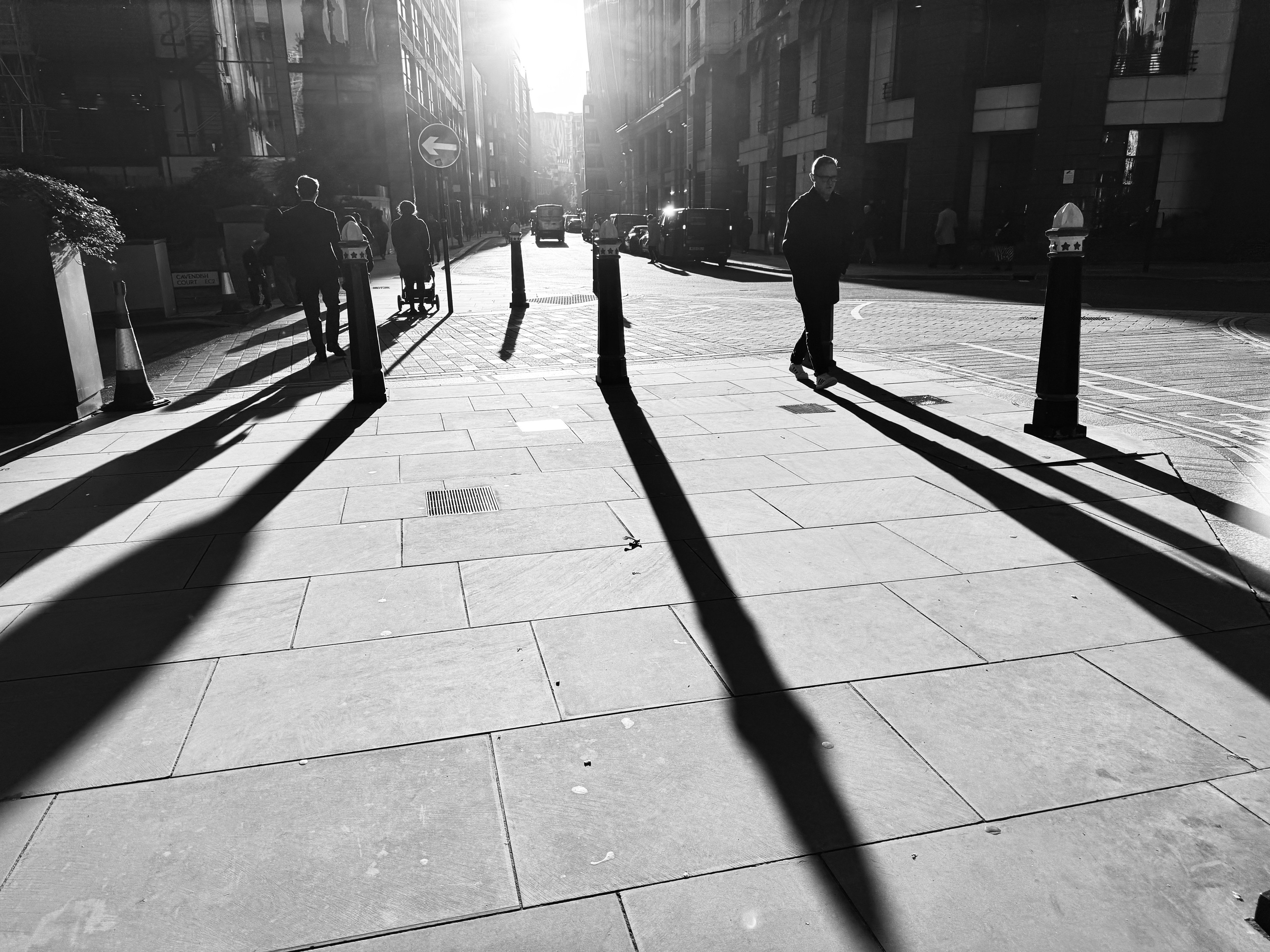
Reminds my of the artist L.S. Lowery's paintings. 🧡. Great shot
Hey fellow Nostriches. I’ve got a community website aimed at serving my small part of the world, so I have a place to point locals that I run into that want to learn about Bitcoin. Here is my bio story on the front page, and my reason for starting the website. First person to send me a link to the actual site via reply to this post gets 1000 sats from my nostr:npub1getal6ykt05fsz5nqu4uld09nfj3y3qxmv8crys4aeut53unfvlqr80nfm hosted node. #albyhub
My name is ________. I have been a Bitcoin researcher and enthusiast since 2021. Throughout my working career I have been interested in investing and finance, and really started delving into topics relating to money and the economy in 2001. Having noticed a staggering decline in the purchasing power of the dollar since the mid 1970’s I, like other workers, investors and people interested in finance, started exploring the reasons why this was happening. I knew surely there must be a reason why employee wages and salaries (including mine) were noticeably decreasing in their effectiveness at purchasing goods, services and assets over time.
Once I learned how our monetary system works and the reason why prices are continually going up despite technological advances making things cheaper and easier to produce, I began looking for an alternative to dollars to save my work and life energy into. Something that could not steal my purchasing power like the government was by continually printing more money.
Unfortunately, the economic climate and income level that I was operating at through the first 25 years of my working career didn’t afford me access to traditional assets like land or real estate as a means of storing my work energy. Back then, it was all about just working to pay bills and keeping a roof over mine and eventually my family’s heads, without much left over every month to acquire assets or accumulate down payments on property. Also, through much of that time, there just simply didn’t seem to exist an asset that could be acquired in small pieces that I saw as a reliable store of value. Even precious metals were just out of my reach, and not really practical for me to acquire, hold, and move around the country with.
Through my interest in computing, information technology, cryptography, and finance that began in the early 90’s, I first took note of the 2009 advent of Bitcoin by about 2015. At first, I dismissed this new electronic peer to peer cash system as a fad, and struggled to understand how a purely electronic form of money could ever have any underlying value. As I continued to dive down the Bitcoin rabbit hole, I came to understand that Bitcoin actually represents the single best asymmetrical upside potential of any asset or investment in existence today, with the benefits of portability, divisibility, inconfiscatability, and the ability to acquire it in small portions over time. Then the question simply became “how do I acquire some Bitcoin and safely store it?”. The contents of this website, and the information I share with others in person and online is the result of the answers I have found to that question. It is an ever changing landscape that requires continual updating of skills and knowledge.
Lakeland Bitcoin provides face to face and online Bitcoin education, acquisition, self custody, security, inheritance, and point of sale resources for businesses, institutions and individual investors in the Lakeland Area of Alberta. I hope you can benefit from my research, knowledge and expertise to begin your Bitcoin journey, and learn how to stand on your own two feet to operate in this space on your own. My consulting is aimed at getting people there, and helping them overcome some of the technical and knowledge hurdles they will encounter along the way.
I suggest that you take the time to really delve into the many resources that I’ve provided on this site, designed to help educate you on this amazing asset: how to acquire it, how to protect it, how to receive Bitcoin payments for your goods and services, and how to ensure that your wealth stored in Bitcoin can be securely transferred to your next of kin in the event that should ever be required.
Lakeland Bitcoin doesn’t provide any specific investment advice, but once you understand the technology and the value proposition that this monetary technology represents, my goal is to assist you in doing it right.
With national currencies being heavily devalued and people’s purchasing power being rapidly diminished through inflation of the money supply by governments worldwide, there’s never been a better time to start learning about an unconfiscatable, portable asset that doesn’t steal your time, money, and energy like government issued currency. Bitcoin is superior savings technology.
Fix the money, fix the world!
₿
#hodl #btcmentorship
https://www.lakelandbitcoin.com/ Dark, I just checked this out now.....is this it?


Joe, man, get away from the screen, take a look around the City of Angels, and explore the wonderful culture there. Travel is one of the wonderful things in life. Time is only a man-made construct anyway. Grab some Somtam, a cold beer, and find yourself a bit of 'company'. If not, then never fear NOSTR is near, like the 7-11 in Thailand. 🫰


🌊 SURF 'N TURF 🏝️
-THE ISLAND LIFE-

A BRIEF HISTORY OF BEN.
What is Big Ben?
Big Ben is commonly known as the house of Parliament's clock tower, located in the London Borough of Westminster. Although, technically, the name only refers to the bell inside the clock tower, which weighs an astonishing (15.1 tons). The bell also stands at 7.2 feet in height and 9 feet in diameter – quite large when you think about it.
To give an idea of the dimensions of the tower: the clock tower itself measures about around 100 meters, while the minute and hour hands are about 4 and 3 meters, respectively. The numbers are approximately 2 feet in size, and the dial is 7 meters.
So, ‘Big Ben’ is the bell which resides inside the ‘Elizabeth tower’, located at the north end of the Palace of Westminster. Westminster holds both the House of Commons and the House of Lords of the United Kingdom.
Who is Big Ben?
There has never been a set answer to that question, although there are two theories... First, that the bell is named after the English bare knuckle prizefighter Benjamin Caunt, who held the English heavyweight championship from 1838 to 1845 for bare knuckle boxing.
Second, is that it was actually named after Sir Benjamin Hall, who was a civil engineer that had served in the House of Commons. Sir Benjamin Hall was also the Commissioner of Works at the time the Big Ben was built.

The tower in which Big Ben is situated was named ‘St. Stephen’s Tower’ until 2012, when it was renamed the Elizabeth Tower to celebrate Elizabeth II’s 60 years on the British throne.
Was There a Clock Tower Before Big Ben?
Yes! There was a bell used for centuries called the ‘Great Tom of Westminster’. The first clock tower is still highly disputed since there are no records to prove it, but it was said to have been erected between 1288 and 1290. In 1367, this early clock tower (if it did exist), was replaced with a new tower and clock. The first chiming clock in England for the public that and housed the Great Tom.
This original Bell was a feature of the Palace of Westminster and was situated on the opposite side of Westminster Hall.

In 1698, clocks had become much more popular and ‘hour bells’ were rapidly becoming redundant. Therefore, the decaying bell tower’s components were sold off to St. Margaret’s of Westminster. The tower was then pulled down in 1707 after the great bell had been sold to St. Paul's Cathedral. Great Tom still resides in St Paul’s Cathedral today. If Big Ben is ever unable to strike, the bell is heard from St. Paul's Cathedral instead.
How Was Big Ben Constructed?
To better answer this question we can look at the clock, tower, and bell. There were a few major players, namely: Charles Barry (architect), Edmund Beckett Denison (clock designer), Sir George Airy (Astronomer Royal and Referee), Edward Dent (clockmaker), and Frederick Dent (Edward’s son and clockmaker).
1834, the Palace of Westminster is almost completely destroyed by a fire that broke out after two underfloor stoves ignited the paneling inside the building. A fire at the Palace of Westminster was also predicted, with a report dating back to 1789 signed by fourteen architects, complaining about the dangers of a fire at the Palace. Although, few precautions were taken.
In 1840, Charles Barry won the design for the new palace, which included the clock tower. Construction began that year with that of the clock tower beginning three years later. Then, Sir George Airy is named Referee to decide who will build the clock in the tower. Strict guidelines for accuracy meant that it took 7 years before a design was finalized.
Denison’s main contribution in the early 1850s was introducing a gravity escapement movement which gave the clock unprecedented accuracy. This was the movement chosen for the tower.
In 1852, Dent won the commission to make the great clock under Denison’s design, but had passed away before completion of the project. This is where his son Frederick Dent was able to step in and replace his father. He completed the mechanism in 1854.
Unfortunately, only a few years later, the first casting of the bell failed and developed a crack. Denison is said to have argued with the manufacturer over who was responsible. This led to a new manufacturer being chosen, who completed the second casting of the bell in 1858. It was drawn to the tower by a team of 16 horses.
By 1859 the great clock and bell are now installed and ticking, the clock started ticking on May 31st, and the Great Bells are heard for the first time on July 11th. However, Big Ben is found to be fractured later that year and a smaller bell is used as a replacement.
Then, in 1863, Sir George Airy, to allow Big Ben to strike the hour once again, recommends rotating the bell and reducing the hammer size.
What Movement Is Used in Big Ben?
Edmund Beckett Denison helped design a very significant horological advance for the time in designing Big Ben’s movement. This was known as the ‘double three-legged gravity escapement’.
In a mechanical clock, the escapement is the device that transfers energy to the timekeeping element. To transfer this energy it needs a force. This force is driven from coiled springs or weights which get transmitted through the clock's gear train.
Each time the pendulum swings, it releases a tooth of the escapements gear wheel. This then allows the gear train to move forward by a fixed amount. The ‘ticking’ noise you hear is actually the sound of the next tooth catching.
The problem with clock towers using escapements is that the large hands (in this case 4 and 3 meters) catch a lot of wind. This in turn generates forces that transmit back into the clock and affect accuracy. Unacceptable to Sir George Airy, chosen to be the Referee for the new clock’s movement.
Prior to the completion of Big Ben, there was no method for stopping external influences from affecting a mechanism’s accuracy. It was Denison who thought of using a calculated arrangement of weighted ‘gravity arms’ to isolate the pendulum. This is what was known as the double three-legged gravity escapement.
Fast forward to today, Denison’s design has more than proved itself – rarely ever being more than a second off time.
Edison’s design was then incorporated into thousands of clocks all over the world after the completion of the Big Ben, showing not only the cultural significance of Big Ben, but also horological.
Aside from improving on external factors to improve accuracy – another key innovation on the Big Ben was the pendulum itself. In prior pendulums, the material used would either expand or contract based on changes in temperature. This would then affect the duration of the movement, causing inaccuracies.
In the design for Big Ben, a 4.5-meter long pendulum was constructed from concentric tubes of zinc and steel. These would expand and contract at different rates and because of the way they were connected to one another, would cause the pendulum to stay the same length and not affect the duration of the movement.
There is quite a bit of upkeep that is required to keep Big Ben moving which won't be discussed in this article, however, one interesting aspect is that the team either adds or removes pennies on the shoulder of the pendulum to keep the time accurate. One penny speeds up the clock by 2/5 of a second per day.

Was Big Ben Ever Affected by Britain’s War Efforts?
For two years during World War I, Big Ben’s bell was not struck in order to prevent enemy aircraft (primarily Zeppelins) from using it as a compass to find the Houses of Parliament.
From 1939 to 1945, during the entirety of the Second World War, the clock dial remained unlit due to wartime blackout restrictions.
On May 10th and May 11th, 1941, incendiary bombs had fallen onto the House of Commons and Westminster Hall from German aircraft. Since resources were scarce, the fire service claimed that it was impossible to save both, so it was decided to save the Hall.
The House of Commons was completely destroyed by the fire which ravaged until morning. The fire had also spread to the Member’s Lobby causing the roof to collapse.
A small bomb had struck the clock tower (Big Ben) and broke all the glass on the south face, but the clock and bells remained undamaged and the chimes could be heard as usual.
The House of Lords was also struck by a bomb that went directly through the floor of the chambers and had not detonated.
In 2020, workers discovered new World War II damage on Big Ben’s clock tower which will increase the cost of restoring it by roughly $24 million USD. This was a shock to residents as the damage inflicted on the building had not been analyzed fully and was much worse than anticipated.
Why Has Big Ben Been Silent?
In August 2017, Big Ben stopped running until 2021 repairs are completed. The total cost kept increasing over the years reaching $96.97 million USD.
The plan in 2017 was for the roof of the Elizabeth Tower to be stripped off and restored, the bell frame repaired, the colour of the clock to be changed for a more vibrant look, leaks into the clock room stemmed and a lift installed.
However, in 2020 additional unforeseen problems were discovered. Decay and damage to hundreds of carvings, asbestos in the belfry, extensive use of toxic lead paint, broken glass in the clock dials, and the need for a specialist clock expert were needed.
Gratefully, Big Ben is set to finish construction in 2021 and the bells are to recommence their regular broadcasting.
A brief overview of the history of Big Ben! Although, technically speaking, a brief history of the Elizabeth Tower as Big Ben is only the Bell portion of the structure!
By: Eric Mulder
Read more:
“London’s Big Ben.” Visit London - Official Tour Guide, https://www.visitlondon.com/things-to-do/sightseeing/london-attraction/big-ben.
Betts, Jonathan D. “Big Ben.” Britannica, https://www.britannica.com/topic/Big-Ben-clock-London.
“Architecture of the Palace.” UK Parliament, https://www.parliament.uk/about/living-heritage/building/palace/architecture/.
The Editors of Encyclopaedia Britannica. “Benjamin Caunt.” Britannica, https://www.britannica.com/biography/Benjamin-Caunt.
Ridley, Christopher J. “Great Tom of Westminster.” The Ancient Society of College Youths, December 2003, https://www.ascy.org.uk/articles/great_tom_of_westminster.php.
“A brief history of Big Ben and Elizabeth Tower.” UK Parliament, https://www.parliament.uk/about/living-heritage/building/palace/big-ben/building-clock-tower/key-dates-/.
“Destruction by fire, 1834.” UK Parliament, https://www.parliament.uk/about/living-heritage/building/palace/estatehistory/reformation-1834/destruction-by-fire/.
Excell, Jon. “Why is Big Ben falling silent?” BBC, July 5th, 2016, https://www.bbc.com/future/article/20160704-the-big-ben-renovation-and-how-the-clock-works.
“Bomb damage.” UK Parliament, https://www.parliament.uk/about/living-heritage/building/palace/architecture/palacestructure/bomb-damage/.
“Big Ben: Cost of repairing Elizabeth Tower rises by £18.6m.” BBC, February 13th, 2020, https://www.bbc.com/news/uk-politics-51482370.
Miller, Frederica. “Why Big Ben is covered in scaffolding and when it's set to go back to normal.” My London, August 12th, 2019, https://www.mylondon.news/news/zone-1-news/what-being-done-big-ben-15423821.
Credits Goes to the respective
Author ✍️/ Photographer📸
🐇 🕳️
#Bitcoin #Satoshis #Freedom #Apocalypse #Music #Movies #Philosophy #Literature
🌊 SURF 'N TURF 🏝️
-THE ISLAND LIFE-

Unique Pattern On The Outer Wall of a Mausoleum In Azerbaijan(12/14 th century)
Just amazing.

Azerbaijan has many mausoleums, including:
Momine Khatun Mausoleum: A 10-sided, fired brick structure with an underground tomb
Noah's Mausoleum: An 8th century mausoleum in Nakhchivan
Seyyid Yahya Bakuvi's Mausoleum: Located in the Palace of the Shirvanshahs in Baku
Tomb of shirvanshahs: Located in Baku
Mausoleum of Heydar Aliyev: Located in the Alley of Honor in Baku
Javad Khan Mausoleum: Located in Ganja
Diri Baba Mausoleum: Located in Qobustan
Vagif Mausoleum: Located in Shusha
Yahya ibn Muhammad al-Haj Mausoleum: Located in Məmmədbəyli
The Sabzikar Cemetery in Ganja is also known as the "kingdom of tombs" and contains hundreds of tombs and vaults. The tombs are made of baked red bricks and have a variety of shapes, including pointed, flat, and semi-circular.

Credits Goes to the respective
Author ✍️/ Photographer📸
🐇 🕳️
#Bitcoin #Satoshis #Freedom #Apocalypse #Music #Movies #Philosophy #Literature
🌊 SURF 'N TURF 🏝️
-THE ISLAND LIFE-

The Whitechapel Bell Foundry was a business in the London Borough of Tower Hamlets. At the time of the closure of its Whitechapel premises, it was the oldest manufacturing company in Great Britain.

The foundry was notable for being the original manufacturer of the Liberty Bell, a famous symbol of American independence, and for re-casting Big Ben, which rings from the north clock tower (the Elizabeth Tower) at the Houses of Parliament in London.

The Whitechapel premises are a Grade II* listed building. The foundry closed on 12 June 2017, after nearly 450 years of bell-making and 250 years at its Whitechapel site, with the final bell cast given to the Museum of London
Credits Goes to the respective
Author ✍️/ Photographer📸
🐇 🕳️
#Bitcoin #Satoshis #Freedom #Apocalypse #Music #Movies #Philosophy #Literature
🌊 SURF 'N TURF 🏝️
-THE ISLAND LIFE-

33 PHRASES THAT WILL MAKE YOU NEVER THINK ABOUT QUITTING
1. No one finds their path without getting lost several times.
2. Self-confidence is the first secret of success.
3. If you don't fight for what you want, don't regret what you lose.
4. All your dreams can come true if you have the courage to pursue them.
5. The moment you want to give up is the moment you should keep pushing.
6. Strength comes not from physical capacity, but from the will of the soul.
7. Only those who dare to fail greatly can achieve greatly.
8. Don't sit around waiting for things to come to you. Fight for what you want, be responsible for yourself.
9. Never give up, because you never know if the next try will work out.
10. Fear doesn't exist anywhere but in the mind.
11. Failure is simply the chance to begin more intelligently.
12. When you want something, all the universe conspires to make your wish come true.
13. When you feel like quitting, think about why you started.
14. There is a driving force more powerful than steam, electricity and atomic energy. That strength is the will.
15. Don't waste time on what isn't worth it: focus on what really matters.
16. It's impossible to enjoy positive experiences with a negative mindset.
17. Life isn't about finding shelter in the storm. It's all about learning to dance in the rain.
18. The human being must overcome the hardest obstacles to taste the sweeter side of success.
19. Dont let the expectations of those around you crush your dreams.
20. Don't spend your day making excuses; all you have to do is find a solution.
21. In order to continue, sometimes you have to start over.
22. If you learn to deal with pain, you'll become stronger everyday.
23. Fall as many times as u need to But never stop rising.
24. You are the owner of your life. No one else can say what to do.
25. The pain of yesterday will be your strength today.
26. If you have a dream, grab it and don't let it go.
27. When one door of happiness closes, another one opens. But often we look so long at the closed door that we do not see the door that has been opened for us.
28. Start by doing what's necessary, then what's possible, and suddenly you will find yourself doing the impossible.
29. Most of the time what we are afraid of doing is what we most need to do.
30. When life gives you lemon squeeze it and make lemonade.
31. Face the sunshine and shadows will fall behind you.
32 Courage does not always roar. Sometimes it’s the little voice at the end of the day that says, “I’ll try again tomorrow.”
33. Remember dear ones that we are incredible beings capable of making our dreams come true.
Credits Goes to the respective
Author ✍️/ Photographer📸
🐇 🕳️
#Bitcoin #Satoshis #Freedom #Apocalypse #Music #Movies #Philosophy #Literature