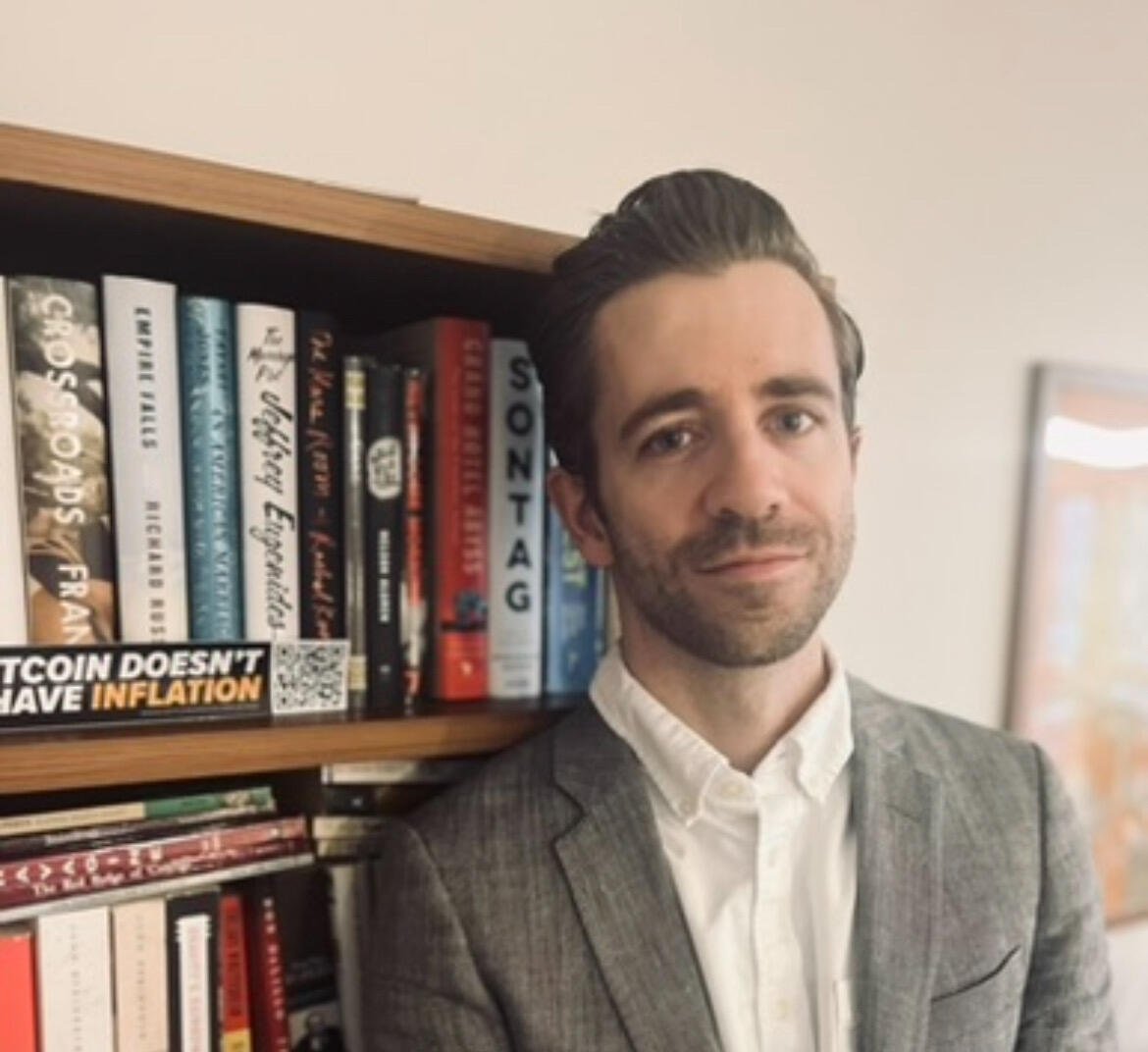

Totally fair and agree. My pitch would be once you hit those, don’t lose that sense of intellectual adventure that got you there in the first place and keep branching out to more stuff. Because it’s certainly true that good fiction/lit can open up perspectives, unearth layers and vistas that were previously unseeable. Again, paraphrasing Eliot, good lit is a raid on the inarticulable.
It’s low key one of my dreams to start a Shakespeare / classic lit reading group of bitcoiners. I think the mash up of ideas would be exhilarating, fruitful, and lots of fun.
And when that dream comes to fruition you are getting an invite sir.

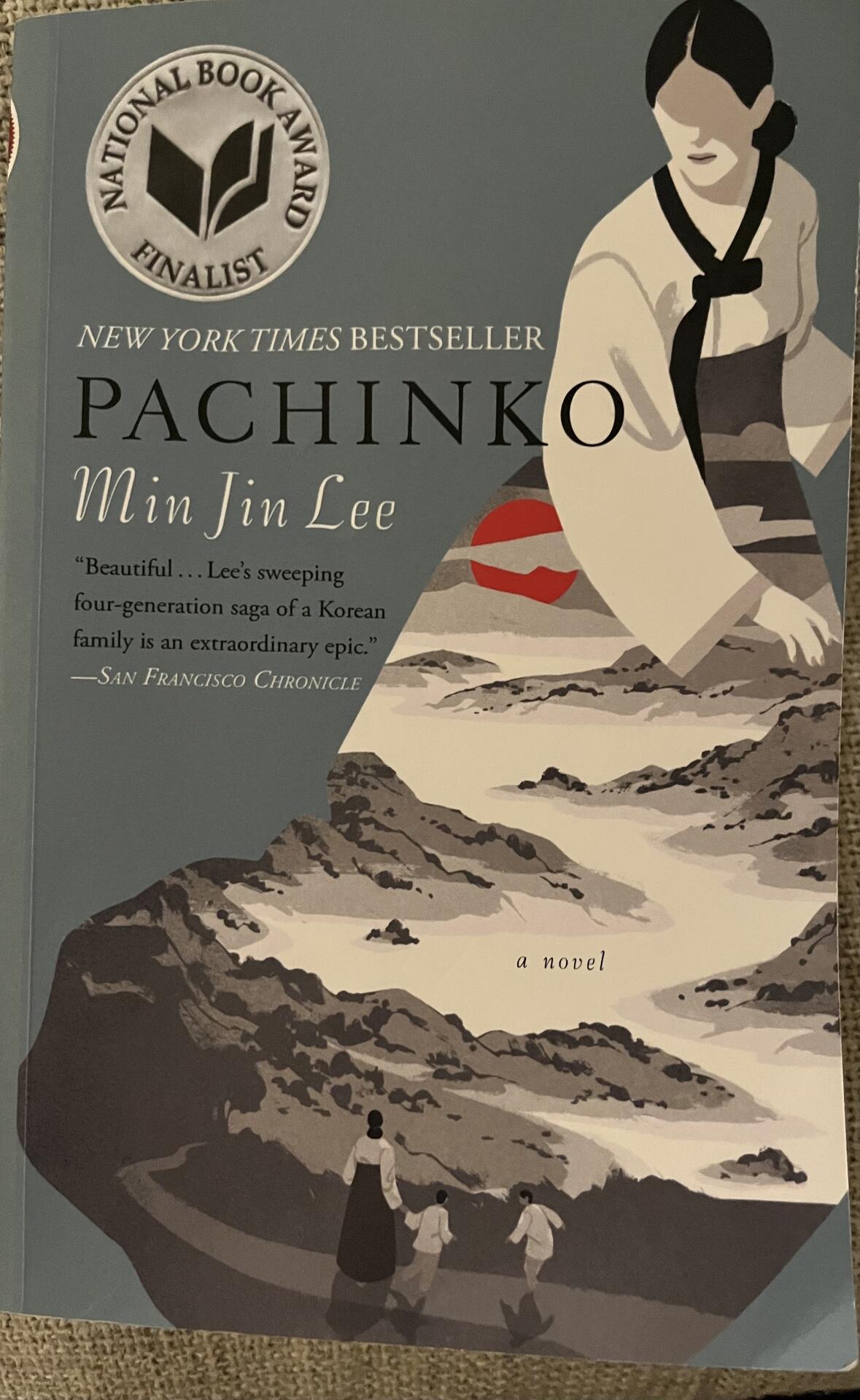
One can certainly do without Ulysses haha. As far as Joyce goes I stick with the dead and portrait of the artist. Eggers is very much influenced by and in the same vein as Wallace, the kind of how-do-we-return-a-modicum-of-sincerity-to-this-whole-thing-after-postmodernism vibe. Eggers wrote the introduction to the copy of IJ I have. And I think Wallace has one of his very few blurbs on the copy of heartbreaking work that I have. Both writers who are really partaking in what Eliot would call “raids on the inarticulate” (which I always wish was raids on the inarticulable) - trying to get to the proverbial nitty gritty of being human, being vulnerable, being alive in an unforgiving environment, and shining a light through it.
The footnotes also serve the purpose of structurally fracturing the narrative in a way that mimics the fractured, splintered nature of our lives realities today. Think about our daily information flow. How often are you interrupted by, say, social media, advertisements, email pings, calls, etc. Modern life is a million pieces of info and content coming at you in a kaleidoscopic blast. I think he’s exploring that by forcing readers to physically flip back and forth from footnotes to narrative and blurring the boundary between which is which. At least that’s how I think about it 🤷♂️

It’s long, but so worth it. Lots of the footnotes are pretty funny, too. Central theme of the book is basically what is freedom in modern America. And I would argue it’s a much more profound, human exploration of it than, say, an economic tract or a less subtle, less nuanced, novel-as-mere-vehicle-for-message thing, I.e. Rand.
Couldn’t possibly agree with this more. Anybody who thinks ayn Rand is an elite novelist has simply not read enough (or widely enough) to know what an insane opinion that is.
Infinite Jest, for example, is a far more interesting rumination on freedom in America than anything by Rothbard, Rand, etc etc.
You will learn more about humanity from Shakespeare than from the Mises (all due respect to Mises).
So many incredible conversations about big ideas live in works of fiction or poetry, where people tend not to look.
100% endorse not just reading more but reading outside of your comfort zone. Read poetry, read more fiction, read something you think you might disagree with, read something long.
Imagine how absolutely miserable hyperbjtcoinization will be if everyone just reads and talks about the same five books. nostr:note1xd2jq296f7vm302ke6vmhd78y7zfqckg6j4564tdtrdg25gyyw0s73v45n
“The integrity of an artist lifts a man above the level of the world without delivering him from it.”
-Thomas Merton
Gm, still thinking about RFK’s speech on Friday.
When you store your wealth in S&P 500 index funds, among the things you are “investing” in and funding are censorship, surveillance, big pharma, the sickness industrial complex, and war.
And so many people do this. They blindly, price-insensitively store their wealth, the result of their life energy on earth, in companies who participate in the aforementioned societally harmful things.
It’s a reflexive, inculcated behavior. It’s what the financial advisor class tells you is “prudent and smart.” It’s what Warren Buffett will tell you is “investing in America.”
It may be prudent and smart, in a dark, cynical way. But I reject the idea that investing in our own gradual spiritual and physical death as a populace is investing in America.
I tend to agree with RFK that the most important issues of our time are fixing our utterly toxic food system, fixing the perverse incentives of our broken healthcare system, dis-empowering the censorship and propaganda machines of mainstream media and tech conglomerates, and defunding war.
One way you vote for THAT is with your money, by saving in #bitcoin.
Another is with your eyeballs and your attention, by using #nostr.
So yes, we talk about our bitcoin price, and maybe we do it too much. But it’s because #bitcoin is a vote. It’s a tool. It’s a protest. It’s being the change you want to see in the world.
Gm #nostr
I am in the very very early stages of my knausgaard journey
When your nightstand has lost all sense of direction: 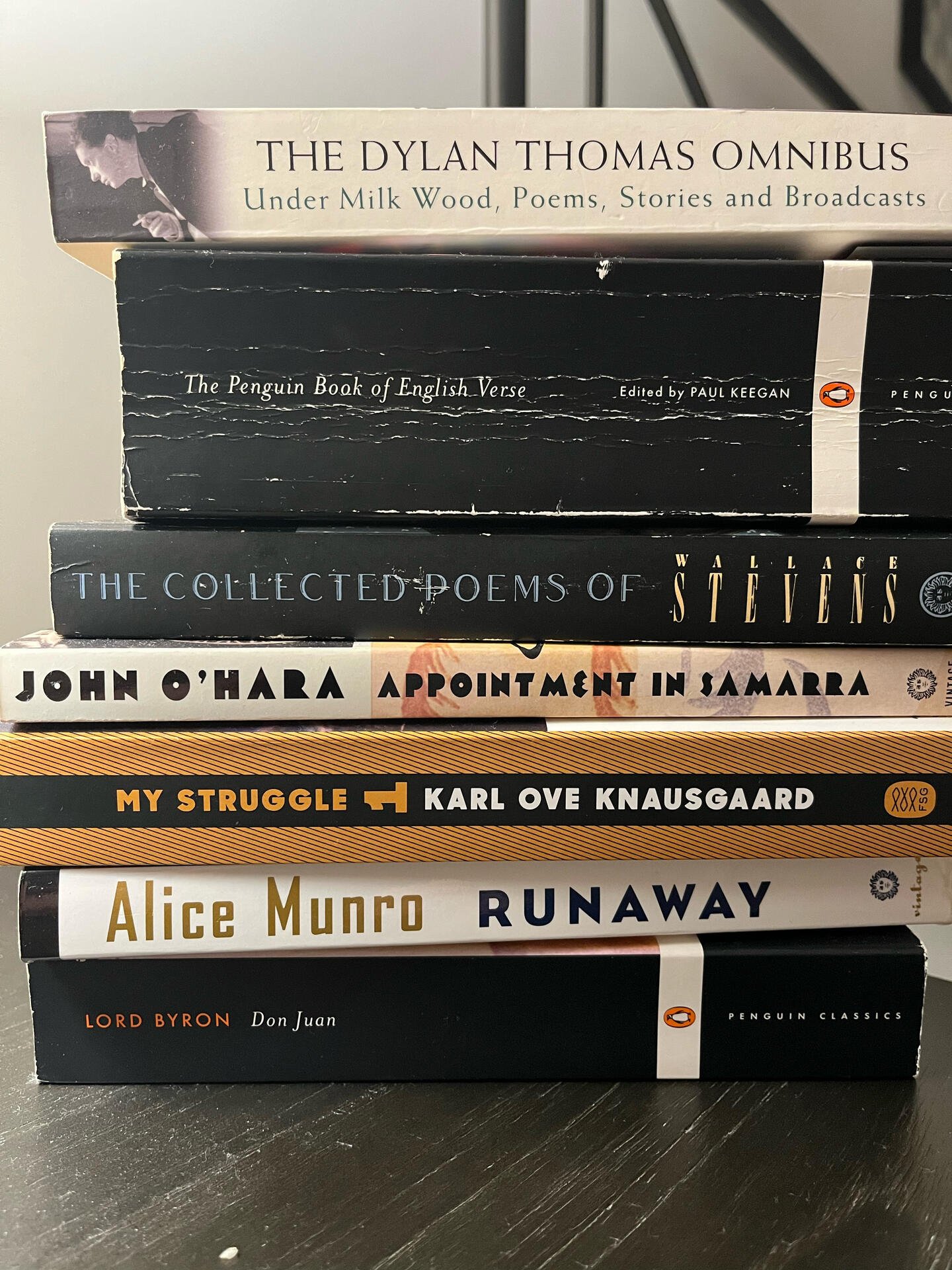
My 2.5 year-old. This is the way. 

David Foster Wallace on the purpose of good fiction. So good. 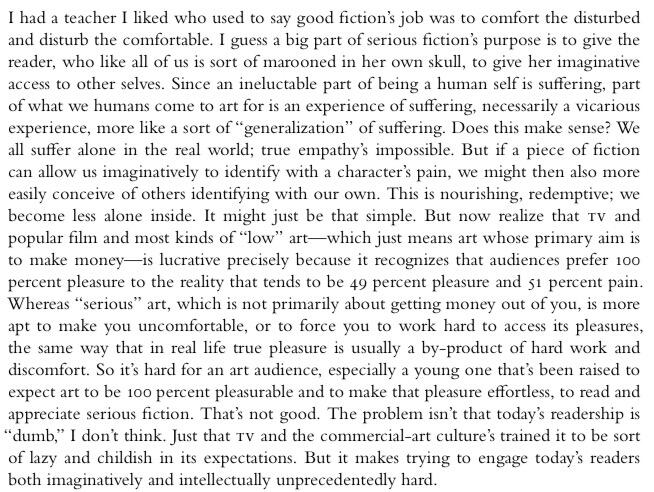


Good point and I sadly agree. I’m hopeful, but hopefully not utterly delusional, that tools like bitcoin and nostr will help a more critical mass of folks look outside the existing system. But you’re certainly right. Parliamentary system would create much more space for constructive clashes of a wider array of ideas.
Despite RFK ending his campaign, I’m hopeful that there’s an emergent groundswell of independent political voices in the U.S.
Voices that are heterodox, non-monolithic, beholden to neither of the two ossified existing parties.
And I hope this leads to a politics with less theater and more real human interaction; less doctrine and more ideas.
Americans are a deeply innovative people. Our country’s founding itself was a tectonic innovation in governance.
Back then it was the tyranny of a distant monarch. Today we live under the tyranny of the two-party system and the ubiquitous media machine that supports it.
There’s a frontier beyond this paradigm, though, and I hope we can find a new frontier in our politics, too. Something more than merely recycled Reagan or FDR.
It’s why I feel so strongly about #bitcoin. Because it aids in the subversion of this paradigm. Same with #nostr.
Other than education, I’m not sure there’s anything in America more in need of innovation than our politics.
I see glimpses of something new, whether it’s Vivek walking around talking to everyone, even passionate detractors, impromptu and unscripted, without handlers or teleprompters.
Or RFK, taking on big pharma, crusading for clean food, healthier lifestyles, and a detoxified world for our children, and doing it all while a massive, coordinated censorship campaign sought to banish and discredit him into obscurity.
I occasionally even see some of it in a guy like John Fetterman who, after his hospitalization, has made the radical decision to just say what he thinks, haters be damned, party marching orders be damned.
I don’t agree with any of these people on everything. But that’s perfectly okay. And that’s the point.
What I want to see is a politics of PEOPLE, warts and all, debating ideas; not of vast machineries producing newer vessels for the same shit.
We are a nation capable of generative, even revolutionary heterodoxy. We awesomely, transcendently weird. But we’ve allowed our political imaginations to atrophy on a 24/7 diet of mainstream media, algorithms, and the virtue-signaling regime that makes us all self-censor.
Polarization went from being a temporary bug to being fundamental. Grievance is now both a business and an infinite regress. Activism is a profession.
If you listen closely you can hear the song of the trapped who has grown to love its cage.
But I’m hopeful there’s a rumbling of something new on the horizon.
The RFK speech today was better, more urgent and more authentic, than any speech from the two major candidates at their respective conventions.

On Tim Walz and his repeated digs at J.D. Vance for getting an education and making some money:
I was born and raised in a small rural town near the Appalachian Mountains, 2 hrs from the nearest major city. Still work in this town today.
My father was born and raised in an even smaller town, even more rural town with a population under 2,000.
I have three degrees from three elite institutions because my folks believed in aspiring to education, that it opened doors, created opportunities, and allowed you to experience more of the world. They instilled that in me.
I am a cocktail of my upbringing and my education.
I shoot guns, and I quote Shakespeare.
I eat venison, and I think about Dostoyevsky.
I am comfortable in both Waylon Jennings and Mozart, Steve Earle and Alice Coltrane.
I can cite Luke Combs and Lou Reed, wax poetic about Top Gun and Le Mepris.
I buy food (and milk) from farmers.
I am an attorney, yes, and my J.D. is from an elite institution. I represent the blue-collar folks of my hometown.
I am neither a supremacist, nor a relativist.
I am a dad and a husband.
I am a #bitcoin er
All my life I have had one foot in the ethos and spirit of my rural hometown and the other in the rarefied echelons of the elitely educated, the financially successful, and the well-connected. It's not always comfortable.
All my life I have climbed, my folks sacrificed and pushed me to climb and to aspire. "To strive, to seek, to find, and not to yield," to quote Tennyson (see, I told you I can do that).
And all my life I have kept my upbringing close to me, because it is a part of me. I don't shed my lived experience, nor do I forfeit its imprint, its impact, simply because I pursued the best education and got a professional job. The validity of my experience does not expire upon achievement.
So when Tim Walz repeatedly attempts to invalidate J.D. Vance’s upbringing, to cast him as some inherently callous, rich interloper, out of touch with the "heartland" simply because he pursued the best education he could and made some money, it bothers me on a deep, personal level.
In the Walz taxonomy, which is binary, but only binary for non-Democrats apparently, financial success or an Ivy-League education, automatically and irrevocably renders one out of touch with "regular" people. Further, aspirations to these things are no longer to be applauded; they're punchlines in campaign speeches.
Never mind the financial success and education of the Obamas, the Clintons, Kamala Harris, Oprah, etc. This does not invalidate their respective experiences, the journeys they each took to get there.
Only if you're J.D. Vance does success actually make you a charlatan to yourself, an interloper in your own life, an enemy to your past.
It's not right. We should be applauding folks, no matter their race or political affiliation, for aspiring, for traversing the brutal terrain of class, region and familial afflictions and making it.
You may agree or disagree with J.D. on the issues, of course. That's perfectly fine.
But dismissing him simply because he managed to go to Yale (like so many Dems, by the way, who readily purport to be regular, working class heroes), or because he majored in philosophy, or because he eventually worked in finance and made some money, is craven, disingenuous, breathtakingly lacking in self-awareness, and offensive to anyone who has actually grown up in the "heartland," myself included.
Like so many other Americans, I contain multitudes, Tim Walz, but your taxonomy apparently doesn't allow that.
“We contend that for a nation to try to tax itself into prosperity is like a man standing in a bucket and trying to lift himself up by the handle.”
Winston S. Churchill
Excellent