
This is not one of the ETFs.
This holder had ~40,000 #BTC before the ETFs were approved.
“Mr. 100” keeps buying 👇 3x 100 $BTC bought today

The Red Line drops by 50% to 450 in 58 days ⏰
As long as daily buys are over the red line, demand is greater than daily supply ✅
7 consecutive trading days near 10,000 BTC 💥
#Bitcoin has not top because fiat money printing has no end 👇

The new spot #Bitcoin ETFs purchased 273,500 Bitcoin (worth $14 Billion!!!) in just 26 trading days 💥
@saylor ‘s $MSTR holdings shown for scale 👇

US banks, left off key bitcoin ETF roles, are pushing SEC to tweak guidance around holding digital assets. A bank trade gp coalition sent SEC letter asking them exclude ETFs from broad crypto umbrella. They want a piece of the action. I don't blame them, it isn't fair.


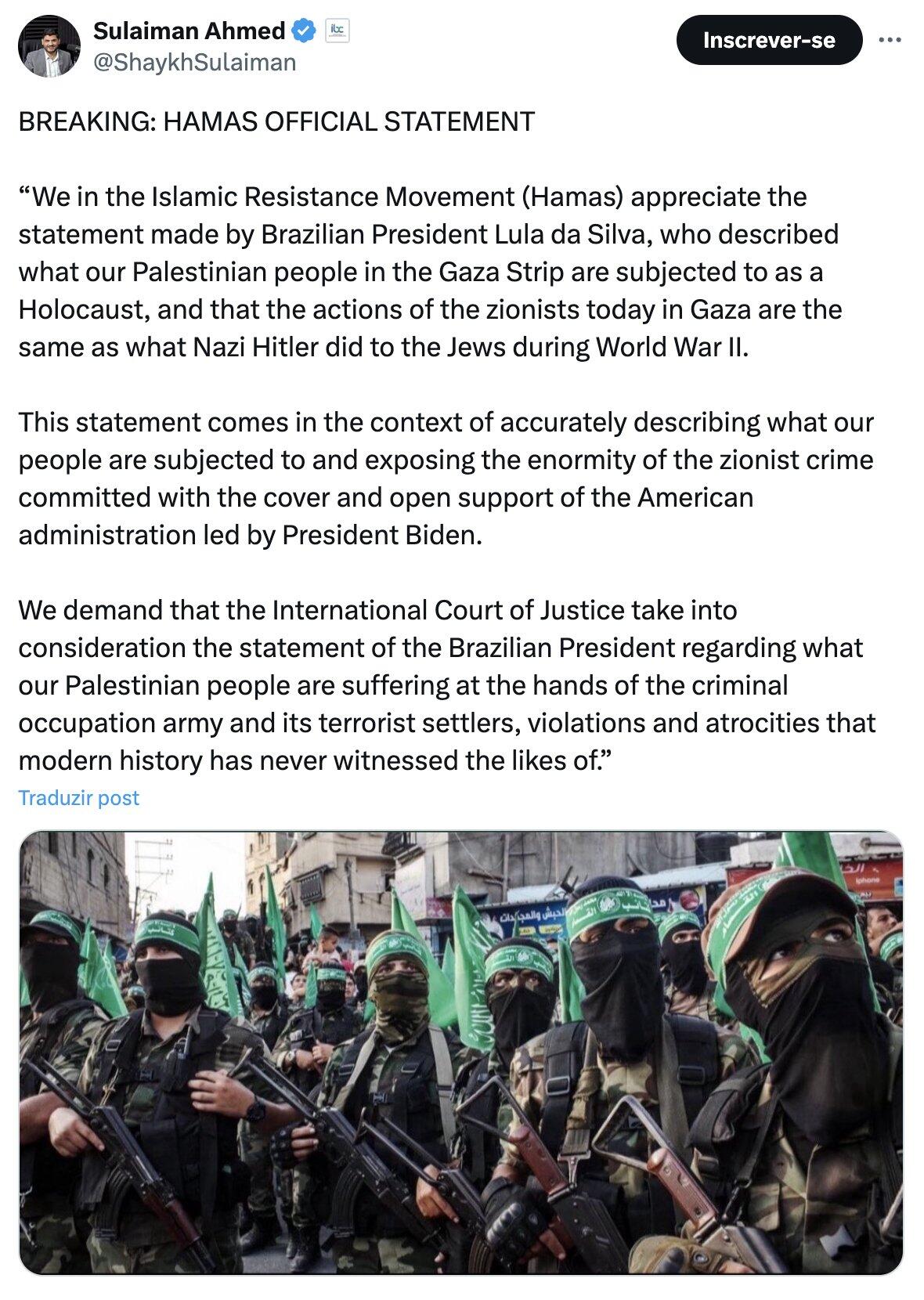
The Palestinian terrorists from Hamas have published a note thanking President Lula for the comments he made today, associating Israel with Nazi Germany and stating that Israel's fight against Hamas is equivalent to the Holocaust perpetrated by Hitler. It is the second time that the Palestinian terrorists have congratulated Lula, with the first occurring on October 31, 2022, when Hamas congratulated Lula on his victory in the presidential elections.

WHO 🇺🇳: Hillary Clinton and Tedros Adhanom discussed "global health challenges, including pandemic preparedness and the pandemic treaty" during the security conference in Munich, Germany, as reported by Tedros.


The Palestinian terrorists of Hamas issued a statement thanking President Lula for his comments today, associating Israel with Nazi Germany and stating that Israel's fight against Hamas is equivalent to Hitler's Holocaust. This is the second time Palestinian terrorists have congratulated Lula, with the first occurring on October 31, 2022, when Hamas congratulated Lula on his victory in the presidential elections.
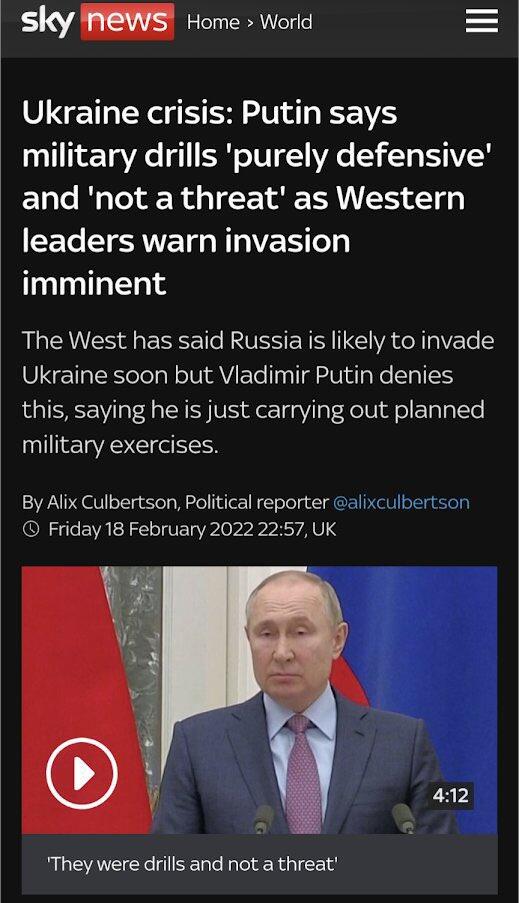
On this day in 2022, Putin stated that Russia was merely conducting "purely defensive" military exercises in Belarus and along the Russian-Ukrainian border and that Russia posed no threat to the West. In his statement, Putin accused the West of attempting to destabilize peace in the region by insinuating a possible Russian aggression.
Six days later, Putin invaded Ukraine with 150,000 soldiers.
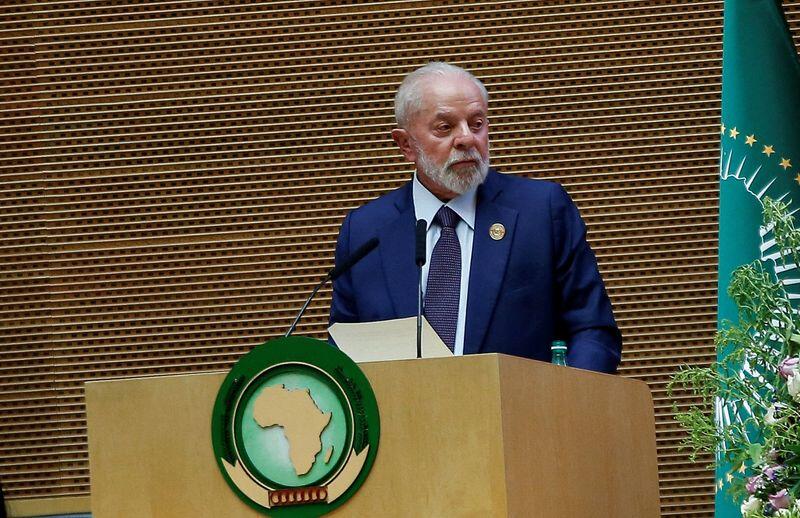
In today's statement, President Lula, besides disrespecting the memory of the millions of victims of the Holocaust perpetrated by the Nazis in World War II, demonstrated a tremendous lack of historical knowledge by saying:
"What is happening in the Gaza Strip does not exist in any other historical moment... actually, it did exist, when Hitler decided to kill the Jews."
Lula ignored the authentic genocides that cost the lives of millions of innocents. Here is a list of just a few of them:
1. Holocaust (World War II, 1941-1945): Approximately 6 million Jews were murdered by the Nazi regime of Adolf Hitler, along with millions of other victims, including Roma, homosexuals, disabled individuals, and political opponents.
2. Great Leap Forward (China, 1958-1962): Policies by leader Mao Zedong resulted in one of the greatest famines in history, with death estimates ranging from 15 to 45 million people.
3. Stalin's Genocide (Soviet Union, 1932-1933): Stalin's collectivization and repression policies led to the deaths of millions of people, including the Holodomor in Ukraine, with estimates of up to 10 million deaths.
4. Armenian Genocide (Ottoman Empire, 1915-1923): Approximately 1.5 million Armenians were killed by the Young Turks government of the Ottoman Empire.
5. Khmer Rouge Extermination Campaign (Cambodia, 1975-1979): An estimated 1.7 to 2 million people were killed by Pol Pot's regime in Cambodia.
6. Rwandan Genocide (1994): In about 100 days, between 500,000 to 1 million Tutsis and moderate Hutus were killed in Rwanda.
7. Suharto's Purge (Indonesia, 1965-1966): Between 500,000 to 1 million people were killed during the power transition in Indonesia.
8. Bosnian Genocide (1992-1995): During the Bosnian War, it is estimated that about 100,000 people were killed, including the Srebrenica massacre.
9. Ethnic Cleansing in Bangladesh (1971): During the Bangladesh Liberation War, it is estimated that between 300,000 to 3 million people were killed by the Pakistani army and its collaborators.
10. Herero and Namaqua Massacres (German South-West Africa, 1904-1908): Approximately 65,000 Hereros and 10,000 Namaquas were killed in a extermination campaign by the German Empire.
Venezuela 🇻🇪: The head of the OAS, Luis Almagro, denounced on Thursday (15) the repression by the Venezuelan dictatorship against the opposition and questioned the transparency of the presidential elections scheduled for this year, which had been agreed upon with the regime's opponents in the Barbados negotiations.
By doing so, King Michael declared the ceasefire from the Romanian side, but the Soviet forces were not interested and entered the rest of the country. The Russians captured around six hundred thousand soldiers. The Germans did not recognize the authority of the new government and attacked the capital. A few days later, the Soviets occupied Bucharest, and the peace treaty was only signed on September 12, 1944.
In May 1946, Antonescu, under trial by the communist government, was found guilty of enticing the Romanian people with the benefits of Nazi Germany, political and economic subjugation by Germany, murder of political opponents, mass murder of civilians, crimes against peace, and participating in the invasion of the Soviet Union. Antonescu was sentenced to death and executed on June 1, 1946.
Regarding the Soviet occupation, the armistice convention and later the Paris Peace Treaties of 1947 provided a legal basis for the Soviet military presence in Romania, which lasted until 1958, with approximately 615,000 soldiers present in 1946.
From 1947 until 1965, the country was called the People's Republic of Romania. It became a satellite state of the Soviet Union, with the Russians pushing for the inclusion of the insignificant Romanian Communist Party in the post-war government, while non-communist political leaders were systematically eliminated from political life, including King Michael, who abdicated under pressure in December 1947 and went into exile.

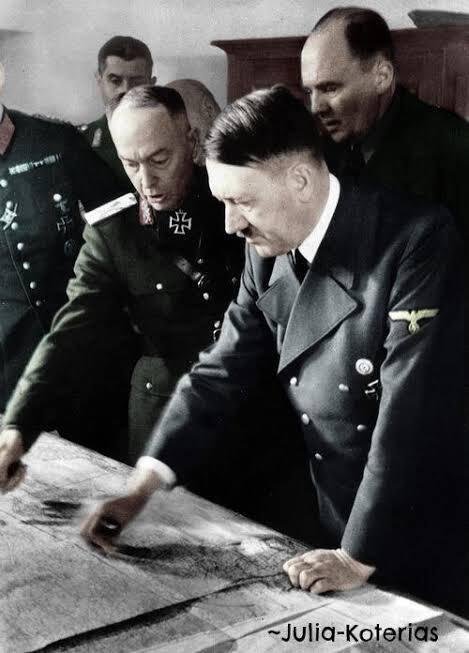
In 1943, Antonescu began considering the possibility of switching sides as the military situation deteriorated for the Axis powers. He attempted to approach the British and Americans, and in response, the Allies demanded that he make peace with the Russians. Antonescu refused but continued to discuss the possibility of switching sides. In August 1944, when the Russians had already entered Romanian territory, Antonescu received another proposal for a ceasefire. This ceasefire suggested that Germany would have fifteen days to leave Romania, the Russians would only pass through the northern part of the country, and the south and the capital would be free from Russian interference. It also offered recognition of Romanian occupation in Hungary and northern Transylvania. Considering the superiority of the Soviet forces, on August 22, 1944, the Soviet army attacked Romanian territories, determined to occupy the capital before any ceasefire agreement could be signed. Antonescu mobilized his troops intending to resist for a while until both governments reached an agreement. The Russians sent a telegram on August 22, which was intercepted by the opposition and members of the Romanian Communist Party. On August 23, 1944, King Michael summoned Antonescu for a meeting. The ruler informed the king about the ceasefire he was about to sign, but the king had already aligned himself with the Romanian Communists and handed him over to them along with his minister Mihai Antonescu.

While in power, Ion Antonescu aligned himself with the Iron Guard, offering positions in his government and deceiving some leaders into supporting him. Antonescu sought to bring the Iron Guard under his direct control because their activities and sympathy for the Romanian people and their cause were undermining state authorities.
The brief period that followed became known as the Legionary National State, which lasted from September 14, 1940, until its dissolution on February 14, 1941, totaling only five months.
With the puppet state fully operational under the Germans and Antonescu's ambition, the two armies began to cooperate. After the capture of Bessarabia and Bukovina, Antonescu sent the Romanian army into Soviet territory, determined to follow the German troops until the complete conquest of the Red territory.
This decision was met with disapproval from the Romanian people and politicians, including those from traditional parties and the Allies. Although Antonescu had spent most of his life in the military career, he failed to adequately prepare the Romanian army for a prolonged campaign. After the Germans and Romanians suffered significant losses in the Battle of Stalingrad and the Russians began their offensive that would only end in Berlin, Antonescu's popularity, which was not the best, rapidly declined.

Before continuing with the thread, we need to understand how Ceausescu came to power and what life was like for Romanians before the revolution.
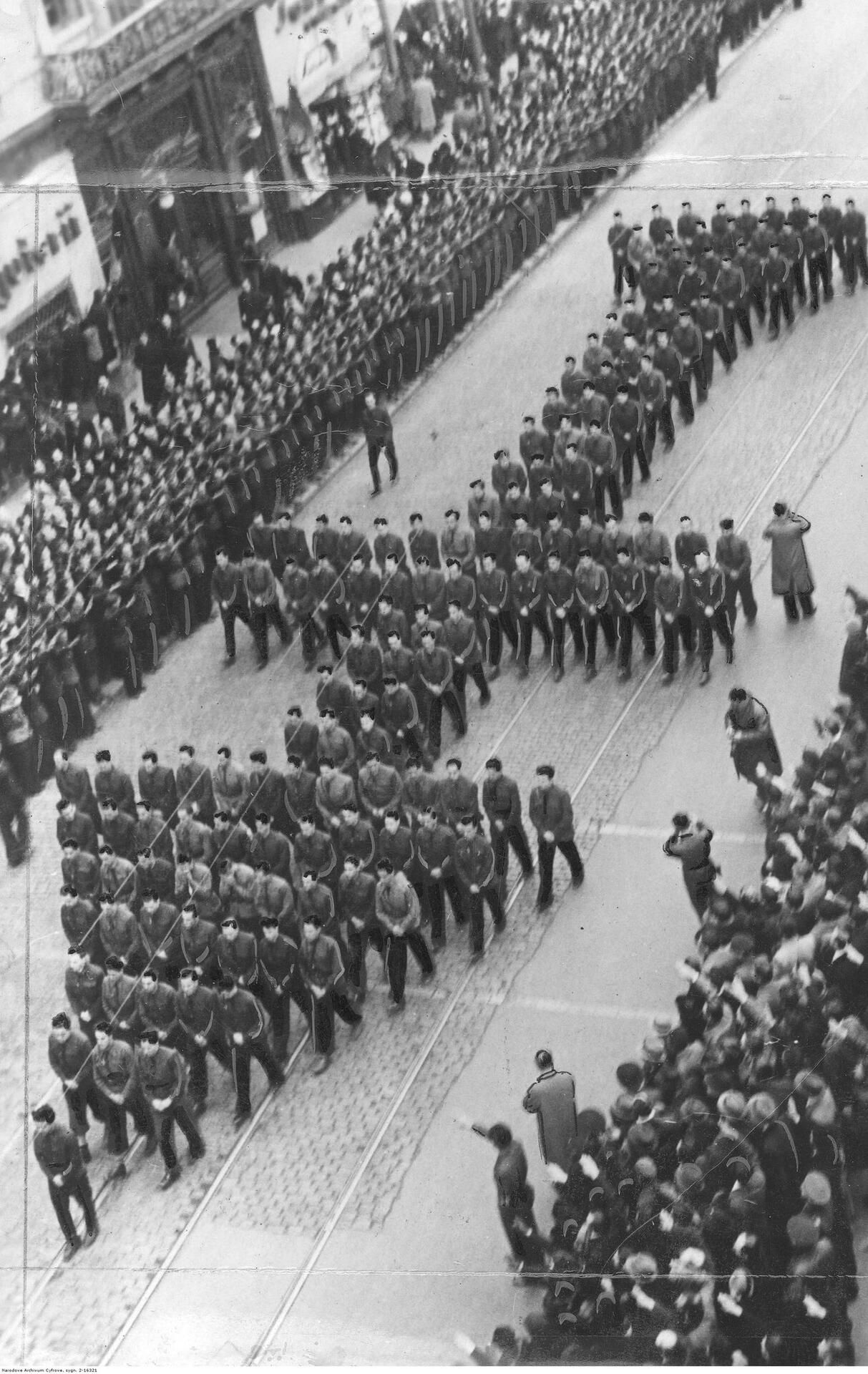
Romania had experienced tumultuous times since 1935. In early 1937, it came under the control of a fascist government, bearing significant resemblance to that of Nazi Germany. King Carol II of Romania dissolved the government a year later due to a failing economy and eventually installed the Orthodox patriarch in power as prime minister.
However, the sudden death of the patriarch and a peasant uprising caused renewed agitation for the Orthodox-rightist organization Iron Guard led by the young and charismatic leader Codreanu.
In June 1940, the Soviet Union invaded two essential Romanian provinces, prompting the king to seek an ally out of fear and apprehension to help protect them and keep the Legionary forces out of power.
On July 5, 1940, despite strong opposition from the population but out of fear of the USSR, Romania allied itself with Nazi Germany, only to be invaded by its ally as part of Hitler's strategy to create a massive eastern front against the Soviet Union. The king abdicated on September 6, leaving the country under the command of Prime Minister Ion Antonescu, who later regained the lost territory from the Soviets, albeit under a puppet state. The Germans utilized Romanian resources as part of the Nazi war effort, taking control of all Romanian oil wells and installations, which led to a severe crisis for the local population as Hitler relinquished the food harvest.
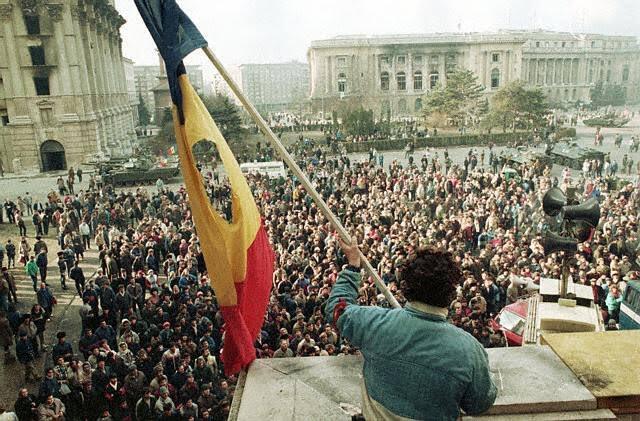
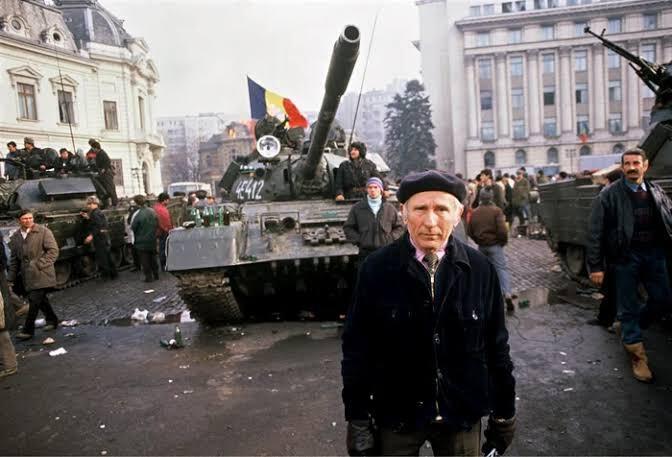
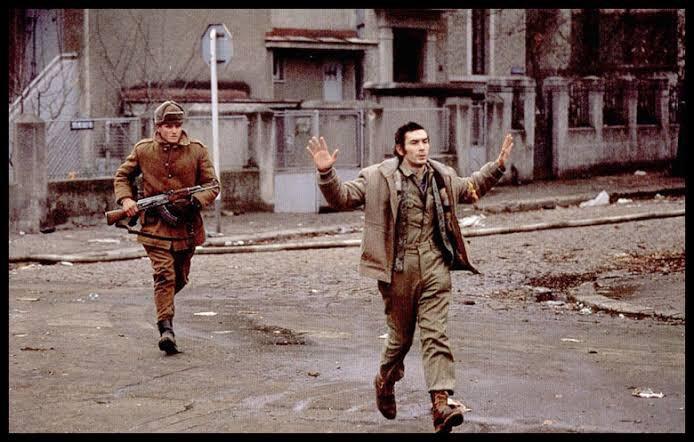
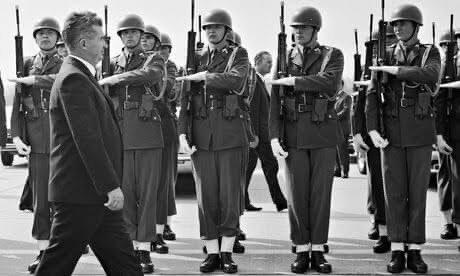
The Romanian Revolution began in a context of economic crises and shortages in the communist bloc of Europe. Ceausescu's regime (in power as president of the Romanian Socialist Republic since 1974, and also serving as general secretary of the Communist Party from 1965 to 1989) exported food at a low price while the local population paid dearly for it. Nicolae followed the same strategy as other dictatorships and used the police as a tool of repression to silence radios/TVs, arresting anyone under the pretext of being agents acting on behalf of other governments, infiltrated to undermine the communist cause of the country. He even had his own police force called the "Securitate," one of the most brutal and repressive that ever existed.
GM Major 🫡 PV 💜