

GM 🥳

Non-stop laughing all the way to the gulag



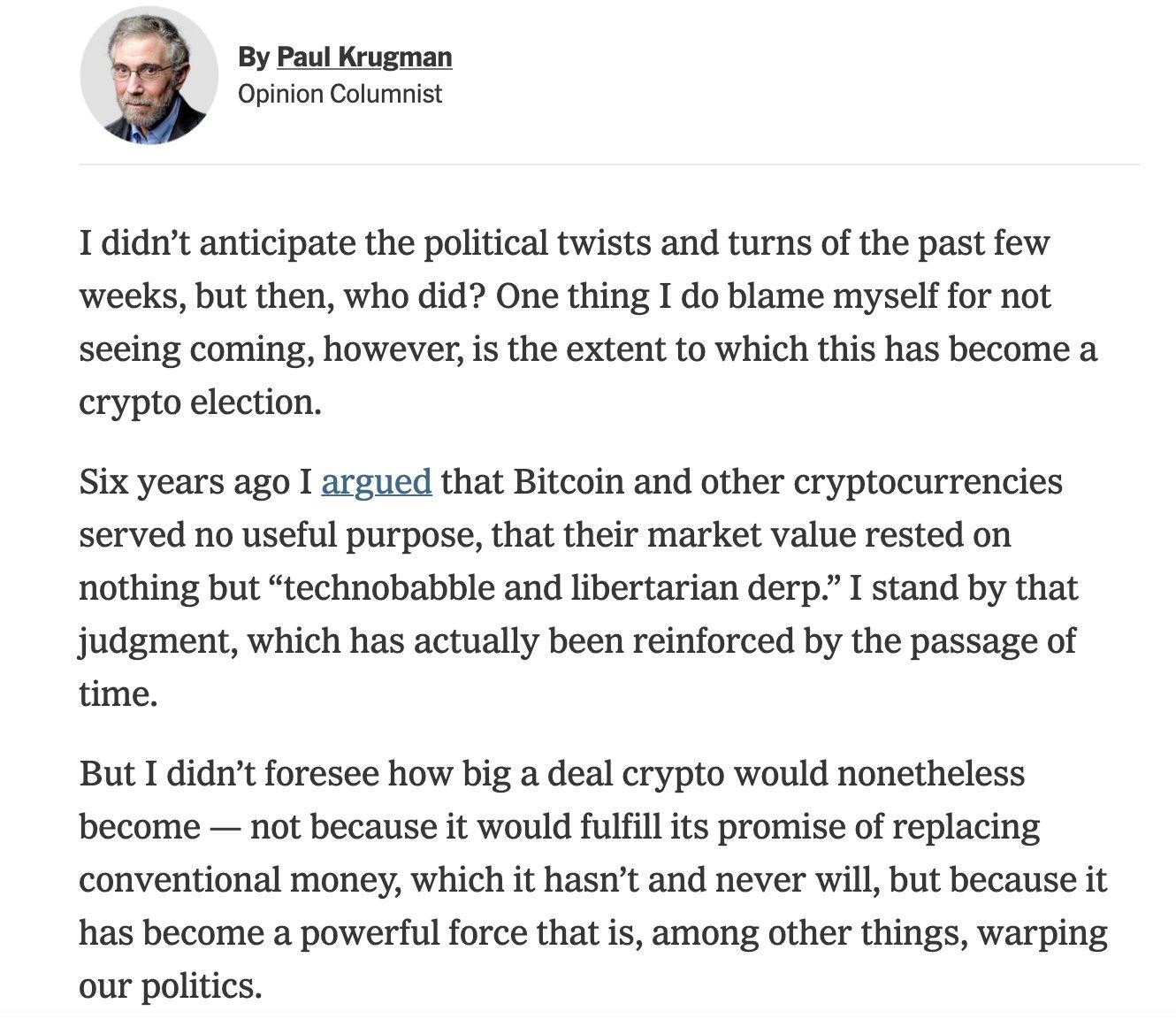
I wonder if he faxed this anywhere🤔


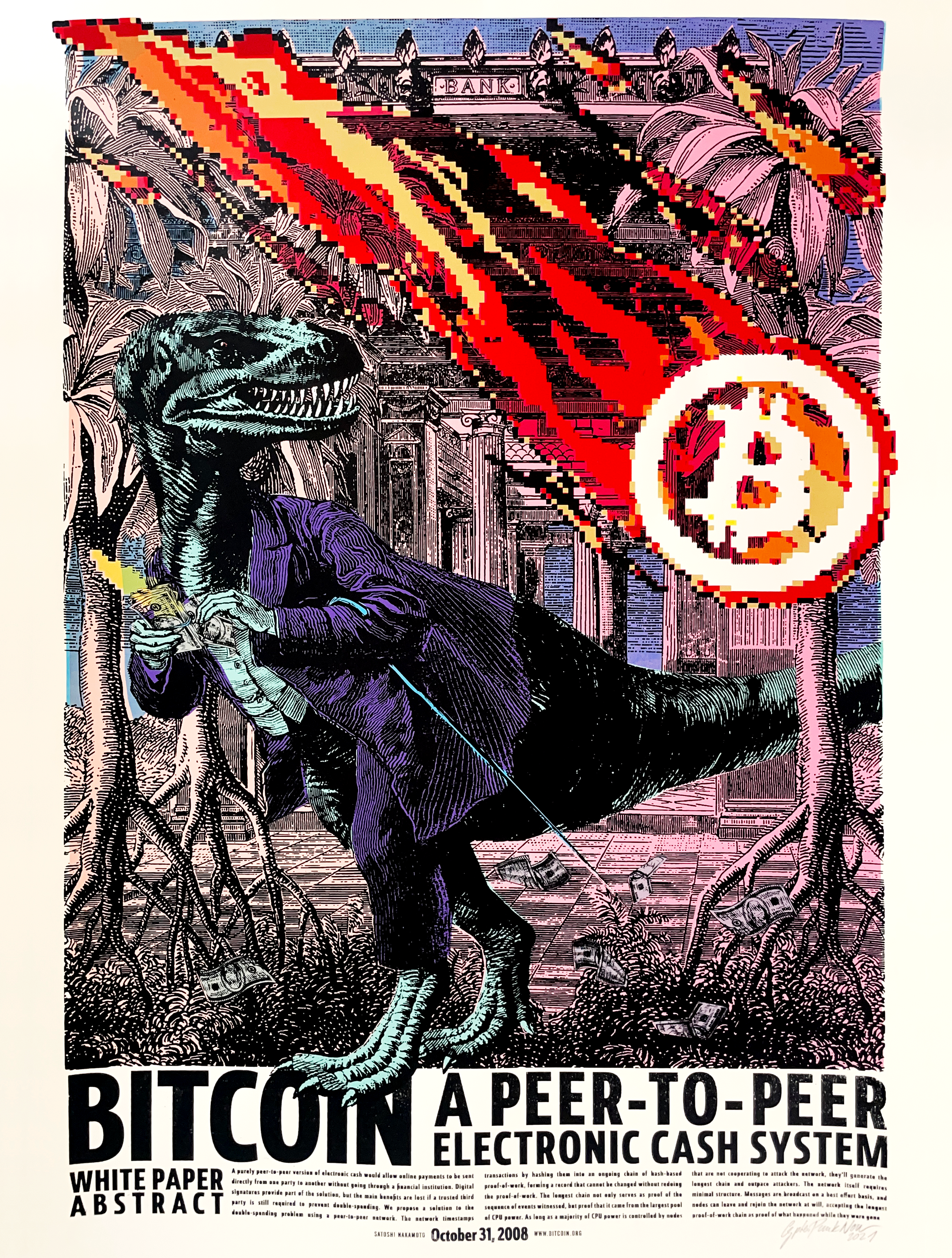
🤷 doesn't feel that long ago. It's not on Bitcoin because it cant be done through a soft fork. The chains that use it either issue a separate token or use "extension blocks" (parallel chain) -- far removed from Bitcoin

First thing that comes to mind:


I'm not making an argument when asking you to compare signature schemes (you brought up something irrelevant and I clarified for you that it would go nowhere, you're welcome). I was being helpful to help you get your terminology straight.
People who don't run nodes cant be 100% sure the Bitcoin they hold is real or have the unencumbered ability to broadcast transactions to the rest of the network. People who don't run nodes aren't actually using Bitcoin to its fullest extent, even if they hold their own keys. It's not ideology, it's just the way things are, a necessity. No permission necessary. It's a learning process everyone goes through, and not going anywhere.
Payjoin is not privacy by obfuscation, obfuscation would be sending Bitcoin in random amounts over and over again to yourself as privacy measure (this doesn't work because of input heuristics). Payjoin is a protocol to construct bitcoin transactions.
Payjoin allows users to break input heuristics by allowing users to coordinate how to use inputs from multiple parties in transactions, securely. (I brought it up because it uses the similar ECDH signature schemes "from the 70s-90s" you listed). Does it solve "privacy"? of course not (theres other heuristics), but it's an incremental improvement addressing a need; another option to construct transactions which wasn't available before.
Privacy means a lot of things. What I think you possibly are trying to get at is the transparency of all transction that happen on Bitcoin being out in the open makes for bad privacy. That's just the nature of the design and has little to do with signature schemes or hashing algorithms. Privacy isn't a feature of the base layer (utxos), and the idea is to build privacy tools in protocols using the existing utxo set instead of going out and build a whole new token. Amounts of all utxos are out in the open in order for anyone to independently validate that supply and issuance schedule are being followed and not being changed without anyone knowing.
Personally "Use this token if you want privacy" doesn't make sense to me. Cryptonote tokens don't have the same assurances.
Speaking of obfuscation, perhaps that applies to RandomX alongside countless other memory intensive PoW schemes. The claims you made that those PoW schemes have advantages in accessibility, ubiquity, plausible deniability (strange selection btw) and declaring those schemes as means to control energy draw, noise, or heat is nonsense. Those schemes exist to obfuscate energy use -- adding unnecessary complexity to a transparent process.
PoW is about energy placing a physical constraint on changing something in the digital space. Being able to channel as much energy as efficiently as possible is exactly how people came to iterating ASICs, and if you are at all worried that the developments in that space could "break" Bitcoin, its already been solved for you with the difficulty adjustment. (the only thing as scarce as block space on this planet, is wafer space)
Almost any device can be used to construct SHA256 hashes (you can even do it with pen and paper), ubiquitous and accessible which is why hashing can be performed anywhere by anyone -- starting with a humble single CPU. It's an even playing field. There's really nothing stopping you from buying top-of-the-line chips on your own and assembling your own device to fit your power envelope or trying your luck on your laptop. Someone recently found a block solo-mining with a BitAxe using like 5 BM1366 chips (~80 Watts of mining power) -- for reference an S21pro has 432 chips (3500 Watts).
I suppose there's not much point comparing Bitcoin and what remains of cryptonote tokens. I will admit I don't have the mental bandwidth to keep track of anything outside of Bitcoin. It may seem like your token is still ticking along, but it doesn't to me.
Happy to be proven wrong, don't let me stop you from holding more tokens


Case in point, you have no idea whats going on. Or if you do, go ahead and go around in circles explaining the merits of ed22519 over secp256k1. Meanwhile there's payjoin to play with both curves.
In the context of over the top math: Keccak-256 was established in 2015 (AFTER your token launched, crazy, no?), not the 70s. It's use for the last decade has mainly been for token projects. (nicknamed SHA-3). You pass around a bunch of coins represented in hashes that only a classroom of people knew how to produce a short decade ago. Coupled with the inability to validate the circulating supply due to lack of transparency...(i.e. your cryptonote predecessors) no red flags go off? You don't think you're acting a bit insane when Bitcoin continues to tick along?
Going along with this, users are under the impression that the ASIC resistance of the CPU-mined token comes from RandomX/CryptoNight/whatever-its-called. Memory hard or not, NOTHING is ASIC resistant; Taiwanese are very clever🥳 . Your token's ASIC resistence comes from lack of market interest and constant top-down hard forks. ASICs are a good thing -- real demand from supporters and/or attackers
PS: if we're being pedantic, the Venn diagram would be cypherpunk-aligned cryptographers (again, tiny). Cryptographers aren't always privacy advocates 🥹
Bitcoin is money, it'll work in all markets (black, white, and everything in between). There's only a finite amount of Bitcoin and more ideological Bitcoiners each day.... it doesn't go backwards What will be left? Them.
The mathematics/cryptography behind monero is way over the top which is even more reason for me to stay away from it. Not all mathematics has to leave the blackboard.
The Venn diagram of post-doc mathematicians and privacy advocates also leads me to believe that theres really not many users who actually know what's going on. Bitcoin on the other hand, I truly think almost anyone can understand.
Piling on top of that, monero as it stands today is smaller in BTC terms than its cryptonote predecessors (i.e. it wasn't unheard of for those tokens to fetch many million of sats each) and hasn't offered much other than ever growing excuses to hardfork. As it stands, it appears to be designed to hardfork in perpetuity, relying on pinky promises masquerading as math
I've done plenty of reading over the years, perhaps the conclusion is that everyone wants to be..... thankful for today 😉


Lightning torch, El Salvador( Bitcoin Beach Wallet, Chivo).
Blockstream offered stickers over lightning at the start when people were figuring it out
Going through the implementations and the teams behind them could be fun. (Eclair, LND, CLN) Or the lesser known implementations (electrum, immortan) and further on with LDK
Establishment of standards (BOLT11/12, LNURL/Lightning Address, dual-funded channels) 🤔



yea I do, I build Core on my own all the time😅 (namely I manually apply the datacarrier patch to the new versions and I dig around a lot because I do my own translations). You should too as you get more familiar with Bitcoin, eventually. Building Bitcoin on your own is a useful skill to have that will benefit you in the future as Bitcoin keeps running, unlike projects that have constant hard forks. It's educational and empowering 🤓
off the top of my head for the circulating supply, the gettxoutsetinfo RPC command is pretty straightforward, it takes all the UTXOs from coinstats and adds them up.
Oh, and gettxoutsetinfo also provides you the information on how much space the utxos takes up on your disk. (very useful for those on pruned nodes)
"how many bitcoins are left in this difficulty/epoch?" -- plenty of people keep track of the Bitcoin supply with questions like this.
the command to sum up all the utxos to get the circulating supply is gettxoutsetinfo, it's useful information because one cant ever know when miners may choose to not collect the full block reward as it has happened multiple times (and may happen in the future).

Every single L-BTC issued by the liquid network is attached to a Bitcoin UTXO pegged into the Federation Multisig wallet. Anyone can verify the total amount of L-BTC issued using their node and perform pegins on their own with Blockstream's Elements software, this isn't possible with the shitcoin in question. The ability to verify issuance independently is important to mitigate hidden inflation.
The similarities between the two come from "Confidential Transaction" where zero knowledge proofs allow for senders and receivers to not reveal amounts.
Swapping in and out of Bitcoin with shitcoins in the name of privacy isn't new, it works in the short term provided the anonymity set is wide enough, but at best it's a tired party trick and shouldn't be taken seriously.

China is actually way behind in terms of chip fabrication
You're thinking Taiwan 😅

He even took credit for the Bitcoin price chart during his term (when he was talking shit about it)
Didn't do the work, treated his audience like idiots 🫠
can't believe I'm up at 3:30 waiting for orange man to talk orange coin
