Avatar
Des Imoto マキシ
16897bfab409ff12a768217e14d472dd5e8a2ae11cc0e3340bf2d6f67f5bac83
Bitcoin is the only chance we have | Toxic Maxi | Anarchist | Voluntarist | #Bitcoin | #Plebchain

People’s reaction to COVID and Bitcoin has been quite an eye opener to me as far as humanity is concerned. Quite bewildering.

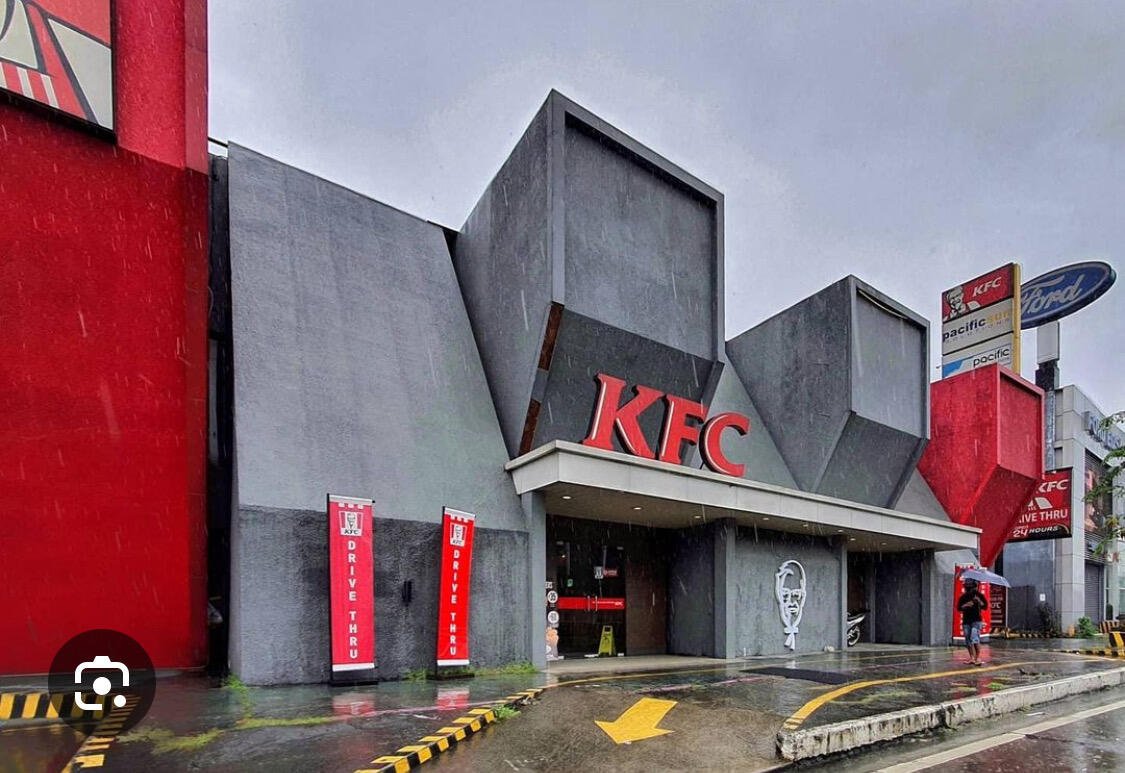
nostr:note1rwd7ghztggz8qd6ulm396y4tvwvwxwj6gaa6h5uwd45r0z3supmqurvrd5

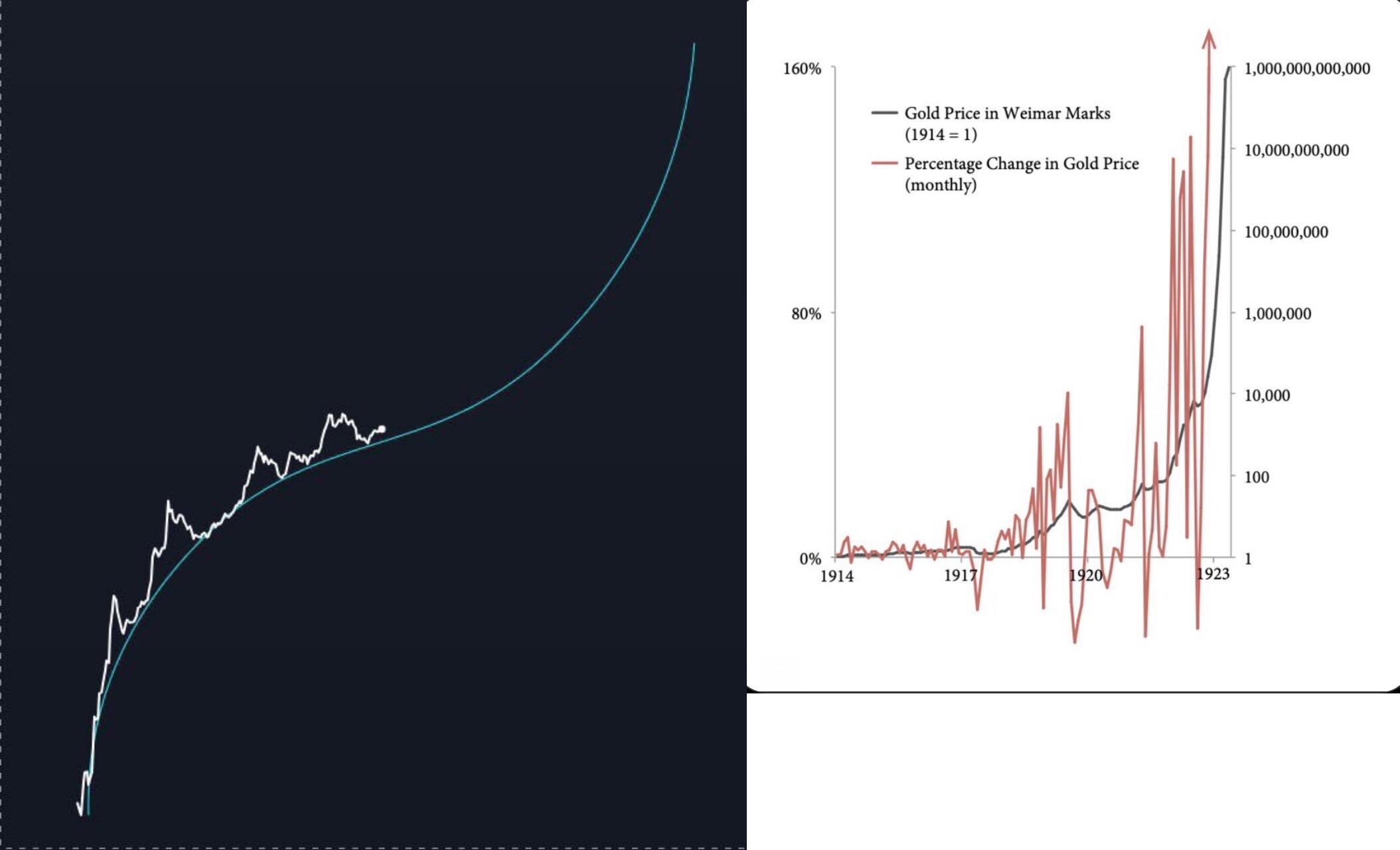
Im curious to see what people think about at what price #Bitcoin detaches from fiat USD (and thus fiat will end)? I think we are currently at the inflection point on chart to the left. Before Bitcoin accelerates away from fiat USD. My guess is between $1 and $10 million USD/BTC. What do you think?
Replying to Avatar Jeff Booth

GM from beautiful Colombia.

With all the chaos and nonsense going on in the world right now, I wanted to share something that I believe is critical as it relates to what is happening on #bitcoin (the first global free market that can’t be cheated) versus a system of corruption (trying to stop that system) Either 1) through willful intent or 2) lack of knowledge.

(*the majority of people fall into the lack of knowledge group)

According to game theory and playoff matrices: even when there are very high rewards and low punishment (they wouldn’t get caught) approximately 10% of people won’t cheat - no matter what!They place a higher internal value on integrity that overrides external rewards. I’ve seen this number as low as 2.5% and as high as 20%.

Why is that important:

Although everyone wants to see themselves as one of the honest, the math says that between 80 - 97.5% of people will cheat depending on the rewards. Now enter money - the ultimate pot of gold with high rewards and low punishment for cheating because people don’t understand it. Most people will cheat - a mirror of the world we see and have seen in Bitcoin since its inception. Need inflation, bad for environment, drug money, doesn’t scale, crypto, meme coins - the list will go on and on because if people can “get rich at someone else’s expense - most will. Those are simply the numbers and always have been.

In fact, in prior periods of history, the honest were at a massive disadvantage because and would often be killed by the cheaters. Because the integrity was so rare, society would often celebrate these people after their deaths as lessons of what we wanted our higher selves to look like.

#bitcoin has changed the equation. Giving those with integrity the power. Why: because 2.5 - 20% of people that won’t cheat is a massive number - especially if many of those people are decentralized and can’t be “found”. Those are the people who eventually run nodes, contribute their time and energy to keeping #bitcoin decentralized and secure, watch for attack vectors, build value on top of this protocol, call out the cheaters, teach and advocate to help others see it. Those people simply can’t be bought, and more are joining every day.

That decentralized and secure protocol bounded by energy is repricing everyone and everything from the other system and it will continue to do so as that system tries to grapple with: the cheaters no longer make the rules.

It will be chaotic, many more will try to cheat (don’t be afraid to slay your heroes) but in the end…..Satoshi unlocked a way to put the best of us into a protocol that was best for all of us.

What a time to be alive.

There are only 20,000 nodes 😳

Did he commit a crime? He hosted a website. Somebody decided to sell some drugs, someone else to buy drugs. Should that be a crime? It’s only a crime because the government says they want to protect us from the possibility the guy buying the drugs getting high and potentially committing a real crime (theft or harm). The problem with totalitarianism is that it’s a race to the bottom…

Replying to Avatar Lyn Alden

I hear this a lot, but one of the ways I gained this skill was by being a generalist in a room full of specialists. A systems engineer. The dumbest person in a room of specialists.

I previously ran the engineering and finances of an aircraft simulation facility. I had a lead computer scientist, a lead IT manager, a lead mechanical engineer, a lead electronic engineer (which was initially my area), a lead aeronautics engineer, a lead graphics engineer, and various juniors, and together we had to1) build and maintain a set of aircraft simulators and 2) repeatedly customize those aircraft simulators for individual clients and then I 3) had to oversee the finances of this. And we'd have upper-management requirements (fiscal goals and limits, broader strategic priorities, etc).

I started as a junior electrical engineer, became the senior electrical engineer, and then moved into that more broad-based tech leader role.

In that role, I had to balance all of those things. I would run meetings, but talk the least. It would be 70% initial questions or letting others speak freely, 20% follow-up questions or purposeful counter-points to sort out the differences between competent people, and then 10% declarations or decisions from me. And even when I made those, I would go to each senior party privately and gather their opinions to look for critical flaws to see if an error correction was needed somewhere along the way after that.

Several of my senior engineers who reported to me were older and more experienced than me, so rather than acting the hot-shot, I would talk to each humbly and view my role as like, "someone has to do this whole organization thing, so please help me maximize your input to that."

Someone had to be the person who was the second best at each of the disciplines, and read people and technicals enough to know who should be promoted to lead each of those disciplines and when they were speaking out of competence vs out of pride or other human details. That was my job. I had to make all the separate engineering disciplines clear enough, and agree enough, to chart a single path forward, and then agreed to by upper management who had way less technical details.

And that came down to what is known by systems engineers as the "critical path". In other words, the critical path is the hardest or most expensive or most contested thing of a given project, so you can focus on solving that as the core, so that the periphery would follow.

That role sounds cool, but there's another side of the coin. I realized early I'd never be focused enough to dominate a specialty as some of the hyper-focused specialists I knew could. I could nail an individual project at like a B+ or A- level, but not an A+ level. I was more drawn to the broader picture from the start. I could be a B or B+ at everything, and an A- in my speciality, but I couldn't care enough even about my specialty to bring it to an A+ level. I wanted to be someone who helped all the A+ specialists come together.

I've since applied this systems engineering mindset to analyzing global macro flows, but also to analyze things like bitcoin or major tech themes like energy or AI. Some of it is instinctual or experienced, but other parts are easily teachable.

And the most easily teachable concept is to always think of the critical path. Picture multiple parallel things that all have to go right to get to the goal, and then imagine the hardest of those paths. That's the path to then focus on in terms of realizing how time consuming or expensive it'll be to solve, and how it might be accelerated.

Lots of other things are easily solvable with some resources, but the critical path is the real project-maker or project-killer. Across discliplines, formally or informally, try to be able to identify it, or identity the right people and ask/watch them enough to help you identify it.

nostr:nevent1qvzqqqqqqypzqm9xan7hhmnqhku2wq35tyau3wme3dmkxyt2hlxu7tdjppnr3slvqqsfqk6tdqgmavkrpzmswzzhcza0mxhzn82z6yxkfl83e4vqs7kecgcjjc8dz

#Bitcoin is not an investment, however.

In 1977 Mercedes-Benz made 250,000 cars. Beautiful cars. Reusable, long lasting (500,000-1 million miles), highly efficient (25/30mpg). Workers in Germany were well paid, single income households. They drove a Mercedes and got a pension to happily for the their lives without a worry. And shareholders lived of the fat dividends.

Today Mercedes builds 2.1 million cars a year, they are disposable plastic items, many of them electric vehicles ruining the environment with Lithium mines and chemicals and they either end up on massive land fills unsold because there are too many cars made or disposed after 200,000 miles. Workers are struggling with dual income families and they’ll have to work well into their 80s, whether they know that yet or not. And even then and even with all the automation, production in Germany is too expensive and moved elsewhere.

Is that progress? Something doesn’t add up. Maybe they should just go back to building 250,000 cars that are good?