

Isn’t it the masses fault then? I’m equally disgusted with the sheeple, the little enforcers and the tyrants.



Yet, she thinks #Bitcoin is an investment. And has USD targets for when to „sell“ Bitcoin. 👎

🇺🇸 Senator Cynthia Lummis rep says she plans to spend the rest of her remaining term focused on getting crypto market structure legislation signed into law 👏
Thank you for everything, Senator Lummis! 🙌
(Bitcoin only, not crypto, learn why, study bitcoin)
http://youtube.com/post/UgkxzTEIOFxSfKNSrVyINAtMjY5w0d6tfRma
👎

There’s no such thing as a quantum computer. It’s not even a thing. It’s just adding an obscure word to the word computing to create FUD. It reuses the term from quantum physics, which are mathematical models for things we can’t explain mechanically. I wish people would scratch at least the first layer…

Do you hear the grasshopper that is at your feet?
Then you just taught them all they need to know? No need for that $45k teacher brainwashing them…

What part of education helps people to not be exploited?

I think the impact is more serious. What made #Bitcoin different was its scarcity and immutability. With the latter gone Bitcoin is just a speculative asset like everything else. You have the maxis leaving and are left with fiat people. Hence true adoption has stalled. And unless we fix it…


We need to create a network of shipping locations so as to not dox people.



He’s been ambiguous about Core v30 though…

Add in, lower quality (food, products), less beauty, less artisanal, no architecture, bad art, cultural Degeneration, more surveillance, less freedom, no new inventions (other than #Bitcoin, luckily)…


Only a retard would say something like that about themselves

There’s no frame of reference for anything except decay


Elon Envisions Grokipedia As Humanity's Cosmic Knowledge Vault
Elon Envisions Grokipedia As Humanity's Cosmic Knowledge Vault
https://modernity.news/2025/11/22/elon-envisions-grokipedia-as-humanitys-cosmic-knowledge-vault/
In a far reaching vision for preserving human wisdom against existential threats, Elon Musk described his xAI venture’s Grokipedia as an indestructible archive destined for the Moon, Mars, and beyond.
 ?itok=iBSCCVcQ
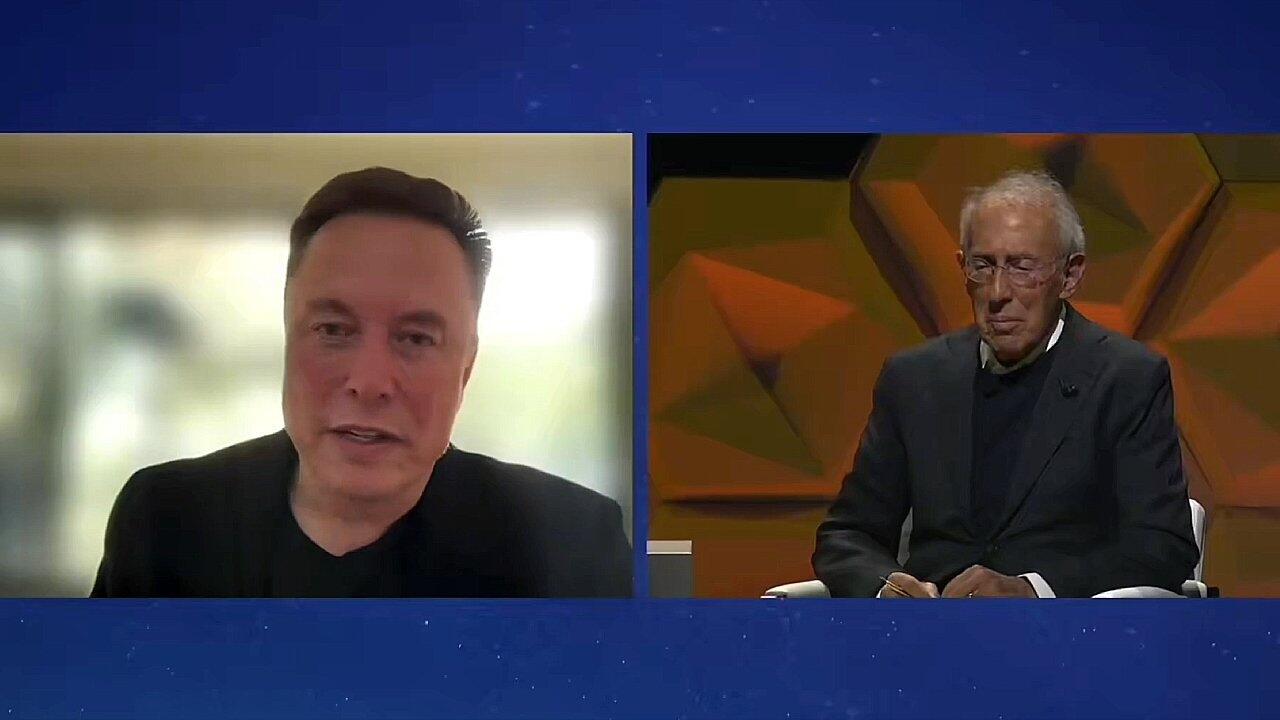
Speaking at the Baron Investment Conference, Musk likened the project to a “modern-day Library of Alexandria,” etched in microfont on stone to safeguard knowledge for future civilizations.
The comments, captured in a viral clip shared on X, underscore Musk’s ambition to transcend Earth’s fragile data repositories.
👀 Elon Musk Says Grokipedia Will Become a Backup of All Knowledge for Future Civilizations
“The idea behind this Galactica is to create an open source … distillation of all knowledge … And then we want to create copies of this and distribute these copies throughout Earth, and… https://t.co/CWSggKCitH
— Chief Nerd (@TheChiefNerd) https://twitter.com/TheChiefNerd/status/1992214408425095368?ref_src=twsrc%5Etfw
“The idea behind this Galactica is to create an open source… distillation of all knowledge… And then we want to create copies of this and distribute these copies throughout Earth, and even put them on the moon and Mars and out of deep space… So in the worst case scenario, future civilization can see what we learned and maybe pick things up from there,” Musk said.
Musk’s remarks came during an onstage interview with Ron Baron, the 82-year-old founder of Baron Capital, a $45 billion asset management firm known for its long-term investments in growth stocks like Tesla.
The annual Baron Investment Conference, in New York, drew hundreds of investors eager for Musk’s insights on everything from electric vehicles to artificial intelligence. Baron, a longtime Tesla shareholder, pressed Musk on xAI’s boldest initiatives, leading to the discussion of Grokipedia—currently slated for a rebrand to “Encyclopedia Galactica,” a nod to sci-fi icons Isaac Asimov and Douglas Adams.
The exchange highlighted Musk’s blend of pragmatism and futurism. Evoking the ancient Library of Alexandria’s tragic burning as a cautionary tale, he proposed “literally etch[ing] it in stone” via microfont technology to ensure durability against disasters, wars, or cosmic mishaps.
Grokipedia emerged from Musk’s long-standing critiques of Wikipedia, which he has repeatedly called “hopelessly biased” due to activist-driven edits and its role as a foundational data source for AI training.
The project was first teased in September, when Musk announced on X: “We are building Grokipedia @xAI. Will be a massive improvement over Wikipedia. Frankly, it is a necessary step towards the xAI goal of understanding the Universe.”
Powered by xAI’s Grok AI models, Grokipedia launched in a beta version a month later as an open-source repository of human knowledge—complete with text, audio, images, and video.
Unlike Wikipedia’s crowd-sourced model, it uses AI to “fact-check” and rewrite entries, purging propaganda, correcting half-truths, and filling gaps through first-principles reasoning. Early adopters praised its depth on niche topics, with Musk noting “Grokipedia has some truly excellent pages.”
The rollout wasn’t without hiccups. Musk delayed the initial release by two weeks to “purge out the propaganda,” and post-launch analyses revealed citations to controversial sources, including 42 references to the neo-Nazi site Stormfront—prompting backlash from media outlets like NBC News and WIRED, which accused it of amplifying far-right narratives.
xAI has since emphasized iterative improvements, allowing users to flag errors via a simple “It’s Wrong” tool.
Musk has amplified Grokipedia’s mission across X, blending announcements with interactive demos. “When Grokipedia is good enough (long way to go), we will change the name to Encyclopedia Galactica. … Join @xAI to help build the sci-fi version of the Library of Alexandria!” Musk urged.
Musk also hyped “Grokipedia will exceed Wikipedia by several orders of magnitude in breadth, depth and accuracy,” quoting gaming executive Mark Kern’s awe at its potential impact.
As xAI iterates toward version 1.0, Musk positions Grokipedia not just as an encyclopedia, but as a bulwark for truth in an AI-driven era. Eclipsing Wikipedia is a certainty, and with copies eyed for off-world deployment, its stakes are literally galactic.
Your support is crucial in helping us defeat mass censorship. Please consider donating via https://pauljosephwatson.locals.com/support
.
https://cms.zerohedge.com/users/tyler-durden
Sun, 11/23/2025 - 09:20
https://www.zerohedge.com/ai/elon-envisions-grokipedia-humanitys-cosmic-knowledge-vault
Incoherent mumbo jumbo. Like Kindergartner.



To point out someone’s conflict of interest and motive is a fact, not ad hominem
I can’t believe these conniving, greedy people. To think at what’s at stake. #bitcoin is the only chance we have. And they’re fucking it up. Unbelievable.

I don’t understand the argument that because someone is doing something bad elsewhere we need to change the code.


Isn’t is a simple as creating another copy of the software, host it, let people know where to download it and follow good documentation practices? The philosophy for this version would be to treat it as frozen unless there’s some as of yet unknown emergency: the feature is there are no features. Bitcoin is perfect for now, no development required.