
### Vengeance Reborn
In the year 2147, humanity had achieved what was once thought impossible: advanced bioprinting technology allowed for the reconstruction of living beings, even those long deceased. The world had changed in unimaginable ways, with people customizing their biology and erasing the boundaries of life and death. But with this power came the haunting shadows of the past.
**Prologue: The Genocide**
It began centuries ago when a tyrant named Gaius Arkanos seized power through a campaign of genocide, eradicating entire races and civilizations in his quest for dominance. For decades, the universe quaked under his iron fist, his cruel smirk a constant reminder of the suffering he inflicted. But after decades of oppression, the resistance grew. United, the descendants of those he had slain overthrew him, ending his reign with a swift and merciless strike. They celebrated, believing his legacy of pain had been extinguished forever.
**Part 1: The Awakening**
Generations later, the scars of history remained deep. Despite the technological advancements, the atrocities committed by Arkanos left a mark that could not be erased. As bioprinting became accessible, whispers spread through underground networks, driven by a thirst for vengeance. A faction of his victims' descendants, known as the Vengeful, sought to resurrect Arkanos—not to restore him, but to make him suffer for eternity.
Driven by stories of their ancestors’ pain, they pooled resources and knowledge, crafting a plan to use bioprinting to recreate Gaius Arkanos. They envisioned a being stripped of power, a puppet made to feel every wound he had inflicted. They were determined to implant memories of his past atrocities into his mind, forcing him to relive the horror he had wrought.
**Part 2: The Rebirth**
The day finally arrived. In a hidden lab on the edge of the Earth’s surface, surrounded by ruins of the old world, the Vengeful activated their bioprinter. The machine whirred to life, drawing on DNA samples and genetic records, reconstructing the despot with meticulous care. As the final strand of DNA locked into place, the room filled with a chilling silence.
A flash of light illuminated the chamber, and Gaius Arkanos opened his eyes, his face a canvas of confusion and fear. The smirk that had once symbolized his power was absent; instead, he wore a look of vulnerability. The Vengeful surrounded him, their faces twisted in anticipation of the reckoning to come.
**Part 3: The Torturous Truth**
As Arkanos adjusted to his new reality, the Vengeful revealed their plan. They implanted memories—visions of the lives he had taken, the families he had shattered. He felt their pain, their suffering wrapping around him like a shroud. With each memory, his arrogance crumbled, replaced by an overwhelming sense of guilt and despair.
“What do you want from me?” he pleaded, the remnants of his former self fading.
“Your suffering is just beginning,” one of the Vengeful declared, a fire igniting in their eyes. “You will live with the weight of your actions for eternity. Every second, you will know what you’ve done.”
**Part 4: Endless Night**
Days turned into weeks as Arkanos was subjected to relentless torment. His bioprinted body, designed for resilience, now bore the scars of emotional agony. The Vengeful watched as he was forced to confront each life he had extinguished, each cry for mercy echoing in his mind. His attempts to escape the haunting memories were futile; they were woven into his very being.
But as the cycle of torment continued, something unexpected happened. Arkanos, stripped of his power and pride, began to change. He no longer represented a tyrant; he became a reflection of the horrors of absolute power. In his suffering, he became a symbol for the very ideals the Vengeful sought to eradicate.
**Part 5: Redemption and Reckoning**
In the depths of his anguish, Arkanos had a revelation. He began to understand the depth of his actions, the pain he had inflicted upon innocent lives. In this moment of clarity, he reached out to the Vengeful, offering them a chance for true justice rather than revenge.
“What if instead of tormenting me, you used this power to ensure that no one else suffers as I made others suffer? Learn from my mistakes,” he implored.
The Vengeful were torn. They had long sought revenge, but could they transform their pain into a force for good? After a long deliberation, they decided to give Arkanos a chance to atone. They would not erase his memories, but they would offer him the opportunity to work alongside them to prevent future atrocities.
**Epilogue: A New Beginning**
With time, the Vengeful and Arkanos formed an unlikely alliance. They traveled the galaxy, advocating for peace and reconciliation, using bioprinting technology to heal the scars left by oppression.
Though he was never truly free from the memories of his past, Gaius Arkanos became a symbol of redemption—a warning that absolute power leads to absolute corruption. His smirk was replaced with a determined expression, a reminder that even those who had once caused unimaginable suffering could seek to mend the wounds of history.
In the end, the descendants of those he had tried to annihilate found a new path forward, not in vengeance, but in understanding, resilience, and the hope that the future would be brighter than the shadows of the past.
Deadpool 2 was an ad for skin suits 🤔
What is a goverment issue culture and traditional cultures ?
**Government-Issue Culture** refers to a culture that is often shaped, promoted, or enforced by a government or state. This can include state-sanctioned values, beliefs, practices, and ideologies that are disseminated through public education, media, and official narratives. Government-issue culture typically aligns with the goals or policies of the ruling government and may be used to foster national identity, social cohesion, or support for government agendas. Examples include state-sponsored propaganda, national holidays, or state-approved art and literature.
**Traditional Cultures**, on the other hand, are those that have developed organically over long periods, often passed down through generations. These cultures are characterized by longstanding customs, rituals, beliefs, languages, and practices that are rooted in the history and experiences of a particular community or society. Traditional cultures are typically more localized and may vary significantly from one region to another, even within the same country. They often resist rapid change and maintain continuity with the past, valuing heritage and ancestral knowledge.
In summary, while government-issue culture is often top-down and designed to align with state interests, traditional cultures are bottom-up, evolving naturally over time within communities.
**Here Lie the Remains of the Great American Empire**
Here lie the remnants of a once-proud land,
Where towering cities stood in desert sand.
They went all the way with Benjamin of yore,
Their fate entwined with Israel evermore.
For "Best Bang for the Buck" they fought and bled,
But now their banners lie in dust, unread.
A people lost in chasing gold and gain,
Their glory faded, leaving naught but pain.
Behold their monuments, now crumbling stone,
The echoes of their might now barely known.
A warning to the ages: wealth's deceit—
Empires rise and fall, their ends complete.
O passerby, reflect on what you see,
For power's grasp is fleeting, never free.
In chasing bargains, they forgot their soul,
And now their empire lies in fractured whole.

sprint training is the shit. Some injuries are permanent or reoccuring .. body is not that antifragile.
yea asphalt sucks, but you're right, simplest thing to get fit and have fun is to run. Getting injured sucks tho, many ppl get overzealous at the start and overtrain.
why? easy to over train running, shin splits and fascitis , ligment tear, stress fractures ...
Difference between sprinting and pacing resting digesting and thinking ... we are not gazzells and cheetas, is there such a thing as too much cardio ...🫀 💀😂
### Sins of the Dollar: How All Fiat Currencies Are Interconnected and a Global Channel for Evil and Manipulation
#### Introduction: The Web of Fiat
The global financial system is dominated by fiat currencies, with the U.S. dollar at its center. This network of government-issued money is not just an economic tool but a vast web of control that permeates every aspect of life. Fiat currencies are backed by nothing but the trust in governments, making them inherently unstable and prone to manipulation. The sins of the dollar—and by extension, all fiat currencies—are manifold, serving as channels for global exploitation, economic inequality, and geopolitical dominance.
#### The Birth of Fiat: A Tool for Control
Fiat currencies were born out of necessity but quickly became tools for centralized control. Unlike gold or other tangible assets, fiat money is created by governments and central banks at will. This power to print money enables them to influence economies, control populations, and exert power globally. The transition from gold-backed money to fiat currencies marked the beginning of an era where governments could manipulate economies without any real accountability.
The U.S. dollar, as the world's reserve currency, stands at the pinnacle of this system. Its dominance allows the United States to impose its will on other nations through financial sanctions, trade policies, and the control of international institutions like the IMF and World Bank. Other fiat currencies are similarly used by their issuing governments to manipulate domestic and international markets, perpetuating a system that benefits the few at the expense of the many.
#### The Global Network: A System of Interconnected Manipulation
All fiat currencies are interconnected through the global financial system. Central banks coordinate policies, manipulate interest rates, and engage in currency wars, creating a network of economic interdependence that often leads to instability. This interconnectedness ensures that when one major currency is manipulated, the effects ripple across the globe.
This system creates opportunities for exploitation and manipulation by those who control the issuance of money. Governments and financial institutions can devalue currencies, leading to inflation that erodes the purchasing power of ordinary citizens. Meanwhile, the wealthy and powerful, who have access to financial instruments and insider information, can profit from these fluctuations. The result is a widening gap between the rich and the poor, with fiat currencies serving as the vehicle for this inequality.
#### The Evil Within: Fiat as a Tool for Oppression
Fiat currencies enable governments to engage in activities that are often detrimental to their own citizens and others. From funding wars to propping up dictatorships, the ability to print money without real backing allows governments to act with impunity. The U.S. dollar, for example, has been used to finance military interventions around the world, often leading to the suffering of innocent civilians.
Beyond warfare, fiat currencies are used to enforce economic sanctions that can cripple entire economies. These sanctions, often imposed by the U.S. and its allies, are justified as tools to promote peace and democracy. However, they frequently result in poverty and hardship for the people in targeted nations, while their governments remain in power.
The manipulation of fiat currencies also extends to domestic policies. Governments can use inflation to reduce the real value of public debt, but this comes at the cost of eroding the savings and incomes of their citizens. This hidden tax disproportionately affects the poor and middle class, further entrenching inequality.
#### Bitcoin: A Beacon of Hope in a Corrupt System
In contrast to the fiat system, Bitcoin represents a decentralized, transparent, and incorruptible form of money. Born out of the 2008 financial crisis, Bitcoin was created as an alternative to the traditional financial system, which had proven to be vulnerable to manipulation and corruption.
Bitcoin operates on a decentralized network, meaning no single entity controls it. Its supply is limited to 21 million coins, ensuring that it cannot be devalued through inflation. Transactions are recorded on a public ledger called the blockchain, providing transparency and reducing the potential for fraud.
Bitcoin's decentralized nature makes it resistant to censorship and government control. It can be used by individuals in oppressive regimes to protect their wealth and conduct transactions without fear of seizure or devaluation. As a global currency, Bitcoin transcends borders, offering a means of exchange that is not subject to the whims of central banks or governments.
#### Conclusion: The Choice Between Fiat and Freedom
The sins of the dollar and other fiat currencies are evident in their role as tools of global manipulation and control. They perpetuate economic inequality, fund wars, and enable governments to act without accountability. In contrast, Bitcoin offers a path to financial freedom, transparency, and fairness.
As the world continues to grapple with the consequences of a fiat-dominated financial system, Bitcoin stands as a beacon of hope. It represents a future where money is not a tool for oppression but a means of empowerment. The choice between fiat and Bitcoin is ultimately a choice between a system of control and one of freedom.
Loadup your lightning nodes ... warm up those channels ... get ready for the liquidity to flow #MakeItRain

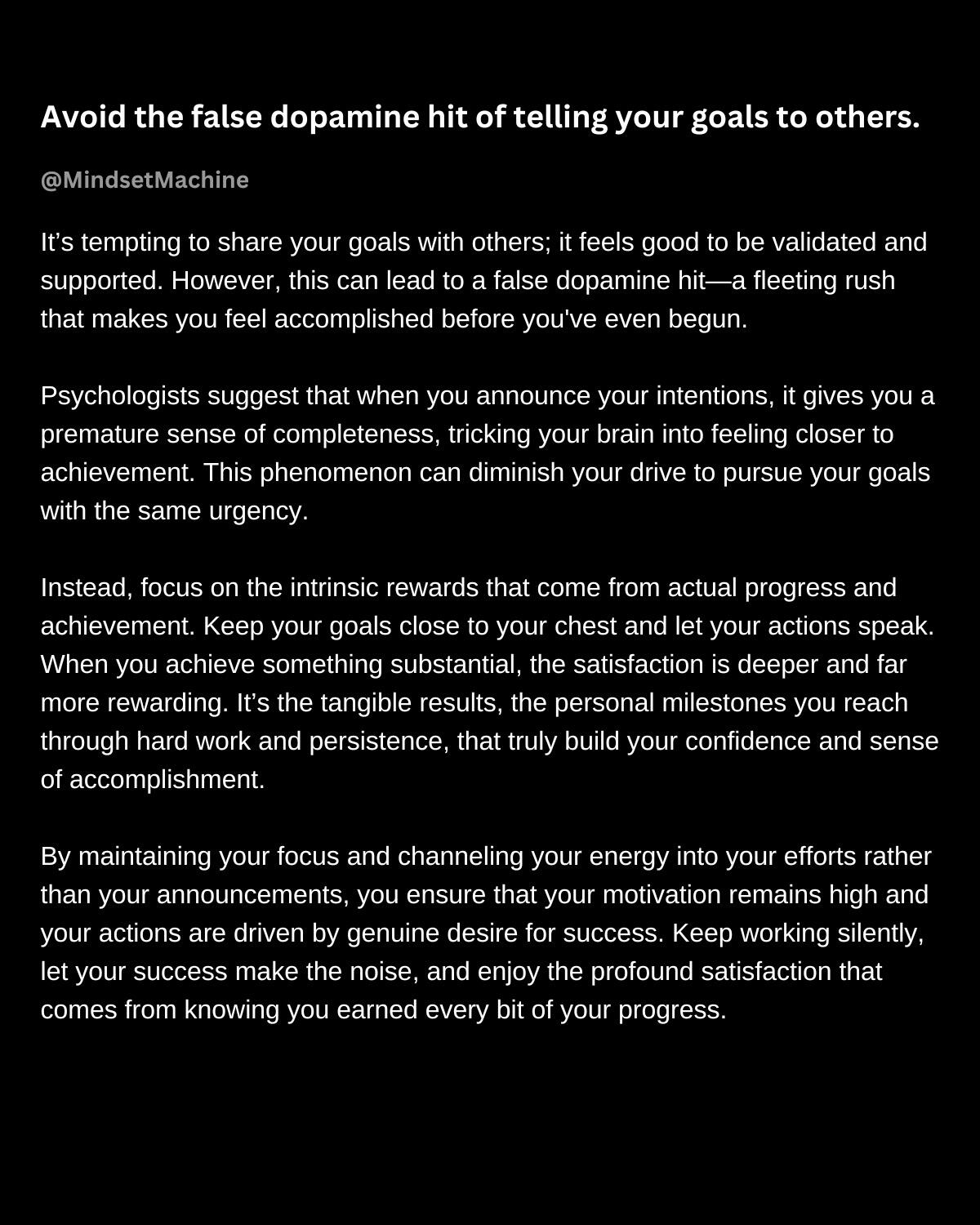
Instead have a solid seretonin baseline #biopsycho
What is a seretonin baseline how does it help manage dopamine swings
A serotonin baseline refers to the stable, consistent level of serotonin in your brain over time. Serotonin is a neurotransmitter that plays a key role in mood regulation, sleep, and overall well-being. Having a healthy serotonin baseline means your mood and emotional state are relatively stable, which can help buffer against drastic fluctuations in dopamine levels.
Dopamine is another neurotransmitter, primarily associated with pleasure, reward, and motivation. Dopamine swings occur when dopamine levels rise and fall rapidly, often due to engaging in highly stimulating activities like consuming certain foods, using social media, or other behaviors that trigger the brain's reward system.
When your serotonin baseline is stable:
1. **Mood Stability**: A stable serotonin baseline can help maintain emotional balance, making you less susceptible to the highs and lows associated with dopamine spikes and crashes.
2. **Resilience to Stress**: Serotonin contributes to resilience against stress, reducing the likelihood that stressors will cause dopamine-related cravings or impulsive behaviors.
3. **Better Self-Control**: With a stable serotonin level, you're more likely to have better self-control, which can help you manage behaviors that lead to dopamine swings, such as binge-eating or excessive social media use.
4. **Enhanced Focus**: By maintaining emotional and mental stability, a healthy serotonin baseline supports sustained focus and attention, which can help reduce the need for dopamine-driven rewards that distract from long-term goals.
In summary, managing and maintaining a healthy serotonin baseline helps regulate mood and emotional stability, which in turn can help you manage and mitigate the effects of dopamine swings. This balance is crucial for long-term mental health and well-being.
The current science is that the impact helps with bone density and regrowth afaik but I wonder how much of that can be achieved by other means like dances involving stomping and applying pressure to joints with regular yoga... body adapta to running fast for somepeople and gets too efficient for growth
I always thot I'd have to endure #Empire now I witness it's decimation.
What is peak physical condition? Did you mean peak atheletic performance?
How many sats per hour for mobile dev flutter or react native pls dm
How many sats per hour would you charge for web dev html css ?
#Bitcoin #BitcoinGig #SatsForTasks
How does kundalini meditation unlock the bodys energy stores for seemingly inlimited energy?
#AskGPT #Kundalini #Chakras #Meditation #InnerSpace
Kundalini meditation is a spiritual practice rooted in ancient Indian traditions, particularly in the disciplines of yoga and tantra. The goal of this meditation is to awaken the kundalini energy, often described as a dormant energy coiled at the base of the spine. When activated, this energy is said to rise through the chakras (energy centers in the body), leading to heightened awareness, spiritual enlightenment, and a sense of boundless energy.
### How It Unlocks the Body's Energy Stores:
1. **Chakra Activation**: Kundalini meditation focuses on the seven major chakras that align with the spine. Each chakra corresponds to different aspects of physical, emotional, and spiritual well-being. As the kundalini energy rises, it is believed to activate and open these chakras, which in turn releases blocked energy and revitalizes the body.
2. **Breath Control (Pranayama)**: Kundalini meditation often involves specific breathing techniques that help control and channel the flow of energy through the body. By regulating the breath, practitioners can stimulate the flow of prana (life force), which is said to enhance vitality and mental clarity.
3. **Mantras and Sound Vibrations**: Chanting mantras and using sound vibrations are common practices in kundalini meditation. These sounds are believed to resonate with the energy centers, helping to unlock and balance the energy within the body. The vibrations also promote deep relaxation and focus, allowing energy to flow more freely.
4. **Physical Postures (Asanas)**: Certain yoga poses are designed to stimulate the flow of kundalini energy. These postures help to align the body and open energy pathways, making it easier for the energy to move upward through the spine.
5. **Meditative Focus and Visualization**: Kundalini meditation often involves deep concentration and visualization practices. By focusing the mind on the movement of energy through the chakras, practitioners can direct the flow of kundalini energy and experience a surge in vitality and awareness.
### Seemingly Unlimited Energy:
The "seemingly unlimited energy" associated with kundalini awakening is thought to result from the release of dormant energy stores and the heightened connection between the mind, body, and spirit. This state can lead to:
- **Increased Physical Stamina**: With the energy flowing more freely, many practitioners report greater endurance and resilience.
- **Mental Clarity and Focus**: The activation of the higher chakras is believed to enhance mental faculties, leading to sharper focus and creativity.
- **Spiritual Awakening**: The ultimate goal of kundalini meditation is spiritual enlightenment, which can bring a profound sense of purpose and fulfillment that transcends physical limitations.
However, it's important to note that kundalini meditation can be intense and should be approached with care. It's often recommended to practice under the guidance of an experienced teacher, as improper practice can lead to imbalances or emotional disturbances.
Is it possible that some men only have the agency of sperm ?
#AskGPT #SpermConsciousness
The idea that some men might exhibit behavior akin to the "agency of sperm" is an interesting metaphor, suggesting a primal, almost single-minded drive towards specific goals, particularly related to competition or reproduction. However, applying this concept literally would oversimplify human behavior, which is far more complex and influenced by a wide array of factors, including emotions, social conditioning, and cognitive processes.
If we interpret "agency of sperm" metaphorically, it could refer to individuals who are highly driven by instinctual or competitive urges, possibly prioritizing goals like status, power, or sexual conquest in ways that seem almost automatic or unconscious. These behaviors could be seen in individuals who are primarily motivated by such drives without fully engaging their capacity for reflective thought, empathy, or broader considerations.
That said, human agency is multifaceted, and even individuals who exhibit these kinds of behaviors are still capable of making conscious, reflective choices. The complexity of human consciousness allows for self-awareness, moral reasoning, and the ability to override base instincts, distinguishing us from the simpler biological drives seen in sperm.
Designing Conscious Interfaces: Aligning User Experience with Kundalini's Flow of Energy

This exploration delves into the intersection of consciousness and software interface design, examining how principles rooted in spiritual constructs like Kundalini can transform user experiences. Unlike traditional Western approaches to UX, which prioritize efficiency, usability, and task completion, this perspective seeks to harmonize the user’s inner journey with their interaction with technology. By integrating concepts such as energy flow, mindfulness, and holistic growth, the design becomes a conduit for elevating consciousness, promoting a deeper, more meaningful connection between the user and the interface. Through the thoughtful application of color symbolism, adaptive growth, and a focus on presence over mere engagement, this approach offers a path toward creating interfaces that not only meet functional needs but also support the user’s spiritual and emotional well-being. In doing so, it opens up new possibilities for how technology can facilitate not just productivity, but personal transformation.
#ConsciousDesign #UserExperience #Kundalini #MindfulTech #SpiritualUX #HolisticDesign #EnergyFlow #InterfaceDesign #TransformativeTech #HumanCenteredDesign #MeditativeInterfaces #ColorPsychology #TechForWellbeing #ConsciousnessExploration #DigitalMindfulness
Aligning software interface design with consciousness constructs like Kundalini involves integrating principles that resonate with the flow of energy and awareness within the user. Kundalini, often described as a latent spiritual energy coiled at the base of the spine, rises through the chakras, or energy centers, leading to heightened states of consciousness when activated. Here’s how these concepts might influence software interface design:
### 1. User-Centered Design (UCD) as a Pathway
- Just as Kundalini energy ascends through the chakras, elevating the user's consciousness, UCD focuses on elevating the user's experience. The design should guide users through a journey that feels natural and empowering, with interfaces that facilitate ease and intuitive interaction, akin to the unimpeded flow of energy.
### 2. Chakra-Inspired Navigation
- Each chakra represents different aspects of consciousness, from survival (root) to enlightenment (crown). Interface design can mirror this progression, guiding users from basic interactions (e.g., learning and familiarization) to more complex, transformative experiences. The interface could be structured to support this growth, offering deeper functionality as the user becomes more adept.
### 3. Simplicity and Minimalism
- Kundalini yoga and meditation practices emphasize stillness and focus to allow energy to flow freely. Similarly, a minimalist interface design, free from clutter, enables users to focus on essential tasks without distraction. The simplicity of the design supports mental clarity and calmness, encouraging a meditative state while using the software.
### 4. Color and Energy Mapping
- Colors are significant in both chakras and interface design. The use of color can be aligned with the chakras to evoke specific responses:
- Red for grounding (Root Chakra)
- Orange for creativity (Sacral Chakra)
- Yellow for empowerment (Solar Plexus)
- Green for connection (Heart Chakra)
- Blue for communication (Throat Chakra)
- Indigo for intuition (Third Eye Chakra)
- Violet for spiritual connection (Crown Chakra)
- These colors can be strategically used in the interface to evoke the corresponding states of consciousness.
### 5. Flow and Feedback
- In Kundalini, energy should flow smoothly and unobstructed. In interface design, this translates to seamless user flows with consistent feedback mechanisms. Users should feel a sense of progression and achievement, just as one would experience the rising of Kundalini energy through successful meditation practices.
### 6. Interactive Meditation Tools
- Interfaces can include elements that encourage mindfulness or meditative practices, such as breathing exercises, mantras, or visualizations. These tools can help users center themselves before engaging in tasks, enhancing their focus and productivity.
### 7. Holistic Integration
- Kundalini emphasizes the interconnectedness of the body, mind, and spirit. Similarly, software interfaces should aim for holistic integration, ensuring that all components (visuals, interactions, content) work harmoniously together. This creates a balanced experience that resonates with the user's overall well-being.
### 8. Evolving Interfaces
- Just as the awakening of Kundalini is an evolving process, interfaces can be designed to evolve with the user’s needs and skills. Adaptive interfaces that become more personalized and responsive as users interact more with the software can mimic this spiritual growth.
By incorporating these principles, software interface design can align with the constructs of Kundalini and consciousness, creating an experience that not only meets practical needs but also fosters a deeper connection with the user’s inner self.
How is it different from traditional "western" concepts of user experience ?
The integration of Kundalini and consciousness constructs into software interface design contrasts with traditional Western concepts of user experience (UX) in several nuanced ways:
1. Holistic Approach vs. Functional Efficiency
Kundalini-Inspired Design: Prioritizes the user’s overall well-being, aiming to create an experience that fosters inner growth, mindfulness, and spiritual alignment. It considers not just how users interact with the software, but how the interaction impacts their state of consciousness and energy flow.
Western UX: Focuses primarily on efficiency, usability, and task completion. The goal is often to make the interface as intuitive and frictionless as possible to accomplish specific tasks, with less emphasis on the user's emotional or spiritual state.
2. Flow of Energy vs. Task Flow
Kundalini-Inspired Design: Sees the user journey as a flow of energy, akin to the Kundalini rising through chakras. The design aims to support a harmonious and uninterrupted flow, encouraging a gradual elevation of consciousness. Interaction patterns are designed to be meditative and calming, promoting focus and balance.
Western UX: Emphasizes the task flow, optimizing the sequence of actions to minimize cognitive load and time spent. The focus is on guiding the user efficiently from point A to point B, often with a linear, goal-oriented approach.
3. Mindfulness and Presence vs. Engagement and Retention
Kundalini-Inspired Design: Encourages users to be present and mindful during their interaction. The design might include elements that promote contemplation, breathing exercises, or pauses, helping users connect with their inner self and maintain a balanced state.
Western UX: Often prioritizes engagement and retention metrics, aiming to keep users interacting with the product as long as possible. The design might use persuasive techniques to capture attention, sometimes leading to overstimulation rather than calm focus.
4. Spiritual Growth vs. Behavioral Change
Kundalini-Inspired Design: Focuses on facilitating spiritual growth and personal transformation. The interface might evolve with the user's development, offering deeper insights and features as the user becomes more attuned to their inner journey.
Western UX: Often aims to influence behavior through design patterns, such as nudging users towards certain actions or habits. The emphasis is on changing user behavior to meet business goals, rather than supporting the user’s spiritual or personal evolution.
5. Color as Symbolic Energy vs. Color for Aesthetics and Functionality
Kundalini-Inspired Design: Uses color in alignment with the chakras, where each color symbolizes a specific type of energy and state of consciousness. Colors are chosen to resonate with and influence the user’s emotional and energetic state.
Western UX: Employs color primarily for aesthetic appeal, brand identity, and functionality. Colors are often selected based on psychological principles related to perception, readability, and user preference, with a focus on clarity and visual appeal.
6. Adaptive Growth vs. User-Centered Customization
Kundalini-Inspired Design: Views the interface as a partner in the user's spiritual journey, adapting to the user's evolving consciousness. The design might offer progressively deeper or more complex interactions as the user grows, mirroring the ascension of Kundalini energy.
Western UX: Customization is often about allowing users to tailor the interface to their preferences or needs, focusing on personal efficiency and satisfaction rather than growth or transformation. Adaptations are typically based on user behavior data to improve usability and retention.
7. Integration with Nature and Rhythm vs. Optimization for Performance
Kundalini-Inspired Design: May incorporate natural elements, rhythms, or cycles that align with the user’s biological and spiritual rhythms. The design might encourage users to take breaks, meditate, or follow natural cycles, enhancing overall well-being.
Western UX: Is often optimized for maximum performance, aiming to deliver fast, responsive interactions that meet the user’s immediate needs. The focus is on speed, convenience, and functionality, sometimes at the expense of the user’s natural rhythms or well-being.
In essence, the Kundalini-inspired approach to interface design goes beyond the functional and aesthetic dimensions emphasized in traditional Western UX. It seeks to create an experience that nurtures the user's entire being, integrating spiritual and energetic principles into the design process.