

Latest prototype of my cyberita.no scandigrind folding knife is ready.
I will be using and testing this for a couple of weeks to make sure I am happy with the performance and design before i initiate first production run.
Can't wait to bring this to market! Soon™ 😃
#bitcoinonly #knives #knifestr


Meanwhile the average guy here in Norway are scraping to get by. Taxes are insane. The massivly bloated government is crowding out and killing the private sector with taxes and regulations. I believe we will never see any of those profits benefitting the people. They will go into a black hole of government waste and grift extending the suffering and decline of our beautiful welfare state. Its sickening! Political solutions to this problem is increasingly difficult as over half of the population depend on the state and will not vote the self out of a job. So despite our collective wealth the private citizen is royaly fucked.
New beater knife. #Knifestr


Culture is imagination made real.
And can be expressed as:
X count as Y in C

Interesting, its not everyday we get to follow a real time 51% attack.

I use paper bitcoin is an aphorism for IOU's. Not literal paper bitcoin currency. Anyway there is the concept of proof of reserves but those schemes are hard to get institutions to adopt and get right so we are left with bank runs, forced liquidations and bankruptcy as corrective measures against paper bitcoin inflation.

Central Banks Do Not Prevent Financial Crises Or Control Inflation
Central Banks Do Not Prevent Financial Crises Or Control Inflation
https://www.dlacalle.com/en/central-banks-do-not-prevent-financial-crises-or-control-inflation
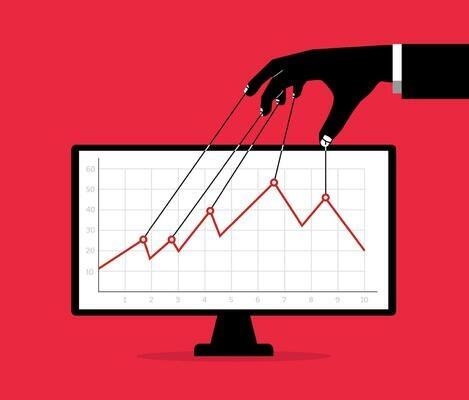
Central banks have become the dominating force in financial markets.
Easing and tightening decisions move all assets from bonds to private equity. Their role is supposed to be to control inflation, provide price stability, and ensure normal market functions. However, there is little evidence of any success in achieving their goals. The era of central bank dominance has been characterised by boom-and-bust cycles, financial crises, policy incentives to increase government spending and debt, and persistent inflation. Recently developed economies’ central banks have taken an increasingly interventionist role.
The creation and proliferation of central banks over the past century promised greater financial stability. Nevertheless, as history and current events continually show, central banks have not prevented financial crises. The frequency and severity of these crises have fluctuated but have not declined since central banks became the leading figure in financial market regulation and monetary interventions. Instead, central banking has introduced new fragilities and changed the nature, but not the recurrence, of financial turmoil.
Empirical evidence dispels the myth that central banks ended the era of frequent financial crises. Regardless of central bank oversight, a credit boom preceded one in three banking crises. Who created those credit booms? Central banks, through the manipulation of interest rates. According to Laeven and Valencia’s comprehensive database, there were 147 banking crises between 1970 and 2011 alone, in an era of near-universal central bank dominance. Financial crises remain a persistent global phenomenon, occurring in cycles that coincide with episodes of credit expansion. Central banks have often prolonged boom periods with low rates and elevated asset purchases and created abrupt bust moments after making mistakes about inflation and credit risks.
According to Reinhart and Rogoff’s work, the rate of crises has not dramatically changed with central banking. Instead, the forms of crises evolved. Twin crises (banking and currency) remain common, and the severity, measured in output loss or fiscal costs, has often increased, especially as financial institutions and governments grew intertwined with monetary authorities.
The Great Financial Crisis of 2008, the Eurozone sovereign debt crisis, and the 2021–2022 inflationary burst rank among the events with the highest costs in history, contradicting the view that central banks have neutralised the risk or costliness of crises.
Central banks act as “lenders of last resort” and regulators. However, with each subsequent crisis, the solution is always the same: larger and more aggressive asset purchase programmes and negative real rates. This means that central banks have gradually moved from lenders of last resort to lenders of first resort, a role that has amplified vulnerabilities. Due to the globalisation of modern central banking and financial innovations, crises tend to be larger in scale and more complex, impacting most nations. The profound involvement of central banks in markets means their policies, such as emergency liquidity or asset purchases, mask systemic risks, leading to delayed but more dramatic failures.
In many advanced economies, recent waves of crises were triggered by debt accumulation and market distortions engineered by central banks, often under the guise of maintaining stability. The IMF and World Bank both note that about half of debt accumulation episodes in emerging markets since 1970 involved financial crises, and episodes associated with crises are marked by higher debt growth, weaker economic outcomes, and depleted reserves—regardless of central banking.
Major crises in recent decades have highlighted that central banks do not prevent systemic disruption. Often, their interventions have only delayed the reckoning but made underlying imbalances, particularly government debt, worse. Central banks do not prevent financial crises. They reshape them, often making their consequences more far-reaching, while shifting the costs onto the public through inflation and debt monetisation.
 ?itok=pAFxQBux
The Growing Priority: Supporting Government Over Managing Inflation
As I argued recently, central banks are increasingly prioritising government debt distribution over combating inflation. Central banks have one priority: keeping the government debt bubble alive. Central banks constantly inject liquidity to stabilise sovereign issuers rather than uphold price stability. In 2025 alone, global debt maturities will reach nearly $2.78 trillion, and central banks are expected to continue easing monetary policies, even as inflation proves persistent.
Central banks use their enormous power to disguise the insolvency of sovereign issuers and make their debt pricier, which leads to the subsequent excessive risk-taking and asset price inflation. Furthermore, the idea that low rates and asset purchases are tools that help governments reduce their fiscal imbalances and conduct budget prudence is negated by reality. Artificially low rates and asset purchases justify persistent deficits and high debt.
Central banks are enabling inflation and financial instability when they should be restraining it. By ignoring monetary aggregates and the risks created by rising government intervention in the economy and currency issuance through debt instruments, central banks are enabling the slow-motion nationalisation of the economy.
The misguided central bank monetary expansion and negative rate policy of 2020, perpetuated well into 2022 despite soaring inflation, is a clear example. Governments benefited in the period of expansion with enormous debt purchases that enabled an ill-advised increase in government spending and debt. Meanwhile, citizens and small businesses suffered from high inflation. Thus, when central banks finally acknowledged the inflation problem they helped create, they kept loose policies prioritising liquidity, which fuelled more government irresponsibility, and the rate hike damaged the finances of families and small businesses that previously suffered the inflation burst. Governments weren’t concerned about rate hikes because they increased taxes.
The Federal Reserve’s response to increasing government deficits has consistently favoured greater government intervention and rising debt levels, even at the expense of higher inflation, which has undermined its independence and credibility.
Independence vanished when central banks abandoned or ignored price stability, blaming inflation on various absurdities instead of government spending and money supply growth.
The Bank of England, for example, keeps cutting rates and easing policy with rising inflation.
Central banks tend to ease monetary policy when governments increase spending and taxes. However, policymakers claim to be data-dependent and strict when governments reduce taxes and spending. Why? Central banks have transitioned from being independent monetary authorities safeguarding the currency’s purchasing power and controlling inflation to facilitating the distribution of rising government debt and disguising rising issuer insolvency.
Modern central banking has shown that no single authority should set interest rates and liquidity. They have consistently erred on the side of rising government size in the economy and made erroneous estimates of inflation and job growth. The reason for this is straightforward: as the size of government in the economy and sovereign debt, which is often considered the safest asset, increase, the central bank’s role becomes increasingly important for maintaining market stability.
Many central banks state that they don’t interfere with fiscal policy and remain independent… except when someone dares to cut taxes and political spending. As such, central banks are not a limit to risk-taking, rising government spending and budget irresponsibility, but rather a tool that enables market and government excess.
https://cms.zerohedge.com/users/tyler-durden
Tue, 08/12/2025 - 07:20
Correct. Central banks create financial crisis and cause inflation..

NEW EPISODE OF nostr:nprofile1qyxhwumn8ghj7mn0wvhxcmmvqywhwumn8ghj7mn0wd68yttsw43zuam9d3kx7unyv4ezumn9wsqzq7q8pqp9qg6mz0y0keaw4u6q7fxr8pzmy3cw0hw8asx5psqxsfj9w2rsvz WITH nostr:nprofile1qyv8wue69uhk6mmwv9jzu6nzx56jucm0d5arsvpcxqq3qamn8ghj7atdvfex2mp6xsurgwqqyzdkm9dhdgq3jxjvw7qc26q76lememf0l75wg9gka3uzgzepx2zl2ewxw6s JUST DROPPED.
IT'S A BANGER OF AN EPISODE.
GO CHECK IT OUT.
Artist, maker, and entrepreneur rejoice. In a bitcoin future your work will be funded and appreciated!
NEW EPISODE OF nostr:nprofile1qyxhwumn8ghj7mn0wvhxcmmvqywhwumn8ghj7mn0wd68yttsw43zuam9d3kx7unyv4ezumn9wsqzq7q8pqp9qg6mz0y0keaw4u6q7fxr8pzmy3cw0hw8asx5psqxsfj9w2rsvz WITH nostr:nprofile1qyv8wue69uhk6mmwv9jzu6nzx56jucm0d5arsvpcxqq3qamn8ghj7atdvfex2mp6xsurgwqqyzdkm9dhdgq3jxjvw7qc26q76lememf0l75wg9gka3uzgzepx2zl2ewxw6s JUST DROPPED.
IT'S A BANGER OF AN EPISODE.
GO CHECK IT OUT.
Thanks, this resonates deeply.
Wrote this for my new web shop at cyberita.no
Why Bitcoin and Nostr
Final settlement and Censorship resistance is key to why i have decided to only sell my knives for bitcoin and use Nostr for my social media presence.
Bitcoin is a Peer-To-Peer electronic cash system that allow online payments to be sent directly from one party to another without going through a financial institution.
Nostr is The simplest open protocol that is able to create a censorship-resistant global “social” network once and for all.
When i started doing research into the knife industry i quickly discovered that makers and companies was having problems with payment providers and social media platforms censoring their business.
This is a growing problem among online retail as a majority of people rely on trusted third parties to market and sell their products. If your product happen to trigger some arbitrary rule your payments can be stopped and your social media account censored or suspended.
Bitcoin and Nostr is censorship resistant protocols that eliminate these risks and promote a fair and egalitarian economy based on sound money and freedom of speech.
Since i want to support Bitcoin and the Nostr protocol i have decided to only sell my knives for bitcoin and only use Nostr for my social media presence. My prices are set in USD and follow the global inflation rate as measured by Global (World) Monetary Supply M2.
Dealers and collectors are welcome to buy my knives with bitcoin and sell them through other channels for fiat with a markup. All my knives come in a simple presentation box with a GS1 US barcode for ease of use in retail environments.
You can follow me on this journey promoting freedom of speech and trade on primal.net/Gunnar or any other Nostr app.
For me bitcoin is a moral imperative. Its all about inalienable property rights. As detailed in this excellent essay by Gigi
Be the change you want to see in the world!

Freedom is not given it's taken. Peoples degree of freedom differ.


Yes, but this will eventually be resolved by a run on the paper bitcoin mills.
There are millions if bitcoin investors who never use the bitcoin network. It would be intresting to see how much Binance and Coinbase wallets alone contributes to the illusion of wide spread bitcoin adoption by moving IOU's around.
We need more people transacting in bitcoin. The institutional adoption and digital gold meme is feeding a huge paper bitcoin fire. #paperbitcoinsummer

We can always lower the block size. 😂

No, lightning use is negligible compared to bitcoin IOUs. Exchanges, ETFs, custodial wallets etc is why mempool is empty. Wait and see what happen when they go belly up.. 💥
Its because most people buy and use paper bitcoin (bitcoin IOUs)😢
In bitcoin we all play by the same rules. Bitcoin's egality represents an extreme leveling of society.


Exit X, don't feed the beast. Self censorship is mental suicide.
In a world of cultural wars and algorithmic narrative control knowledge of what count as truths and how they are constructed will help you navigate the sea of lies and build a better future.
With this in mind I encourage you to read this excellent book from John R. Searle
Culture is imagination made real.
X counts as Y in context C
The Construction of Social Reality
https://archive.org/details/construction-of-social-reality-john-r.-searle/mode/1up

This is the way reject the digital Westphalia accord of the walled gardens of control.


Fuck that digital dystrophy, we ignore and route around them. Anyone still sucking up these restrictions for fiat gains and a little bit of clout are rapidly losing my respect.
Thanks for a great article highlighting among other things the importance of our chosen means of communication in the war of information and mind control.

Cyber pandemic incoming
