

Why can’t you do both? If you are going to make a fiat purchase use bitcoin instead and buy more bitcoin with the fiat you would have spent.
So if the merchant won’t accept bitcoin:
1) take the fiat you would have spent and exchange it for bitcoin
2) pay the merchant with a fiat credit card
3) when the credit card payment is due 30+ days later, exchange enough, bitcoin to cover the fiat payment
Most of the time you will have bitcoin left over from doing this transaction that you can HODL keep stacking. But even if you don’t, you have lived on a bitcoin standard as a first principle


I have thought of the sequence of phases like you until I read this article written by nostr:npub1w69ya7xs697hk3hky3gllryz8rwverfa0ylz89chf9qnhfcskc2s64zltw
https://www.perplexity.ai/search/please-find-an-article-parker-z29rHzp2QZ2kK2XqMoraGw
He changed my thinking to MoE leading SoV because the value comes from our ability to exchange it with fiat. Layer 2 solutions will allow more direct exchange expanding MoE which will then drive UoA and the tools needed to help the masses manage and track their bitcoin as their base currency
I’m working on those tools anticipating that day and would like to create a white paper on UoA. If anybody wants to collaborate on that please message me

I hadn’t thought of it this way; thank you for sharing.
I have been using this definition of the difference as generated by AI and find it helpful when writing to know whether to capitalize or not
https://www.perplexity.ai/search/what-is-the-difference-between-ysnHl5vbQIiXDfU0LRB26Q

"If the utility in money lies in its ability to coordinate trade, then bitcoin’s value is not merely tied to one’s willingness to save it. It is tied to its ability to coordinate trade and to transfer value between humans.”
Great piece from nostr:npub1w69ya7xs697hk3hky3gllryz8rwverfa0ylz89chf9qnhfcskc2s64zltw
This is a great article. Totally changed my perspective when I first read it a few weeks ago.
If #MoE creates #SoV, it also leads to #UoA. I used to think it was three phases of 1) SoV, then 2) UoA, and finally 3) UoA for bitcoin to achieve full monetary status but I think MoE will drive both of the others. And as MoE expands beyond the exchanges to robust layer 2 solutions both SoV and UoA will grow.
I’ve decided to focus my contributions to bitcoin by building tools to support UoA adoption which seems like it needs more of us working on it
I’m also putting together a white paper on UoA to help layout a vision. If anybody is interested in collaborating, please message me

nostr:npub1w69ya7xs697hk3hky3gllryz8rwverfa0ylz89chf9qnhfcskc2s64zltw wrote an article recently about the #SoV coming because of the #MoE established during the 15 year history.
It changed my perspective about where we are with #SoV and why.
https://www.perplexity.ai/search/please-find-an-article-parker-z29rHzp2QZ2kK2XqMoraGw
That’s a good point. I appreciate your perspective as it is definitely a complete and fair definition of UoA
One more thought, as a business owner I’m trying to calculate and understand my costs in bitcoin and then set my prices in bitcoin as well (I have a subscription based SaaS company). Since some customers cannot or won’t pay in bitcoin I offer a USD price converted from the Bitcoin.
This is new and I’m still working out the details but if they pay in bitcoin I expect to gradually decrease their price while if they pay in USD I expect to gradually increase their price. They get to choose which way to pay.
I think my message might have been confusing with some of my examples.
My base currency in my personal financial management and business accounting software is Bitcoin denominated, not USD. The opposite of all other financial software that treat a Bitcoin as some kind of investment or asset like a stock and tracks its value in USD.
I immediately convert all fiat I receive to BTC and store it that way except if I get some fiat cash which I carry around in small amounts to help the needy I encounter.
Whenever I can, I pay bills or make purchases in BTC directly. If I have to use fiat to buy I use a credit card and pay it off in full each month by converting sufficient BTC to make the payment. So USD is only a payment rail I use for receiving or sending value I measure and account for in bitcoin.
For example, I recently took a cruise and covered expenses for my brothers in USD that we would split at the end. Each time I spent in USD I was mentally thinking of how much Bitcoin that was sometimes using the calculator if I couldn’t do the math in my head. At the end of the cruise, they paid me back in BTC that I had kept track of. When the credit card bill in USD is due later this month I will convert BTC to USD to pay it because I don’t have any cash balance in USD.
I follow this pattern as much as possible.
While prices are mostly not quoted in bitcoin, I mentally or manually convert the quoted price to bitcoin to determine relative to my bitcoin holding whether I’m comfortable making that purchase. When doing this over time every thing costs less in bitcoin to buy.
It isn’t a perfect system and most people cannot do it as it takes a lot of focused attention and change of mindset. But I’m motivated to force myself to do it and create the tools to make it easier so others can adopt them in an easier way and not have to do so many mental gymnastics.
My thinking is that we need tools to easily track and account for our stored bitcoin and then convert USD prices back to bitcoin before we make a purchase or when we get paid in USD.
We begin to think of and manage our money like a person does who has USD and visits a country and encounters a different currency as #UoA (for example pesos in Mexico) and does the calculation back to USD to understand the “real” cost. Bitcoin if you stay in the country for more than a few weeks you begin to automatically and intuitively recognize the value of the new currency without having to convert back to USD
If bitcoin is your base currency and you track and account for your value in it, each time you need to transact in USD or any other currency you will convert mentally to bitcoin and assign value relative to your base currency of bitcoin. As bitcoin continues it adoption curve more and more people will think this way until the majority haven’t transition the pricing #UoA because they already think that way and businesses understand their costs in bitcoin too
This is too hard to do in your head but with simple apps that facilitate, it should be possible. I’m starting the journey to live 100% on bitcoin while treating USD receipts and payments and only a payment rail and I’m building the tools to make it easy for me to accomplish that and then share the tools with the world

Totally agree but I think we have more #MoE than we realize. That we can exchange bitcoin for ever more fiat which is a #MoE establishes the #SoV of bitcoin. With many layers of two transaction technologies under development by really smart people full #MoE will be achieved.
When #MoE adoption happens, likely suddenly, we will need tools for #UoA. They largely don’t exist today and so my focus in our community is to write a white paper to provide a vision for how to achieve #UoA and and building the tools to facilitate it.
If anybody wants to collaborate in this passion, please message me.

I think fiat price and exchangeability, one method of #MoE, is an important step for establishing bitcoin as a #SoV. In addition to the global education you mentioned we also need tools to help us think of and track our purchasing power in bitcoin. To that end, I’m writing a #UoA white paper and working on tools to help achieve this final frontier for Bitcoin to become money used universally in the world. If anybody wants to collaborate on those efforts, please message me
Agree 100%. We have achieved #SoV based on fiat #MoE, but until we convert to #UoA bitcoin will be an asset and not money. For that reason, I’m working on a white paper about #UoA and tools to make it easier for bitcoin holders to think and manage their money in a bitcoin #UoA. If anybody had interest in this please message me to collaborate

Why is everything priced in #bitcoin? It's becoming the Earth's unit of account! But beware, hoarding wealth in #NVIDIA might not be wise as costs trend towards production costs. Thoughts? #USDollar #Economics #Investing . https://youtu.be/rPhjihK6qAg
Hoarding wealth in stocks, bonds, or anything that has decreasing production costs seems like a tenuous proposition compared to bitcoin. Bitcoin’s production costs seem likely to increase forever as exchangeability with fiat #MoE results in it storing more value #SoV thereby increasing demand for mined coins (i.e., increasing hashrate) requiring more cost inputs like electricity to mine.

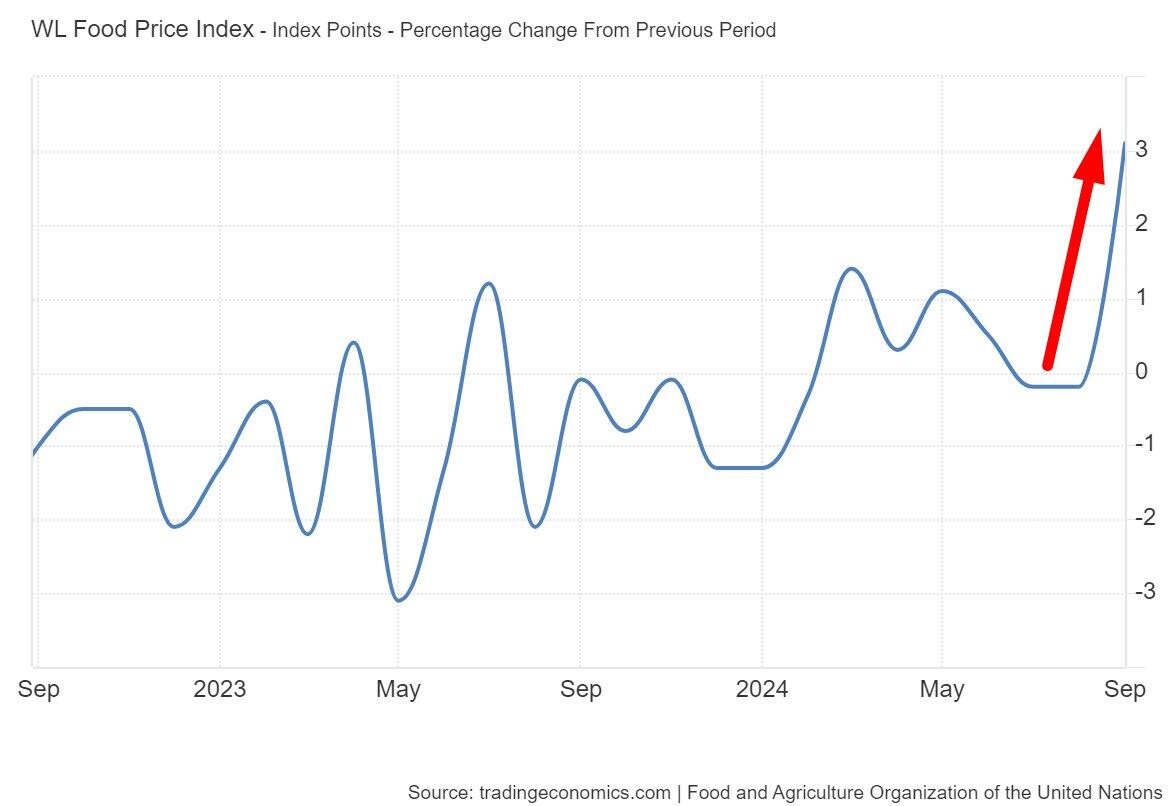
YTD I’ve been trying to mentally live on a bitcoin standard #UoA and start to value my purchases including food in sats. My sats definitely buy me more than they did last year but I haven’t kept precise track. Your question has motivated me to start doing that in some tools I’m building to help one think and track in a bitcoin #UoA

Totally agree! Can you share any tools you are using to help accomplish living in a world of sats #UoA without constantly doing mental calculations back to your fiat currency?

I think there is a good chance you will be following a lot of people!

I’m a spiritual person and feel the spirituality of Bitcoin. God said “I say unto you that all things unto me are spiritual” and God gave us Bitcoin through Satoshi.

Did you create this? I’ve been working on a similar visual representation of the time line of the adoption of the three properties of money and had some ideas I would like to collaborate with you on particularly to create a white paper on #UoA. Could we connect?

💥 Zap Giveaway Alert! 💥
We're thrilled to give back to our incredible community with 245,000 sats up for grabs! Here’s how you can earn your share while spreading Bitcoin knowledge:
🔁 Repost & Follow – Get 840 sats
💬 Comment & Tag a Friend – Get 420 sats
❤️ Like this Post – Get 210 sats
#Value4Value – Help us spread the word about our Bitcoin Masterclass:
👉 21lectures.com/bitcoin-masterclass
A huge thank you to everyone who participated in our previous giveaway! Let's keep the momentum going!
https://primal.net/e/note1sytyfgqsz6l422ph44p4x8ydpc0e87ehnyw8xh5qe0aca5sduh8qld7a4f
@npub10ej5me8kedfjfxqfy706h9234mp0eawr9zdnvgyt0k76szze6wrsn60qfe free sats