Repeat after me: “An AI model is NOT Open Source unless it publishes its complete training data, including datasets and instructions to reproduce”.
Apple’s M4 Max takes the performance crown in both single core and multi-core performance, beating both Intel and AMD.
It’s surprising and saddening how many people are willing to accept censorship as long they don’t like the ones being censored.
They seem to be immune to any kind of cautionary tale.
Sadly, “slightly faster” in a microbenchmark usually means absolutely nothing. Specially when the implementations aren’t comparable at feature-level. nostr:note1vjqhnsh0r56eygp055hhumd4zqaw2uagjta998pr32wyvkggnyvqualle8
Balatro from #steam works like a charm on Asahi #linux with krun+FEX. 😄 
Yo cambiaría “gasto” por “consumismo”. nostr:note14ps2uq2pktccsx6eqmjeanufjalkq9fm7667wefw8zs8zd8u2d7qvjlx5v

#Valve #SteamDeck as a stepping stone to the #Linux desktop
https://opensourcewatch.beehiiv.com/p/valve-steam-desk-stepping-stone-linux-desktop
Steam support on most desktop distros could be better, but we'll get there eventually.

Back in the day, becoming an AS (Autonomous System) wasn't that hard, it was just very costly (in both time and money). I don't know how different can this be today. In other words, it can be done (probably)! 😜
Remember UMSDOS? UMSDOS was a #linux pseudo-filesystem overlaid on top of a FAT filesystem. All the attributes that couldn't be stored in FAT (actual file name, permission and ownership bits...) were stored on a separate file in the same directory.
It was super-slow, extremely fragile and, well, pretty much a hack. BUT, it allowed many, including myself, to have a "soft" entry to installing Linux at a time when disk space was scarce and repartitioning usually meant losing data.
And, in fact, my first Linux distro was Slackware 3.1, installed in no other place than C:\LINUX 😄
I’m seriously considering getting a Starlink connection for my secondary office. 4G kind of works, but downloading relatively large files is a PITA, and the video on meetings is pretty much a hit or miss.
While it isn’t a well known feature, you can easily run a container inside a VM for additional isolation in #podman, simply by adding “—runtime=krun” to the command line.
This requires crun to be built with libkrun support and having a symbolic link from “krun” to “crun”. On #fedora #linux both of these can be achieved by installing the “crun-krun” package.
On a first thought, and from an Engineering point of view, #nostr architecture seems kind of crazy, especially given it's chaotic nature:
- Clients can pick their own relays for receiving, sending and searching events (and those can be different for each action!).
- Beyond the NIPs and the WSS protocol, relays doesn't adhere to a strict set of rules. They may or may not stream from other relays, the time to store events can greatly vary from one to other (some can even rely exclusively on a in-memory storage), they can filter events arbitrarily...
But, if you go beyond the a purely Engineering perspective and think about its design within the context of human and societal behavior, the craziness starts to dissipate.
Many things in the real world are chaotic, and we empirically know they work better that way, with the Free Market being the prime example of this. Yes, it's unintuitive, leading some people to confusion and frustration, which implies a longer time to reach widespread adoption. And changes are harder to implement and settle. But we also know that, and the end of this bumpy road, there's the prize of the authentic resilience.
I’m always tempted by RISC-V machines, and it’s nice seeing them in better SoCs and more practical form factors, but being honest with myself, I know the daily experience is going to be subpar and the machine will end in a corner collecting dust. #tech
GM #nostr ! Yesterday IBM hit an all-time high. 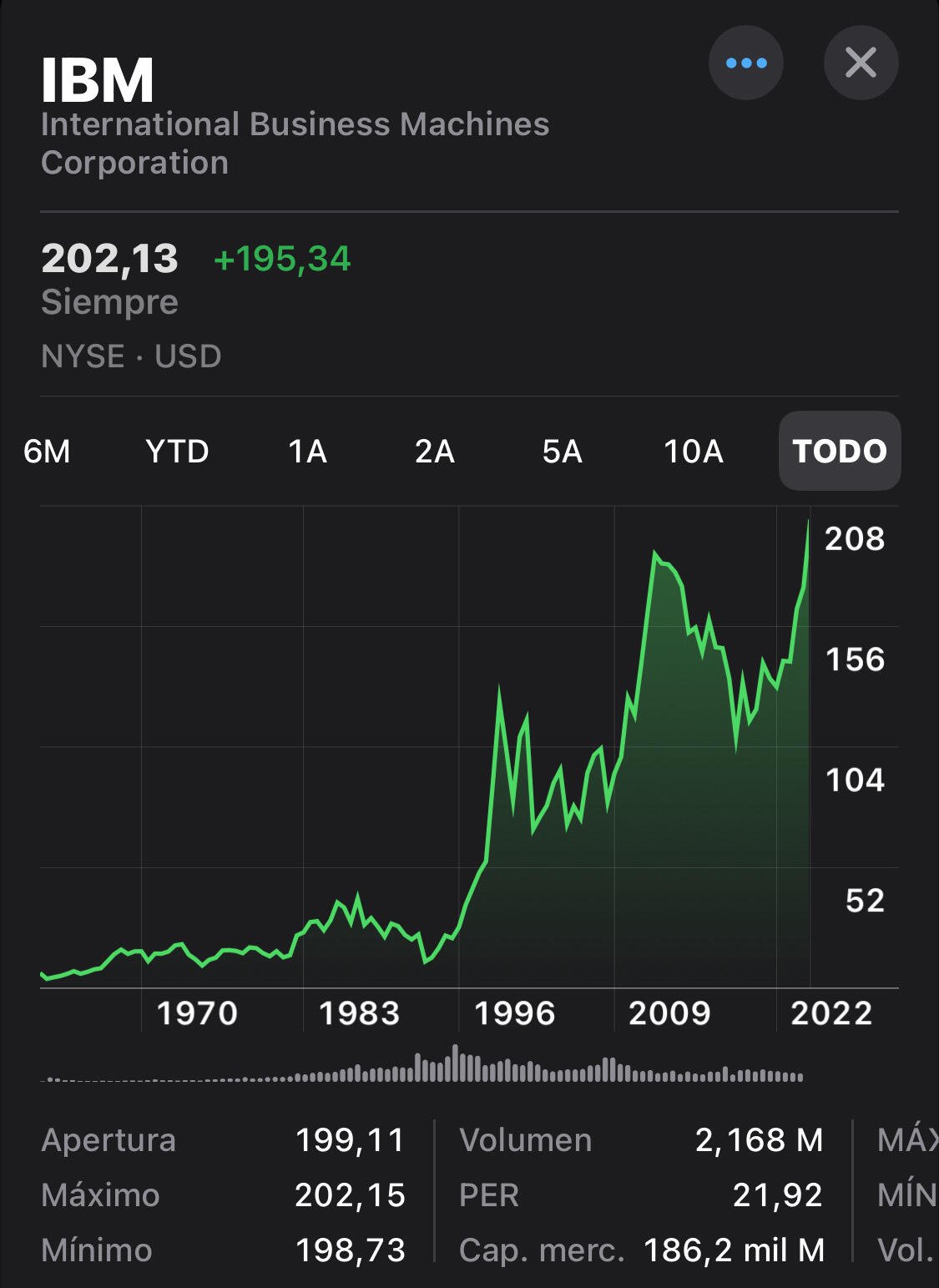
nostr-rs-relay works like a charm with OpenBSD's relayd. 😄

Sí. Yo, por mi parte, voy a tratar de publicar algo por aquí diariamente.
1. Encontrar perfiles reales (hay muchos perfiles de Mastodon sincronizados por mostr.pub, pero es unidireccional) que hablen de tecnología más allá del ámbito de bitcoin y nostr.
2. Snort y Damus.
For AI to become really widespread, GPU/NPU vendors need to understand that having to write backends and shaders for each vendor doesn’t scale. We should aim for standardization at the lowest level, bottom-up.
Vulkan seems to be the best positioned common language to achieve this, but it definitely needs extensions to be able to provide the equivalent semantics to frameworks such as CUDA or Metal. And that means investing serious money into it.