Avatar
Aynodarnac
21611b335cf2e898822f6cc4f7997bc5a9a2d08cc5bd6571eb4ea949a658cc1e
Health information. Expert. Some things are bad.

Q :Is it ok to hate psychopaths ?

If you think the bad actors are doing ok :

“Suspicion always haunts the guilty mind; The thief doth fear each bush an officer.”

― William Shakespeare, King Henry VI, Part 3

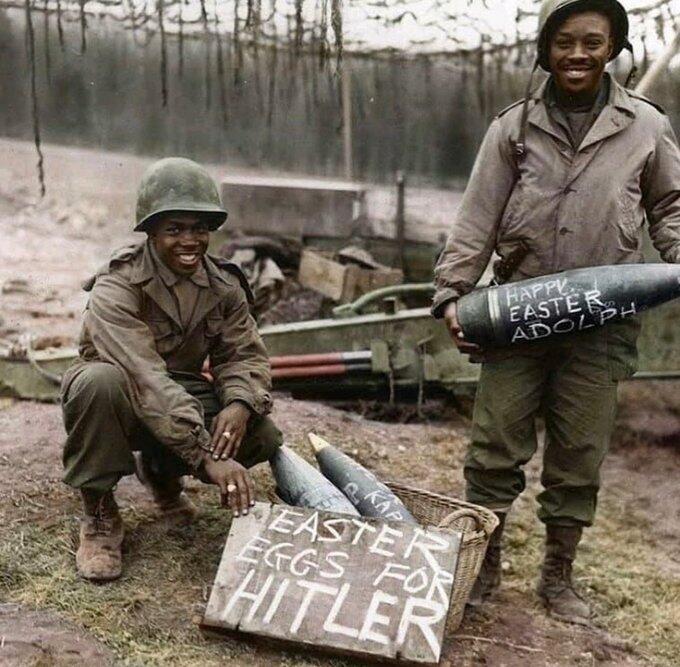
Smiling about killing strangers = brainwashed 🤡

Replying to Avatar jimmysong

# "Free" is Slavery

Thae Young Ho is the highest ranking defector to ever have come out of North Korea. He was an ambassador to Sweden and then to England. At the Oslo Freedom Forum back in 2019, I got to talk to him for a few hours, and it's a conversation I'll never forget.

It's rare that we get such a high ranking official to come out of the country to tell us how they operate, but Mr. Thae is one of those people. He was able to enlighten many of us what North Korea's process for the currency revaluation was and why they backtracked. He also told us about how they had to execute someone so that the regime wouldn't get blamed. If you read any works of Rene Girard, that shouldn't surprise you, especially given that it's an atheist country.

## Kim's Rise to Power

But the story that struck me the most was about Kim Il Sung's rise to power. Mr. Thae explained that after being installed as the hand-picked leader of North Korea in 1945, he wasn't that popular. His Korean was marginal as he had grown up mostly in China. His education was a scant 8 years, all of it in Chinese and communist guerrilla tactics weren't exactly beloved by the people. Yet if we look at how he's looked at in North Korea today, he's essentially viewed as a divinity. Somehow, this poorly educated, barely comprehensible puppet of the Soviet Union became the god of North Korea.

So what happened? How did he gain all that power? What did he do to take control? You would think that given what we're generally told about communism that it would be based completely on fear and ruthlessness that consolidated his power. And certainly, there was plenty of that. But according to Mr. Thae, Kim Il Sung relied on something else: free stuff.

## The Cult of Free

Everyone loves free stuff. Think about how popular the free stuff section on your local craigslist is. I'll bet you anything it's the most visited and monitored part of the site and rarely will you find stuff that's that valuable that someone hasn't taken already. It's part of the human instinct to try to get something for nothing and Kim Il Sung exploited it.

As with most socialist/communist programs, the way he won over the North Korean people was with lots of entitlements. They got free health care, free food, free housing, a guaranteed job. They got everything they needed. And with Soviet subsidization, it worked great. People supported him and for a time, a lot of international observers thought that North Korea was doing better than the South.

But there's a darker side to "free stuff." What happens when they run out of a scarce resource? How do you determine who gets it? Say there's medicine that will help two different people, but there's only enough for one. Who gets it?

In a free market, prices help you decide that, and a high price spurs greater production of the scarce resource so that the prices come down. But if it's free, what do you do? When you have a central controller of everything, the answer is obvious. You reward those that are loyal and punish those that are not. Instead of money being your currency, it was loyalty to the regime that was your currency.

## Markets Build Community

Soon, the only people that really got the free stuff were near the top of the ideological hierarchy. Instead of prices determining what you got, it was your perceived compliance and loyalty to the regime that determined it.

In the absence of a market, compliance was what determined who got what. Mr. Thae's point of the story was that there's something sacred about market transactions. Market transactions cause both parties to have obligations to the other. There's a mutual desire to satisfy the other party and it binds us together in a community. That's precisely what they lacked in North Korea and why the regime was so powerful.

It's easy to listen to these stories and think of it as "out" there, that it's got nothing to do with us. But after listening to this story, I started thinking about what stuff I got for free from centralized entities. I get GMail for free. I get Facebook for free. I get YouTube for free. I realized that the cost of getting these things was indeed compliance. In these walled gardens, they can kick you out at any time and that is indeed what they do. The reason why these companies have so much power is because they give you this stuff in exchange for compliance. They give you this stuff to *enslave* you.

## Western Governments

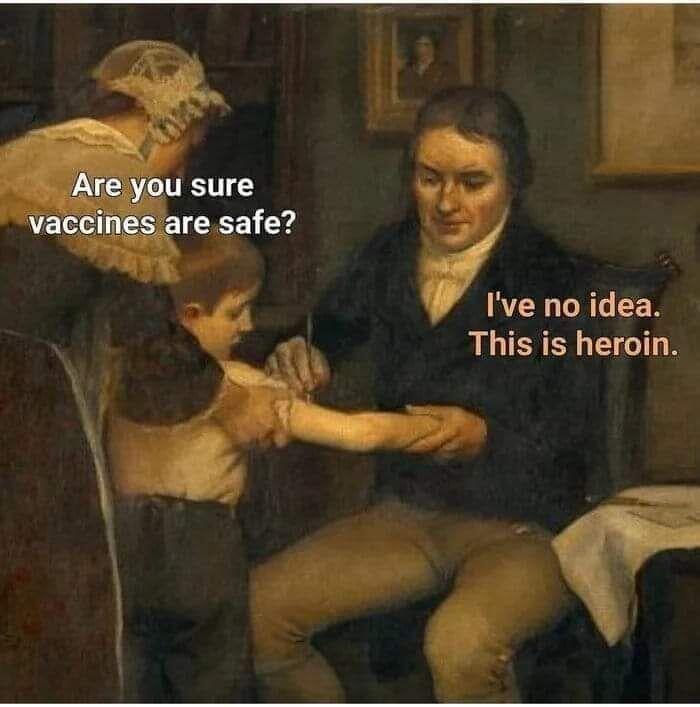
Fact is, there's way more of the communist/socialist system of free embedded in our supposed democracies than we think. Remember during the pandemic how you had to get a vax to keep your job, visit your sick relatives or travel? There were people in the US suggesting that unvaxxed people should be denied health care services. Such tactics really only work when the service is "free." The central controller of the resource extracts its pound of flesh, just not in money. Many governments have gone down this route. We're much closer to communism in western societies than we'd like to believe.

Prices and paying for things are a good thing. They obligate both parties to the trade to satisfy the other. The instinct to get something for nothing is not one that builds civilization. The reason communism has led to tyranny every single time is because the central government ends up with all the resources and wields absolute power through "free" stuff.

Reject free. Pay for value.

If someone gives you something or helps you , it is a natural human instinct to feel obligated to them. Psychopaths consist of roughly 4% of the population, but this can vary its time and place. They do not have this instinct, but they have learnt how to exploit it by lying to, and cheating, non- psychopaths.

“Government” is essentially psychopaths controlling non-psychopaths.

This is why there is no “correct” form of government/political system. Politics is a vicious game played by psychopaths with each other.

Societies change/collapse when non-psychopaths become aware of their exploitation by some means. Politicians try to slow this down by censorship and even imprisoning people who facilitate this awareness. i.e “Hate speech “

Political theories are based on the idea that people are NOT divided into psychopaths and non-psychopaths. Hence : “Equity” “Equal rights” “Human rights” “each according to his ability “

“Societal values” .

It is laughable that Political Science does not discuss psychopathy.

In the past people lived in small groups/villages. By means of gossip, it was very difficult for psychopaths to operate without being discovered. When they were discovered they were made to leave the group, which effectively meant death.
I don't know what's going on, and I'm probably not smart enough to understand if somebody was to explain it to me. All I know is we're being tested somehow, by somebody or some thing a whole lot smarter than us, and all I can do is be friendly and keep calm and try and have a nice time till it's over.

Kurt Vonnegut

Do you sincerely want to be rich ?

If you have an open mind, and are a bit sceptical, you can make money by reading things on the internet and acting accordingly .

Central planning.

Some people telling everyone one else what to do.

“He who has so little knowledge of human nature as to seek happiness by changing anything but his own disposition will waste his life in fruitless efforts.”

Samuel Johnson

Samuel Johnson (18 September 1709 [OS 7 September] – 13 December 1784), often called Dr Johnson, was an English writer who made lasting contributions as a poet, playwright, essayist, moralist, literary critic, sermonist, biographer, editor, and lexicographer. The Oxford Dictionary of National Biography calls him "arguably the most distinguished man of letters in English history"