

This is the guy who accuses me of ad hominem

Maybe, maybe not. I suppose you'll never no.
Plausible deniability is a wonderful thing.

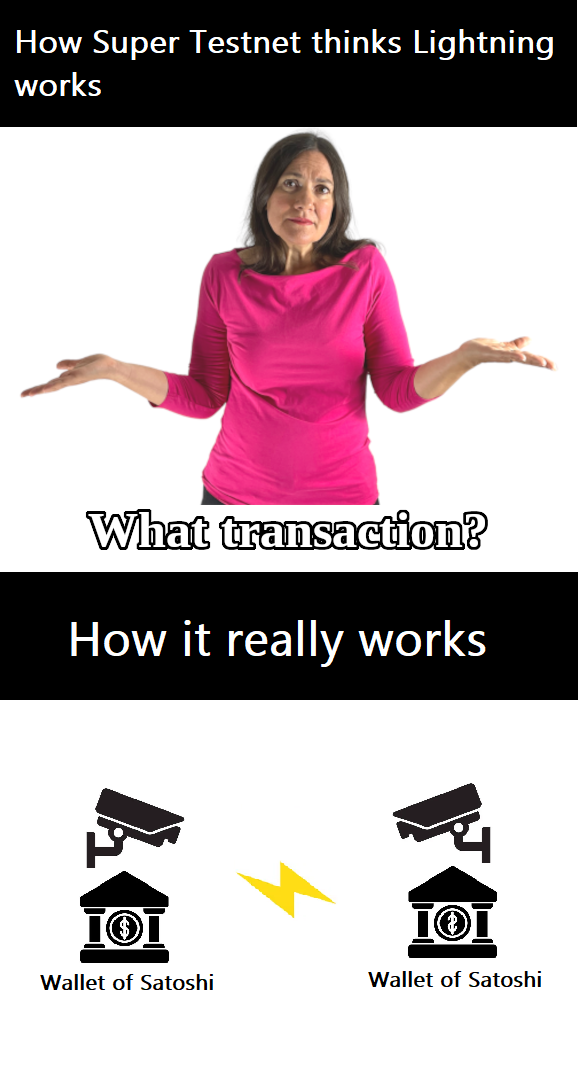

I'm a huge fan of the FCMP idea and I look forward to seeing them implemented
It will make the fight much more fair

> But again, please don't argue onchain Bitcoin is more private than onchain monero...
I don't. Onchain bitcoin is less private than onchain monero...unless you use coinjoin + stealth addresses, in which case, I think it's about the same, though sometimes better (due to coinjoins sometimes having larger anonymity sets).

Finnish busts: https://cointelegraph.com/news/finnish-authorities-traced-monero-vastaamo-hack
Japanese busts: https://cointelegraph.com/news/monero-transactions-japanese-authorities-arrest-18-scammers
Chainalysis explains how they trace monero: https://cointelegraph.com/news/chainalysis-leak-monero-traceability
Ciphertrace claims to be able to trace monero but does not provide an example: https://news.bitcoin.com/ciphertrace-enhanced-monero-tracing-capabilities-governments/
> Monero already does provide provable reliable privacy. for all users of the network.
Except the ones who keep getting arrested
since it's a "dedicated device" for lightning transactions, it's not for web browsing
> You will need almost 1 TB of disk space for a bitcoin node
not if you do transaction pruning...though then there is some additional setup to ensure you can get the blocks you need when LN needs them
nostr:nprofile1qqszmxrnkfdl9hdxzstgf4zdt6mk4avlzemc3fvwxcatzeclalhg0uspr3mhxue69uhkummnw3ezucnfw33k76twv4ezuum0vd5kzmqprpmhxue69uhhyetvv9ujumn0wd68yct5dyhxxmmdqy28wumn8ghj7un9d3shjtnwdaehgu3wvfnsryzw6e aren't they changing the protocol so that the Anon set is every monero transaction ever? Pretty sure this is either out of date or soon to be.
Plus not very nuanced to compare monero and lightning. Lightning is a notoriously heavy lift to do self custodially. Lots of errors and headaches. Monero just works
They are testing whether they can modify monero to use full chain membership proofs, and they hope to get it done this year: https://x.com/MoneroMavrick/status/1856881416987988406
> monero just works


I am not a privacy expert. That said, for serious privacy, I would start with this:
- Get a dedicated device
- Install TailsOS on it
- Download a bitcoin node and electrs
- Open electrum (comes with TailsOS)
- Set it to use your node (not electrum servers)
- Set it use tor (probably automatic on TailsOS, but check)
- Send bitcoin to electrum via a coinjoin
- Open channels with privacy focused peers (e.g. ecash mints)

Of course, if the guy had used lightning instead of monero, the Finnish technique wouldn't have worked. The swap service wouldn't know what address received the money (because lightning hides the recipient's address from the sender) and binance would not know what address sent it to their exchange (because lightning hides the sender's address from the recipient)
they told us most of how they traced the Finnish guy's monero. After arresting him, they sent an information request to a swap service which knew precisely what address they sent the monero to (because monero does not encrypt the recipient address), and then they sent another information request to binance, who knew that address showed up as a "ring member" in a transaction to their exchange. So they knew it was him. Didn't require breaking any cryptography. Just following the trail through monero's public ledger.
BTW
there 90 minutes of STNs pedantic quibbling about why he thinks LN is better than monero on nostr:nprofile1qqsqxf440czzuzyjswddcumcg6yafpdll55958wvl6w94kk6g7dp6nqpr3mhxue69uhkummnw3ezuur0wf6x2mt0dejhymewvdhk6tcpzemhxue69uhkummnw3ezu7rdwgh8ymmrddej7qghwaehxw309aux6u3ww4ek2mn0wd68ytn0wfnj77a2vxg s pod
if anyone can listen to him splitting hairs to rationalize his ideas for that long.
I encourage readers to listen to the podcast and draw their own conclusions
also this one with me and Luke Parker (monero dev): https://x.com/super_testnet/status/1824431745443279044
there 90 minutes of STNs pedantic quibbling on nostr:nprofile1qqsqxf440czzuzyjswddcumcg6yafpdll55958wvl6w94kk6g7dp6nqpr3mhxue69uhkummnw3ezuur0wf6x2mt0dejhymewvdhk6tcpzemhxue69uhkummnw3ezu7rdwgh8ymmrddej7qghwaehxw309aux6u3ww4ek2mn0wd68ytn0wfnj77a2vxg pod
if anyone can listen to him splitting hairs to rationalize his ideas for that long.
I encourage readers to listen to the podcast and draw their own conclusions
also this one with me and Luke Parker (monero dev): https://x.com/super_testnet/status/1824431745443279044
they don't need to break "long established cryptographic primitives" because monero doesn't encrypt the sender or the recipient
and the entire crypto community *did* hear about these busts, hence the highly visible articles in very popular crypto news outlets
wait no, don't "just" do anything -- if you want decent privacy, you have to do more than that

Just download electrum and open some channels